-
2020-05-13
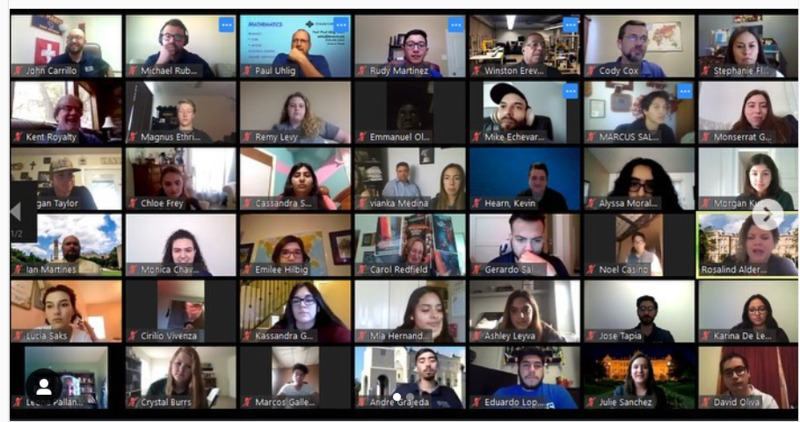
The pandemic hit and many new college students were forced to enjoy their admission celebrations from their homes through their computer screen and Zoom. Still, St. Mary's University pushed forward to make this event memorable and celebrate future incoming Rattlers to their new school. This screenshot is a still shot of the emotions and celebrations early freshmen experienced during the pandemic. Being accepted into university is no small thing, but a Zoom celebration is a small gesture of congratulations that feels very big.
-
2021-08-05
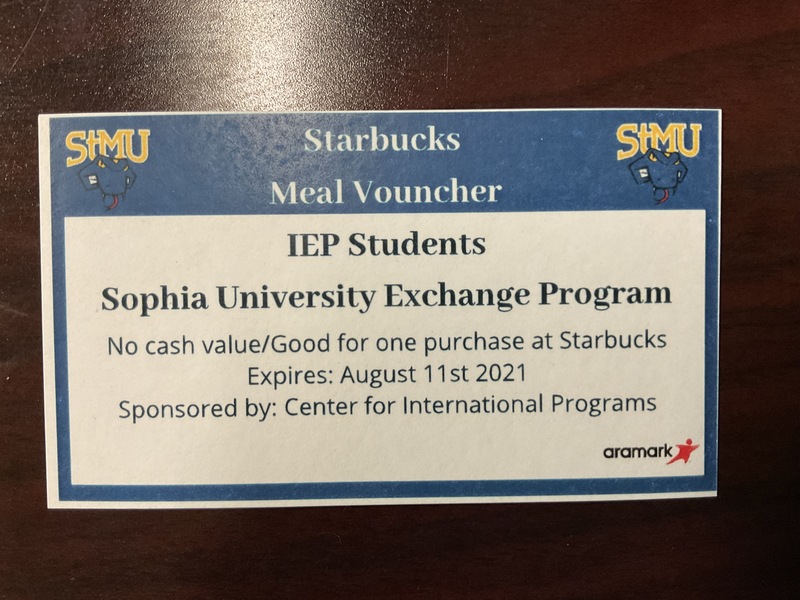
The meal voucher was made for international students coming during the first weekend of August and did not have food, nor was the cafe open for them to eat. During the summer of 2021, communication between the University Cafeteria and the Center for International Programs was complex due to changes inside the Center for International Programs. No plans were made for the incoming students coming that weekend. For that reason, the Center for International Programs had to create a meal voucher to eat at Starbucks or Chick-fil-a inside the campus. Twenty students were coming in the weekend, and the CIP team had to check them in, bring food supplies, and pick them up from the airport.
-
2021-04-06
President Biden will promote his administration’s success in accelerating the pace of coronavirus vaccinations during two appearances on Tuesday, as officials in nearly every state say they will make shots available to all adults by his target of April 19.
Three months into his presidency, Mr. Biden confronts an escalating migrant surge at the border with Mexico and has embarked on a grind-it-out effort to ram through a $2.3 trillion infrastructure bill. But the virus remains his primary focus.
And he wants the country to know that — so he is offering multiple updates each week, along with helpful visual cues, like standing next to a giant Easter bunny wearing a mask.
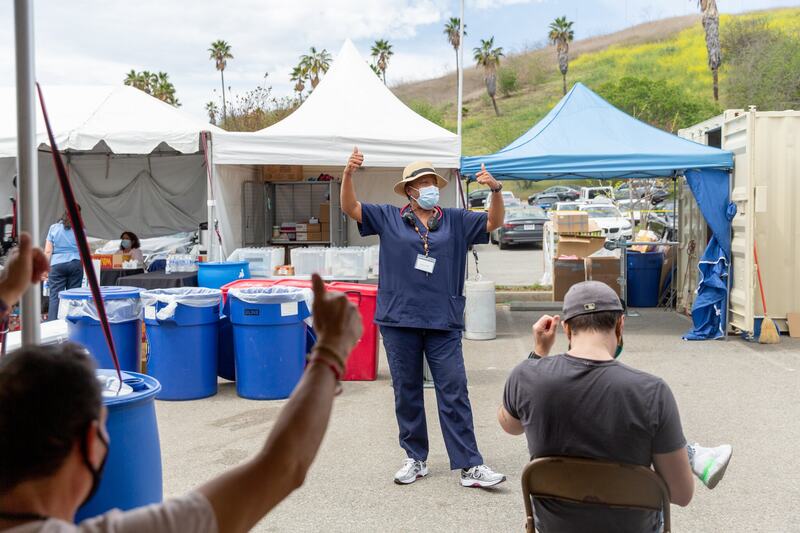
On Tuesday afternoon, Mr. Biden will travel to Alexandria, Va., to tour a vaccination site at the Virginia Theological Seminary. Later, at the White House, he will deliver remarks emphasizing recent successes, including the milestone of delivering four million vaccinations in one day over the weekend.
More than three million doses are now being given on average each day, compared with well under one million when Mr. Biden took office in January, according to the Centers for Disease Control and Prevention. Every state has now given at least one dose to a quarter or more of its population. About 62.4 million people — 19 percent of Americans — have been fully vaccinated.
On Monday, Gov. Larry Hogan of Maryland announced that all Maryland residents 16 or older would be eligible from Tuesday for a shot at the state’s mass vaccination sites, and starting April 19 at any vaccine provider in the state.
Also on Monday, Gov. Philip D. Murphy of New Jersey and Mayor Muriel Bowser of Washington, D.C., said residents 16 or older would be eligible on April 19.
Gov. Kate Brown of Oregon announced Tuesday that all Oregonians over the age of 16 were eligible to receive a vaccine. The state had been limiting the doses to those with underlying conditions and frontline workers.
That leaves one state, Hawaii, keeping to Mr. Biden’s original deadline of May 1.
In Hawaii, 34 percent of residents have received at least one dose. Alabama has vaccinated the lowest proportion of its residents, at 25 percent.
Along with dangerous coronavirus variants that were identified in Britain, South Africa and Brazil, new mutations have continued to pop up in the United States, from California to New York to Oregon.
The shots will eventually win, scientists say, but because each infection gives the coronavirus a chance to evolve further, vaccinations must proceed as quickly as possible.
For now, however, cases are rising sharply in parts of the country, with some states offering a stark reminder that the pandemic is far from over. Yet again, governors across the country have lifted precautions like mask mandates and capacity limits on businesses.
-
2021-01-19
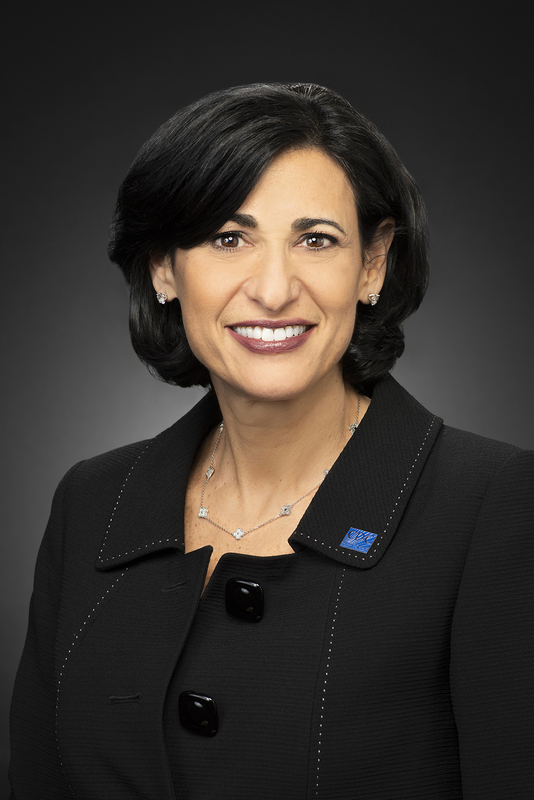
As Rochelle Walensky, MD, MPH, prepares to assume the role of CDC director on January 20, the former professor of medicine at Harvard Medical School and infectious disease physician at Massachusetts General Hospital and Brigham Women’s Hospital faces a myriad of challenges wrought by the ongoing coronavirus disease 2019 (COVID-19) pandemic.
January 21st marks the 1-year mark since the first case of COVID-19 was reported in the United States, while current data indicate the country has surpassed 400,000 deaths. In comparison, the 1918 flu pandemic took 675,000 American lives, while the US reported a total of 405,000 fatalities during World War II.
Even at the unprecedented speed with which pharmaceutical companies have developed vaccines for COVID-19, rollout has been fragmented at the state level while racial disparities in administration rates are beginning to become apparent.
In an effort to improve the national rollout of COVID-19 vaccines, Walensky plans to increase the CDC’s communication to combat any hesitancy in receiving the vaccine, and indicated she wanted to increase media appearances above those made by current director Robert Redfield, MD, who departs with any remaining Trump administration officials Wednesday. She said making sure science-based communication is effectively disseminated to the public in layman’s terms is a top priority.
“Science is now conveyed through Twitter. Science is conveyed on social media, on podcasts, and in many different ways. And I think that's critical,” Walensky said during a livestreamed interview with JAMA's Howard Bauchner, MD, the journal's editor-in-chief. When confronting vaccine hesitancy or anti-vaxxer sentiment on social media, “There's just this massive void and the right information, I think, is not getting out there… I want to make sure that the science is conveyed. We have to say it to one another. We have to say it to the public. And then we have to say it in other forms.”
Internally, Walensky hopes to bolster the voices of scientists already employed by the CDC. Under the Trump presidency, “they have been diminished. I think they've been muzzled,” Walensky said. “This top tier agency—world renowned—hasn't really been appreciated over the last 4 years, and really markedly over the last year. So I have to fix that.”
Although some states have been widely successful in administering the allotment of COVID-19 vaccines they were given, many have reported roadblocks. Part of the Biden administration’s plan to enhance rollout is to expand vaccine allocation to 4 key locations: federally qualified health centers, community vaccination centers (ie, stadiums), mobile units, and pharmacies.
“Part of the challenge with COVID-19 was that we had a frail public health infrastructure to start. It wasn't ready to tackle what it was given,” Walensky said. As director, she hopes to bring this reality to Congress’ attention. “We're in this because we had warnings for many, many other public health scares in the last 20 years and we didn't fix our public health infrastructure and our data infrastructure,” in response to those tests.
In order to meet President-elect Biden’s goal of 100 million vaccinations in 100 days, the constraints currently faced by federal and state governments need to be mitigated. “We have to titrate our supply and our eligibility so that we somehow hit the sweet spot, wherever it is we are, with how much supply we have and how many people are eligible,” Walensky said.
While the CDC set the initial guidelines for vaccine eligibility and revised them this month, the Trump administration left actual rules and distribution processes to states, resulting in wide variation across the country. Some states adopted stricter standards that led to the waste of vaccines, while loose adherence has led to long lines and confused residents.
Expanding the population of those eligible to administer the vaccine can also help alleviate these roadblocks. These individuals can include retirees, the Public Health Commissioned Corps, medical military, upper level medical and nursing students, dentists and veterinarians.
Increasing both the number of vaccination sites and vaccinators will also help address the equity problems brought to light by the pandemic. “We want to make sure that we can deliver volume, but also volume to the people in places that might be harder to reach.” In a collaborative approach, the federal government will step in at a state-by-state level and offer help based on each state’s unique challenges, Walensky said.
-
2020-12-31
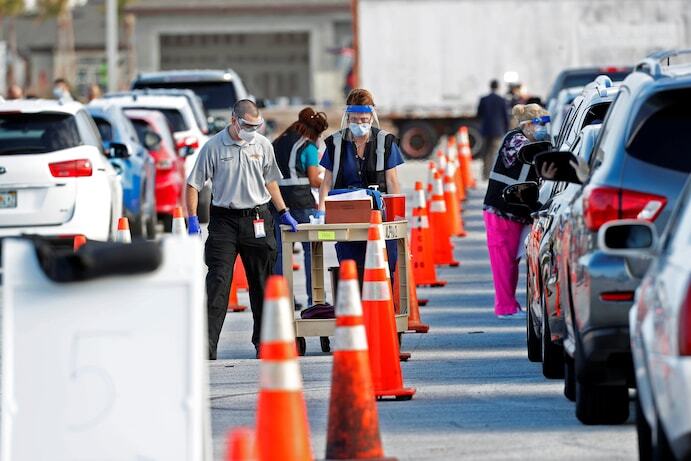
Logistical problems at the heart of the federal government’s faltering rollout of coronavirus vaccines came into sharper view Thursday as the Trump administration fell vastly short of its goal of delivering an initial shot to 20 million people by the end of December.
On the final day of a bleak year, only about 2.8 million people had received the shot, according to the Centers for Disease Control and Prevention — the first of two doses needed to provide immunity to the virus. Around 14 million doses had been distributed as of Wednesday, according to Gustave Perna, chief operating officer of Operation Warp Speed, and a total of 20 million doses have been allocated.
Though the figures are an underestimate — data collection on vaccinations has lagged — the doses administered so far represent just a small fraction of the ambitious targets outlined by officials from the administration’s Operation Warp Speed program in the fall.
“We’d have liked to have seen it run smoothly and have 20 million doses in to people today, by the end of 2020, which was the projection,” Anthony S. Fauci, the government’s leading infectious-disease expert, said in an interview with NBC’s “Today” show on Thursday. “Obviously it didn’t happen, and that’s disappointing.”
Nationwide, states and health-care providers continued to grapple with unpredictable timelines for when new vaccine shipments would arrive and in what quantities, while chronically underfunded public health departments struggled to muster the resources to carry out mass injections of front-line workers and vulnerable people.
Fauci said that he hoped momentum for vaccinations would build in the first weeks of the new year and bring the country closer to its immunization goals.
“But there really has to be more effort in the sense of resources for the locals, namely the states, the cities, the counties, the places where the vaccine is actually going into the arms of individuals,” he said. “We have to support the local groups, the states and the cities to help them get this task done, which is a very prodigious task.”
Under the Trump administration’s plan, the federal government supplies vaccines to states but leaves it to state officials to prioritize residents, send doses to providers and get shots into people’s arms.
The approach — as well as a litany of logistical problems — has caused a varied distribution effort. Local health departments and hospitals tasked with administering the vaccines have complained that they do not know when shipments will come or if they will receive additional resources, said Oscar Alleyne, and epidemiologist and chief of programs and services for the National Association of County and City Health Officials, which is made up of about 3,000 local health departments.
“Some health departments have only received vaccines as recently as this week,” Alleyne told The Washington Post. “I had one health department that told me they had received their vaccines the day after Christmas.”
Alleyne compared the communication concerns to those that cropped up during the H1N1 pandemic in 2009, when unclear guidance hampered efforts to get the population vaccinated.
“It really boils down to ensuring a very transparent process,” Alleyne said.
“There will always be a lag between the doses allocated and those shipped; between those shipped and those administered; and between those administered and those reported to CDC as administered,” Michael J. Pratt, a spokesperson for Operation Warp Speed, said in a statement. “We’re working to make those lags as small as possible.”
At the Texas Medical Center, the largest medical complex in the world, the approach has already created logistical challenges. Hospital officials on the campus in south Houston often don’t know exactly when to expect new shipments or precisely how many vials they’ll receive, according to Bill McKeon, the center’s chief executive officer. That leaves the center with just a couple days’ worth of vaccine inventory on hand at a time, he said.
“At best, we hear estimates. It’s a day-to-day situation,” McKeon told The Post. “We hear that we may be getting more next week but we’re not sure.”
To date, the center has administered the first of the two injections to about 60,000 people, averaging more than 4,000 a day, according to McKeon. That includes some of the center’s 120,000 employees, as well as patients with underlying conditions who are first in line for inoculation. But it’s only a tiny portion of the sprawling metropolitan area the center serves.
Until hospital officials can better predict how many vaccine doses they’ll have available week after week, McKeon said, vaccinating more people, faster, will be an uphill battle.
“You can’t do scheduling with a couple days of inventory. We wouldn’t put a patient through the process of coming to the hospital, leaving their home, and then say, ‘Sorry we don’t have the inventory,’ ” he said. “We can’t be bold and just say, ‘Let’s do ten thousand a day.’ ”
McKeon called on the federal government to take a more active role, possibly offering more large-scale vaccination centers, and relieve pressure on state officials, whom he said were “rowing in the same direction” as providers. There will be a growing need not just for more health-care workers to give the shots, he said, but for people who can perform the administrative work of calling patients, verifying their personal information and signing them up for injections.
“I’m not seeing the grand strategies on a national basis, and I’m concerned, because this is a war,” he said. “Every day that we delay on some of those grander strategies we’re going to see losses of life.”
As the distribution of vaccines has proceeded in fits and starts, coronavirus deaths and hospitalizations have soared to new heights. More than 125,000 people around the country were in hospital beds battling covid-19, the disease caused by the virus. Hospitalizations have exceeded 100,000 since Dec. 2.
The nation on Wednesday also recorded a record 3,862 deaths in a day. The previous record, set on Dec. 17, was 3,406.
New daily reported cases were trending upward again, after dipping during the week of Christmas. Family gatherings and spikes in holiday travel make it all but certain that the new year will bring yet another wave of infections.
Compounding fears about the accelerating virus spread, a new, more transmissible variant of the coronavirus has cropped up in multiple U.S. states after circulating in the United Kingdom.
The presence of the mutated pathogen only added to the need for vaccinations to ramp up quickly, said Scott Gottlieb, former Food and Drug Administration commissioner.
“The Covid vaccine could be a tool to help reduce the impact of current wave of epidemic spread,” he tweeted Thursday. “But we’re largely missing the narrow window we had to deploy it rapidly enough to alter the present trajectory of death and disease in January. The new variant makes this more urgent.”
Clarification: This story has been updated to cite Operation Warp Speed’s distribution numbers. It has also been updated to note that Operation Warp Speed has allocated 20 million vaccine doses to states.
-
2020-12-14
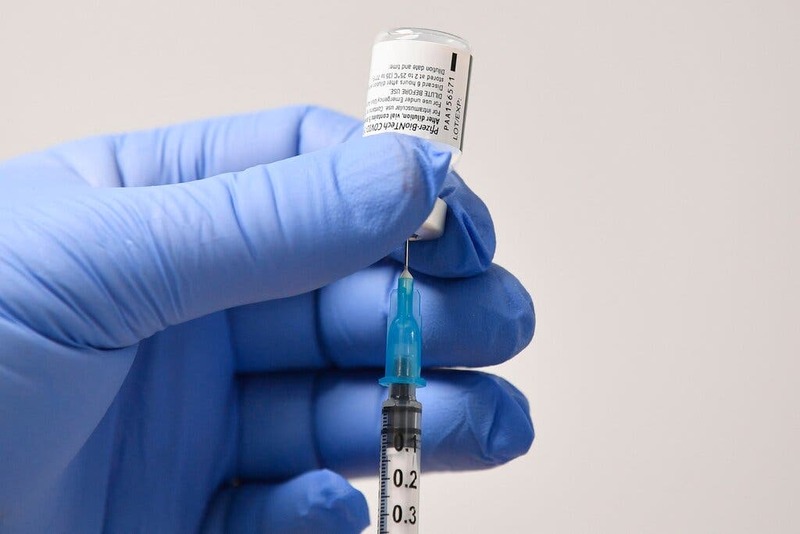
The Food and Drug Administration authorized Pfizer’s Covid-19 vaccine for emergency use on Friday, clearing the way for millions of highly vulnerable people to begin receiving inoculations within days.
The authorization is a turning point in a pandemic that has taken more than 290,000 lives in the United States. With the decision, the United States becomes the sixth country — in addition to Britain, Bahrain, Canada, Saudi Arabia and Mexico — to clear the vaccine. Today, we ask the science and health reporter Donald G. McNeil Jr. what might happen next.
-
2021-01-10
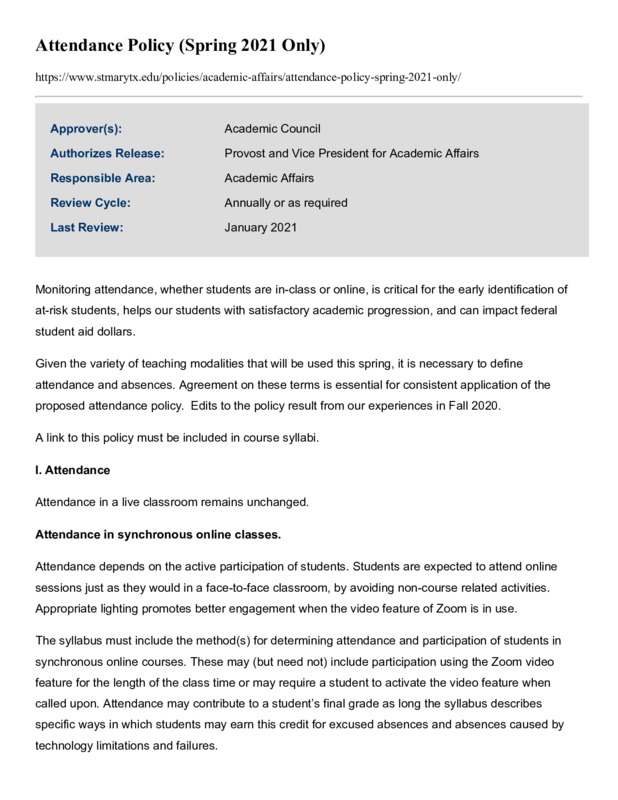
Students slowly began to return to campus and in-person classes as we moved into the second full semester during COVID. While policies were still place for things such as masks and attendance, they became more lenient as COVID “lessened.” This goes to show how difficult it could have been for the people in the positions to make these decisions. Their decisions were based on the new information that was being released by public health officials throughout the pandemic.
-
2020-04-23
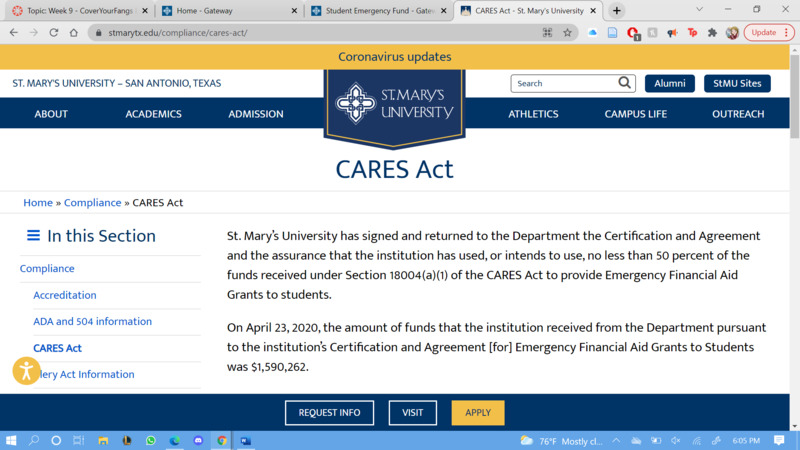
Many students from the start of the pandemic have had to turn to governmental assistance from the CARES act to help pay for their tuition or college-related expenses. This item showcases one of the most prominent government relief programs that were available to STMu students and college students nationwide. This funding was essential for many college-aged students who may not have qualified for the stimulus package or unemployment but who were facing the negative financial effects of the pandemic.
-
2021-04-07
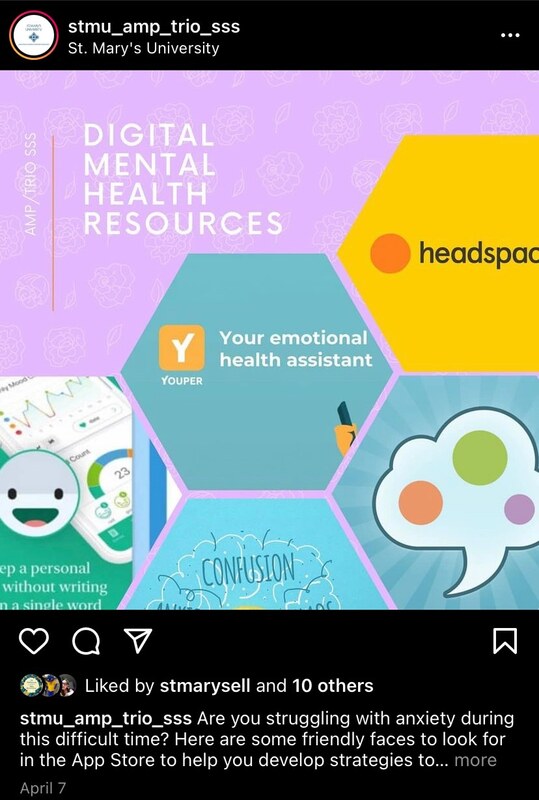
The pandemic was difficult in more ways than one. Health and safety were covered by all news stations, but the deeper hidden pandemic was the struggle of mental health and staying mentally healthy during isolation and lockdown. These screenshots showcase that mental health was an important topic that people were struggling with but the university tried to give help to students and staff that were struggling. This screenshot is important to me because they were resources I utilized that helped me mentally go through the pandemic and I believe deserve more attention.
-
2021-11-01
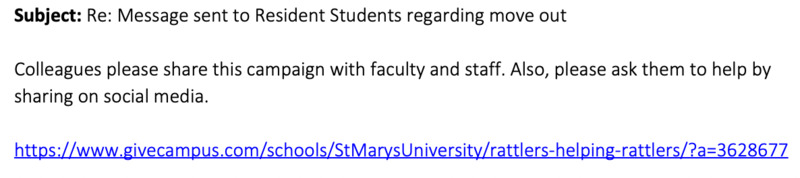
When this series of emails was sent to St. Mary's Faculty and Staff it really hit hard and really touched me. I didn't realize that some students did not have any means of getting back home, students were not prepared for this at all and due to the pandemic all dorms and classes were cancelled, they were worried they would not make it home. So, St. Mary's sent an email out reaching out to everyone that was able to give funds and send students home. When this pandemic hit us no one was prepared for what was to come.
-
2021-11-10
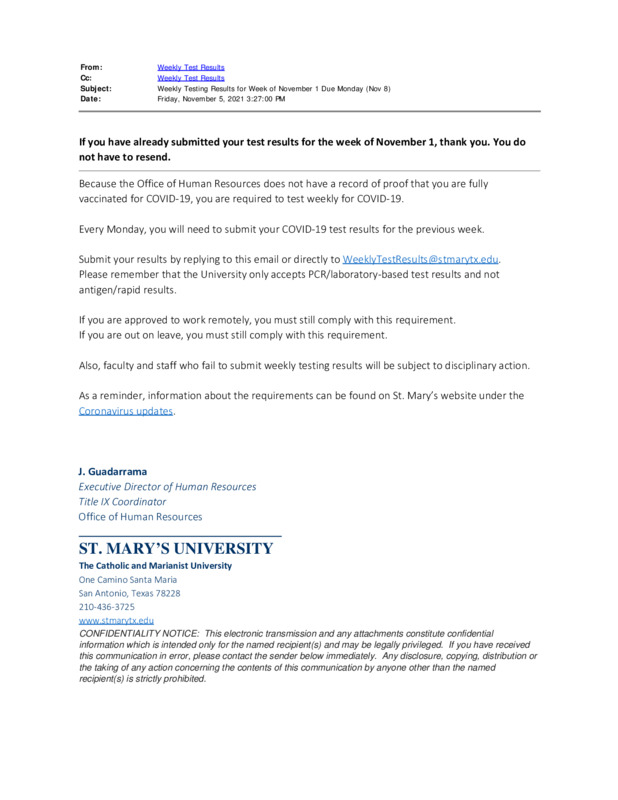
Since the pandemic and everyone returning back to work a vaccine has been provided for everyone to take the vaccine if they choose to. The vaccine is to help with Covid, if received it can help with less symptoms if one happens to catch Covid. At my place of employment we have received emails from HR that anyone who has not been vaccinated must take a covid weekly test in order to ensure we do not have covid and make sure the campus is a safe place to be and ensure that everyone stays virus free.
-
2021-08
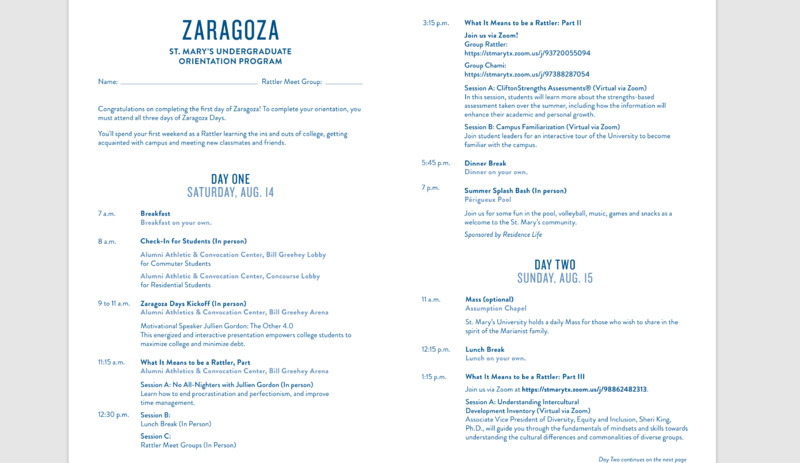
This orientation program shows the different accommodations that have been made to ensure a safe experience during Zaragoza days. Prior to the pandemic, the events scheduled for students would be held in person so that students would have the opportunity to interact face to face and make new connections with other students. However, the Zaragoza days held in August 2021 integrated both in person and online orientation events. This program shows that some of the scheduled events were held on Zoom during different sessions. This was to ensure that students were provided with safe and easy access to learn more about being and undergrad at St. Mary's while not completely limiting their orientation experience by still holding in person events that adhered to Covid-19 guidelines.
-
2021-08
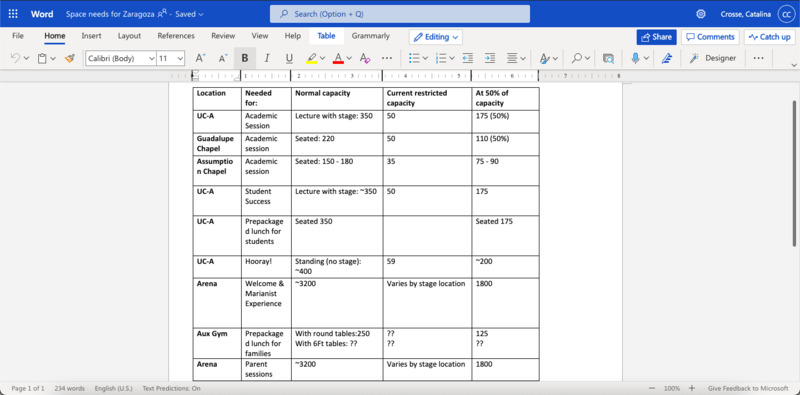
For this item, I wanted to highlight the differences in the Zaragoza student orientation for incoming freshmen and transfer students. This is a program that happens at the beginning of every school year. My class, entering St. Mary's in Fall 2019 was the last class to have a normal experience prior to the pandemic. However, since the pandemic, many operations have had to change to ensure the safety of those involved. The Fall 2020 Zaragoza experience was entirely over zoom. With the school now transitioning back to in person teaching, Zaragoza leaders had to the opportunity and challenge to create a Zaragoza experience like never seen before that provided safe interaction among all students and parents. These screenshots specifically showed a rushed project that needed to be approved in a short amount of time that accommodated both to the universities expectations while following the state's guidelines.
-
2021-11-03
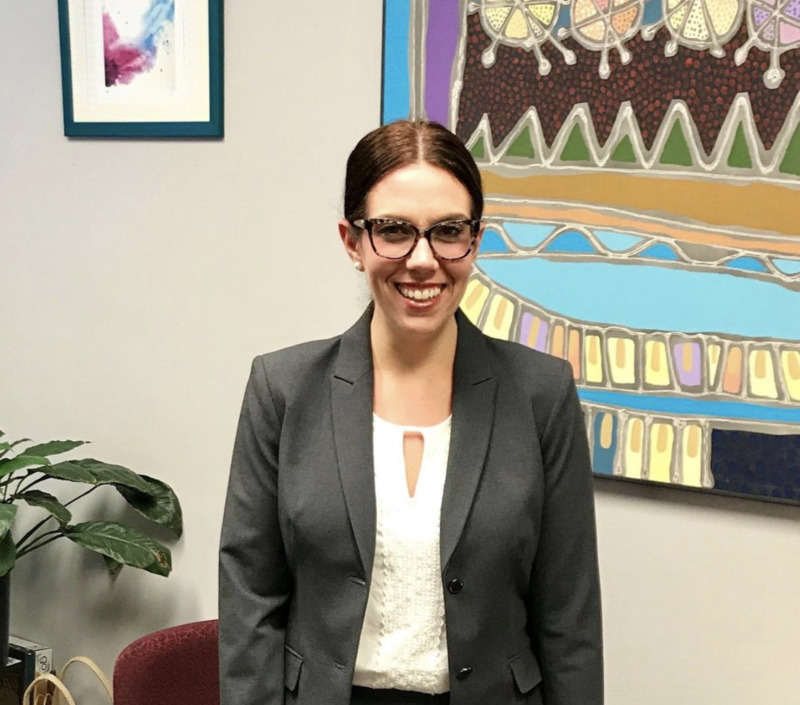
Through this oral history, Clare Acosta and I develop a conversation about both the Community Engagement office work and the program of Empower: Ecuador. The conversation was specifically focused on the before and after of COVID-19 and also what was learned from the process. It is a very deep conversation that I really enjoyed and know that Clare also did.
-
2020-09-14
Pfizer and BioNTech are moving to enlarge the Phase 3 trial of their Covid-19 vaccine by 50%, which could allow the companies to collect more safety and efficacy data and to increase the diversity of the study’s participants.
The companies said in a press release that they would increase the size of the study to 44,000 participants, up from an initial recruitment goal of 30,000 individuals.
The U.S. Food and Drug Administration will have to approve the change before it goes into effect.
“The companies continue to expect that a conclusive readout on efficacy is likely by the end of October,” the press release said. The Pfizer and BioNTech study is likely to be among the first in the U.S. to report efficacy data from a Phase 3 trial.
Related: AstraZeneca resumes Covid-19 vaccine trials in the U.K.
Expanding the trial will likely make it easier for the company to demonstrate whether the vaccine is effective against SARS-CoV-2, the virus that causes Covid-19. The companies also said that the change will allow the study to include a more diverse population. The companies said the study will now include adolescents as young as 16, people with stable HIV, and those with hepatitis C or hepatitis B.
The companies said that the trial is expected to reach its initial target of 30,000 patients next week. Moderna, which started its trial on the same day as Pfizer, said on Sept. 4 that it is working to increase the diversity of trial participants in its study, “even if those efforts impact the speed of enrollment.”
Related: Covid-19 Drugs and Vaccines Tracker
The Pfizer/BioNTech study could finish sooner than Moderna’s, even though the two began on the same day, for other reasons, as well. Both vaccines require a second shot; Pfizer’s is given after three weeks, while Moderna’s is given after four. The Pfizer trial also starts to count cases of Covid-19 sooner after participants receive their shots than the Moderna study.
But the Pfizer/BioNTech vaccine could also prove to be one of the most difficult of the experimental vaccines to distribute, should they prove effective. The vaccine must be kept at a temperature of -70 degrees Celsius.
There has been political pressure to move a vaccine quickly, with President Trump saying that one could be available before election day. Last week, several drugmakers, including Pfizer, issued a pledge not to move a vaccine forward sooner than was justified by the results of their clinical trials.
-
2020-07-14
Moderna Inc’s experimental vaccine for COVID-19 showed it was safe and provoked immune responses in all 45 healthy volunteers in an ongoing early-stage study, U.S. researchers reported on Tuesday.
Volunteers who got two doses of the vaccine had high levels of virus-killing antibodies that exceeded the average levels seen in people who had recovered from COVID-19, the team reported in the New England Journal of Medicine.
No study volunteers experienced a serious side effect, but more than half reported mild or moderate reactions such as fatigue, headache, chills, muscle aches or pain at the injection site. These were more likely to occur after the second dose and in people who got the highest dose.
Experts say a vaccine is needed to put an end to the coronavirus pandemic that has sickened millions and caused nearly 575,000 deaths worldwide.
Moderna was the first to start human testing of a vaccine for the novel coronavirus on March 16, 66 days after the genetic sequence of the virus was released.
Dr. Anthony Fauci, director of the National Institute of Allergy and Infectious Diseases, whose researchers developed Moderna’s vaccine candidate, called the results “good news,” noting that the study found no serious adverse events and the vaccine produced “reasonably high” levels of virus-killing or neutralizing antibodies.
“If your vaccine can induce a response comparable with natural infection, that’s a winner,” Fauci said in a telephone interview. “That’s why we’re very pleased by the results.”
Moderna shares jumped more than 15% in after-hours trading on Tuesday.
The U.S. government is supporting Moderna’s vaccine with nearly half a billion dollars and has chosen it as one of the first to enter large-scale human trials. A successful vaccine could be a turning point for Cambridge, Massachusetts-based Moderna, which has never had a licensed product.
Moderna’s shot, mRNA-1273, uses ribonucleic acid (RNA) - a chemical messenger that contains instructions for making proteins. When injected into people, the vaccine instructs cells to make proteins that mimic the outer surface of the coronavirus, which the body recognizes as a foreign invader, and mounts an immune response against.
The results released Tuesday involved three doses of the vaccine, tested in groups of 15 volunteers aged 18-55 who got two shots, 28 days apart. The groups tested 25, 100 or 250 micrograms of the vaccine.
Adverse events after the second dose occurred in seven of the 13 volunteers who got the 25-microgram dose, all 15 participants who received the 100 microgram dose and all 14 who got the 250 microgram dose. In the highest-dose group, three patients had severe reactions such as fever, chills, headache or nausea. One of these had a fever of 103.28 Fahrenheit (39.6 C).
“We didn’t see any events that are characterized as serious adverse events,” said lead author Dr Lisa Jackson of Kaiser Permanente Washington Health Research Institute in Seattle, referring to reactions that require hospitalization or result in death.
In June, Moderna said it selected the 100-microgram dose for its late-stage study to minimize adverse reactions.
At that dose, Moderna said the company is on track to deliver about 500 million doses per year, and possibly up to 1 billion doses per year, starting in 2021, from the company’s internal U.S. manufacturing site and strategic collaboration with Swiss drugmaker Lonza.
“It’s a good first step,” said Dr William Schaffner, a vaccine expert at Vanderbilt University Medical Center who was not involved in the study.
“There’s nothing here that would inhibit one from going ahead to the Phase 2/Phase 3 trials,” he said.
In April, Moderna expanded the Phase 1 trial to include adults over 55, who are more at risk of serious disease, with the aim of enrolling 120 volunteers. Moderna said it will follow study volunteers for a year to look for side effects and check how long immunity lasts.
Moderna started its phase 2 trial in May and expects to start a phase 3 trial on July 27.
Phase 1 trials aim to ensure a treatment is safe and help determine an effective dose. Phase 2 trials test a treatment in a larger group and get an early read on effectiveness. Phase 3 trials are conducted in a large group of individuals to confirm efficacy and identify rare side effects. Moderna’s Phase 3 trial will be conducted in 30,000 volunteers.
-
2020-05-21
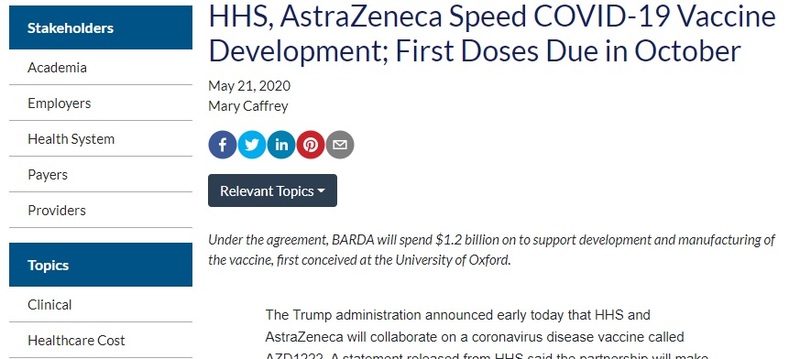
The Trump administration announced early today that HHS and AstraZeneca will collaborate on a coronavirus disease vaccine called AZD1222. A statement released from HHS said the partnership will make “at least 300 million doses” of the vaccine available, “with the first doses delivered as early as October 2020.”
The vaccine is one originally developed at the University of Oxford; the university and AstraZeneca announced a global development agreement for the vaccine on April 30. In its own statement early today, AstraZeneca said a phase 1/2 clinical trial of the vaccine began last month to assess its safety immunogenicity and efficacy in over 1000 healthy volunteers, who are 18 to 55 years of age. These volunteers are all in the United Kingdom. Late-stage trials would begin in several countries based on these results, the statement said.
According to HHS, the agreement between AstraZeneca and the Biomedical Advanced Research and Development Authority (BARDA), an agency within HHS, would essentially kick start manufacturing of the doses while phase 3 clinical studies are under way this summer, involving 30,000 volunteers in the United States. BARDA will spend up to $1.2 billion for research, technology transfer, and scaled-up manufacturing,
Emergency use authorization or licensure from FDA would be needed for the vaccine to reach the public, the statement said. As for the timeline, “Early milestones enable BARDA and AstraZeneca to determine how the program progresses forward.”
“This contract with AstraZeneca is a major milestone in Operation Warp Speed’s work toward a safe, effective, widely available vaccine by 2021,” said HHS Secretary Alex Azar. “Getting a vaccine to the American public as soon as possible is one part of President Trump’s multi-faceted strategy for safely reopening our country and bringing life back to normal, which is essential to Americans’ physical and mental well-being in so many ways.”
“The Trump Administration is making multiple major investments in developing and manufacturing promising vaccines long before they’re approved so that a successful vaccine will reach the American people without a day wasted,” Azar said.
Besides the BARDA agreement, AstraZeneca said it has reached deals with the Coalition for Epidemic Preparedness Innovations (CEPI), the Vaccine Alliance and the World Health Organisation (WHO), to ensure the fair allocation and distribution of the vaccine around the world. AstraZeneca is also in discussions the Serum Institute of India and other potential partners to boost production and distribution.
AstraZeneca also holds a major stake in Moderna Therapeutics, which announced earlier this week its experimental vaccine had produced antibodies in small group of healthy volunteers.
-
2020-01-30
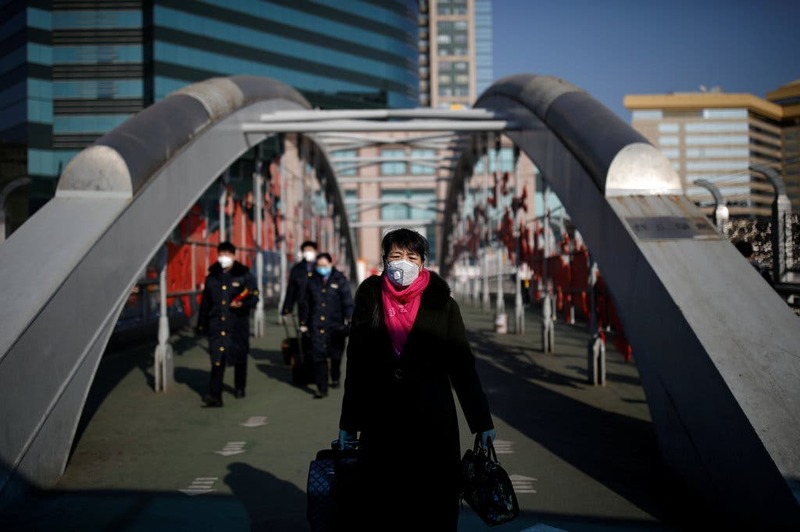
The World Health Organization declared a global health emergency on Thursday as the coronavirus outbreak spread well beyond China, where it emerged last month.
The move reversed the organization’s decision just a week ago to hold off such a declaration. Since then, there have been thousands of new cases in China and clear evidence of human-to-human transmission in several other countries, including the United States.
-
2021-08-17
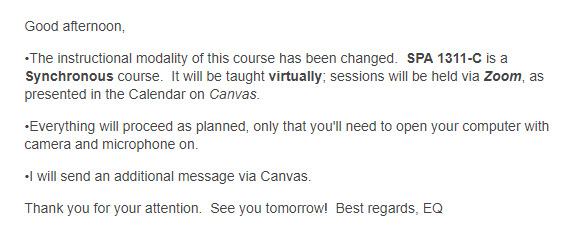
For Fall 2021, some teachers gave the option to zoom into class for students who were not comfortable being present in person. Out of my five classes, only two had this option specifically stated. I planned to attend all classes in person but the day before class was due to start one teacher switched to remote only. Initially, I was okay with it. It was the first class of the day so maybe I wouldn't have to get up so early. Then I realized I would have to wake up early anyway. The class after the remote one was ten minutes after. I would of had to rush even if the class was on campus. Situations like these showed that things were even unexpectedly changing for teachers. While the situation may have slightly inconvenienced me, I'm sure it wasn't ideal for the teacher either.
-
2020-07-25
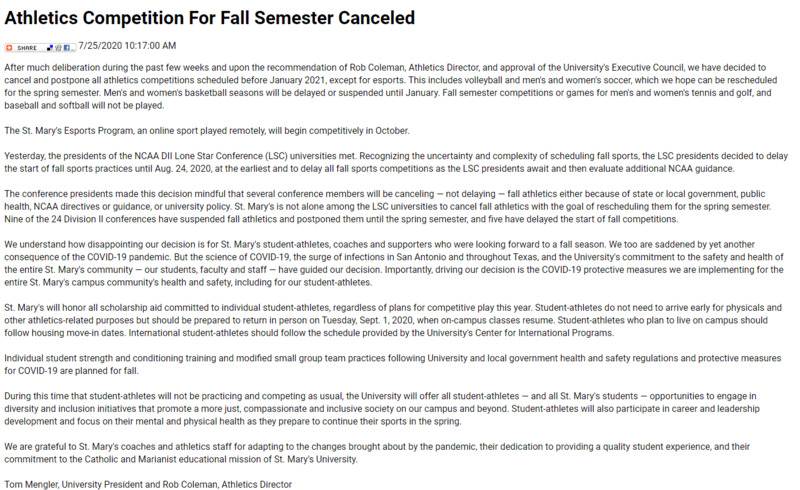
Athletics has always been a big part of bringing together a school's community. It's an important aspect for not just the athletes but also the supporters. The complete cancellation of sporting events can be a jarring disruption to a school's morale and spirit. The rising of popularity of esports and competitive videogames though has been helpful in keeping people connected. Though physical, in person sports have been cancelled, classmates can still keep in touch with each other through their school's team by playing and watching the school's online games. The St. Mary's esports team has provided a way for people for people with similar interests to meet without actually ever seeing each other in person. A placement on the team isn't even necessary. Videogames have been an important outlet for me in the pandemic to keep me mentally happy. The closure of many places and the inability to see certain people in real life has made me rely on them instead.
-
2021-10-26
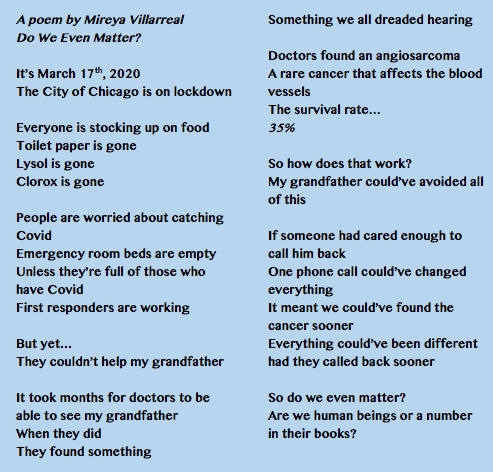
This poem talks about the failure of our medical field when it came to covid. They focused more on those with Covid than those who were struggling with cancer. My grandfather became one of those victims.
-

2020-10-20
Article regarding virtual Indigenous People's Day.
-
2021
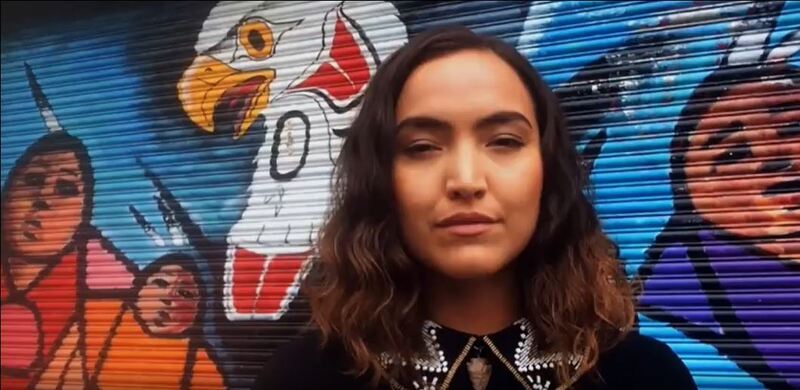
This is a video on being Indigenous by CBC News.
-
2021-10-09
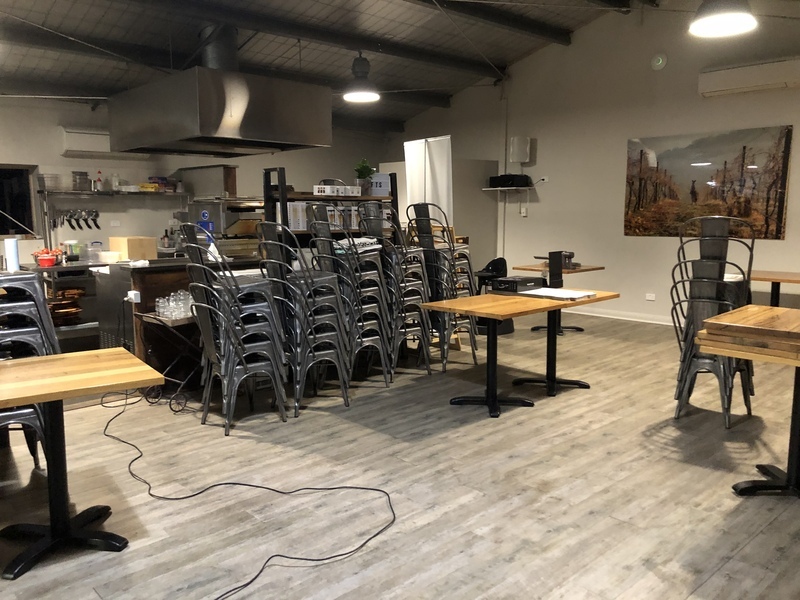
My parents own a small restaurant, and as such, were largely impacted by Melbourne’s various lockdowns. The restaurant is located on the outskirts of the Yarra Valley, in a peri-urban region known for tourism. As such, the location of the restaurant is isolated from major townships and shopping complexes. We were open for takeaway at the start of the pandemic, however when the 5km rule was introduced (in metropolitan Melbourne residents were only allowed to travel a maximum of 5km from home) it meant that only our very near neighbours were permitted to pick up takeaway; remaining open was thus unviable. As we transition into a post-COVID world, my Mum – the manager – in consultation with other local restaurant owners has reflected on common anxieties about the spread of COVID-19 and the process of verifying/mandating that each customer is double vaccinated (as per state government legislation). Will we receive resistance from anti-vaxxers? Will these rules impact how many customers we receive? There are many unknowns. Pictured is the interior of the restaurant – which has been packed up for nearly a year now – and our check-in QR code which customers must scan before entering.
-

2021-06-06
Exercise became a large part of my life in the pre-pandemic world. It assisted me in maintaining good mental and physical health whilst I navigated university life, work life and social life. I signed up to a gym and regularly attended group fitness sessions. Having found this therapeutic outlet, my anxiety flared up when gyms were closed at the start of the pandemic. I think that many people, like me, would have struggled with the inability to undertake their fitness regimens – for social, physical or mental health purposes – during the pandemic. My Dad was also one of these people – he went out and bought a home gym for us to use (which we crammed into our spare room). In 2021, I thought the pandemic was over, however was still very appreciative of the set of dumbbells I received for my birthday. Sure enough, we were back into a lockdown soon after. Thank goodness for those dumbbells – they’ve kept me sane, more than I’d like to admit!
-
2021-09-10
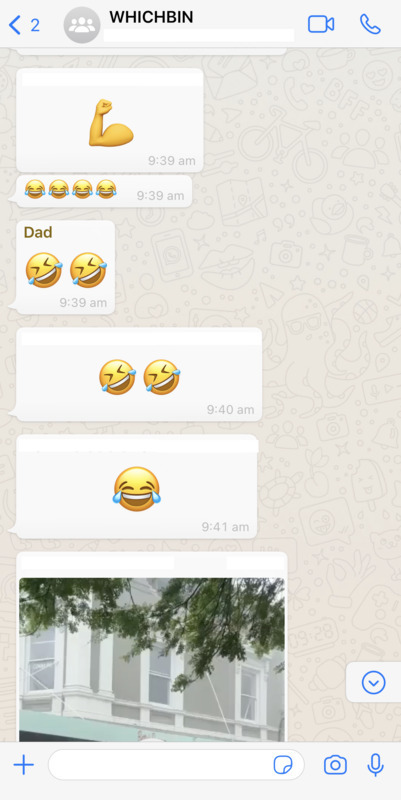
Lockdown shifted the nature of community dynamics in our local area. We live in a peri-urban region on the outskirts of the Yarra Ranges; as such, neighbouring properties are separated by large swathes of Australian bush. This can be isolating at times; it’s very different to suburban living. Our street (which spans about 7kms) and adjacent streets have a WhatsApp group chat named ‘Fireguard’, which allows residents to share information about fire safety, planned burn-offs and emergency warnings. However, during lockdown the chat was increasingly used for the purposes of socialisation. Suddenly, distant neighbours began sharing jokes and engaging in conversations about lockdown living, through the chat. The chat became a site of social interaction that the members of our area probably didn’t realise they needed, until they did. We eventually decided to create a separate chat for general/social purposes only, the title ‘WHICHBIN’ constituting a friendly inside joke about one particular chat member who never fails to ask, “which bin?” she needs to put out for collection each week.
-
2020-12-18
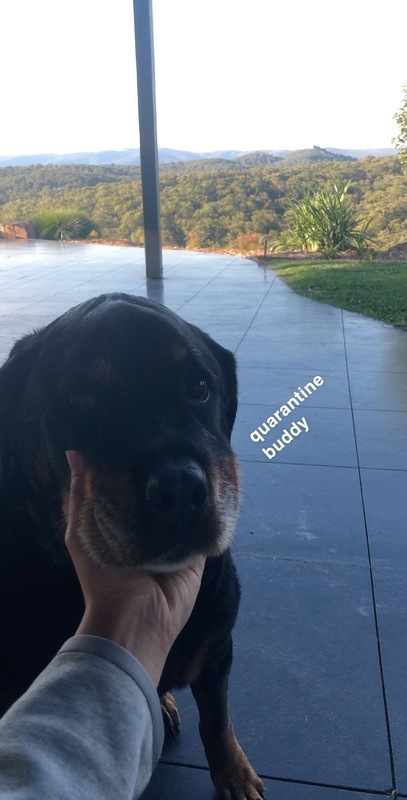
State-sanctioned restrictions changed the way in which individuals/groups were able to process emotional experiences, such as grief. Our family dog –Bonnie – was a saving grace during lockdown. She was my “quarantine buddy” and made each day a little brighter. My family went through a tough time around Christmas; Bonnie was becoming progressively sicker, and we had to make the decision to put her down. When we arrived at the vet clinic, we discovered that our family who had attended – Dad, Mum, my brother, myself and my grandparents – could not all wish her farewell together; only two of us were allowed in the waiting room with Bonnie at once, due to COVIDSafe density limits. My parents went in together, and then my grandparents, and then my brother and myself. I’m glad that my brother and I got to share the experience of saying goodbye together; Bonnie was a fundamental part of our childhoods, thus we shared a similar type of grief. However, the ability to farewell this member of our family as a family unit was impacted by COVID-19. Pictured is a “Snapchat” of Bonnie that I sent to my friends, and a picture of her at the clinic.
-
2021-05-06
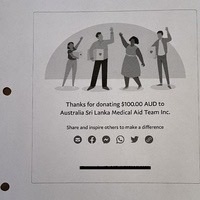
Through discussions with my grandmother, I reflected on an interesting intersection between the impact of the lockdown on both older Melburnians and faith communities. My grandmother is a practising Buddhist; a key annual ritual that was unable to be undertaken in 2021 was the commemoration of my grandfather’s death anniversary, typically observed by preparing food and inviting friends and relatives to our home for a ceremony (known in Buddhist ethics as sharing ‘merits’ with the deceased to send them good fortune). As this gathering was not permitted, my grandmother shared ‘merits’ with my grandfather by instead donating to a charity; I think that such as example highlights the mediation between religious practices and natural sciences, in the context of this health crisis. Pictured is the receipt from my grandmother’s donation; sharing her wealth by committing this good deed was important to her during this time.
-
2020-03-27
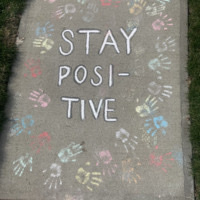
During the height of the pandemic and quarantine, my family and I spent hours a day walking. We would walk through our neighborhood, the Metroparks, and we would find new trails and paths. One day they made an announcement that the country would be in quarantine for another month. my family and I were concerned and didn’t know what to expect. We were thinking how much longer can this be, what is our world coming to, and will everyone stay safe. we were unsure of our future. we decided to take a walk to clear our minds. During the walk, we came up to sidewalk chalk that said be positive with handprints, hearts, and other creative designs. It was a young girl who was designing these patterns and quotes and it made us realize that we need to stay positive during these tough times. It was a day we all remember during quarantine.
-
2021-11-03
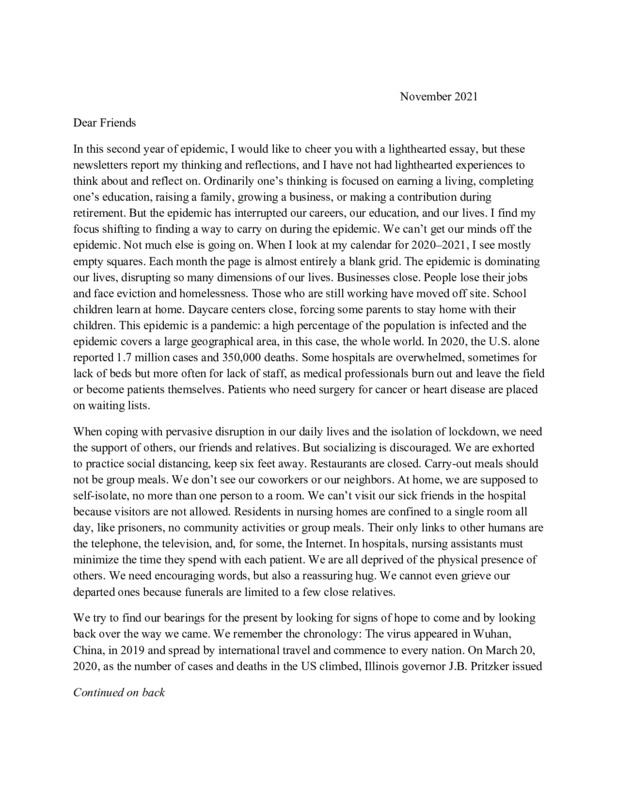
At the holidays I send a newsletter about whatever I have been thinking that year. This year and last the newsletters were about the epidemic. I was looking for examples in history to help us see today how we could cope with the disruption of our lives.
-
2020-09-14
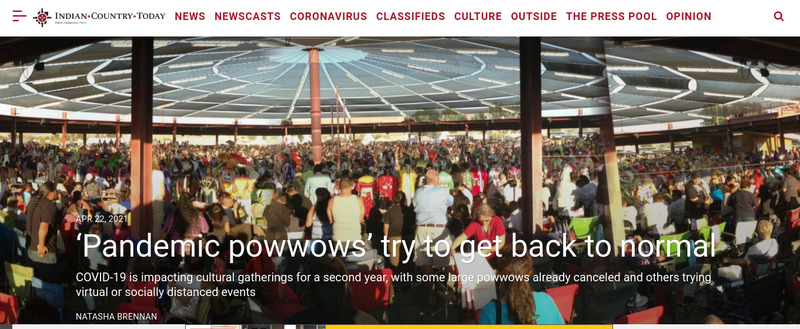
Every year as a tradition Tribes of Native Americans gather to celebrate through song and dance at events known as Pow Wows. These events reinforce long-honored traditions, the most important being unification. The Pow wows allow for the togetherness of the people and the connectedness of the tribes. Covid -19 brought an abrupt halt to that for hundreds of indigenous tribes across the U.S and Canada. As a result, the only way to share some of these meaningful traditions was to offer a virtual option. While not the same it did allow for some of the singing and dancing competitions to take place. The long-term after effect though is that not having the in-person Pow Wow resulted in a significant loss of revenue for those tribes that were hosting the event. Pow Wows bring in significant revenue from vendors and non-indigenous spectators. This loss has had a trickle-down effect on the indigenous communities making it more difficult to endure the pandemic. As a parent of a Northeastern student, not having the ability to have my daughter physically share in the in-person powwows is disappointing. Pow wows are more than just celebrations they are an opportunity to connect with your identity and heritage-which is vital for the younger generations.
-
2020-03
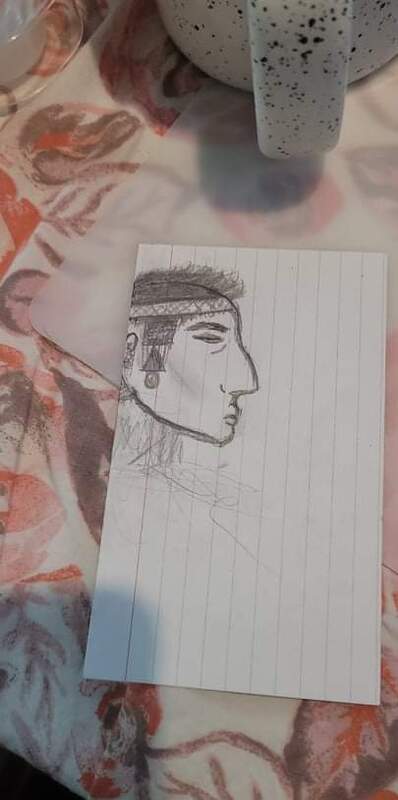
I am a Game Art major at Full Sail University, but my sister goes to Northeastern University, so we are a Northeastern family. I am of Mayan descent, so living through COVID-19 was a little scary because we got all the news and updates about how COVID-19 was ravaging Mayan communities in Guatemala. We live in the USA in a rural area, so we were a little "safer," but the fear remained. I am proud of my people and my heritage, and I don't doubt our ability to survive the pandemic. Here is a quick sketch I made.
-
2020-06-30
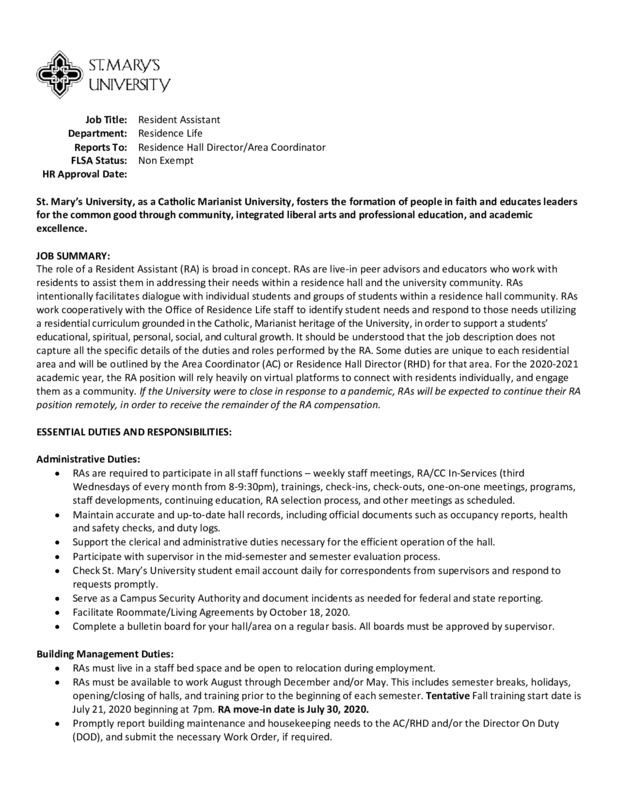
After being sent home during Spring 2020 the Office of Residence Life changed the way it functioned. With that, student staff like resident assistants also had to change how they did their jobs. Creating community, health and safety checks, and engagement opportunities were all completed virtually. As many discovered, going to college via zoom came with many difficulties. What about when campuses were opening back up? What about the uncertainties regarding the growing pandemic after Spring 2020? In preparation for Fall 2020 and anticipation of re-opening residence halls, policy changes were made. Students were also asked to join the "Protect St. Mary's Pledge", a commitment to holding ourselves and our community accountable, ensuring we take the necessary precautions and follow policy. The Office of Residence Life and resident assistants were at the forefront of enforcing these new policies and keeping dorm halls safe. Resident assistants played a significant role in trying to make campus and residence life a bit normal again by creating community and engaging with residents, this time while taking covid-19 precautions. In a time of great transition and uncertainty, resident assistants served as student health ambassadors and vessels for the University's mission and policies.
-
2021-04-25
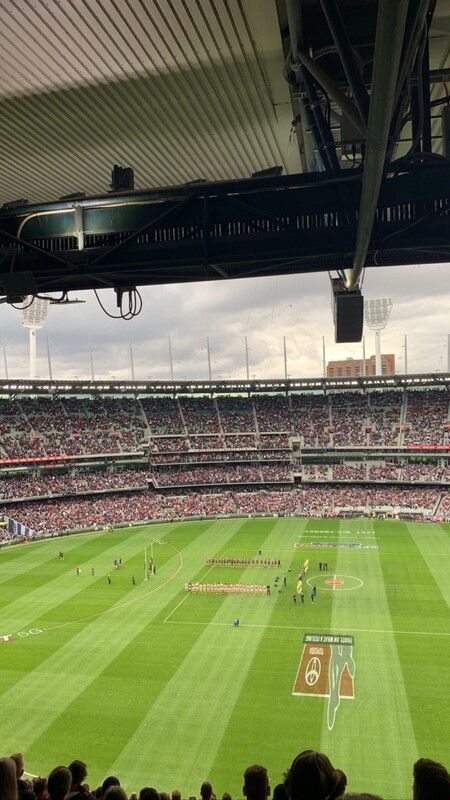
This is an image from the Anzac Day match at the MCG on the 25th of April 2021. Returning to the MCG for AFL matches was one the more ‘normal’ things we could do at the start of the year. When this game was held, it was the largest crowd recorded at a sporting event in the world. The Anzac round is my favourite round of the year and it felt amazing that footy was back and Melbourne was covid free. A couple weeks later the AFL team I support - the Collingwood Magpies - saw its lowest ever recorded attendance at the MCG since 1940, as AFL returned, many of their supporters chose not to attend games, this may be due to how our team was performing or the capacity limits. Just looking back at this photo in lockdown makes me question how we thought we were ‘back to normal’ at the start of the year, when we were so far from it.
-
2021-09-09
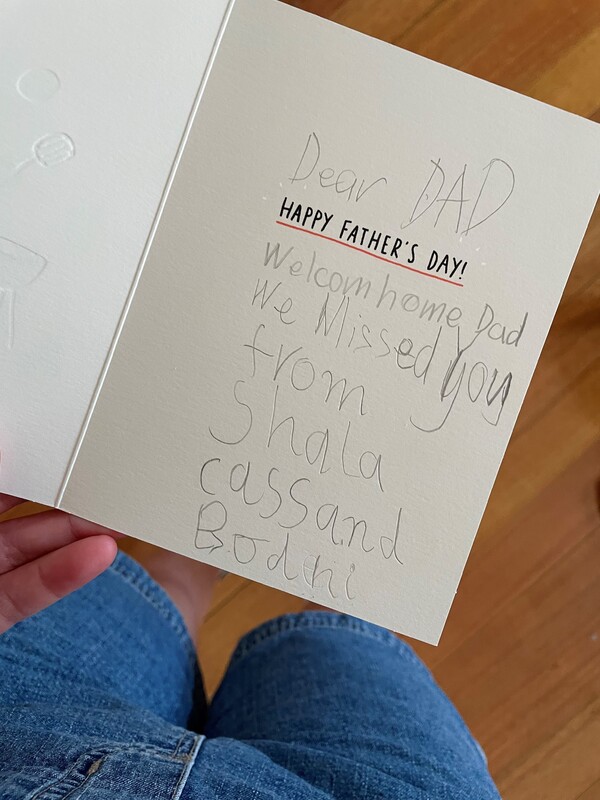
This is a card my siblings and I wrote for our dad. In September my father was sent into emergency as he had to have a quadruple bypass. It was rather scary as no one could visit him whilst he was recovering. We are extremely lucky that his surgery got pushed forward by his cardiologist as now our public healthcare system is now struggling and surgeries like what my dad had are being postponed. His surgery was even postponed as another cardiology ward in a nearby hospital had a covid outbreak so the nurses and doctors at his hospital had to work over there. My dad came home a couple days after Father’s Day (it was the first Father’s Day we didn’t spend with him in our lives) and is now feeling so much better. The first thing he told me when he came home was that he “never wants to get covid” because he was on a ventilator, and it was “the worst part” of the whole experience. I genuinely thought he was on the ventilator for a day or multiple days as he didn’t stop complaining about how bad it was - turns out he was only conscious with the ventilator in him for just under an hour.
-
2021-09-19
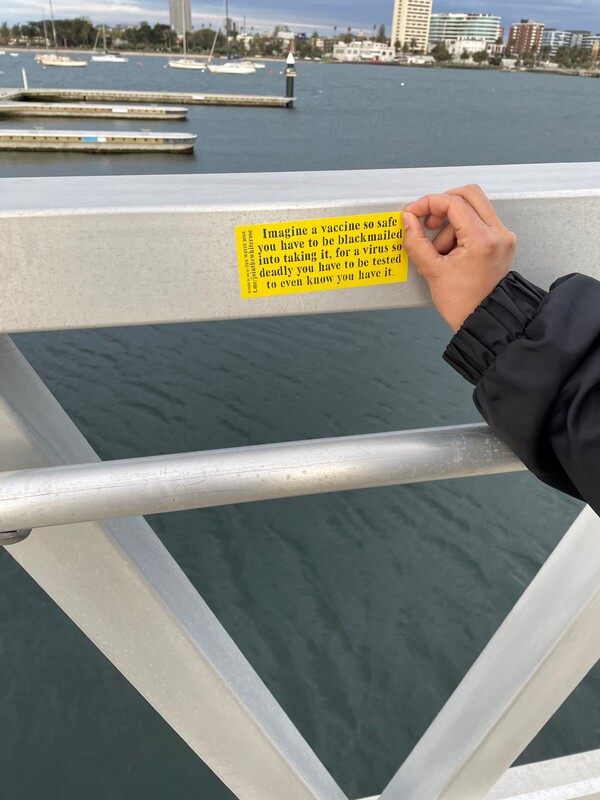
This image I took down the St. Kilda pier. Someone had left various stickers that spread misinformation about covid, lockdowns and the vaccine. My friends and I decided it was best to remove these stickers as they are quite harmful. Living in Melbourne it has been so tiring watching ‘freedom protestors’ and people from far-right groups constantly spread misinformation and attend protests during stage 4 lockdowns (where we can only leave the house for the essentials). The fear-mongering these groups do its quite upsetting as I’ve seen my friends and some distant family members share their information on social media. The ‘anti-vaxxers’ and covid deniers even compare wearing a mask, getting vaccinated and being in lockdown to the Holocaust, which is so harmful and upsetting
-
2021-10-21
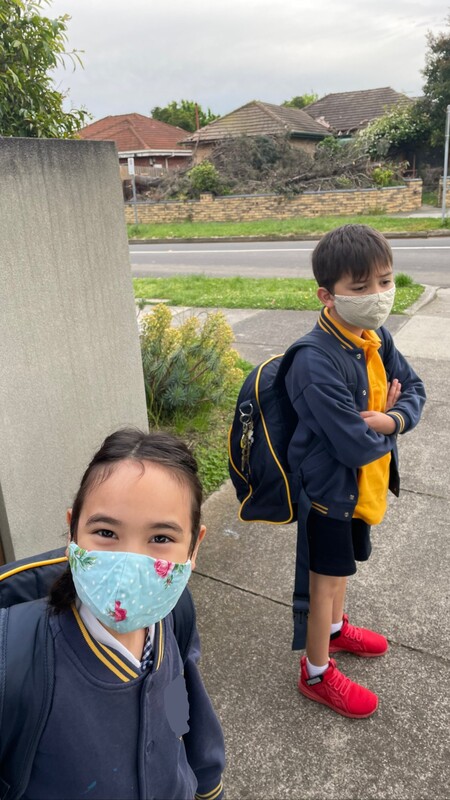
This is an image of my younger siblings on their first day back at school! My sister started her first year of school last year, so her entire schooling experience has been broken up into periods of online learning. Everyone in her grade 1 class is struggling a bit as they haven’t had a proper experience of going to school. It is not mandatory for grades prep to 2 to be wearing face masks in class; however, my brother has been admitted to the hospital a couple of times when he has a bad asthma attack so we’re trying to be as careful as we can. As you can see there are mixed feelings attached to going back to class, both were excited to see their friends and teachers, but will miss spending the whole day at home with dad and me.
-
2021-10-22
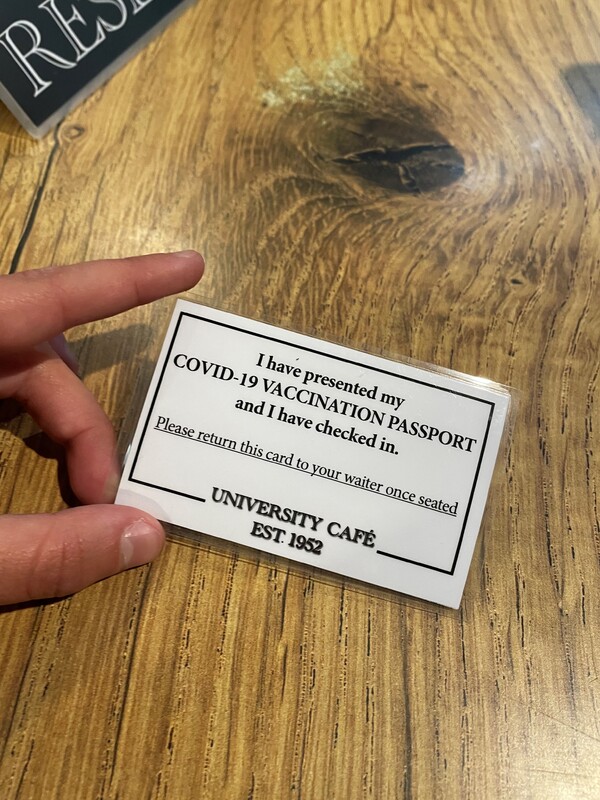
This is an image I took on the first night out of the last Melbourne lockdown! I went to my favourite pasta place in Melbourne for dinner and this was their way of making sure everyone they served was fully vaccinated and checked in. Once checking in the server gave us this little laminated slip we gave to the waiter in return for the menu, this ensured no one had sat down without checking in. In Melbourne, it is mandatory for all hospitality venues to have their staff and customers fully vaccinated.
-
2020-05-01
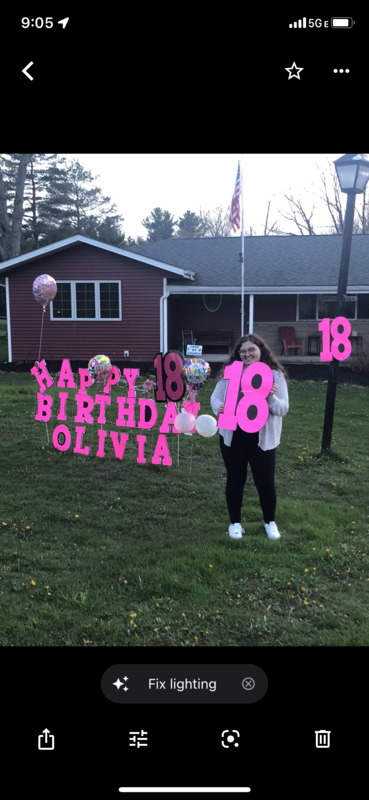
This photo was taken on my 18th birthday, during my senior year of high school. I should have been in school, however the entire world was in quarantine due to the Coronavirus. I had no way of being able to have a normal birthday, so my parents decided to organize a drive through birthday party for me where my friends and family came through in my driveway and waved to me and left gifts. While very unexpected from what I thought my 18th birthday was going to be, I think it shows that despite the conditions, people were loving and passionate enough to participate in something like this for me.
-
2020-03-20
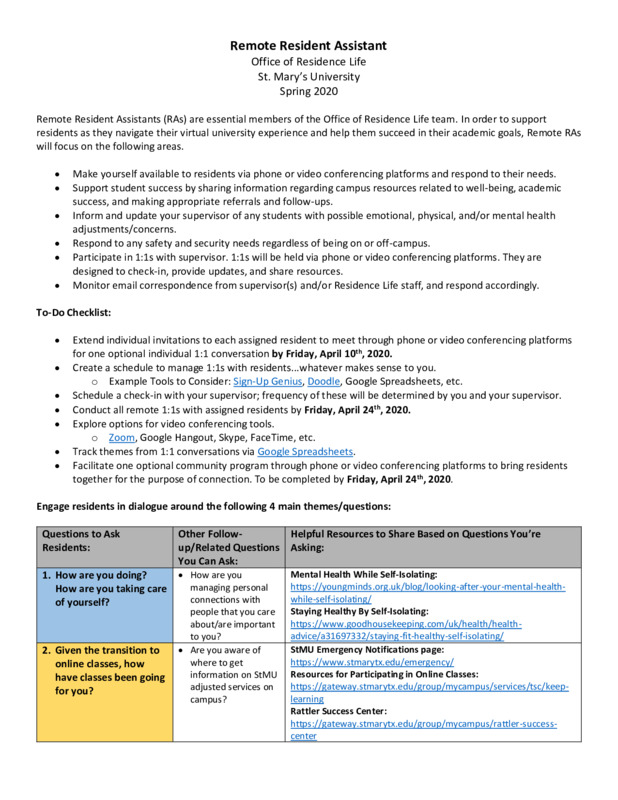
This is a pdf of the resident assistant job description when St. Mary's University decided to go virtual. The described duties of the resident assistant showcase how St. Mary's Residence life was trying to serve students regardless of being off-campus. The job description really shows the sense of community that exists on campus and persevered virtually. As a freshman during Spring 2020, I along with many others, never expected to be sent home. I also never expected an institution to care so much about the well-being of its students especially when the whole world was in chaos at the time. However, as seen here, even student staff like resident assistants reached out and made themselves available to their peers. Resident assistants had 1:1 conversations with residents at home designed to check-in and share resources. Even the resident assistants themselves were required to have one-on-one meetings with their supervisors also to check-in. While student staff was trying to facilitate community and safety virtually, they too were being taken care of by residence life.
-

2020-11-14T06:24:00
Time can only tell what the future holds in front of us. Two years into this pandemic and time had drained, some having more in the hour glass than others. Cherish the times where you are able to do your favorite things with family. When the time strikes, the unpredictable occurs without a warning in sight. Never take advantage of items in your possession. Never make complaints. Never compare your life to others. The human body is unpredictable to even the highest honor of physicians, be attentive towards loved ones. Most importantly, cherish your own circumstances; there will be days of sorrow and days of joy. Live life to the fullest before your time has reached the gotten of the hole.
-
2021-08-21
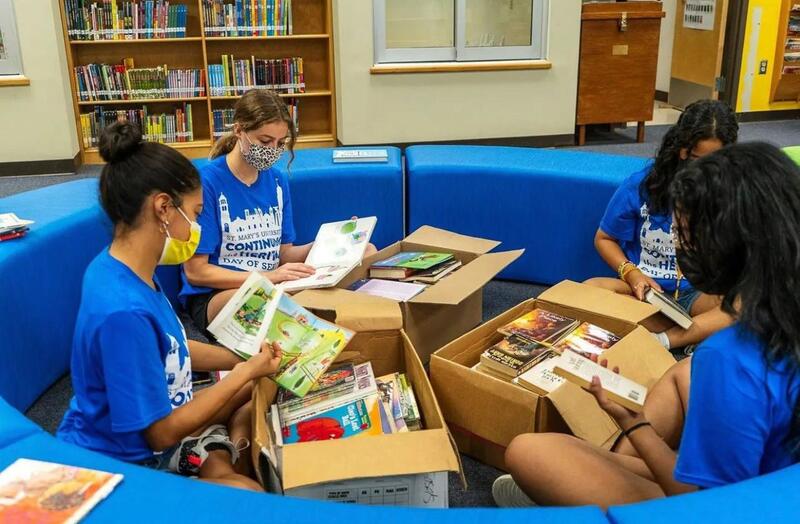
Continuing the Heritage is a wonderful event that St. Mary’s puts on for its students and staff. It allows all members of the university to participate in a day of service, offering over 30 volunteer opportunities to join on that day. CTH not only brings the student community together but also connects the students to the city of San Antonio and its community. Even with Covid, when everything went remote, St. Mary’s still found ways to make CTH happen and found opportunities for students to volunteer remotely. This year was my second time participating in CTH and I really enjoyed it. The first time I did it was freshman year and I worked with No Graffiti SA and this year I helped in the library at Locke Hill Elementary School. Both times were very fun and rewarding as I got to not only volunteer with friends but also be able to spend some time giving back to my community even during a pandemic.
-
2021-11-02
The text story would be about my feelings toward COVID-19. It is sad that I don't remember much of what life was like before the pandemic hit. The masks, the social distancing, the looks you get when you have a runny nose. There are so many theories in regards to COVID-19 and much like anything else, everyone has their own opinion. Some revolve their lives around it, others don't care about. Personally, I'm not scared of the pandemic, I'm not vaccinated, nor do I get worried when people around me test positive for it. It is important to me because it has significantly changed our lives for the worse. We miss out on extremely important events and experiences. In my opinion, much of this should be a choice. If you want to wear a mask, wear one. If you want to social distance, do it. If you want to get vaccinated, get vaccinated.
-
2020-07-28
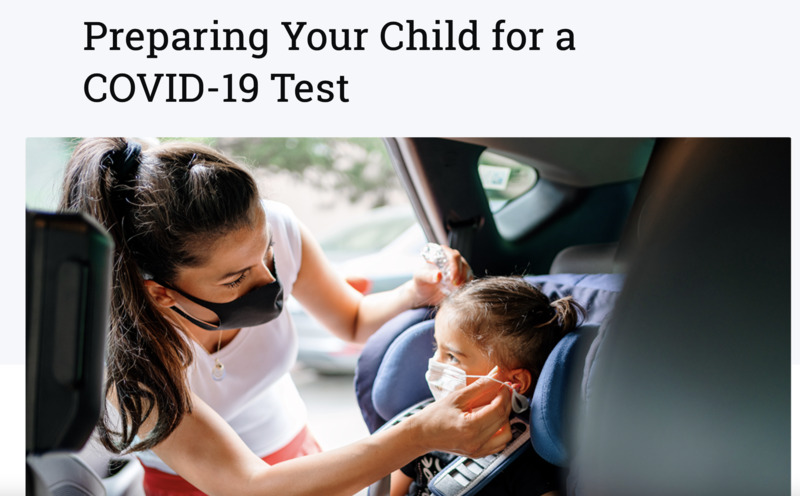
A blog post from Banner Health about helping children take a Covid-19 test
-
2020-07-21
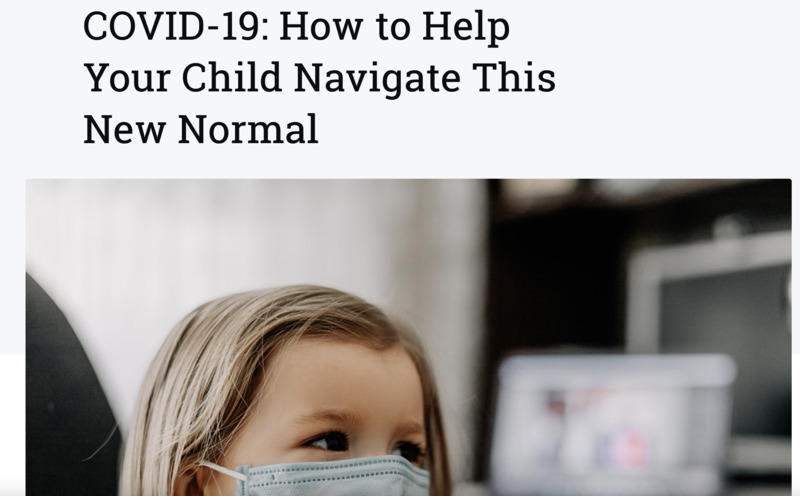
A blog post from Banner Health about helping children during Covid-19.
-

2020-07-15
A blog post from Banner Health about managing stress and anxiety during Covid-19.
-
2021-03-05
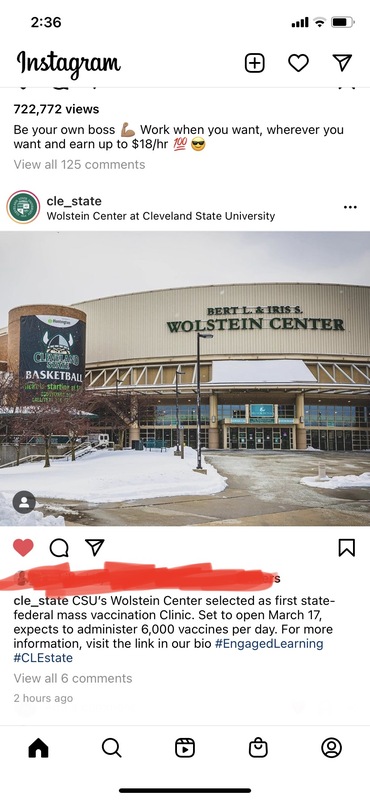
A screenshot of when my college announced that our basketball arena would house the first mass vaccination center in our state. I sent this to my family because I thought it was so cold my college got this opportunity. Most of my family got vaccinated here and it was so well run and easy!
-
2020-04-13
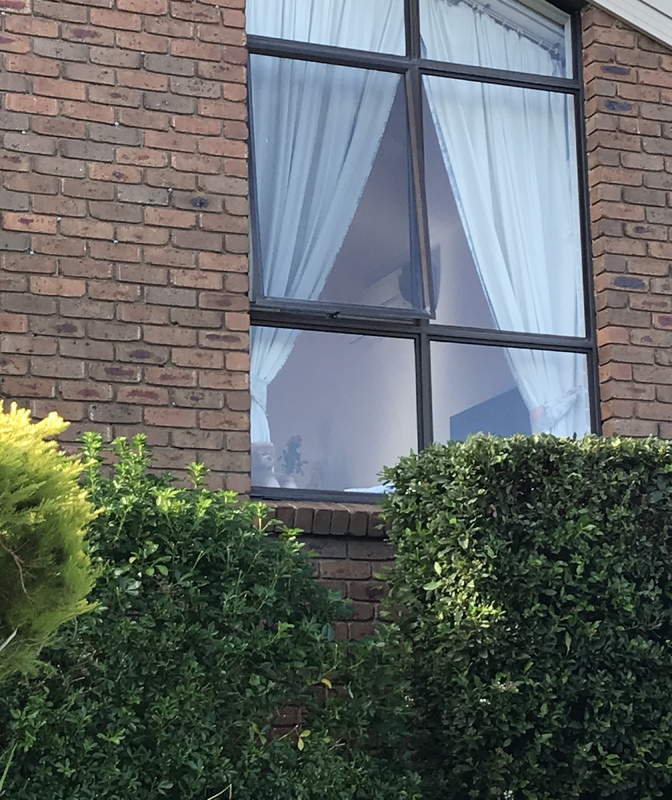
These two photographs were taken in April 2020 during Easter. My neighbourhood decided to come together and do something special for the kids - many families participated and placed teddy bears on their windows facing the footpath. This created a 'Bear Hunt' trail for children and their families to participate in. I decided to take a walk around my neighbourhood to experience this for myself and it has become one of my most memorable moments during the COVID-19 lockdown. Many children and their families were walking around socially distanced, and strangers I had never seen before would wave at me across the streets and exchange greetings. The sense of community was really strong and it felt like everyone was together, in solidarity, even amidst the toughest of times.
-
2020-02-05
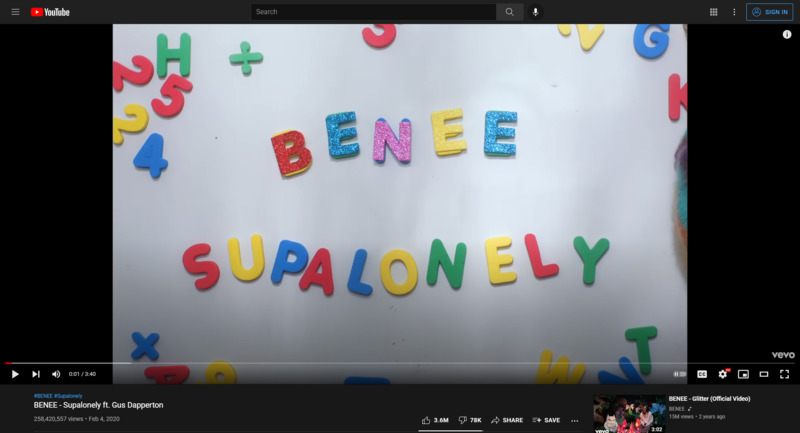
Supalonley by BENEE is a song that rose to prominence on social media platform Tik Tok. In 2020 when millions of people were in lockdown with little to do, sites like Tok Tok saw their userbases skyrocket. This had a colossal effect on the music industry, as songs that became trends on Tik Tok could easily transfer that success to the charts. This was the experience of Supalonley. The song's snarky self-depreciation appealed to the young generation on Tik Tok who used it as a catharsis for the youth they were losing, and this popularity propelled it to mainstream success. The music video, set mostly in a suburban house, was also a familiar setting for people in lockdown.
HIST30060
-
2020-07-15
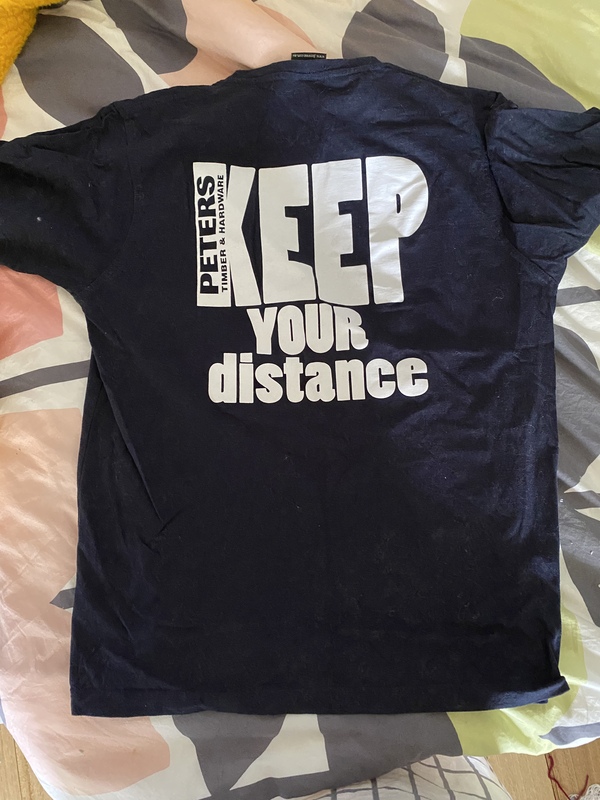
HIST30060: This photo of the back of my work uniform shows how workplaces were affected by the restrictions of the pandemic. Hardware stores were able to stay open to trade customers and for "click and collect" purchases during Melbourne's lockdowns, which meant a change to our normal work routines. Staff were charged with the responsibility of making sure customers wore masks, checked in with the QR codes and practiced social distancing throughout the store. These necessary rules were challenging to enforce sometimes and customers could often be disgruntled and unhappy with these changes. This message on the back of the uniform was in keeping with the atmosphere of working during this period and symbolises our adjustment to "covid normal" practices.