-
2020-08-22
I first heard about the A Journal of the Plague Year: An Archive of COVID-19 (JOTPY) internship opportunity through Arizona State University's History Master's Student's Facebook page. I decided to pursue my M.A. in history degree for a variety of reasons: I love learning, I love history, and I hoped to gain exposure to potential career opportunities. I chose to attend ASU because it was clear to me that the faculty prioritize community. When I saw Dr. Kole's Facebook post, I was instantly captivated. It was precisely the type of experience I was looking for without even knowing it. And it was an opportunity to work in real-time with ASU faculty and with other M.A. students, which created additional avenues to build community. I contacted my faculty advisor and decided to drop my upcoming courses to open up my schedule for this once in a lifetime experience.
Before JOTPY, I had very little knowledge of public history. As a high school educator, I have always believed in the importance and power of public history. Outside of teaching, however, I had no experience working in public history. My experience with JOTPY taught me that public history requires professionals to simultaneously use high-level critical thinking skills (i.e., how can we fill silences within the archive) and pay attention to details and minutiae (i.e., make sure that curator’s folksonomy terms are lowercase). One's ability to think "big picture" while not losing sight of the building blocks is crucial to the success of projects such as JOTPY. I have developed the ability to easily transition my thinking depending on the type of archival work that I am engaged in. Additionally, I have developed my ability to write in various modalities (i.e., blog posts, collection plans, press releases). I have fine-tuned working remotely, sharpened my problem-solving skills through innovative thinking, and learned a variety of new software – from Omeka to Slack to otter.ai. I have also developed an understanding of ethics and best practices in public history. Although I am not sure in what capacity, I would like to continue to work within the field of public history.
As expected, the JOTPY internship was indeed a once in a lifetime experience. It felt good to do something for the very first time again. I felt challenged by the different types of writing we were asked to produce. Having never written a collection plan, a press release, or a blog post, each of those assignments pushed me outside of my comfort zone. As a result, I learned that I indeed do still love learning new things. Perhaps the most fulfilling aspect of this experience for me was working within my internship cohort. Our team's ability to directly communicate with each other, to offer constructive feedback, to step in to help others when needed, and to adapt to ever-constant changes characteristic of working in a rapid response live archive, was simply incredible. I also really enjoyed engaging with ASU faculty. Dr. Kole was an incredible leader whose guidance and support truly brought out the best in every single intern. She cultivated our strengths and presented opportunities for us to further develop our interests and passions while supporting the overall mission and work of JOTPY. I am not sure where I am headed next. However, I do know that by leaning into unique opportunities is something that I enjoy. I plan to continue to look for various ways to further develop myself academically, professionally, and personally.
I developed the San Francisco Bay Area Collection as a way to ensure the diversity of the region was captured within the archive. One of the Collection's strengths is its ability to intersect with other major collections within JOTPY. While I do not have an official role within JOPTY, I plan to further develop the San Francisco Bay Area Collection through the curriculum I develop for my own students.
-
2020-08-23
As a second-year graduate student in the History MA program at Arizona State University, I found myself enrolling in the HST 580: Professional Experience course after viewing an online announcement outlining the unique experience of a remote internship. With prior experience as a digital archivist with the National Archives and Records Administration, the Smithsonian Institute, and the California Digital Newspaper Collection, in addition to years spent as an undergraduate research assistant at the UCLA Center for Korean Studies digitizing reels of microfilm, I initially believed this internship to be hours of busywork without much substance. I was quickly proven wrong, however. Unlike the previous archives mentioned, A Journal of the Plague Year is a living and breathing archive, recording stories as they occur. This constant fluctuation resulting from live submissions created a dynamic, and sometimes turbulent, workspace that required interns to possess flexibility, problem-solving, and innovation skills.
Far from my initial understanding of the internship, the archive provided curatorial interns with a wide-ranging set of skills applicable in any professional environment. Using Omeka-S, Otter.ai, and Slack, interns learned to enhance accessibility to historical documents by curating and transcribing crowdsourced items into a searchable resource. Curatorial interns carefully handled thousands of photographs, articles, and recordings, while assisting with branding, legal compliance, and writing for diverse platforms. Through archival collaborations with international universities and institutions, interns were able to advance their communication skills to convey necessary, time-sensitive, and fluctuating information concerning the live curation of items.
This interactive and innovative internship challenged my understanding of public history and pushed me to appreciate the archival process in a new light. As calls for submissions urged individuals to share their everyday experiences with the COVID-19 pandemic, I recognized the importance of documenting daily happenings and confronting historical silences. As a result, A Journal of the Plague Year reignited my determination to support rural K-12 students and ensure that their stories are documented alongside their urban and suburban counterparts. While I have no immediate plans to become a public historian, I have learned an innumerable amount of skills that will surely advance my career in the educational sector.
-
2020-08-19
This is my portfolio for my 15 weeks as an intern working with The Journal of the Plague Year. I was anxious to learn the skills involved in gathering, creating, and archiving materials to preserve history in our lifetime. The pandemic of COVID-19 is a once in a century occurrence, and I felt it was very important to preserve our thoughts, emotions, photographs, jokes, and events that are shaping our lives now.
Generally, I’ve been fascinated by archives and the potential they hold for telling our stories. I’ve also been frustrated by the lack of accessibility they all present. I’m hoping that the digital archive techniques we have employed will ease that problem. We’ve had the freedom to use tags (or, in archive-speak, folksonomy) to make the content searchable and accessible to all who come after us. In addition to archive work, my branch of historical interest is in the everyday lives of people. This digital repository satisfies both passions.
Lastly, working on preserving the events of this pandemic has helped me find my way during this difficult time. I feel that I've been able to contribute--at least a little bit--and thus been able to be causative over some little part of this global nightmare.
I am earning my Master’s degree in order to teach at the college where I work now. I’ve been functioning as a TA for the last several years as well as working as a classified staff member. I should graduate in May 2021, and become an adjunct. However, with all learning remote and the campus closed, hiring may be delayed. My mission is to inspire a love of history and the ability to think critically about the past and present. Too often history is still being taught as a memorization exercise of dates, names, and events. I will teach against that model and hopefully inspire a love of the past and its lessons and stories in my students.
I want to thank all of our staff at ASU for delivering a professional learning experience—I was very lucky to have had the opportunity to be a part of it.
-
2020-08-17
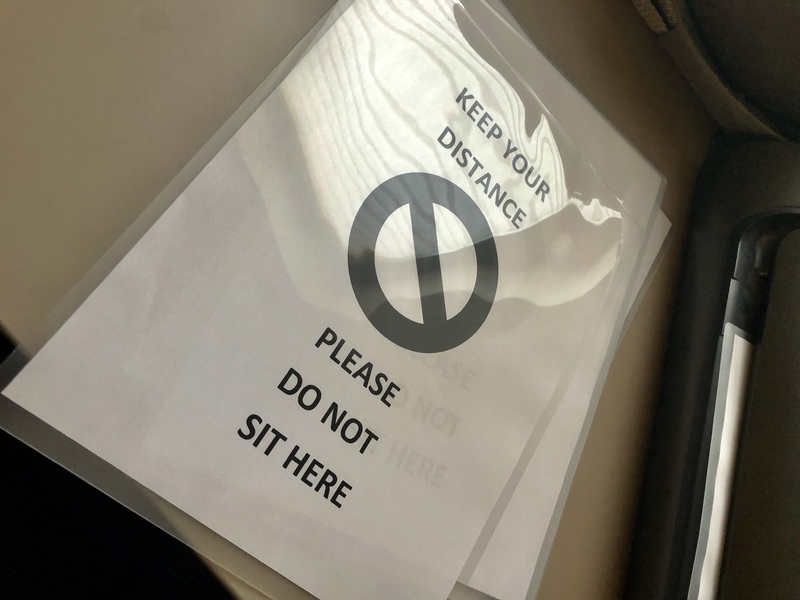
This is an actual workplace posting in the communal office placed on every other computer workstation to remind employees to maintain social distancing.
-
2020-08-19
The Journal of the Plague Year will become a lasting memory and not just because it is preserved inside of an archive. One of the most memorable aspects will be the way our internship class grew to become a team. As we all look back to our first weeks, little did we know the scope of pedagogy we would need to experience before arriving upon these final days. Dr. Kole gave us the support we needed, but wasn’t afraid to introduce us to the “rapid” nature of a rapid response archive. The conversations of “wearing hats” became common terminology to describe all of the evolving jobs this internship would entail. Some days we were scholars thinking deeply about the concerns of silences. Other days we felt more like roving reporters gathering stories as they were developing. Our “marketing hats” were often in use as we promoted our Calls for Submissions. Undoubtedly, there were days we were required to stack our hats four high. As fledgling public historians, we accomplished all of these things and we did it together as a team. The word “team” seems the most obvious description, but for our group the most fitting term is “family.”
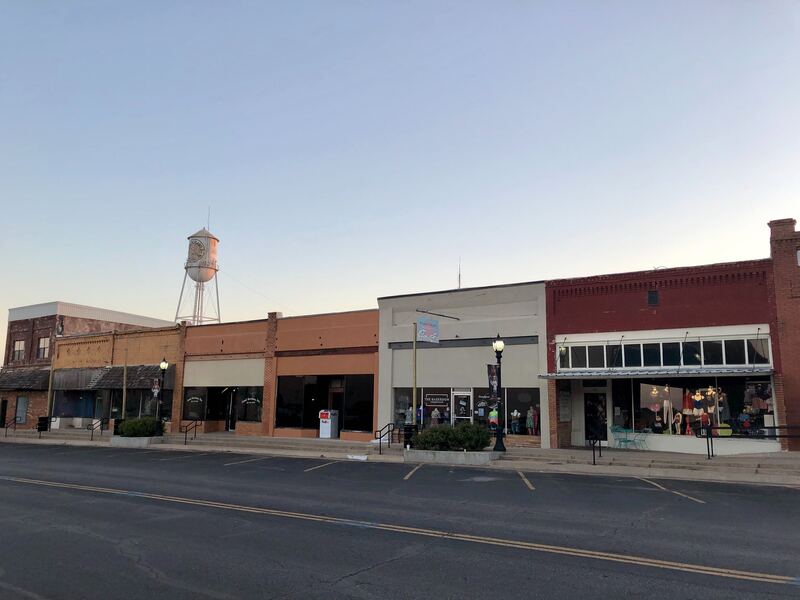
This moment has already come and gone, yet it’s preserved for those that look toward it. I felt the need to devote my individual time to preserving those things that were at propinquity. That being said, the “Rural Voices” collection is something near and dear to me. Near because I live in the community that inspired this collection. Dear because it’s so much more; it’s home. I created it because of this familiarity, a familiarity that was disrupted by COVID-19 and I experienced firsthand. Moving forward, future interns will have the opportunity to continue what I have started. This collection was never meant to have only one voice and is only a reflection of its first voice. Every rural community has a wealth of history occurring and with each passing moment those voices fade. The “Rural Voices” collection was, and should always remain, a direct response to that silence.
-
2020-08-19
Prior to interning the JOTPY internship I thought we would be doing a lot of submissions for the archive to build it and maybe online work to raise awareness of the archive. I had no real knowledge of public history and was going in not expecting it to be such an important part of the archive. Throughout the internship I developed many skills such as curating, how to write a blog, press release and mission statement, and how to build an individual archive collection. I realized my colloquial writing was weak during the internship since many of the projects involved reaching out directly to the general public and speaking plainly. I was once quite adept at this but being an undergrad and now a graduate student these skills had become quite rusty as I endeavored to perfect my academic writing.
I had to learn to work as a team in the internship and also reach out to regular non academics for submissions and these socially based experiences were uncomfortable for me since I am more of an introvert. However, throughout the internship I came to really value the camaraderie and community the interns built together. Before the internship I shied away from group projects as a necessary evil to be avoided at all costs however the internship showed me how much fun working with others could be and to value a great team. The internship also allowed me to network with other people including fellow interns, teachers and archive associates. The internship gave me real world experience of my historical skills introduced me to many new skills set that could pertain to future employment. Overall, it was a great experience that I wouldn’t trade for the world.
-
2020
This article tells a similar story of many that I have recently heard, the story of renters purchasing homes in order to take advantage of the low interest rates that were a result of the global pandemic. This article details that the estimate of about a 3% average interest rate will remain the same until the end of the year! Despite this, because of many Americans having less than reliable jobs through this pandemic era, banks are not giving out loans to just anyone, and it has been difficult to qualify for a home loan. Lower income households are still having difficult acquiring property, possibly even more difficulty than before the pandemic.
-
2020
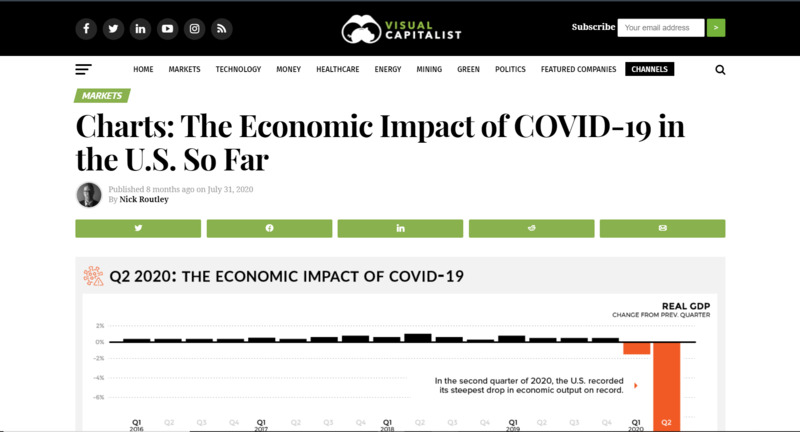
This article provides a break down of the big picture of United States economics in the past few months. This break down includes simplistic graphs of the following: consumer spending, national debt, U.S. money supply, consumer sentiment, fed balance sheet, U.S. dollar, fiscal expenditures, inflation rate, and loans to the private sector. These grids provide a representation of how COVID-19 has impacted the United States in a variety of different ways. The article also has short descriptions of each segment that provides the reader with more detailed information. This article provides statistical analysis and quantitative evidence depicting the economic downfall that the United States has faced due to this global pandemic.
-
2020
This image shows the different economic impacts of each state in comparison with one another. It is interesting that Alaska has been moderately affected and that Florida, New York and Washington state have the highest risk for exposure. This image shows that many middle states have had low exposure when it comes to the economy.
-
2020-08-17
I joined the Journal of the Plague Year Covid-19 archive before the internship experience began. I contacted Dr. Tebeau and asked how I could contribute to the archive to develop a K-12 teaching experience. I quite literally hit the ground running. I had imagined slowly starting the work; however, I quickly realized it was like drinking from a firehose, and I loved it. Before this experience, I hadn't had much interaction with rapid response archives. They were a new concept to me, and the internship is where I learned what they were and how they functioned. As a student sitting in a history class, I think it's easy to see history as systematic and well planned because, by the time we are reviewing it, there has been some organization. Being part of the rapid response archive shows the exceptional amount of work it takes to archive history.
While there is never a good time for a global pandemic to strike, this pandemic started during a beautiful place in my graduate studies. I had taken two of my core courses and a methods class. So, I felt prepared when discussing silences in the archive, biases, and other responsibilities held by the archive. This internship was a great way to use what I had learned over the last nine months and apply it rather than waiting until I had graduated to apply these skills. This application of expertise is something that doesn't usually occur during courses of study. I have also found that the internship has helped me shape my virtual class schedule as we head into the fall. While my district presented me with a virtual bell schedule to follow, it seemed like a lot to wrap my mind around, but I applied Dr. Kole's model for the internship to my class, sent it off to my instructional coach, and she loves it! While it's not directly related to the archive, the online pedagogy has been helpful.
My favorite thing about working with the archive was curating. I just loved seeing all of the items come through and reading the stories attached to them. Beyond that, I feel like I have a great base of people I can now lean on through the rest of my time at ASU. I now have teacher friends in California with whom I am now sharing distance learning ideas. I hope these are the things that stand out when people think back to the Covid-19 pandemic. While it seems to be tearing through our country and pulling us apart, there's been a lot of good to come. I'm eternally grateful to have been presented with this opportunity, and I cannot wait to see how large this archive grows.
-
2020-08-13
Vandana Ravikumar/Luce Foundation: Southwest Stories Fellowship
-
2020-08-16
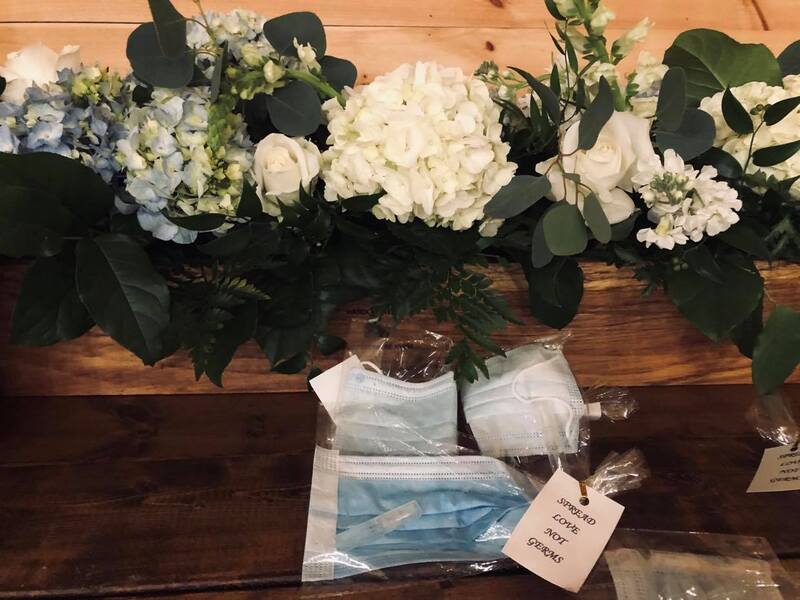
This is a photo I took at a wedding I directed this weekend. The bride had me place a bag on each individual chair. The bags contained mask and hand sanitizers. The little tags read "Spread Love Not Germs". This has been a popular response to the pandemic.
-
2020-08-16
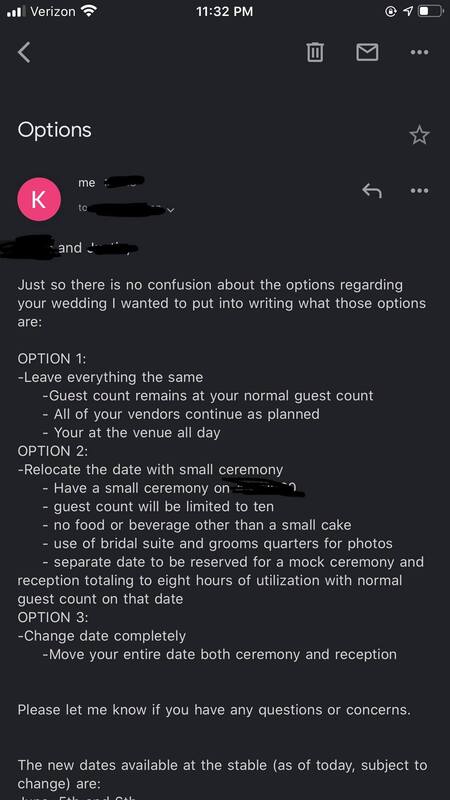
This is an email I had to send to a bride who was upset over COVID-19 ruining her wedding plans. These options were developed after deciding what was doable under mandates at the time. The bride ended up moving her wedding to 2021 and had an intimate ceremony in her home.
-
2020-08-09
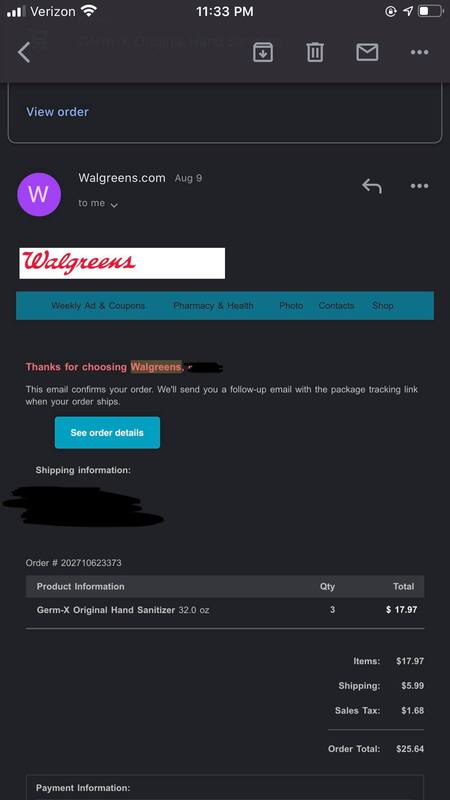
This email depicts the main purchases made by myself and other brides fro their wedding. Finding sanitizer in bulk has been a challenge, but a must for those continuing with wedding receptions.
-
2020-04-20
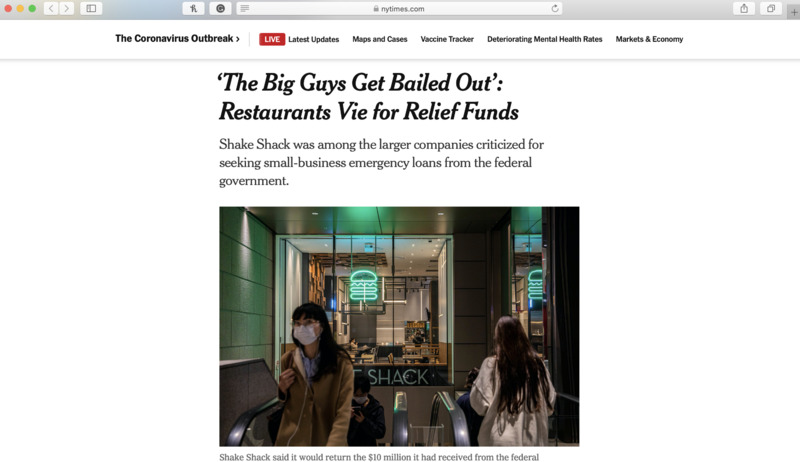
In the restaurant world, there are the big boys and the ma-and-pa restaurants. Shake Shack is one of the big boys, founded by Danny Meyer, so why did it receive 10 million dollars of the Small Business Relief Money? Glitches, confusion, and fine print. National Restaurant Association lobbyists fought for a provision that would allow funding to go to chain restaurants with fewer than 500 employees per location. The relief money now exhausted many independent and small restaurant owners were left out while chains got millions.
-

2020-07-21
Danny Meyer, one of the biggest names in the restaurant industry backs out of the No Tipping Movement. The No Tipping Movement advocates ending tipping culture in the US to create an equitable working environment and curve the harassment servers can suffer from customers. Due to the pandemic, Danny Meyer chose to allow his servers to make more money by eliminating no tipping from his restaurants and serving a hit to the movement as others panic to follow suit.
-
2020-08-11
Food workers share their experiences in this Bon Appetit article on how the industry is dealing with the events of 2020 from the pandemic to the protests. Each story is unique and covers almost every aspect of the industry.
-
2020-06-12
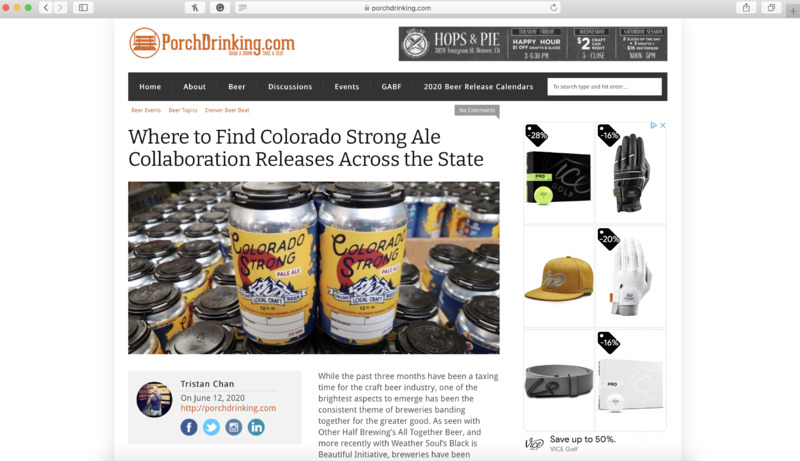
This is a follow-up to the first article featuring the collaboration of Colorado breweries to support each other as well as healthcare, hospitality, gig, and service workers. This article lists all breweries with current release dates of the collaborative beer, Colorado Strong Pale Ale.
-
08/16/2020
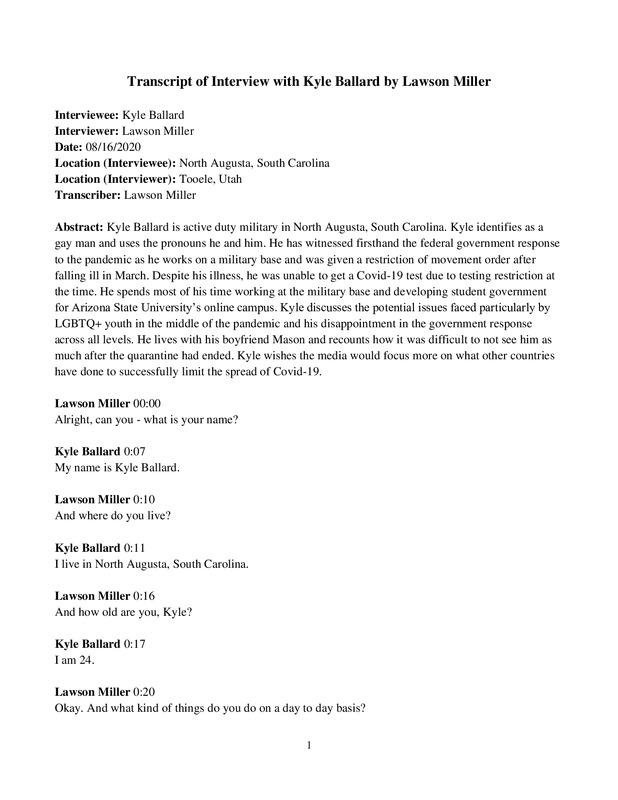
Kyle Ballard is active duty military in North Augusta, South Carolina. Kyle identifies as a gay man and uses the pronouns he and him. He has witnessed firsthand the federal government response to the pandemic as he works on a military base and was given a restriction of movement order after falling ill in March. Despite his illness, he was unable to get a Covid-19 test due to testing restriction at the time. He spends most of his time working at the military base and developing student government for Arizona State University’s online campus. Kyle discusses the potential issues faced particularly by LGBTQ+ youth in the middle of the pandemic and his disappointment in the government response across all levels. He lives with his boyfriend Mason and recounts how it was difficult to not see him as much after the quarantine had ended. Kyle wishes the media would focus more on what other countries have done to successfully limit the spread of Covid-19.
-
2020-04-11
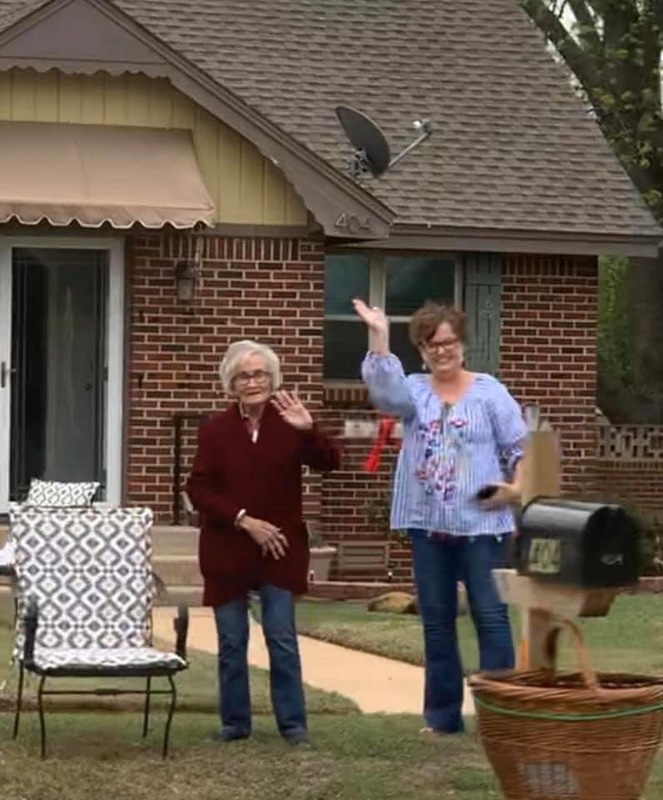
Local resident Genelle Richey retired in 2012, dedicating 62 years of her life to teaching the youth of Blanchard, Oklahoma. Since then, Mrs. Richey's status of being a local educator and mentor as only grown in appreciation. On April 11, 2020 during the peak of COVID-19 shutdowns, the community of Blanchard expressed its gratitude to Mrs. Richey by organizing hundreds of participants to drive past her in a "reverse" parade celebrating her 90th birthday. She and her family gathered on North Main Street to greet the cheerful crowd as they passed. The event was organized by her family and mostly through Facebook to preserve the surprise to Mrs. Richey herself. The event took place between 3:00 and 4:00 PM on that Saturday, April 11. The parade featured vehicles displaying signs and decorated "float" style trailers. The line of vehicles were led by Blanchard Police and Fire Departments. Parade vehicles dropped off birthday gifts and took photographs to preserve the special event. During an otherwise quiet and uneventful month of pandemic closures, the community of Blanchard resiliently came together to adapt a memorable day for a very special woman.
Submitted for the #ruralvoices collection. Contributed by Clinton P. Roberts, curatorial intern for Arizona State University, HST 580.
-
2020-06-28
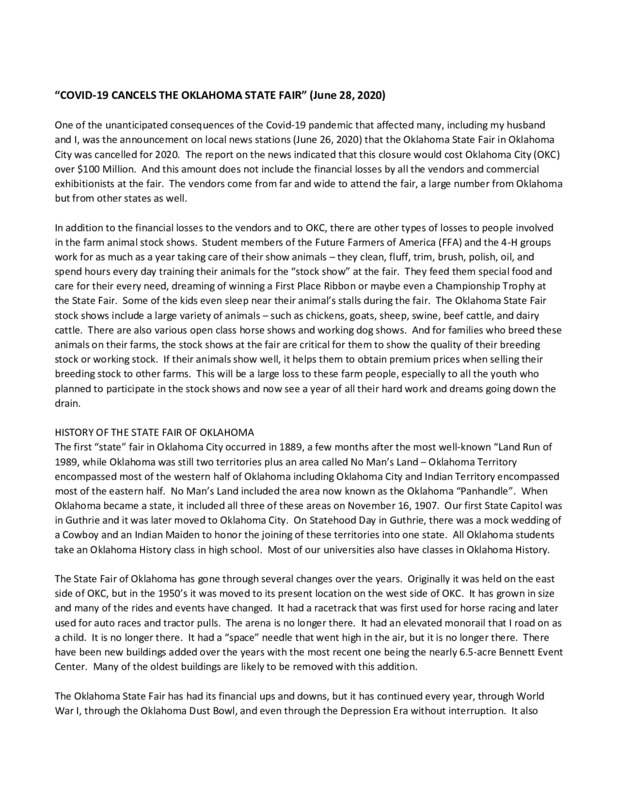
Sharon Annesley of Blanchard, Oklahoma tells the story of how the COVID-19 pandemic has disrupted the traditions of the Oklahoma State Fair. Her text document story chronicles how the State Fair changed over the years, but had never been canceled. She details how this will affect the local economy of vendors, agriculture, and local tourism. She also describes what a typical day for her and her husband would be at the fair and the long-standing tradition it has become to them. Text document authored by Sharon Annesley. The story is titled under the heading “COVID-19 CANCELS THE OKLAHOMA STATE FAIR” (June 28, 2020) The story features personally gathered information and accounts by Sharon Annesley. This document was hand-submitted in a physical form for submission to Clinton P. Roberts for the #ruralvoices collection. Contributed by Clinton P. Roberts, curatorial intern for Arizona State University, HST 580.
-
2020-08-09
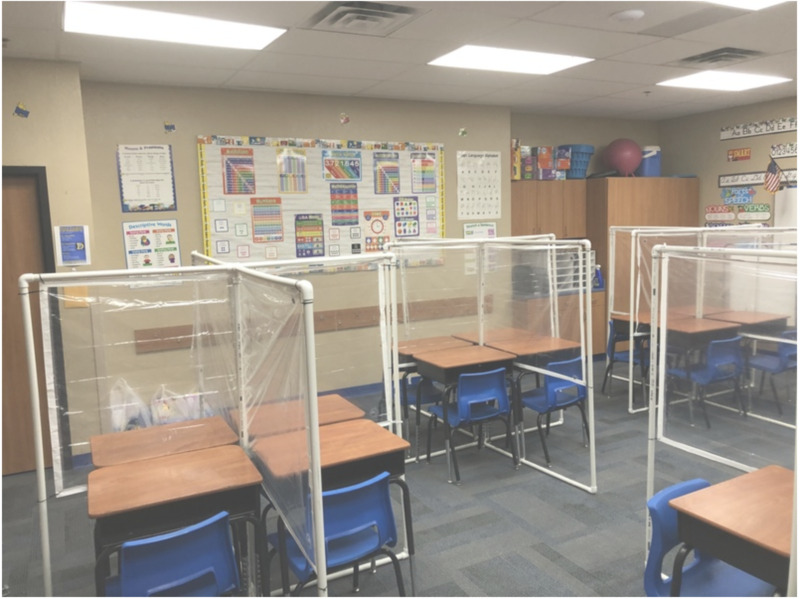
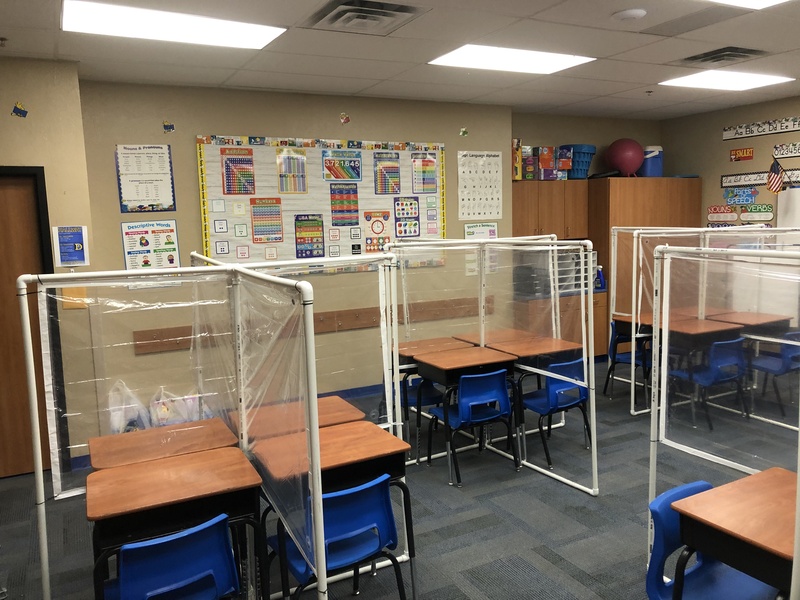
With the reopening of Oklahoma schools, teachers are doing their best to create preventive measures in their classrooms. Dibble, Oklahoma third grade teacher Ms. McDaniel was inspired by online plans for creating class dividers out of PVC pipe and transparent shower curtains. The dividers allow the students to interact with one another, see the classroom board, and see the teacher without being able to breathe directing on other students. Oklahoma schools have not instituted a regulation for masks or other protective measures and only have offered recommendations. This has left individual school districts to provide their own rules. In this particular school some students wear mask, some do not, and others have opted for virtual learning. These desk dividers become a way for teachers to have structural PPE where individual PPE may not exist. Ms. McDaniel made five large cross section dividers that can protect up to twenty children. Ms. McDaniel researched, purchased, and fabricated all of these on her own. Her ingenuity is an example of how rural schools and rural teachers have had to be more creative with their methods of precaution.
Submitted for the #ruralvoices collection. Contributed by Clinton P. Roberts, curatorial intern for Arizona State University, HST 580.
-
2020-08-11
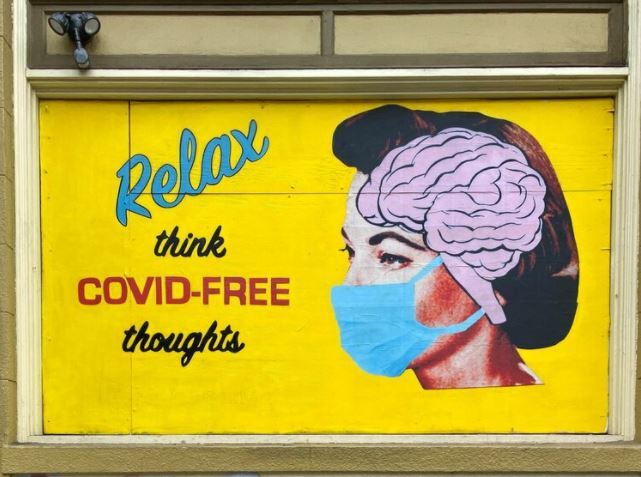
San Francisco Bay Area artists, Mark Harris, created a stunning mural on the boarded up windows of local business, Rose Gold Piercing and Tattoo. Rose Gold shut its doors at the start of California's COVID-19 shelter-in-place orders and has yet to reopen. Harris's message to "Relax, think COVID-free thoughts" is a reminder of how much our world has changed and is being dictated by the reality of the COVID-19 pandemic. As the pandemic continues to wreck havoc on the San Francisco Bay Area, Harris's art brings hope and beauty to local residents. Harris's mural is a part of the larger San Francisco Bay Area art initiative, Paint the Void. Over 100 murals have been created in public spaces throughout the San Francisco Bay Area as a result of Paint the Void.
-
2020-04-17
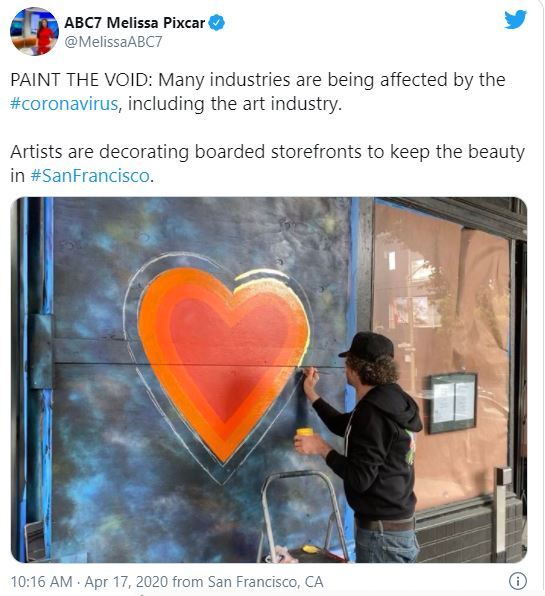
Businesses across the San Francisco Bay Area have closed, some temporary and some permanently, as a result of California's COVID-19 shelter-in-place orders. Those that hope to re-open have boarded up their windows to try to protect their stores and inventory. As a result of the crushing economic blow of the COVID-19 pandemic, the vibrancy of San Francisco streets has vanished. In response, local arts are turning boarded storefronts into beautiful murals with messages of hope. Local artists are "bringing life and beauty to our streets, sending messages of love to people in their community." Two local art agencies, Building 180 and Art for Civil Discourse, have teamed up and created Paint the Void. Paint the Void pairs local artists with boarded up businesses in an attempt to beautify the city and "to bring hope into the community and inspire people." Artists hope to eventually auction their murals and donate the funds raised to those in need.
-
2020-08-16
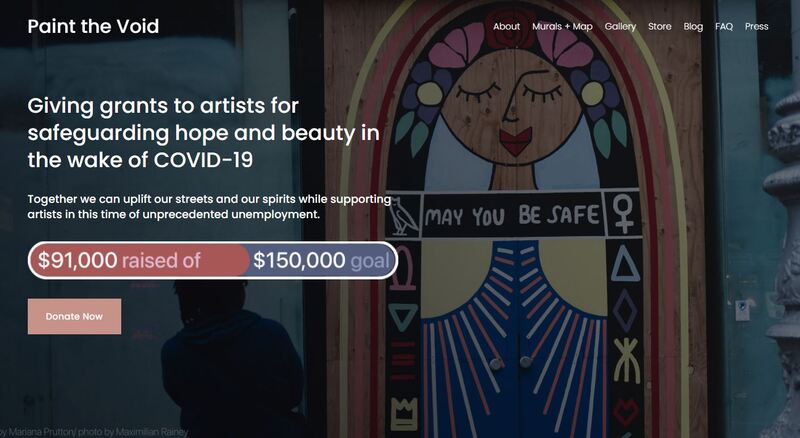
Artists around the world have faced insurmountable challenges during the COVID-19 pandemic. San Francisco Bay Area artists are turning public spaces into canvases to inspire hope. In the turbulence of the COVID-19 pandemic, Paint the Void emerged. This organization's mission is "to match local artists with boarded up businesses to create murals as a response to the void left behind in the wake of COVID-19." The group is raising money to grant artists stipends "for their hard work as guardians of hope and beauty in these unprecedented times." To date, the organization has helped 91 local artists create 100 murals across 84 storefront in the San Francisco Bay Area.
-
2020-08-13
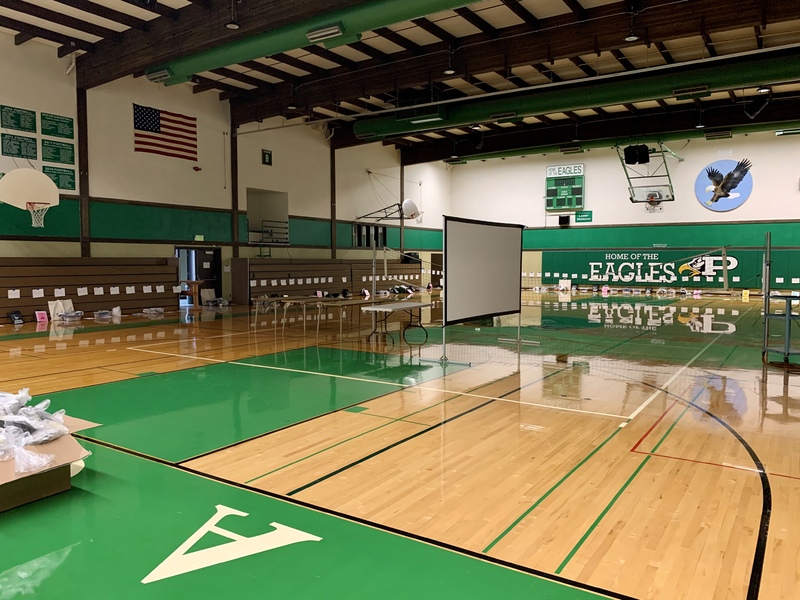
Unable to resume in-person instruction, for the time being, the first day of school for students at Princeton Joint Unified School District in Princeton, California looked quite different this year. Instead of having students on campus, parents were asked to attend a scheduled conference to pick up supplies, technology, and information. The white papers hanging around the perimeter of the gym list every student in attendance, and the items placed below each sign were left for students to use at home.
Parents attending the meetings felt overwhelmed and frustrated by the inability to return in-person but recognized that the local school district did not make this decision. Over the summer months, distance learning strategies were completely overhauled to improve on the lackluster results of last spring. Teachers at Princeton Joint Unified School District will be offering live instruction throughout the day using several new platforms. Parent conferences will continue into next week before daily live instruction begins on August 20, 2020.
-
07/24/2020
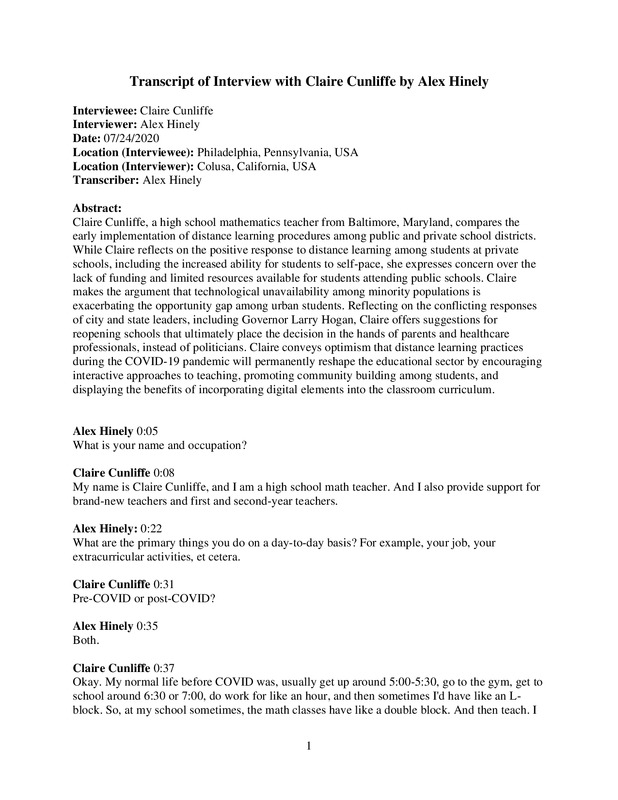
Claire Cunliffe, a high school mathematics teacher from Baltimore, Maryland, compares the early implementation of distance learning procedures among public and private school districts. While Claire reflects on the positive response to distance learning among students at private schools, including the increased ability for students to self-pace, she expresses concern over the lack of funding and limited resources available for students attending public schools. Claire makes the argument that technological unavailability among minority populations is exacerbating the opportunity gap among urban students. Reflecting on the conflicting responses of city and state leaders, including Governor Larry Hogan, Claire offers suggestions for reopening schools that ultimately place the decision in the hands of parents and healthcare professionals, instead of politicians. Claire conveys optimism that distance learning practices during the COVID-19 pandemic will permanently reshape the educational sector by encouraging interactive approaches to teaching, promoting community building among students, and displaying the benefits of incorporating digital elements into the classroom curriculum.
-

2020-07-17
After months of wondering if Princeton Joint Unified School District schools could feasibly return to in-person instruction amid the COVID-19 pandemic, Governor Newsom decided for us. Positive cases in Colusa County and Glenn County dramatically rose in July, and, as a result, both counties were placed on the state’s watch list. While the state has offered school districts in these counties to submit a waiver request allowing them to reopen, the chance of being approved appears very slim.
As the pandemic has continued, it is interesting to see how everything has become more politicized than it initially was. Politicians from both sides of the aisle appear to be making decisions concerning the health and welfare of the American public based on political ideologies. Parents have openly expressed their frustrations with the governor’s decision, often pinning it on Democrats as a whole. While the push-and-pull continues between parents wanting to return to normal and politicians keeping their kids home, schools are stuck in the middle, trying to make this new system of learning work for families who want no part of it.
-
2020-07-17
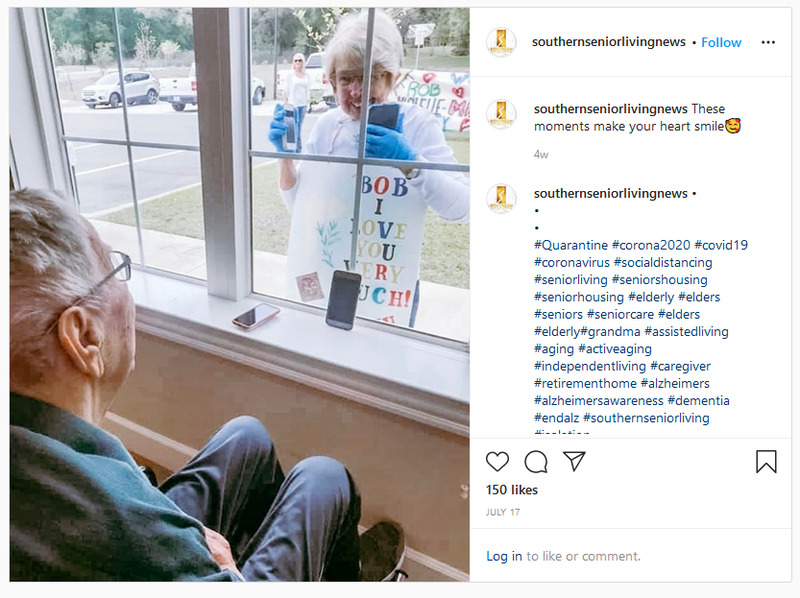
COVID-19 has forced us to innovate visiting loved ones. A common way to get around not being able to see family and friends in long or short term care facilities is talking to them through a window. In this case, a woman stands outside a window wearing gloves and a sign saying "Bob I love you very much!!" and uses a cell phone to talk to Bob.
-
2020-05-27
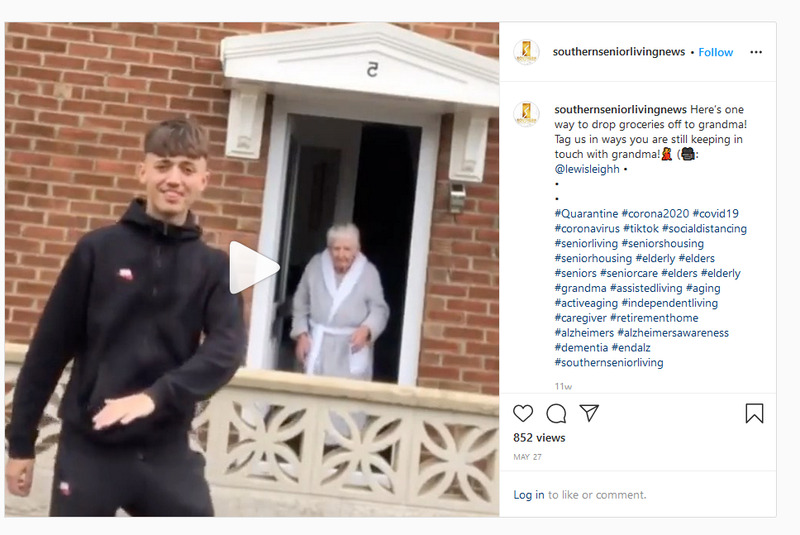
This young man dances with his grandma when he drops off her groceries. Social distancing has made it hard to spend time with our older loved ones and this is a great example of how we can still have fun with them even while socially distant.
-
2020-04-22
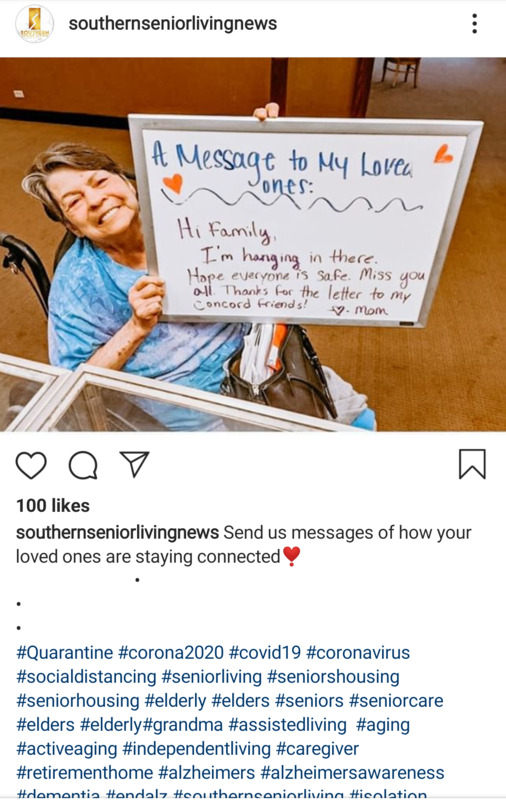
Instagram account southernseniorlivingnews posts a photo of a woman holding up a whiteboard with a message to her family reading "Hi family, I'm hanging in there. Hope everyone is safe. Miss you all. Thanks for the letter to my Concord friends! <3 Mom". COVID has made it way more difficult to see and communicate with loved ones who live inside an assisted living, nursing home, or other community for older adults. Protecting them also means restricting our contact with them and that can be extremely difficult for both parties.
-
2020-08-14
Sarandon Raboin/Luce Foundation: Southwest Stories Fellowship
-
2020-08-14
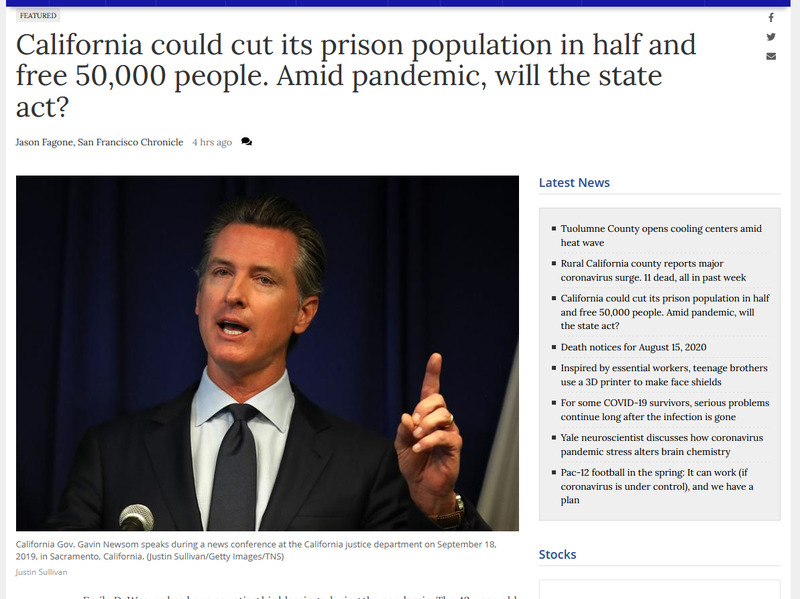
A news article discussing the potential release of thousands of prisoners to help relieve overcrowding during the COVID-19 pandemic. Large amounts of prisoners have been released in the past with no detriment to public safety. In a time when people are dying as a result of this overcrowding during a pandemic it would be incredibly beneficial to release these people. According to data, the issue seems to be one of political risk rather than of public safety.
-
2020-08-14
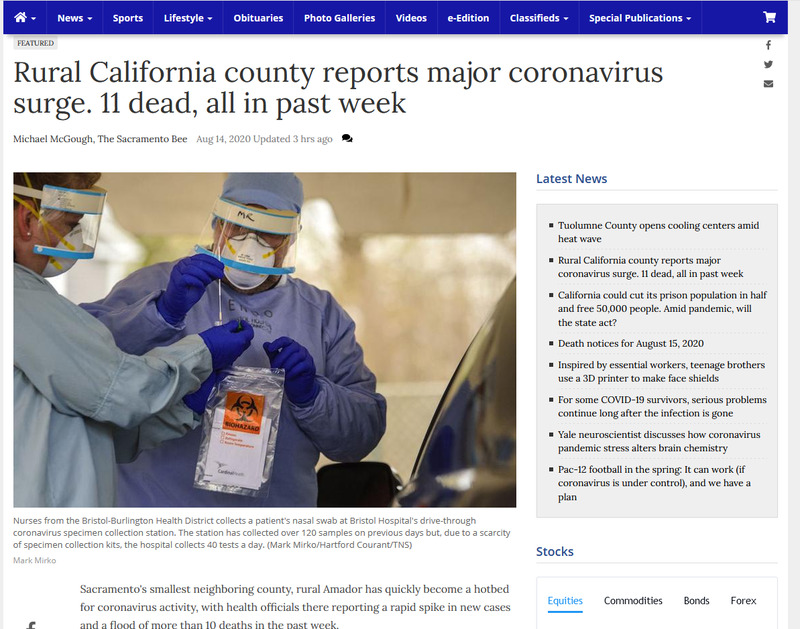
An article reporting on the surge of COVID-19 cases in a rural California county close to Sacramento, Amador County.
-
2020-07
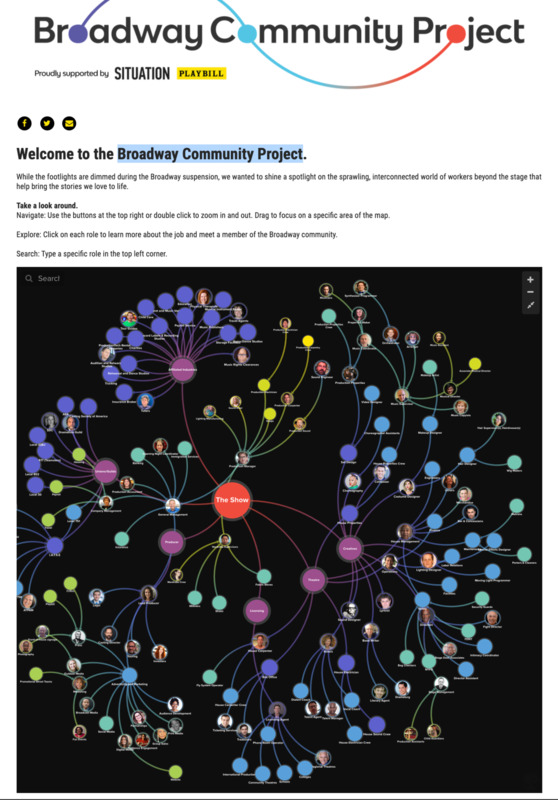
"This is a project curated by and for the Broadway community. While the footlights are dimmed during the Broadway suspension, we wanted to shine a spotlight on the sprawling, interconnected world of workers beyond the stage that help bring the stories we love to life.
By creating this interactive tool, we hope that audience and industry members alike will take a moment to learn more about the artists and artisans, technicians and ticketers. Collectively, all the roles, small businesses, and vital individuals have helped make Broadway the cultural heart of New York City through their passionate, tireless work.
This is a living, breathing map, and we need you to continue its growth and evolution. The contributions from within our community will help ensure it’s as representative of Broadway as possible."
-
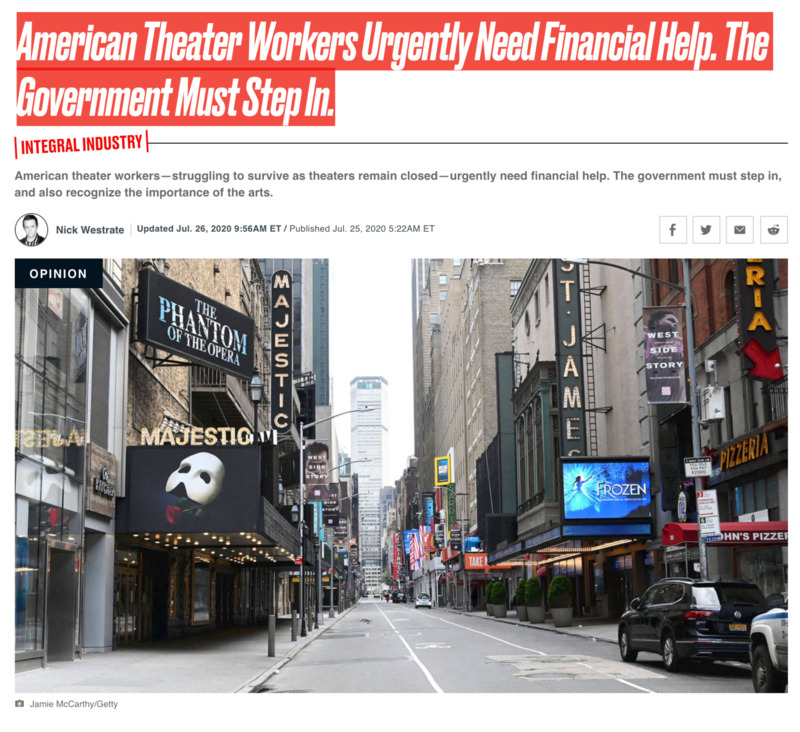
2020-07-26
"The arts in New York City is a major economic engine. According to a study commissioned last year by the Mayor’s "Office of Arts and Entertainment, theater is responsible for $1.3 billion in annual economic output, 8,409 jobs, and $513 million in salaries. The Broadway closedown, effective from March 12, has had a massive financial impact on New York, and a massive personal impact on those who work within it...When the coronavirus pandemic hit New York City, hundreds of Broadway shows closed immediately. While the Actors’ Equity Association was able to secure several weeks of pay and health insurance for Broadway and touring performers, many were left with nothing."
-
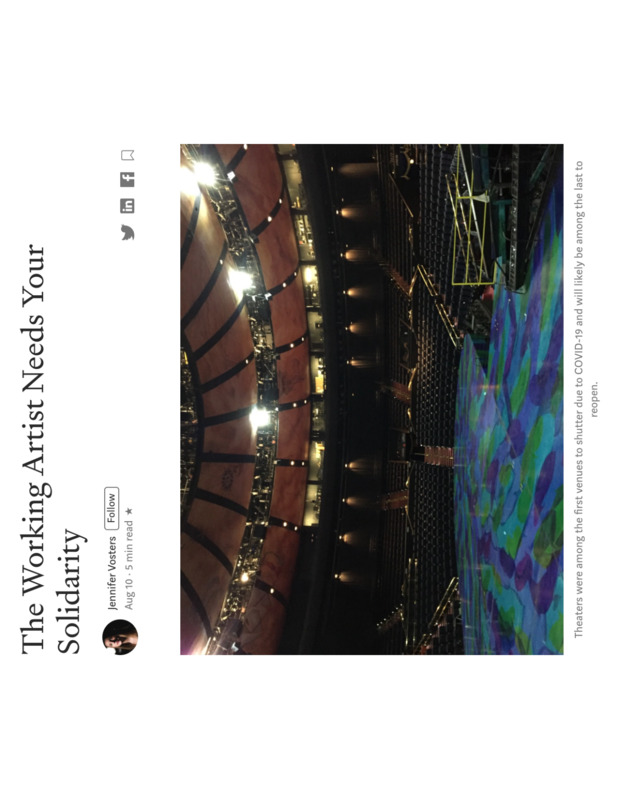
2020-08-10
An item curated for the Performing Arts collection to highlight the plight of the American theatre professional. "It’s looking more and more likely that, barring an incredible about-face like a spectacularly successful vaccine or a powerful and immediate treatment option, a majority of U.S. theaters won’t survive the pandemic. This includes theaters that were financially flourishing in the Before Times, like Mercury Theater Chicago. And along with these institutions, a majority of theatremakers — not just actors or directors, but costumers, musicians, composers, wig masters, props masters, designers, electricians, stage hands, carpenters, stage managers, company managers, house managers, administrators, wardrobe crew, production assistants, ticket sellers, concessions vendors, marketing directors, photographers, choreographers, venue staff — will not be able to wait this out."
-
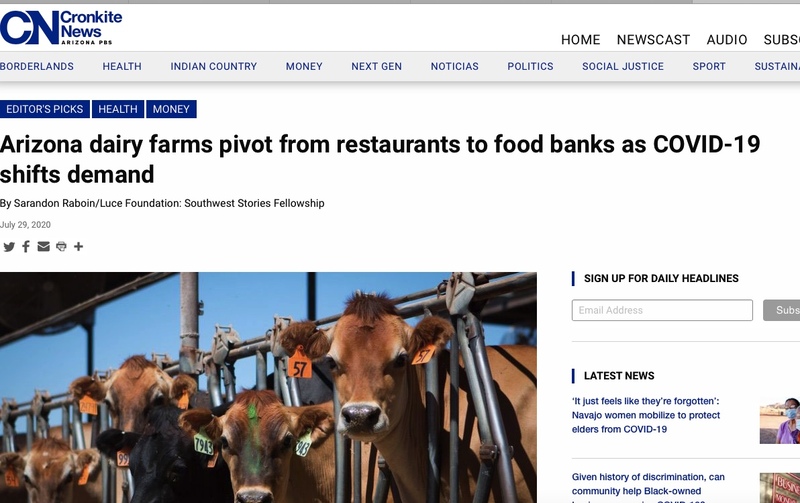
2020-07-29
By Sarandon Raboin/Luce Foundation: Southwest Stories Fellowship
-
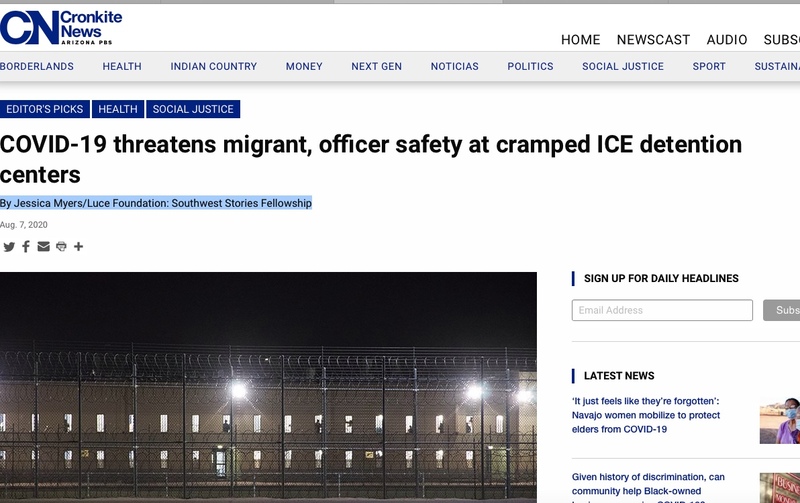
2020-08-07
By Jessica Myers/Luce Foundation: Southwest Stories Fellowship
-
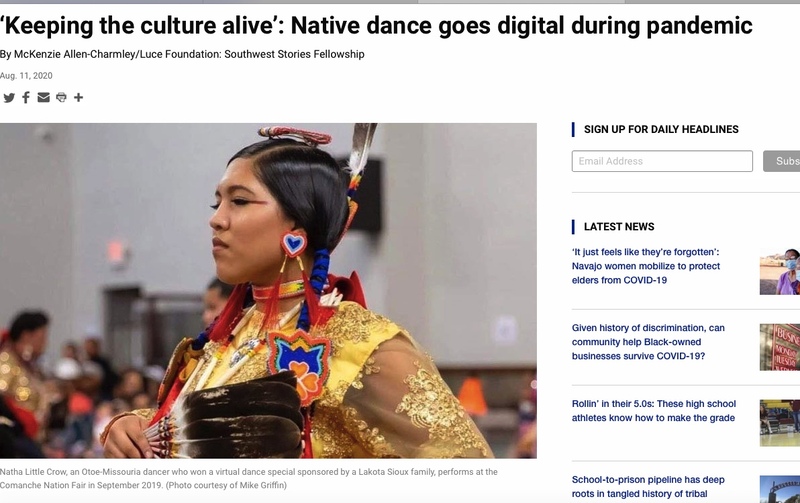
2020-08-11
By McKenzie Allen-Charmley|Luce Foundation: Southwest Stories Fellowship
-
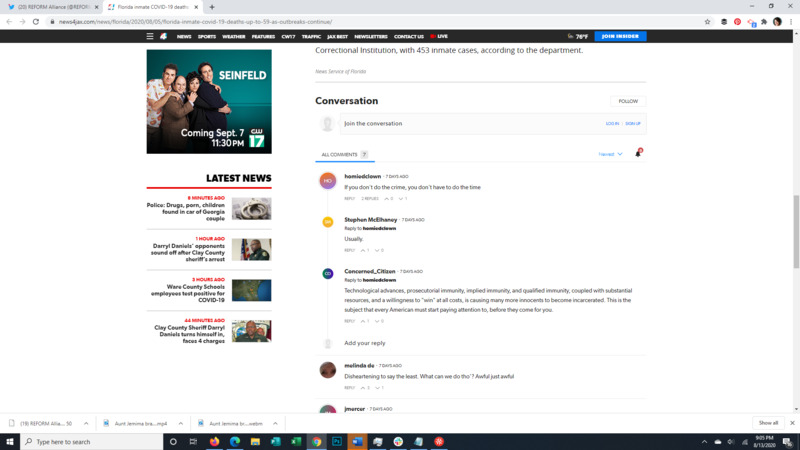
2020-08-05
Covid is particularly dangerous in places where social distancing is not an option. For this reason the nation's correctional facilities have seen huge outbreaks of the virus. This article discusses the conditions in Florida's prisons. While the state says they are doing more to combat the virus as of this article's writing Florida has seen 59 incarcerated people die from Covid.
-
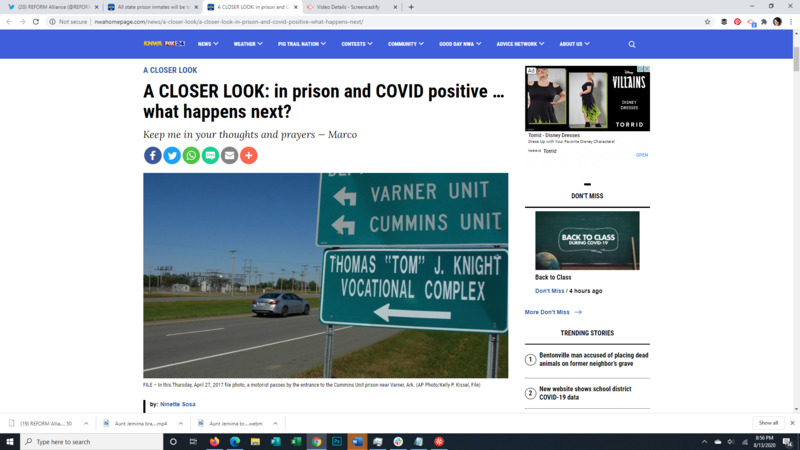
2020-05-04
This article talks with several people who have loved ones at correctional facilities across Arkansas. One woman explains that her loved on, Derek Coley, age 29, housed in the Cummins Unit, was due to go before the prison board for possible release in June but instead he died from Covid. He told staff he couldn't breath, was taken to the infirmary where they called an ambulance but he died before it arrives. Another incarcerated person sent a letter from an outside hospital to notify his family he was sick with covid, the prison never informed them. A third person said they were tested for Covid, had the virus, and were sent back to their cell, never isolated, and didn't receive any follow up care for days.
The article also outlines the state correctional facilities Policy/Procedures for notifying next of kin.
-
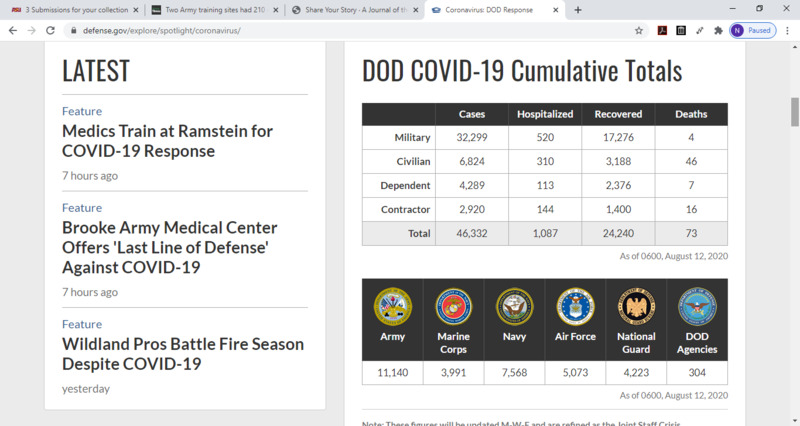
2020-08-13
This is an update of the number of coronavirus cases in the military.It shows a significant difference between the military branches with the army leading with the highest number of cases.
-
2020-07-13
There was recently a spike in the number of covid cases in Arkansas State Prison facilities. Officials suggest this may be due to early testing. They point to the fact that if a person has been exposed recently and is tested right away they may not have enough of a viral load to test positive for the virus even though they are carrying it. This causes false negatives and results in those people not being isolated. The officials also point to supply chain issues preventing them from testing as much as they would like.
-
2020-08-05
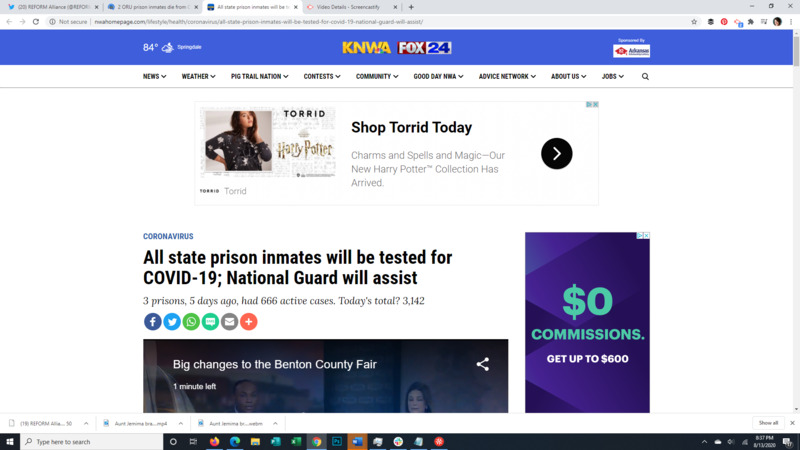
On August 5th, Arkansas Governor Asa Hutchinson announced a plan to test all of the people incarcerated at the 19 state prisons. As of the press conference 10 of the facilities had already been tested and the remaining 9 would be completed by the end of August. To help with this 10 National Guard personnel will be assisting.
Other figures provided show just how quickly the virus spread through an enclosed population that is unable to social distance. At three facilities the total number of cases was 666 and five days later the total case count was well over three thousand.
-
2020-08-11
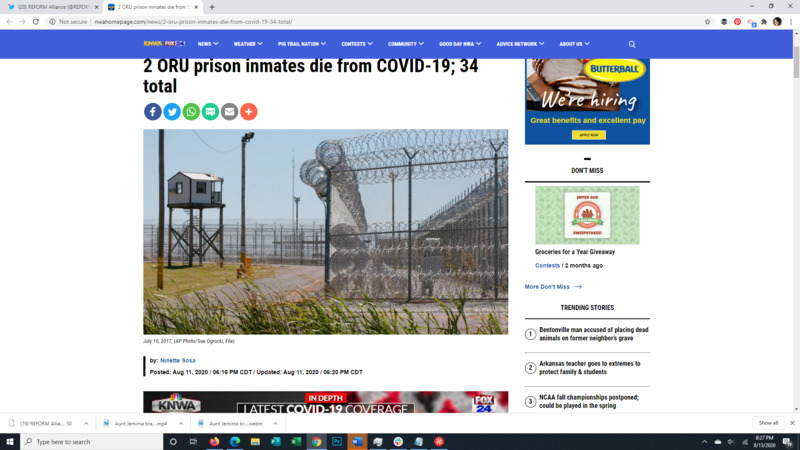
Two more people incarcerated at Arkansas state prisons have died from the Coronavirus, bringing the total deaths from the virus to thirty four. They also have 800 active cases.
-
2020-08-10
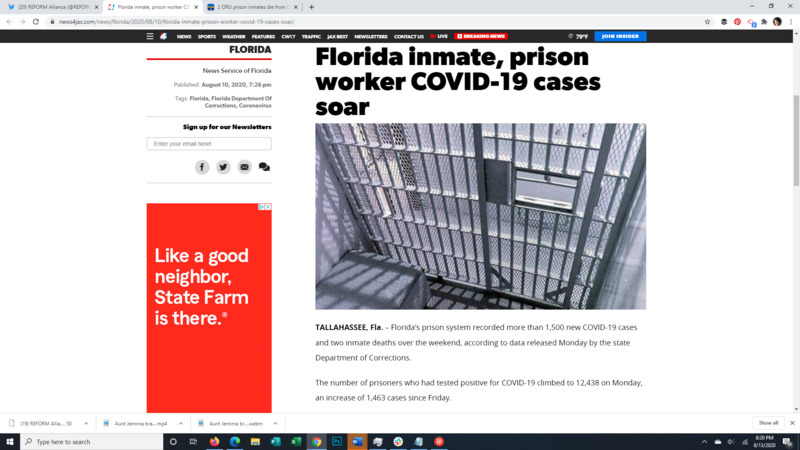
This article highlights the amazing speed at which Covid-19 spreads through the nation's correctional facilities. Over twelve thousand incarcerated people have the virus, of which sixty five have died.
As an example of how quickly the virus spreads the article sites the Taylor Correctional Institute going from 25 cases on August 1st to 564 on August 10th. To date over seventy-three thousand tests have been conducted in the states correctional facilities.
-
2020-07-24
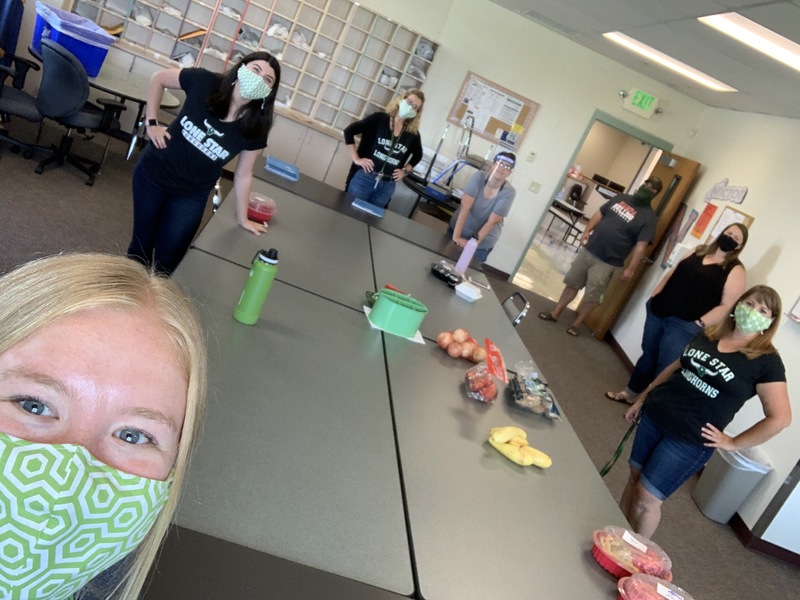
Did you even teach summer school if you didn't take a selfie? At the end of our 3 week in person summer school our principal ordered in food for all of the staff. There weren't many of us so we were able to share a meal together while still maintaining proper social distancing. This was the only time that we didn't have to wear a face covering of any sort. I remember how relieved I was when that day ended because I was tired of teaching summer school. But as we are beginning our year online I now miss those days because I got to interact with students in person rather than on a computer screen. The districts near us just decided to remain online until Ocotober 1, 2020 and I have a feeling that a similar decision will be made in my district as well.
-
2020-08-08
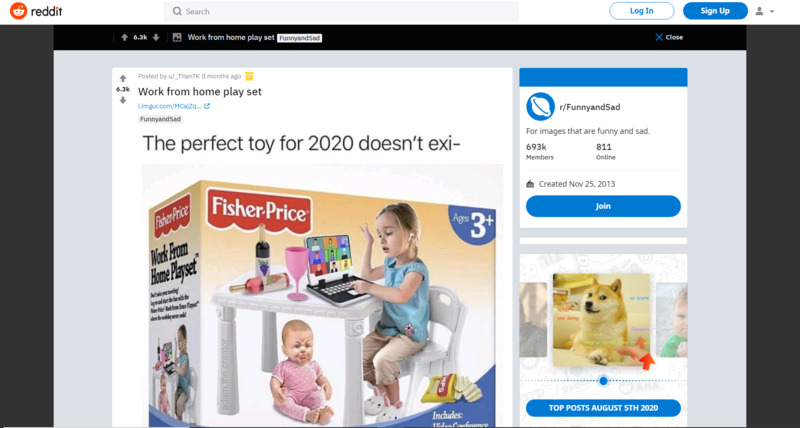
The perfect toy for 2020. For kids who want to imitate their parents, here is the toy for them. Note the earbuds, the laptop with Zoom software, the crying baby on the floor, the snacks, and the wine.
-
2020-06-01
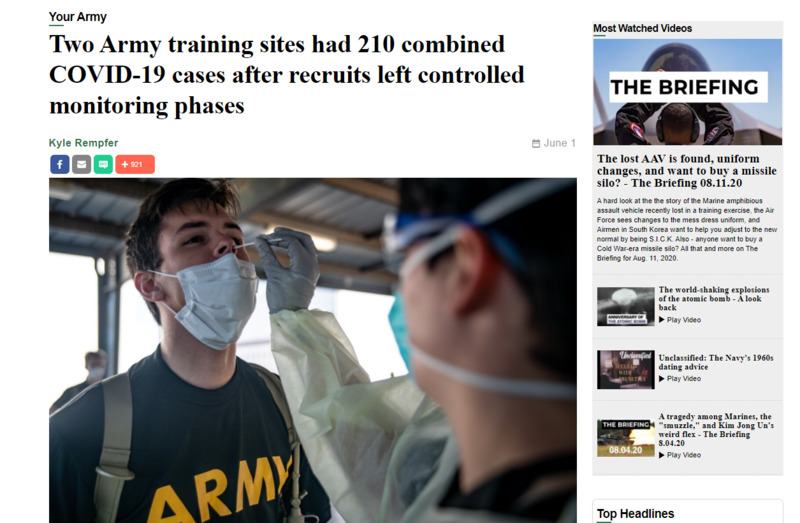
This is an article discussing new protocols for military basic training involving a 14 day quarantine period and testing before training as well as contact tracing.