
Items
Search full-text
apple pay, 【访问 Amsiga.com】oJM3t5i, CVV卡料, 同步鱼, 钓鱼网站教学 VV46
-
 2020-07-23
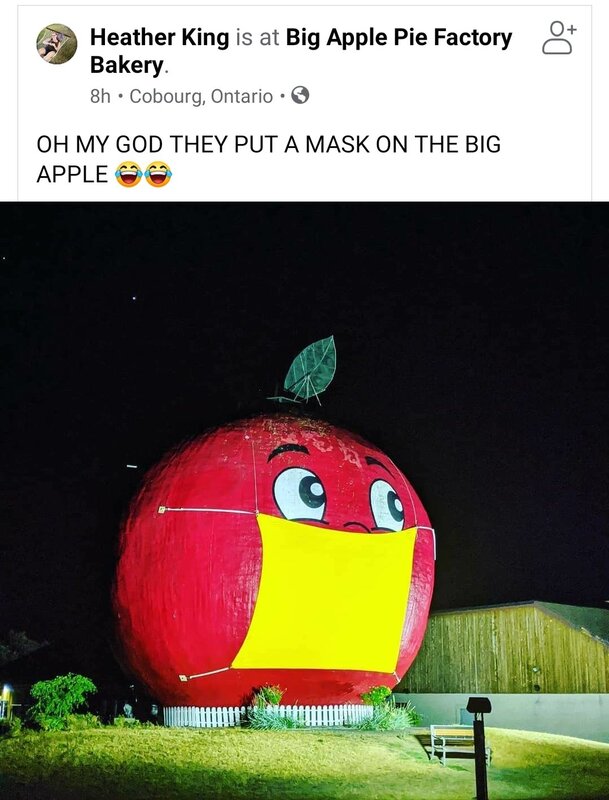
"Oh my God they put a mask on the Big Apple"
A photograph showing a facsimile of an apple, several stories tall, with a face painted on it. On the face is a large piece of fabric tied to look like a mask. The Big Apple is a roadside attraction along the busy Toronto-Montreal-Ottawa corridor of Highway 401 near Cobourg, Ontario. Anyone who has travelled this route within the last 20 years or more is familiar with the landmark which has, at times, been billed at the World's Largest Apple, and is attached to an apple pie bakery. The caption accompanying the photograph says "OH MY GOD THEY PUT A MASK ON THE BIG APPLE" (followed but two emojis crying from laughter) -
 2020-11-17
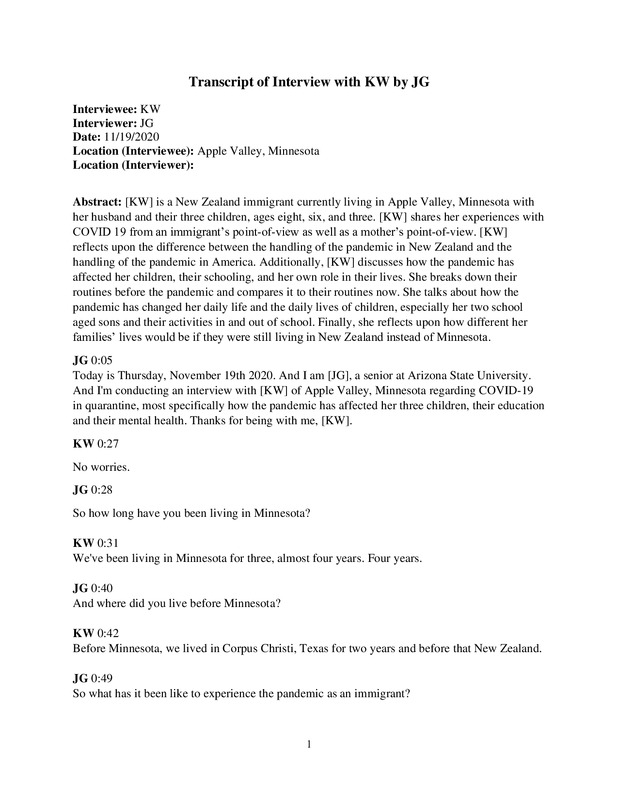
KW Oral History, 2020/11/19
[KW] is a New Zealand immigrant currently living in Apple Valley, Minnesota with her husband and their three children, ages eight, six, and three. [KW] shares her experiences with COVID 19 from an immigrant’s point-of-view as well as a mother’s point-of-view. [KW] reflects upon the difference between the handling of the pandemic in New Zealand and the handling of the pandemic in America. Additionally, [KW] discusses how the pandemic has affected her children, their schooling, and her own role in their lives. She breaks down their routines before the pandemic and compares it to their routines now. She talks about how the pandemic has changed her daily life and the daily lives of children, especially her two school aged sons and their activities in and out of school. Finally, she reflects upon how different her families’ lives would be if they were still living in New Zealand instead of Minnesota. -
 2020-08-04
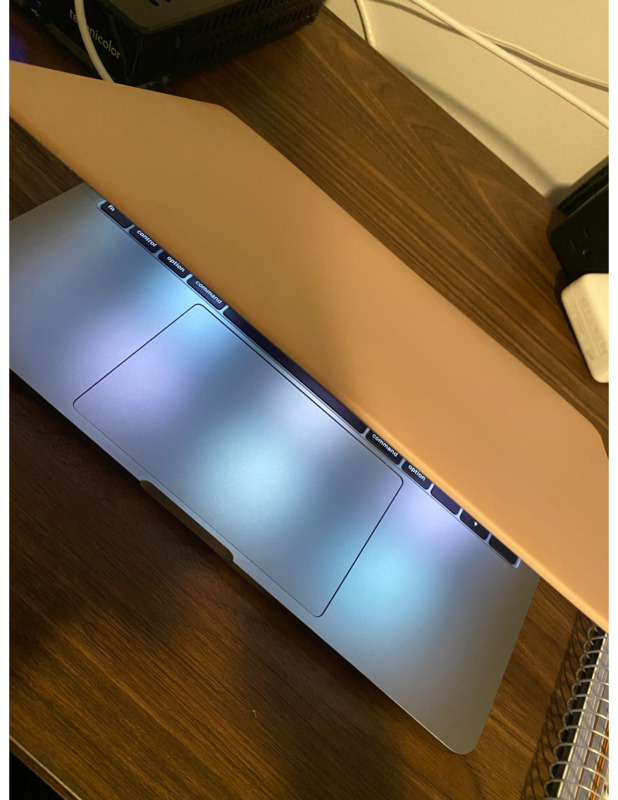
Life in a Pandemic
My laptop represents life during a pandemic because it shows how technology was used to overcome the challenges of being isolated and away from school, work, those that we love, etc. The laptop helped me personally because I was able to stay in touch with friends, become an ambassador for a company close to my heart, learn new skills, and get a marketing job. -
 2020-06-06
Cancel the noise
Since I've been stuck in the house doing a lot of chores, I use my AirPods a lot. I like to put them in and play some of my artists while I do chores. It makes a not so pleasant activity pleasant. Even when I'm not doing chores it provides a release. I get to kind of take a step back from being stuck inside with my family because I can't hear anything when they are in. -
 2020-03-21
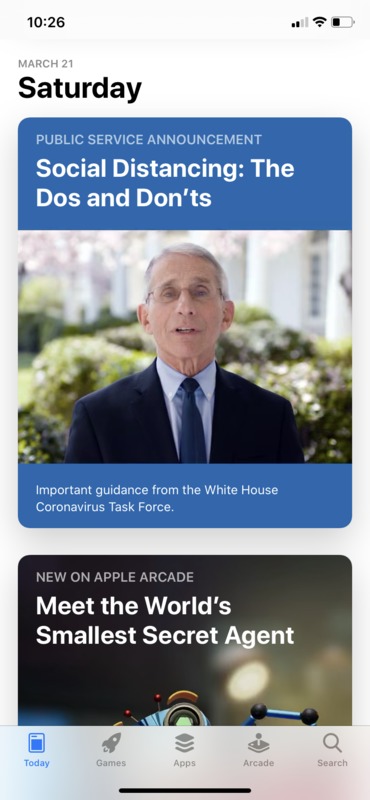
Apple App Store Social Distancing PSA
The Apple app store on my phone featured a public service announcement about social distancing, featuring Dr. Anthony Fauci. It shows how different companies are attempting to help inform people on the importance of flattening the curve. -
 05/15/2020
Mackenzie Shay Oral History, 2020/05/15
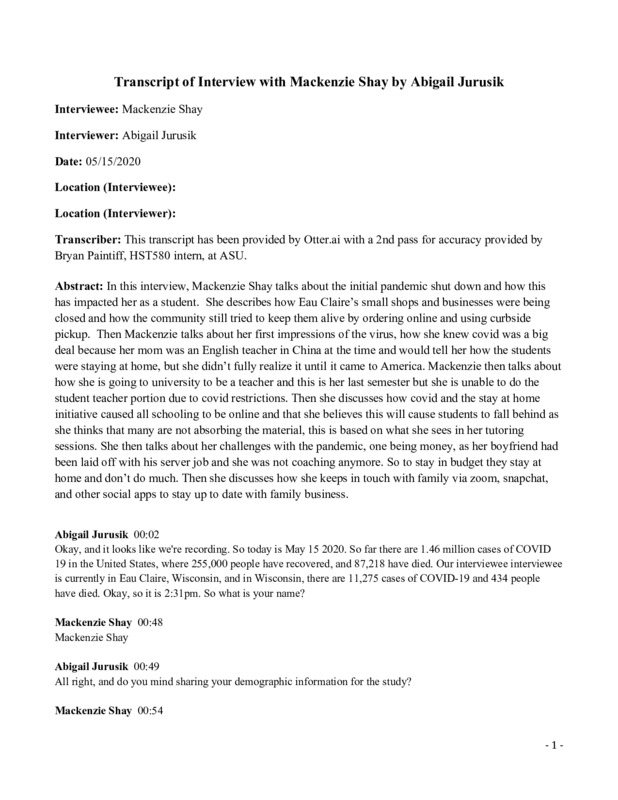
In this interview, Mackenzie Shay talks about the initial pandemic shut down and how this has impacted her as a student. She describes how Eau Claire’s small shops and businesses were being closed and how the community still tried to keep them alive by ordering online and using curbside pickup. Then Mackenzie talks about her first impressions of the virus, how she knew covid was a big deal because her mom was an English teacher in China at the time and would tell her how the students were staying at home, but she didn’t fully realize it until it came to America. Mackenzie then talks about how she is going to university to be a teacher and this is her last semester but she is unable to do the student teacher portion due to covid restrictions. Then she discusses how covid and the stay at home initiative caused all schooling to be online and that she believes this will cause students to fall behind as she thinks that many are not absorbing the material, this is based on what she sees in her tutoring sessions. She then talks about her challenges with the pandemic, one being money, as her boyfriend had been laid off with his server job and she was not coaching anymore. So to stay in budget they stay at home and don’t do much. Then she discusses how she keeps in touch with family via zoom, snapchat, and other social apps to stay up to date with family business. -
 05/02/2021
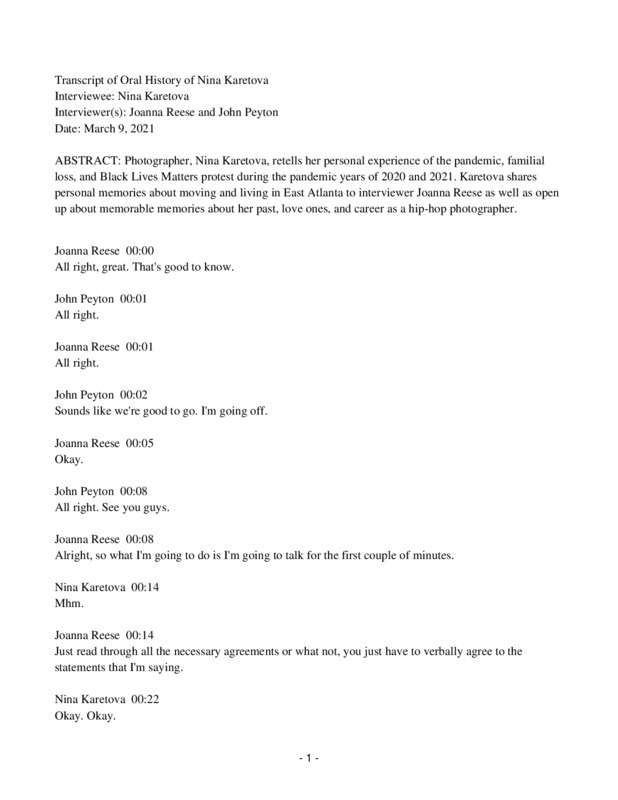
Nina Karetova Oral History, 2021/03/09
Indiana University advocate, Joanna Reese interviews Atlanta photographer, Nina Karetova. -
 04/16/2020
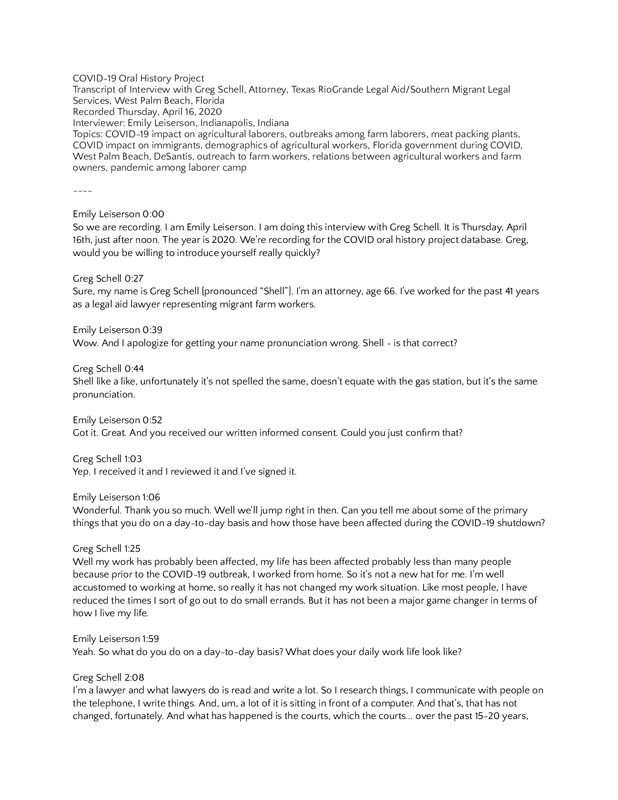
Greg Schell Oral History, 2020/04/16
-
 09/23/2020
Marla McCartney Oral History, 2020/09/23
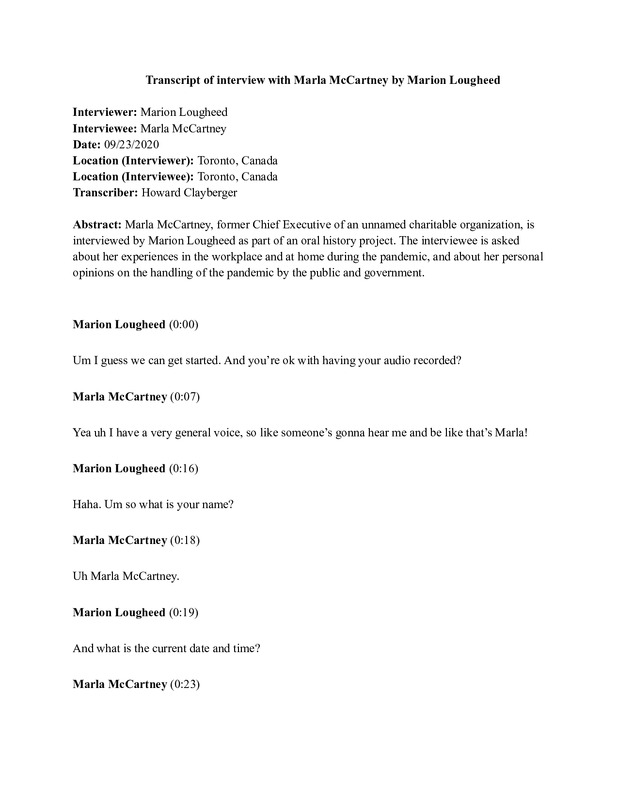
Marla McCartney, former Chief Executive of an unnamed charitable organization, is interviewed by Marion Lougheed as part of an oral history project. The interviewee is asked about her experiences in the workplace and at home during the pandemic, and about her personal opinions on the handling of the pandemic by the public and government. -
 2021-03-31
Gyre Oral History, 2021/03/31
Self-Description: “My name is Gyre. I am a multidisciplinary artist based in South Africa with global ambitions. I specialize in music, but I also work as a freelance writer as well as in dance. I’m a dancer learning to choreograph. Political commentator, particularity with regard to the LBGTQA+ community. I identify as queer. I am homoromatic and homosexual at this point in my life. You never know honey, it’s a spectrum. I had my first venture into artistic expression that is rooted in queer rights and queer understanding and queer theory, was my debut album, titled Queernomics, which was a documented audio-visual book about the contemporary experiences of a Black queer South African male, and that has gotten me into the positions that I express myself in, both out of passion and out of profession. Inkosi Yenkonkoni, which means “The Gay King”, in my native language which is Zulu.” Other details available here: Works produced during the pandemic: Kithi, International LGBTQ+ Rights Festival, writing on football. Some of the things we spoke about included: “What happens at the top is just politics, what happens at the bottom is real life.” Thinking about the term “pandemic” Listening to the body The pandemic exposing state corruption Having written a song called “Quarantine” in 2018 The inadequacies and privileges of Medical Aid in South Africa, having aged out of Medical Aid before COVID, the personal impact of worse-health insurance during pandemic, the importance of demonetizing health care Pre-COVID keeping busy: organizing, walking, collaborating Transit during COVID, sub/urban and outskirt disparities Canceling shows and taking dance classes and rethinking what it means to be productive Global Americanization and the impact of Trump’s pandemic denialism on South African health Moving out of disbelief about the severity of COVID after losing a loved one in the first wave Gratitude for the global influence of the Black Lives Matter movement, and sadness that tragedy in the diaspora brings neocolonialism to the fore The importance of social media for queer counter-violence and activist fractures among LGBTQA+ Feeling allyship with the #metoo movement How homophobia intersects with everyday altercations about social distancing The anxieties of hooking up during the pandemic The importance that scientists learn to speak in lay terms about climate change and vaccines Existence as resistance and creating art “Spread love not tolerance” Other cultural references include: Trans Day of Visibility, astrology, and the TV series Pose. -
2020-04-11
virtual learning
Doing school online was a crazy experience that I will not forget. I did all of my class on my apple laptop on zoom. I was able to go on zoom in different places such as Utah, Arizona, friends houses, and just different room in my house. It was fun because i could wake up and just go to my computer, i wouldn't have to get ready for school. It also sucked cause i couldn't see my friends and it was hard to learn and pay attention online. That was about everything that happened during online school. -
 04/11/2020
Talitha Brandel-Black Oral History, 2020/04/11
-
 2020-06-24
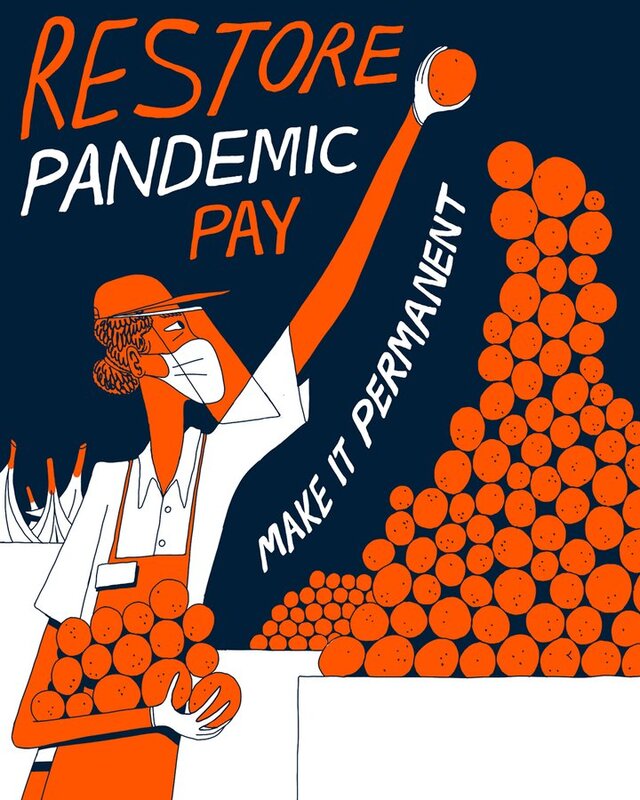
Restore Pandemic Pay // Make it Permanant Poster
A poster shared on social media in support of advocacy work being done by a friend of the artist. At the beginning of the pandemic, workers in Canada's major grocery stores were given pay increases across the board by their individual employers, as compensation for the additional work and precautions they had to undertake and the hazards they would face having to interact with many different people during the near complete shut down. As time has gone on and other business sectors have begun to open up, the grocery chains have repealed this pay increase, a move which many workers and supporters consider unfair given they are still facing the same risks they have been since the beginning of the pandemic in Canada. -
 2020-06-02
Ottawa hospital workers protest exclusion from pandemic pay
While some health care professions such as doctors and nurses are receiving additional pay during the pandemic, others such as technicians and therapists are not leading to protests for a more inclusive pay policy. -
 2021-02
Hoping for Good Days
It was several months since my last day in a classroom. March 13, 2020 to be exact. Friday the 13th. The previous school year we were told it was to be a possible 2 week break that ended up going until the end of the year. What was to become of the next school year of 2020-21? I tried to stay optimistic over the summer and enjoy the time spent with family. We were lucky to have each other and have a yard and house where we felt safe to be quarantined. I knew a lot of my students were not so lucky in that they lived in apartments with several family members. Still I wanted to be optimistic about the upcoming year. As the start of school year date got closer, it was apparent we were to continue online teaching via zoom. I felt I was pretty tech savvy and could integrate technology enough to keep my students engaged, but it was still challenging. I taught incoming freshman 9th grade students. They did not get the “new students” experience of coming to my school and meeting and greeting all the faculty and each other. Initially the expectation was to have all students have cameras on, and for the most part in that Fall semester, my students did. But then towards the break students started getting sick, parents were losing their jobs, some even lost family members. People were sad. We barely made it into the winter break with students attending “online”. I was fortunate to have most of my students log in but in other classes students stopped showing up. And if they did log in, cameras were off and it felt like talking to a void. Were they still paying attention? Were some of them just logging in and doing other things like playing video games or sleeping? I was frustrated, but also empathetic knowing for a lot of these students survival, not academics, was their priority during the time. After the winter break and a return to zoom teaching, it was a palpable sadness. There were people who had lost loved ones, and my students were depressed. I could feel the grief and sorrow through the screen and sometimes I would weep after my classes ended for the day. I had to maintain a persona of optimism for my students online and also keep encouraging their academic pursuits. I have never had such a challenging teaching year like the 2020-21 year. The sensory experience I am recalling is sometime in February of 2021. It was the second semester of school, back from the break and many people had a rough time of the holiday season with loneliness, fear, and loss. I don't know how I came up with the idea but I thought about students sharing playlists with the class. I would review them, and if we had a test together on zoom I would play songs on the background. One particular song I found was “Good Days” by SZA. It was not my style of music, but I knew it was what my students listened to. The day I played that song I started to get a lot of feedback from the zoom chat from all my classes about that song. By this time a majority of students had stopped showing themselves on camera and/or stopped talking, however Good Days sparked something in my students. The intro of the song is very melodic and serene. It is one of those songs that sounds very sweet, but is very sad at the same time. I could tell by the response of my students that it hit a nerve. A few of them began to speak up again in class, a few would turn their camera on again. And of course, I had several sending messages after class thanking me for the song. This happy/sad song connected me again to my students that I thought I had lost over winter break. It gave me a little hope again, and I think it gave some of them hope too. Now, whenever I hear Good Days by Sza it reminds me of those lonely online zoom classes in February and how we were all feeling a bit sad, but a simple song gave us all a bit of hope that the future was to have some Good Days ahead. Lyrics to Good Days All the while, I'll await my armored fate with a smile Still wanna try, still believe in (good days) Good days, always (good days) Always inside (always in my mind, always in my mind, mind) Good day living in my mind -
 2020-08-10
Smelling the labor shortage
Trash stinks. This fact is universally recognized, except, maybe, by raccoons and the like. Nobody likes to have trash around, let alone piled up and overflowing. And that's not something that most people have to really worry about. The – at least relative – cleanliness of the streets is taken for granted by the vast majority of people who are privileged enough to enjoy regular cleanup services. For most of my life, I placed my trash in a bag in a bin in my kitchen until it was full, or, if I made chicken for dinner, until I was done cooking. Then I took the bag out of the bin and out to the larger bin outside – out of sight, out of mind. When Sunday night rolled around, I emptied the kitchen bin one final time, took it out, and wheeled the larger bin to the sidewalk. It was empty when I woke up on Monday and thus began the cycle again. The city's sanitation workers faithfully took care of mine and everyone else's trash before the crack of dawn. But something changed one Monday morning in August 2020. I pulled in the driveway at 3:30pm after having just finished an exhausting shift at a coffee shop, where a third of my coworkers had called out sick over the course of that week. As I always do, I walked over to the bin, grabbed the handle, and started wheeling it back to its usual place by the back yard gate. It felt heavy. It wasn't full; I usually don't produce enough trash to fill it up every week. "Was today a holiday?", I thought to myself. No, it was just a regular Monday – as regular as any day could be post-March 2020. Maybe they were just behind schedule. I kept walking back to the back yard gate and. as usual, I spun the bin around intending to just walk away. Being clumsy, I managed to set it off its balance and knocked it over. Trash spilled onto the ground and one of the bags broke open. The smell of rotting eggshells, an old hunk of cheese I found while cleaning out my refrigerator three days prior, and the, er, soiled, cat litter wafted upwards creating a smoldering cocktail of aromas that left me coughing. I got gloves and a mask (something I never would have owned six months back) and cleaned it up – no big deal. Tuesday came and still there was no sign of the sanitation workers. Sunday arrived and again I wheeled the bin to the road; this time it was so full that the lid would not fully close. I assumed that last week's interruption of service was a one-off. As I got home from work Monday and saw the bin still full, I realized the degree to which I had been taking the trash service for granted. I wheeled it back to the gate, went inside, and opened up the news app on my computer. I stumbled across an article about the disproportionate affects of COVID-19 on essential workers. The lack of service was not a one-off, it was a problem. Recent photos of streets littered with trash and overflowing bins abounded when I did a Google search for them. I went outside to go for a walk. That smell – the cocktail of cheese, eggs, and cat litter – was now at my front door. Similar cocktails emanated from each house I walked past, each with their own garnish, so to speak. It was overpowering. It was the first time I had experienced the result of our modality of living in such a visceral, sensory way. But beyond my own discomfort and beyond the discomfort of my neighbors' similar experiences, that overpowering stench that saturated the air made me conscious of the people who clean it up for me every week. It made me conscious of the degree to which we as a society depend of them and people who perform other services we take for granted. It highlighted, in a very stark way, what our society prioritizes above the health of its people. The sanitation workers don't make very much money. They have to go to work, even if they are sick, because lack of guaranteed sick time even in the midst of a raging pandemic puts their lives at risk. Either way, their lives are at risk. -
 2021-06
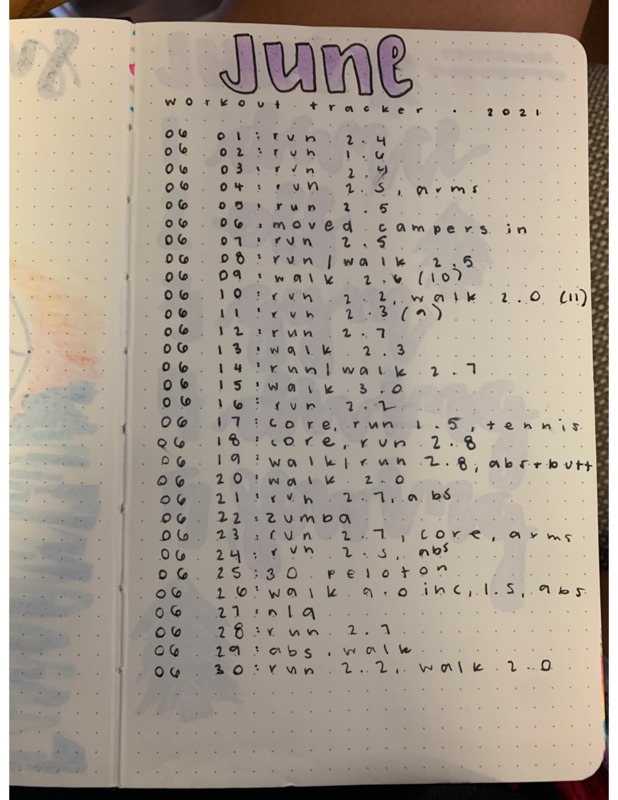
Lasting pandemic effects of overexercising
This page from my bullet journal displays the workout I conducted each day during the month of June, 2021. The viewer should note three pertinent pieces of information to understand the necessity of this piece for the archive: the bullet journal itself, the exercise habits, and the timeline between the beginning of the pandemic to the actual entry. Primarily, I picked up the hobby of bullet journaling itself during March of 2020. I wanted a method to record my own habits – such as exercise, eating, music taste, and TV shows - in a scrapbook type format during the pandemic. Truthfully, the entire book would contribute to the archive, due to the personal detail and day-to-day routine recorded. Secondly, the workout tracker shows a slight addiction to exercise, with runs or walks every day, in addition to tens of thousands of steps I already took. These overexercising habits began for me during quarantine, with time and stress on my hands, and no healthy ways of coping. Finally, the reader should also acknowledge that I wrote this entry in June of 2021, a full 15 months after the start of lockdown in the US. That timeline shows that lingering effects of the pandemic remain, perhaps even grow with time. This artifact expresses more about my experience with the pandemic than I can articulate due to one central reason: learning self-love through exercise. Though I’d always struggled with having time on my hands, the pandemic left me feeling more uneasy with loneliness and boredom. Without a healthy way to deal with my emotions, I turned to exercise for the release and endorphins that I needed. Before I knew it, a casual workout each day led to apple watch addiction, calorie counting obsession, and cycles of binge eating and overcompensating through exercise, etc. While this sounds like my own personal journey, quarantine kickstarted and exacerbated these issues for adolescents all over the nation. With the recent introduction of tiktok “What I eat in a day” videos and Chloe Ting’s workout videos, people grew obsessive about wellness and moving their bodies. I learned so much about my body and my brain through this struggle with overexercise and obsession – and I feel grateful for that. Still though, I notice these effects in myself and others. This small contribution of a workout tracker speaks volumes about habits of teenagers after months of loneliness and free time – whether teenagers obtained an obsession with appearance, food, or exercising. And if those issues did not resurrect for some, I’d argue that the pandemic brought many other mental health challenges to surface for my age group. While this submission does little to express my emotions or challenges surrounding my exercise routine, it conveys the lingering effects of mental health tolls and body challenges from the pandemic. -
 2020-04-10
Finding Creativity in the Times of Covid-19
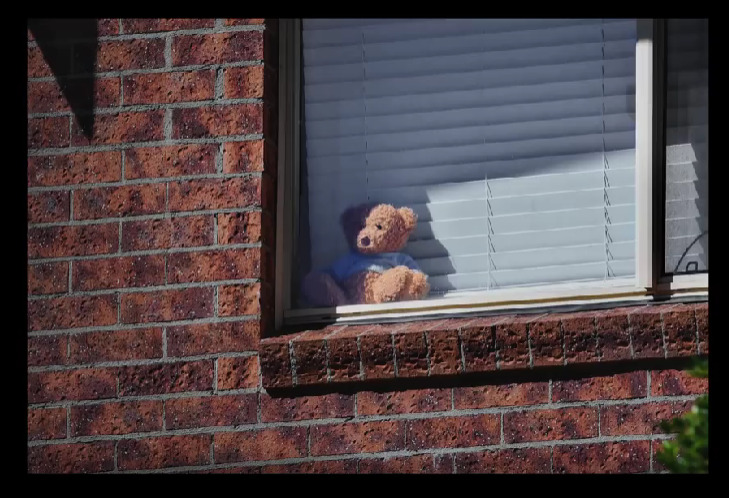
This is an inspirational video produced by the company Apple. This short one-and-a-half-minute long video consists of various photos and videos filmed by people all over the world durig the pandemic. There are great displays of creativity and different forms of art in this video. For instance, the art of playing the violin, learning to dance ballet, as well as the craft of making of old motion pictures are all displayed in the source. I chose to display this object because reflects the needs and considerations of an ethical archival collection. This source assures that an abundance of different perspectives from people of many backgrounds are represented respectively. I also feel as though this archive does attempt to fill an archival silence and amplify the voices of marginalized groups by allowing for such a diverse array of people to be included in this video featurette. -
 2020-05-19
The World Exists in the Palm of My Hand
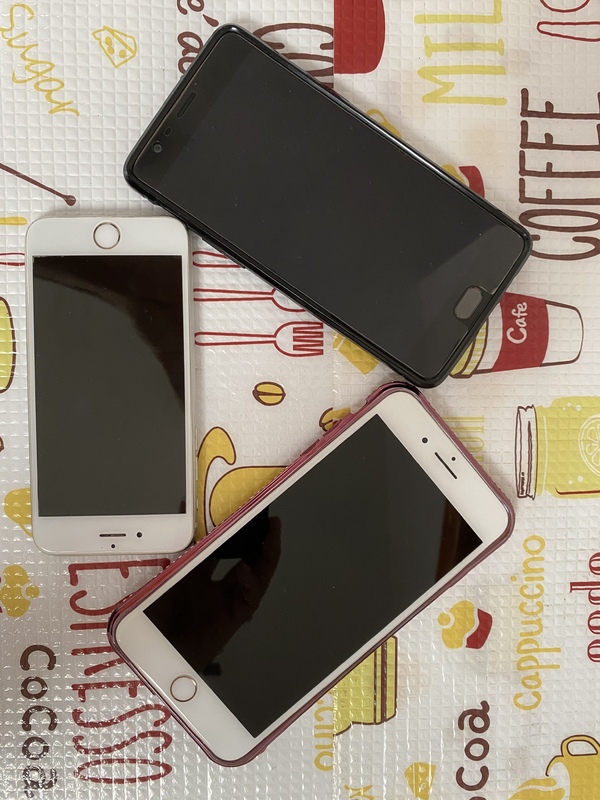
The object I'm submitting does not only show us its important during this Pandemic but in everyday life. This object has merely existed for no more than 30 years but has had profound impact on our society. Companies Like Apple Inc. and Samsung Group have made fortunes seeing these items to us. The object that I believe has made a massive impact on my life and the lives of many people around the world are cellphones. These small bricks of metal and plastic seemingly run the world. They control humans and push forward everything from the spread of information to entertainment. Without my phone to keep me entertained, connected, informed and busy; the quarantine and the Pandemic in general would have been much hard. Anywhere in the world I connect and communicate with anyone. During a time when we weren't allowed to leave home phones became a lifeline for communication. I find it very interesting that before the Pandemic people would blame phones for the lack of human contact. Now that the Pandemic has been in full swing the only form of contact we have is through these phones. -
 2020-08-10
Music That Got Me Through Quarantine
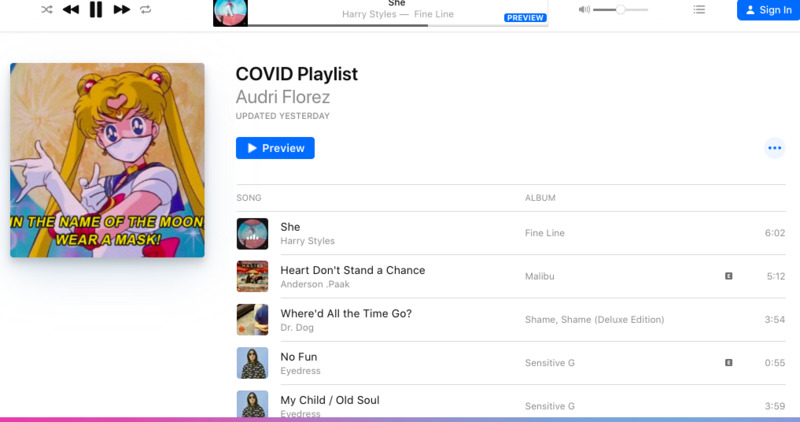
Music is something that has always helped me. But music has helped me the most with getting through this pandemic. It allowed me to just escape to a whole new world. This playlist in particular has many uplifting songs and very few down songs. I want more uplifting music because we need more positivity at a time like this. I hope my playlist can give others a positive vibe and good feeling. -
 April 8, 2020
The Big Apple Sleeping For The First Time Since The 1800s
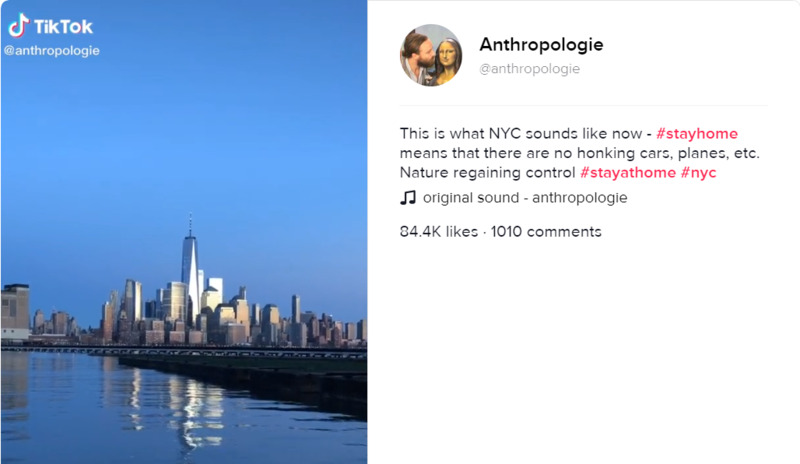
Birds and other sounds of nature are now audible because of the extreme decreases in human activity in New York City due to COVID-19. This media goes to show how much of an effect humans have on nature.Original caption by the creator: This is what NYC sounds like now - #stayhome means that there are no honking cars, planes, etc. -
 2020-05-04
My Stupid Dead iPhone
This phone crashed on me the beginning of last week. While I waited for my new phone to arrive in the mail, it was at first liberating to be without at phone. I didn't check the news as much, didn't feel as weighed down emotionally. However, it quickly became more anxiety-producing to not have a phone. It was harder to communicate with the outside world. When I did have to call someone, I used my husband's phone. This prompted friends to worry that I was laying in a ditch somewhere. It felt very good when that package arrived from Apple. -
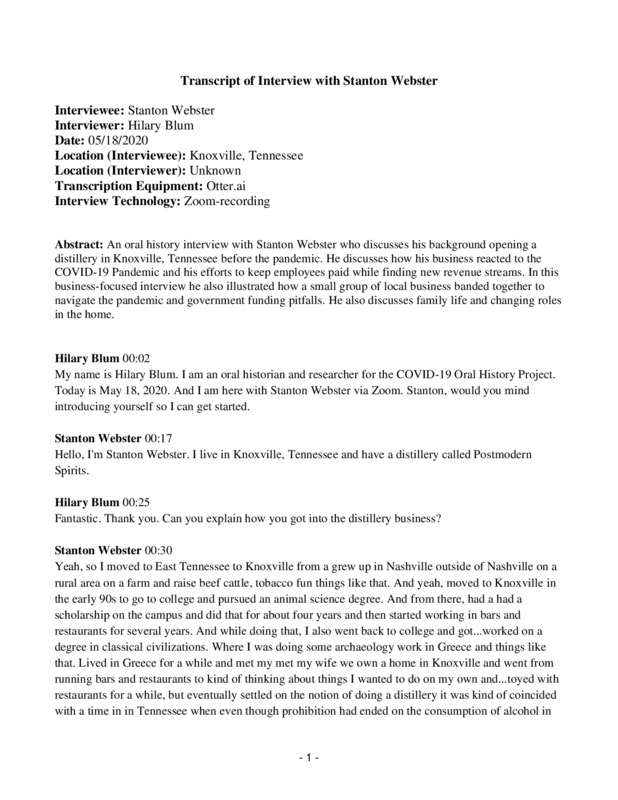 05/18/2020
Stanton Webster Oral History, 2020/05/18
An oral history interview with Stanton Webster who discusses his background opening a distillery in Knoxville, Tennessee before the pandemic. He discusses how his business reacted to the COVID-19 Pandemic and his efforts to keep employees paid while finding new revenue streams. In this business-focused interview he also illustrated how a small group of local business banded together to navigate the pandemic and government funding pitfalls. He also discusses family life and changing roles in the home. -
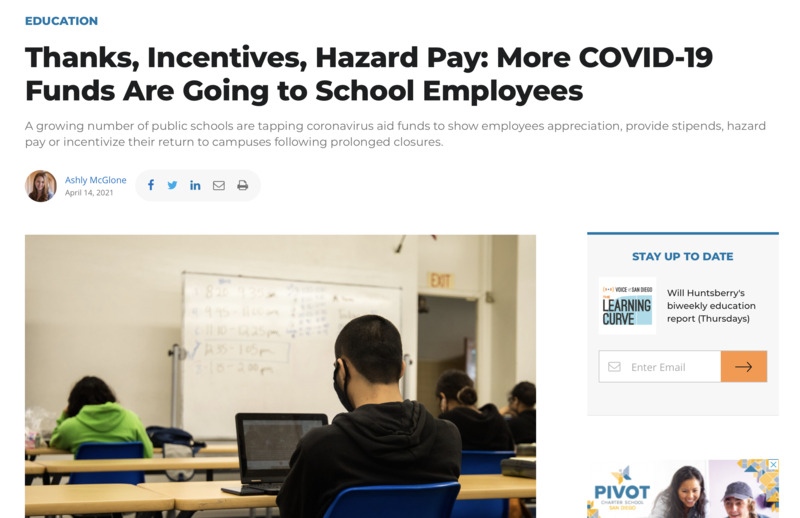 2021-04-14
California teachers are getting one-time stipends as incentives and hazard pay
As much as there are "reopening schools" supporters, there are about as much hesitant to do so. You might hear the hesitations from concerned parents and children, but school employees experience it as well. Schools are typically crowded and people are in close quarters at almost all times of the day. Although California regulations are to remain 3-6 feet apart in and out of classrooms, it continues to be a difficult challenge. Moreover, such precautions might lessen the spread but they're not guaranteed. This is where aid funds in the form of stipends come in. These stipends are displays of gratitude, used as an incentive and, unfortunately, hazard pay. More than $2 billion will be distributed across 42 K-12 school districts in the San Diego region. Stipends vary, however. There are one-time stipends for Lakeside school district teachers who have taught since October 1, 2020 of $450 to $900. Special education teachers in the same district will receive more, about $500 to $1000. Despite the incentives, there is an ongoing conflict over who is eligible for the stipend (to my personal surprise). One argued that only employees returning to campus are eligible, while there was a debate over whether those teaching since Fall 2020 should even be compensated for. If this were the criteria, it should simply be an incentive to return as the act of “being appreciative” would not exclude any teachers who have and will continue to work during the pandemic. -
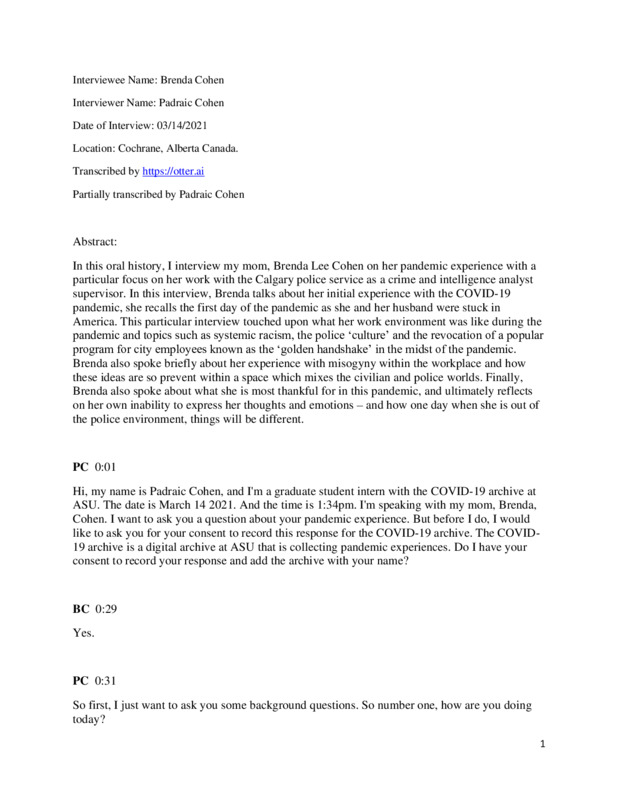 2021-03-14
Brenda Cohen Oral History, 2021/03/14
In this oral history, I interview my mom, Brenda Lee Cohen on her pandemic experience with a particular focus on her work with the Calgary police service as a crime and intelligence analyst supervisor. In this interview, Brenda talks about her initial experience with the COVID-19 pandemic, she recalls the first day of the pandemic as she and her husband were stuck in America. This particular interview touched upon what her work environment was like during the pandemic and topics such as systemic racism, the police ‘culture’ and the revocation of a popular program for city employees known as the ‘golden handshake’ in the midst of the pandemic. Brenda also spoke briefly about her experience with misogyny within the workplace and how these ideas are so prevent within a space which mixes the civilian and police worlds. Finally, Brenda also spoke about what she is most thankful for in this pandemic, and ultimately reflects on her own inability to express her thoughts and emotions – and how one day when she is out of the police environment, things will be different. Interviewee Name: Brenda Cohen Interviewer Name: Padraic Cohen Date of Interview: 03/14/2021 Location: Cochrane, Alberta Canada. Transcribed by https://otter.ai Partially transcribed by Padraic Cohen -
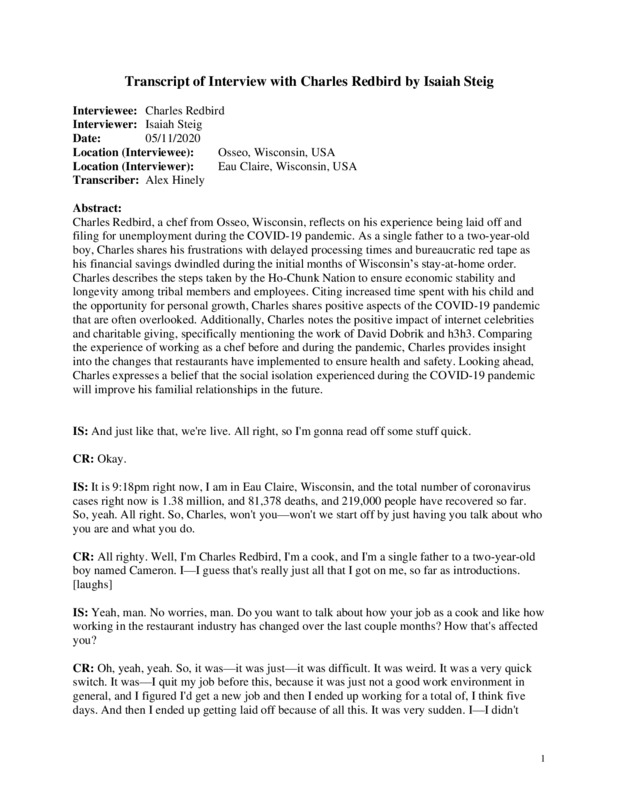 05/11/2020
Charles Redbird Oral History, 2020/05/11
Charles Redbird, a chef from Osseo, Wisconsin, reflects on his experience being laid off and filing for unemployment during the COVID-19 pandemic. As a single father to a two-year-old boy, Charles shares his frustrations with delayed processing times and bureaucratic red tape as his financial savings dwindled during the initial months of Wisconsin’s stay-at-home order. Charles describes the steps taken by the Ho-Chunk Nation to ensure economic stability and longevity among tribal members and employees. Citing increased time spent with his child and the opportunity for personal growth, Charles shares positive aspects of the COVID-19 pandemic that are often overlooked. Additionally, Charles notes the positive impact of internet celebrities and charitable giving, specifically mentioning the work of David Dobrik and h3h3. Comparing the experience of working as a chef before and during the pandemic, Charles provides insight into the changes that restaurants have implemented to ensure health and safety. Looking ahead, Charles expresses a belief that the social isolation experienced during the COVID-19 pandemic will improve his familial relationships in the future. -
 11/27/2021
Rebecca Ferber Oral HIstory, 2021/11/27
Rebecca Lynn Ferber is a resident of Oronoco, MN, and currently works for the Mayo Clinic in Rochester as a CRNA (Certified Registered Nurse Anesthetist). In this interview, Rebecca talks about how COVID has affected her job as a CRNA and Mayo Clinic as a whole as well as a mom and wife. She also talks about how it has affected her family and friends and how some of her relationships have been strained because of different views on COVID. She touches on how it not only affects people's physical health but mental health as well and gives some advice for future generations. -
 2021-01-30
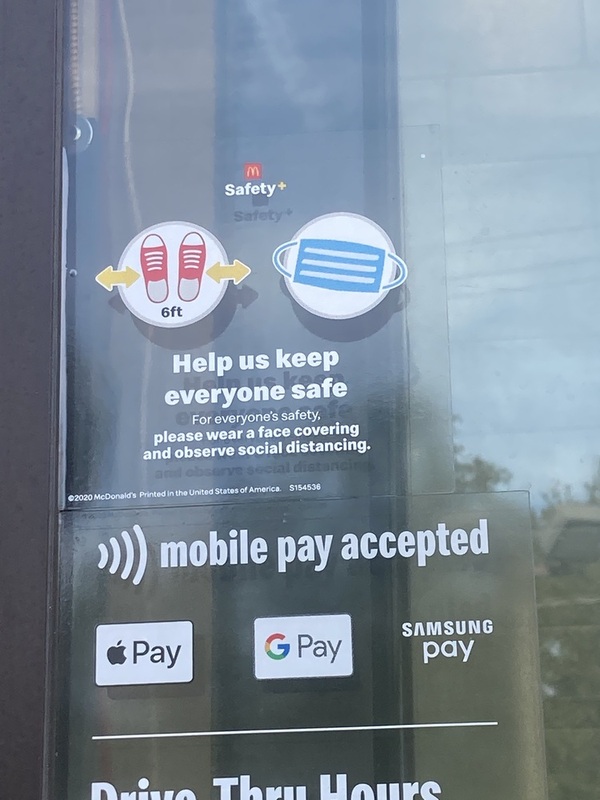
Local McDonald's Reminder of Mask Policy
Signs such as this one found in a local McDonalds have become commonplace during the pandemic. -
2020-05-10
TEN LITTLE TENANTS IN THE CORONAVIRUS CRISIS
TEN LITTLE TENANTS IN THE CORONAVIRUS CRISIS A little story from the lockdown By Berthold von Kamptz (2020, Hamburg, Germany) Before the corona period: Once upon a time there were ten little tenants. They lived in an apartment building near Charlesburg near Castle Newman Street in Atlanta, which was managed by the strict landlord Johann Hermann, a real estate agent and philistine, and his son Rudolf, an often rebellious son and sound engineer who owned a small music studio. The ten tenants lived in the red brick apartment building and not always harmoniously. But as long as they avoided each other and did not know each other well, it worked out reasonably well. Either they were too busy with their work, their relationship, family and other obligations, so that in this often stressful time before the corona pandemic there was hardly any time. Only Grandma Leni asked how Mr. Lemke, Mr. Schmitz, Mr. Weidmann or Mr. Ehlert were doing. Because she was a pensioner, was curious, interested in other people and had time. Otherwise - if you were honest - almost no one was interested in anyone else. Everyone had their own life, something to do with themselves. Most people left the apartment in the morning and then disappeared into the grey mass. And Grandma Leni thought: "My contacts in the building are only superficial. How I hate that." Tenant No. 1: The former humorous gallery owner Jochen Schmitz from Switzerland lived in the basement. He represented many young artists, had sales skills, good taste and often cracked jokes. And what artists he had! Neo-expressionists, conceptual artists, pop artists and cubists. What exhibitions he did. Nobody would have thought of that before! Tenant No. 2: And now we come to Grandma Leni. She lived on the left on the ground floor. Her name was exactly Grandma Leni Saubermann. She always read a lot, knitted and lovingly looked after her two grandchildren, who often visited her, as did her daughter Ruth. At 85, Grandma Leni was fit. And many thought: "What more can she do." But her son Hugo, with whom she had little contact, thought: "She's old, just wait a bit and then she'll leave us." Tenant No. 3: On the right on the ground floor lived the artist Fritz Weidmann. He came from Europe. He always wore trousers with holes in them. He was not successful as an artist. The gallery owner down in the basement didn't want him. Schmitz said: "At 40, he's too old. His work leaves me cold." So Fritz drank a lot and was often drunk. And when he raged, you could hear it throughout the house. And many said: When will the landlord finally throw him out! Tenant No. 4: Upstairs on the second floor on the left lived the singer Daniel Lechler. He often wrote and sang his songs - sometimes even late at night. And that really annoyed the neighbors below and next to him. But that's how he was. Vain and completely gay, that's just how this singer was. He had a friend somewhere that nobody knew.And the neighbor Herbert Lemke in particular got upset and hated guys like Daniel. He had to get up at 5 a.m. because he was a baker! Tenant No. 5: And now we come to the baker Holger Lemke. He lived on the second floor to the right, opposite Lechler's apartment. Lemke was always upset and the only reason they didn't argue was because Mr. Lechler rarely met him in the dark stairwell. And Lemke hated people who were different - people like Lechler, because he was also politically extremely right-wing. Tenant No. 6: To make matters worse, a tenant named Gustav Ehlert lived above him on the third floor to the right. And he wasn't politically right-wing, but politically extremely left-wing. He had lots of left-wing websites with multiple links. And sometimes he was inclined to violence. And he always felt miserable when he heard the tenant Lemke running around the apartment. And heard the people he hated ranting. And one day he came up with a nasty plan. Tenant no. 7: And on the third floor to the left lived Ali with his wife and child. The family came from somewhere in the Middle East Europe - presumably. After the arguments with Holger Lemke, which were caused by both of them, he was protected by Gustav Ehlert, who lived opposite his apartment on the right. Whenever there were problems, he simply went over to Ehlert. Tenant no. 8: Above Ali on the fourth floor to the left lived old Knut Rückner, who was suffering from cancer. He was alone, depressed and addicted to medication. He had an uncertain future. But he did not want to end it because he was a fighter. Reason prevailed here. Tenant no. 9: On the fourth floor to the right opposite Knut Rückner lived Tim Rösler, who often argued with his wife Anna since he had recently been unfaithful. At this point, Anna could not yet decide whether she should forgive her husband and stay with him, or not forgive him and leave him completely. She had already taken another room in Woodberry City in Atlanta and only lived with her husband from time to time. At first he begged her to stay with him. But gradually he had had enough of her swearing, accusations, frustration and jealousy. And he thought: "If it doesn't stop, I'll kill her or leave her, then finally stop shouting!" Tenant No. 10: And in the attic lived the graphic artist Albert Eisenblätter, a graphic artist who had been left by his girlfriend and who either cried now and then, watched TV or masturbated in his attic apartment. He had messed up several relationships. This was now the fourth! The landlord Johann Hermann and his son Rudolf: They lived in a single-family house in Greenwood City (Atlanta). And the father-son relationship was not always easy. Johann Hermann had a lot to do with managing the property. Since Rudolf often didn't help much in the past, this sometimes caused the relationship to cool down.Because Rudolf had a job and a lot to do. And therefore often had little time for property management. He was a sound engineer, was involved in various small music productions - also in advertising - and also had a small recording studio, but what he earned was not enough to live well from it. He had also gambled in the casino, had too many women who often stole money from his pocket. At some point he was in debt, it was no longer possible, and there were discussions with his father. And then everything came out. And then his previous life was over. And so he promised to pull himself together. And also to do property management and earn some extra money. His father told him: "You have to change, because if you don't, it will tear the whole family apart." And so they did property management together and Rudolf pulled himself together after these incidents. And soon father and son got along well again. And his father encouraged him. Then suddenly Corona came... Then suddenly Corona came and changed everything. Like a huge monster, Corona swept across the whole world. And turned everything upside down. In America. In Europe. In Afrika.... During the lockdown, all shops closed. Hotels, sports clubs, concert halls, opera houses, bars, restaurants, hotels, clubs, brothels, cafes,... Only supermarkets, doctor's offices and pharmacies were open. The landlord Johann Hermann and his son Rudolf: They panicked. Johann immediately bought masks from the pharmacy. And Johann immediately sent his son to panic buy. And soon the cans were piling up in the basement. But there was almost no toilet paper anywhere! It was a lot of running around to at least get kitchen paper as a toilet paper substitute. Fortunately, Johann earned well and had fortunately saved a lot of money during the Corona period. That was enough for the time being. Rudolf was not so lucky. He lost his job as a musician because concerts were not allowed and contact restrictions necessarily applied and could no longer keep his head above water financially. So Johann helped his son and then he managed to make ends meet. As the number of people infected with Corona kept increasing, Johann and Rudolf stocked up on food in the basement and then stayed at home. They were afraid. And they told themselves: If they stayed at home, nothing would happen. When they turned their attention to the property management, they noticed something frightening: There were more and more arguments among the tenants, some had not paid. Everyone against everyone, nothing had been normal since the Corona crisis. And if it continued like this, chaos would break out. That had a lot to do with Corona, Corona acted as a problem amplifier, nerves were frayed and this led to more arguments. Also due to tight budgets. Johann often said: "But often it is not just Corona, but also the people themselves, who have not learned to show solidarity and deal with problems. Many were doing too well before the crisis,could have everything they wanted and now there is a lockdown. A lot of things are different. You can't blame everything on Corona." Victim number 1 was tenant number 10: graphic artist Albert Eisenblätter was the first to freak out. He couldn't handle the lockdown and the loneliness at all, he kept thinking about his ex-girlfriend and masturbated constantly. And he often drank too much alcohol to the point of almost fainting. He couldn't handle losing all his graphic design jobs at all. He could no longer pay the rent and so Johann Hermann and his son Rudolf sent him several reminders by letter. They wanted to throw him out if he could no longer pay the rent. Then one day during the lockdown he stopped responding to their reminders. Finally, Johann and Rudolf drove to his apartment and knocked on his door. But he didn't open it! He seemed to have disappeared off the face of the earth. Then Johann called the police and they broke down the door. Then they saw Albert Eisenblätter and the rope around his neck. He had hanged himself! There were only 9 tenants left in the house. Victim No. 2 was tenant No. 8: Knut Rückner could not cope at all with the fact that tenant Eisenblaetter had hanged himself above him. He was still battling with his cancer. He only made it to his doctor's office in great pain and with the risk of contracting the coronavirus. And he couldn't even get all of his medication from the pharmacy. He only got one pack of antidepressants. Then he was taken to hospital and died. Then there were only 8 left. Victim No. 3 was tenant No. 2: Grandma Leni Saubermann fell into depression. Her grandchildren could no longer visit her during the coronavirus lockdown because of the risk of infection. She became increasingly lonely and depressed. Finally, her daughter Ruth made sure that she went to a nursing home. But before that, she caught the coronavirus when she secretly met an old friend. So she ended up in a nursing home and died a little later of Covid-19. Then there were only 7 left. Victim No. 4 was tenant No. 3: Tenant Tim Rösner did not die. But the lockdown frustration and certain circumstances caused him to become angrier and angrier. And his anger was directed at the gallery owner down in the converted basement, who did not appreciate his art. How humiliated he felt! He had already earned little from his art before and then Corona came along, so that he could not pay his rent. Finally, at some point he went crazy and beat up the gallery owner and devastated his gallery. He was then taken away by the police and had to go to a psychiatric hospital. Then there were only 6 left. Victim No. 5 was tenant No. 1: The Corona crisis also made the gallery owner Jochen Schmitz feel bad. After being attacked by the artist Fritz, he became depressed and suffered from post-traumatic stress disorder. He could no longer pay the rent,had to move and rent other premises. Nobody knew for sure whether he went bankrupt. When he moved out there were only 5 left. Soon after, the apartment was rented out again. Victim No. 6 was tenant No. 9: After a short period of peace in the apartment building, Tim and his wife argued more and more. The arguments were often so violent that everyone in the house heard everything. Then one day he almost beat her to death. Then he had to go to prison. She barely survived and then moved out too. There were only 4 left. Victim No. 7 was tenant No. 7: Ali got it in the fall. He attacked Mr. Lemke, Mr. Lemke attacked him. Nobody knew exactly who started it. Since Corona, it got worse and worse. Mr. Ehlert, who lived to his left, wanted to help him wherever he could. Even the singer Daniel Lecher! When Ali left the house one day, he was knocked down by an unknown man wearing a mask. The police could not prove anything against Mr. Lemke. Maybe it wasn't him. Only Ehlert suspected that Mr. Lemke was behind it. Ali was taken to the hospital. His family then moved out of the apartment. Ali did recover. But as we later learned, Ali became infected with Corona through unfortunate circumstances. So Ali eventually died of Corona. Then there were only 3 left. Victims No. 8 and 9 were tenants No. 5 and No. 6: After Ali's attack and his entire family moved out, Lemke and Ehlert got into increasingly serious arguments. When they met by chance outside, a fight broke out. Later there was a stabbing and both killed each other. So there was only one left. Victim No. 10 was tenant No. 4: One day during the Corona crisis, singer Daniel Lechner learned that his friend had contracted Corona in May 2020. According to stories, he visited him. The latter then died suddenly. Daniel became depressed and drank more and more. Then one day during the corona crisis he fell from the first floor. He later died in hospital. It was inexplicable and incomprehensible. Then everyone left the house and then there were only 0. The landlord Johann Hermann and his son Rudolf: The fact that so much was happening in the apartment building frightened Johann Hermann and his son Rudolf. It was pure madness! That wasn't the case before the corona crisis! First bills piled up. Then there was the first major trouble. The unpleasant tenant Lemke wanted a lot of repairs to be done in the house. All of the electrical systems in the basement, the doorbell panel, lights in the entrance, pipe inspections in the basement, a new refrigerator and the heating in his apartment, which was supposedly making noises. Some of it was certainly necessary, others not. A lot of it was lies or made up. He wanted to have the whole house done ideally and then live cheaply! And he acted as a caretaker, threatening to inform the building authorities.Who was going to pay for all of this? And all of this during the lockdown and the Corona crisis that followed! A little later, an unknown person caused a riot in the house and damaged doors in the basement, the railing, the steps, and rubbish was scattered around the basement. Nobody knew who it was. Johann suspected that it was a frustrated tenant or a tenant who had gone crazy during the lockdown and who hated Johann and Rudolf. Probably the evil Lemke! Or Ehlert - he was also a suspect! But nothing could be proven if there were no witnesses. Because suspicions were not enough for the police. Then, a little later, there were serious conflicts between the tenants. There were the first deaths. First the tenant Eisenblätter, then the tenant Rückner.... Every time Rudolf heard of a tenant's death in the apartment building, his hands shook. Johann was also worried. "During the Corona crisis and the lockdown, many people are going crazy. Unfortunately. Everyone against everyone. At first, during the Corona crisis in March and April, solidarity was the order of the day. But the longer the Corona crisis lasts, the more aggressive many people become. The good people seem to be dwindling. In the past, the bad people lived at the expense of the good. If everyone becomes bad, then even the bad people will eventually be afraid and no longer want to live in such a world. A philosopher once said something similar," said Johann. It was an attempt to explain these strange occurrences. Because of all the problems in the house, they eventually got into financial difficulties. Then their son Rudolf had an accident during the second lockdown. He drove drunk into a tree and then died. A little later, their father Johann died of a heart attack from grief. Uncle Jochen Hermann was Johann's brother. He inherited the apartment building from his brother. Renovations were carried out and new tenants moved in. Everyone thought that Jochen Hermann had solved all the problems with the apartment building. But then another disaster happened later: the house was set on fire by a leftist, a friend of Ehlert. Several new tenants died and the house burned down almost completely. Only rubble towered into the sky like individual memorials. They were images like from a war. The conclusion: And the undertaker Walter had a lot to do. And he shamelessly exploited the grief. For example, he made a mourner pay him 3000 euros for an expensive coffin and instead of the expensive coffin he only took a cheap coffin for 300 euros. That's how he made a profit. And how good the business was! Lots of people died - like mayflies - of Corona or perished or killed themselves or each other. "I love the Grim Reaper as long as he doesn't find me. And if he's looking for me, I'll hide somewhere in the cemetery behind the gravestones. But the money is there. And when the money is there, a good woman isn't far away for me. Because money is power. To be honest, I never let anything burn.I already have a steady wife. I'm a Corona denier anyway. For me, the hysteria about Corona is exaggerated, the people who died of Corona had pre-existing conditions and would have died anyway. I don't care. Life is too short, I don't care about rules. I have my wife. What does the Bible say? It says: The man should give to the woman what is due to her, and the woman to the man in the same way. Do not deprive one another of it, so that Satan does not tempt you... A pastor once said to me who was transferred because of a scandal. Walter, like many others, lived by the motto: "Let us eat and drink, tomorrow we die." How wrong he was! Even in the wrong interpretation of the Bible. He became careless with his contacts, later no longer paid attention to keeping his distance and wearing a mask. Shortly afterwards, he contracted Corona while giving a blowjob to a strange woman. He died a short time later. And finally, one more gravestone adorned Atlantas' Greenwood cemetery and on it sat a black crow with very black eyes. And it cawed horribly. It almost sounded like: "When is the next one's turn? In the meantime, I'll look at the graves." THE END -
 12/01/2020
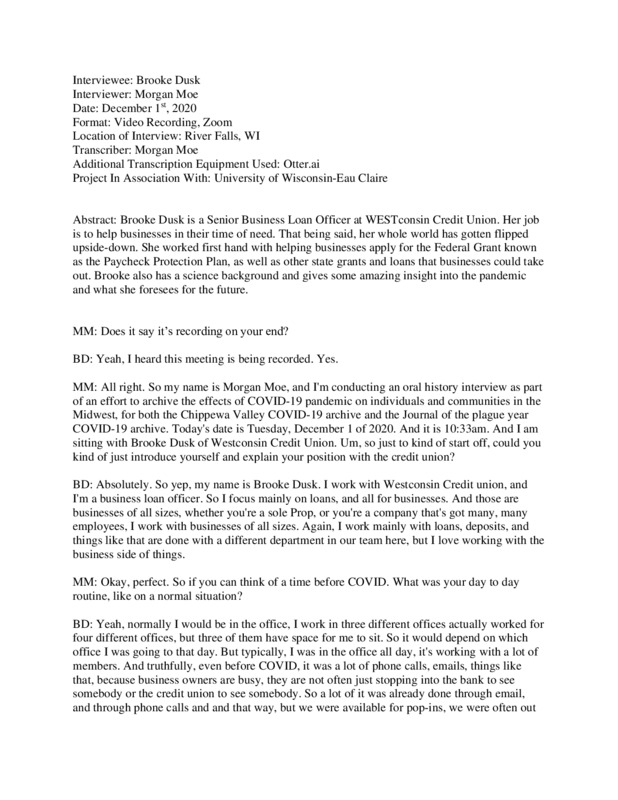
Brooke Dusk Oral History, 2020/12/01
Brooke Dusk is a Senior Business Loan Officer at WESTconsin Credit Union. Her job is to help businesses in their time of need. That being said, her whole world has gotten flipped upside-down. She worked first hand with helping businesses apply for the Federal Grant known as the Paycheck Protection Plan, as well as other state grants and loans that businesses could take out. Brooke also has a science background and gives some amazing insight into the pandemic and what she foresees for the future. -
 04/14/2021
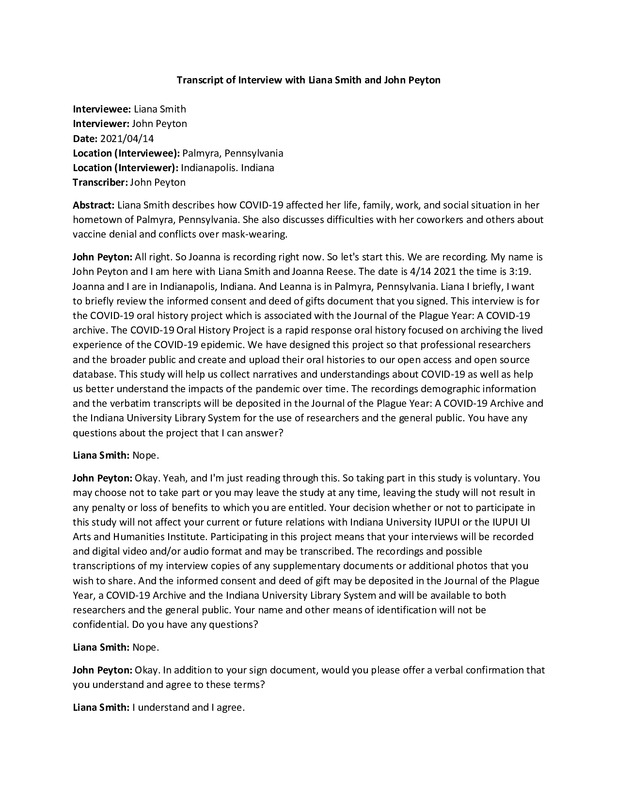
Liana Smith Oral History, 2021/04/14
-
 12/16/2020
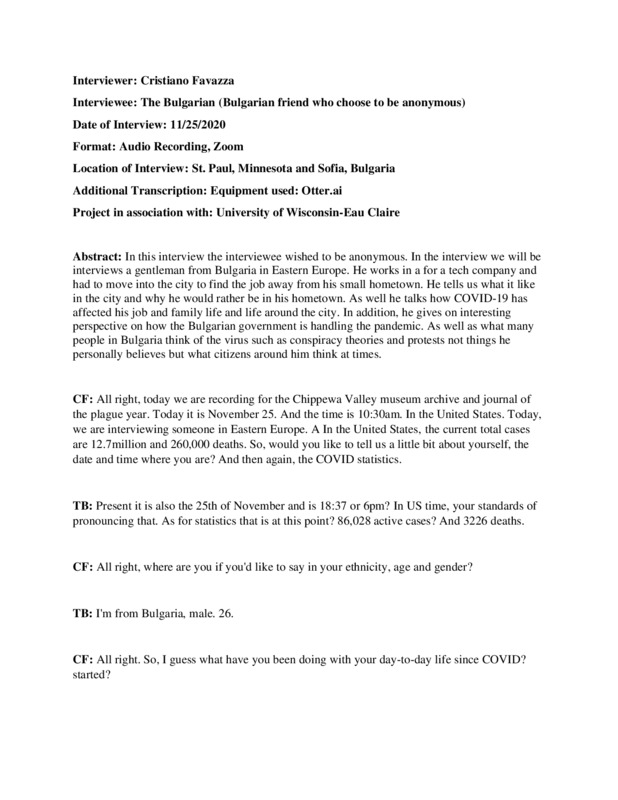
The Bulgarian Oral History, 2020/12/16
In this interview the interviewee wished to be anonymous. In the interview we will be interviews a gentleman from Bulgaria in Eastern Europe. He works in a for a tech company and had to move into the city to find the job away from his small hometown. He tells us what it like in the city and why he would rather be in his hometown. As well he talks how COVID-19 has affected his job and family life and life around the city. In addition, he gives on interesting perspective on how the Bulgarian government is handling the pandemic. As well as what many people in Bulgaria think of the virus such as conspiracy theories and protests not things he personally believes but what citizens around him think at times. -
 03/19/2021
Jeff Litsey Oral History, 2021/03/19
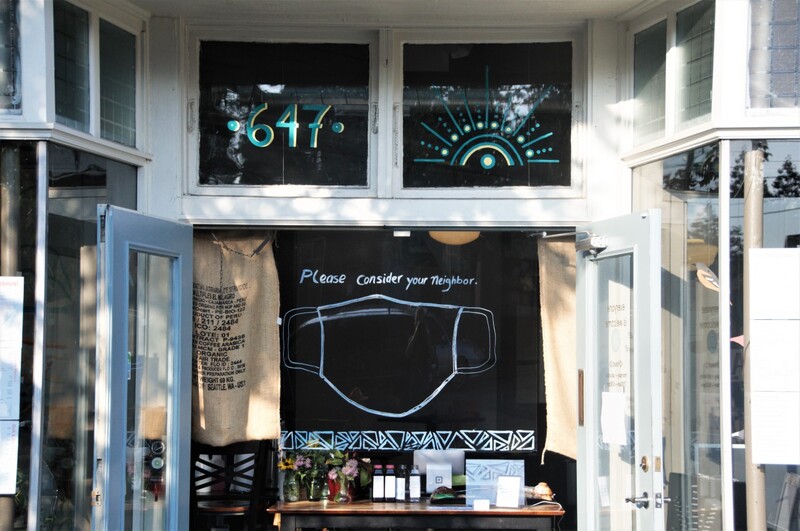
Jeff Litsey is a resident of the Fountain Square Neighborhood in Indianapolis with his wife and two children. Jeff discusses how the pandemic has affected his family life and schedule while also discussing how the neighborhood dynamics have evolved during the pandemic. Jeff talks about the challenges of running a small, locally owned, coffee shop during the pandemic in the Fletcher Place neighborhood of Indianapolis. This includes revenue, business plan evolution, government assistance, adjusting employee’s hours and pay, and helping employees and customers feel safe during the pandemic. He also illustrates how the neighborhood community helped his employees through tips that rolled into a community employee assistance plan. Additionally, Jeff discusses his anxiety that increased during the pandemic from running a business and worrying about how his shop could affect others and himself. This extended to worrying about his family. He discusses how the hobbies of art, hiking, and birdwatching helped him feel better. The interview ends with his hopes for all people to have healthcare and a home. -
 12/29/2021
Scott Koran Oral History, 2021/12/29
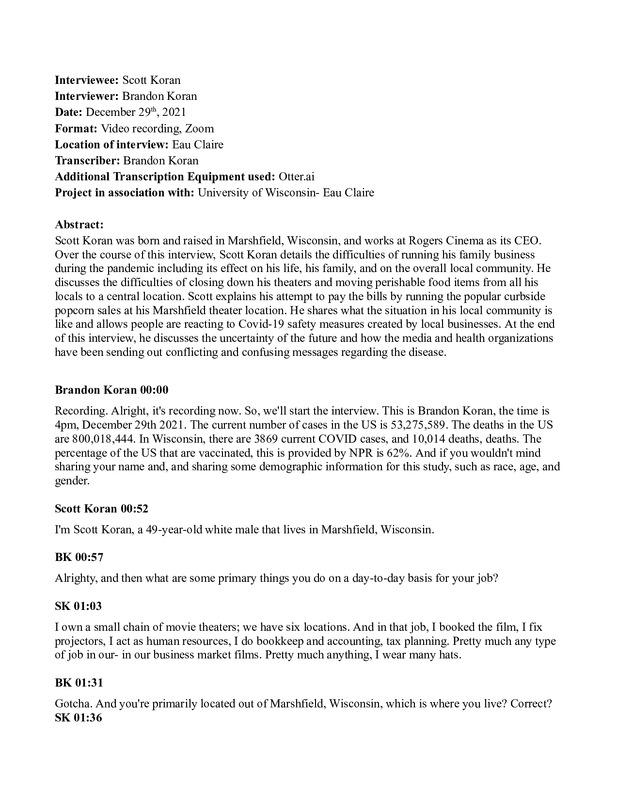
Scott Koran was born and raised in Marshfield, Wisconsin, and works at Rogers Cinema as its CEO. Over the course of this interview, Scott Koran details the difficulties of running his family business during the pandemic including its effect on his life, his family, and on the overall local community. He discusses the difficulties of closing down his theaters and moving perishable food items from all his locals to a central location. Scott explains his attempt to pay the bills by running the popular curbside popcorn sales at his Marshfield theater location. He shares what the situation in his local community is like and allows people are reacting to Covid-19 safety measures created by local businesses. At the end of this interview, he discusses the uncertainty of the future and how the media and health organizations have been sending out conflicting and confusing messages regarding the disease. -
 12/11/2020
Anthony Wallace Oral History, 2020/12/11
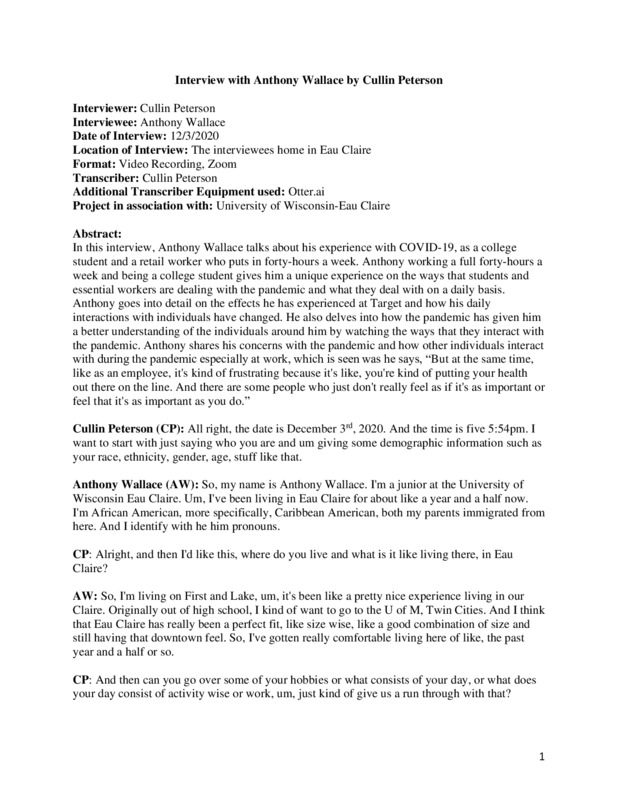
C19OH -
 2020-05-20
LaGuardia’s Ghost Town
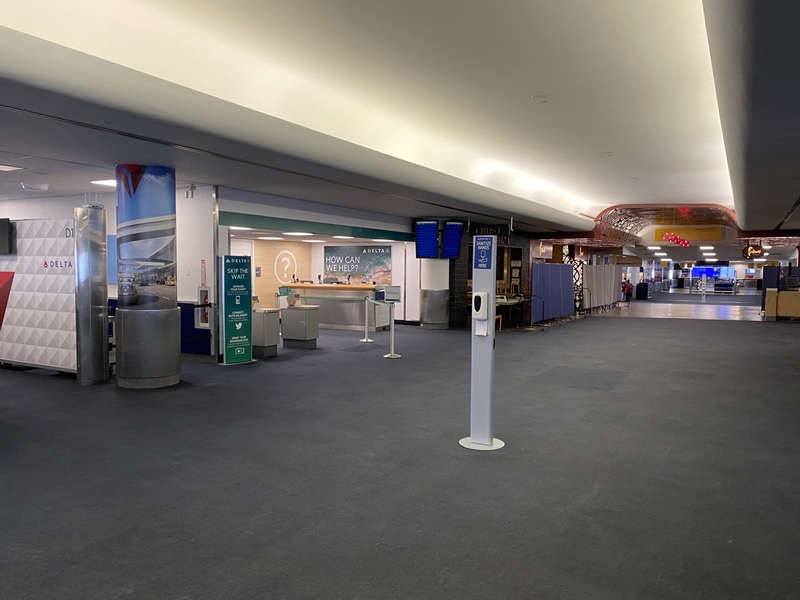
For my primary source, I selected a photograph I took of the gate house area in LaGuardia Airport in mid March of 2020. In the picture it shows several employees, sitting around doing nothing at all, the whole airport was a “ghost town”, meaning there were no passengers to assist with there tickets and gate claims, or any questions in general. During this time we were all nervous, not just nervous about COVID-19 and from the horrific scenes in the news, but also as an 11 year veteran in the airline industry, our jobs were on the line because of the decrease in flying, fear of flying, and the travel restrictions of no flying. With the airline burning 35 million dollars a day how can they pay 80,000 employees system wide I told myself. The airline soon told us system wide that it’s recommended we take a leave of absence at least a year with no pay to save the company or else there would be cuts, not including the 25% cut in our salary we took already. All week I was on the phone with my work partner talking everyday trying to figure what’s the plan. All these thoughts came racing three my head. What are we going to do? Do you think we will be fired or let go since we have seniority? Why I didn’t finish college 13 years ago and became lawyer or something. My job made us an offer, hey said take the year off with no pay, and your still have flying benefits for you and your family as always, and you will still have full medical benefits and we will pay your medical as well. After talking with my family, my fiancé, my partner from work, I decided on March 26th 2020, I was going to take the leave of absence. A whole year later April 26th of 2021 I finally came back to work full time, and the airport passenger count is starting to increase. The reason why I seated this primary source is because I would like historians to know the insides that us airline employees faced during these challenging times. I know many airline companies asked Congress for help in payroll support for the employees which majority of them did get including us, but we never saw that payroll support, nor did they call us back Early to work since they got some kind of support from the government, instead that money went in the stock market, and for bonuses to the CEO, and managers in the company. While I am happy and very fortunate to be back at work, it was very challenging as I’m sure it was for everyone, but one good thing that came out of it, 13 years later, a year ago from today. I was able to join the family of bronx community college, and focus on my education while I was off. -
 2020-12-05
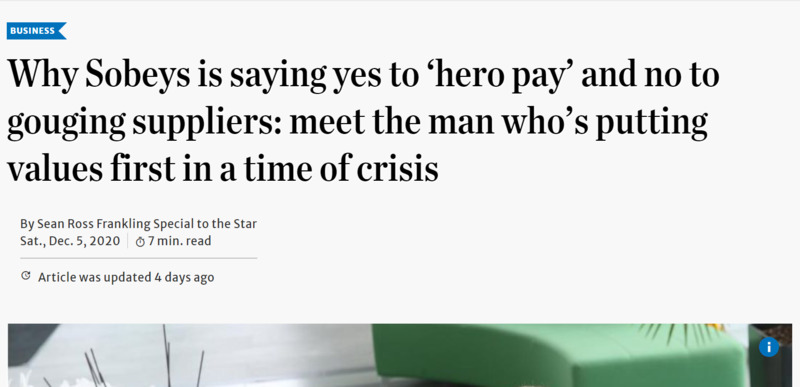
Why Sobeys is saying yes to ‘hero pay’ and no to gouging suppliers: meet the man who’s putting values first in a time of crisis
Sobey's agreeing to pay hero pay -
 11/03/2020
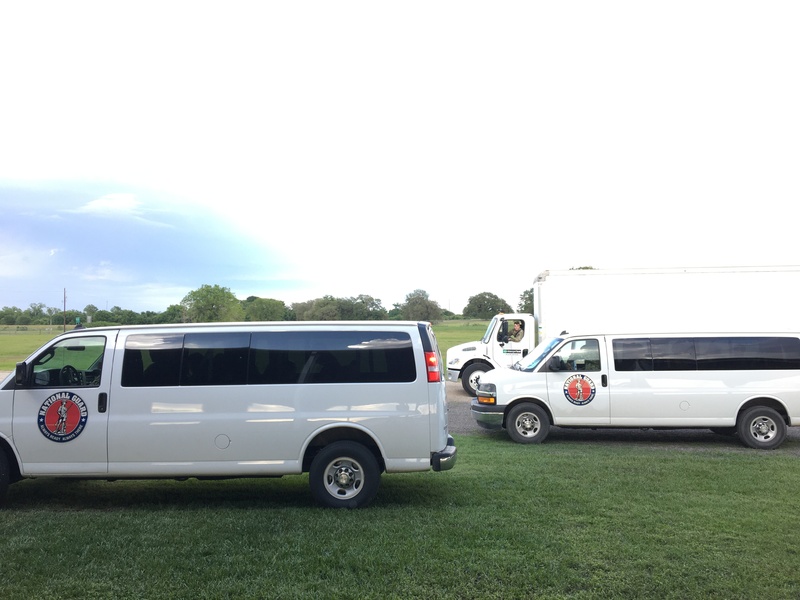
Peter Bain Oral History, 2020/11/03
An interview of Texas Army National Guardsman Peter Bain who served on both the COVID-19 Relief Mission and the Civil Unrest Mission during the summer of 2020. -
 05/24/2020
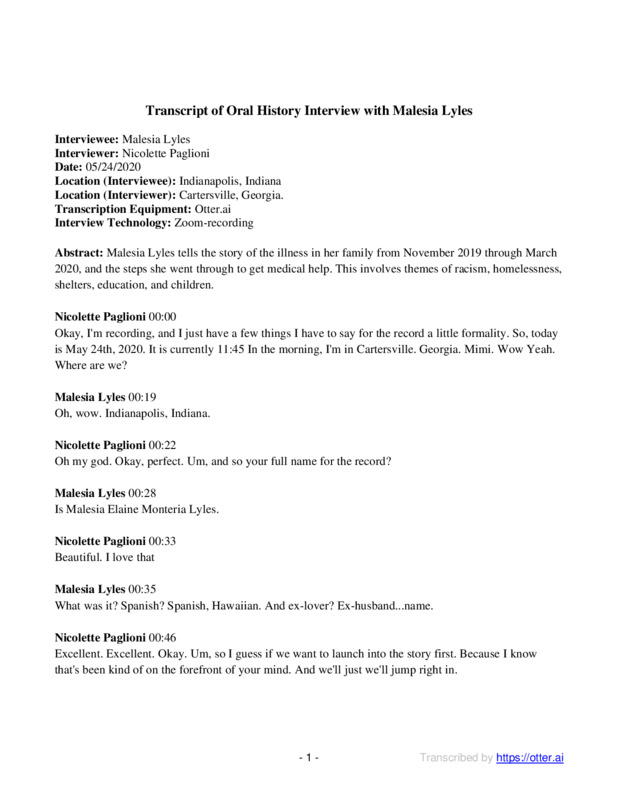
Malesia Lyles Oral History, 2020/05/24
An incomplete interview with Malesia. Malesia Lyles tells the story of the illness in her family from November 2019 through March 2020, and the steps she went through to get medical help. This involves themes of racism, homelessness, shelters, education, and children. -
 07/07/2020
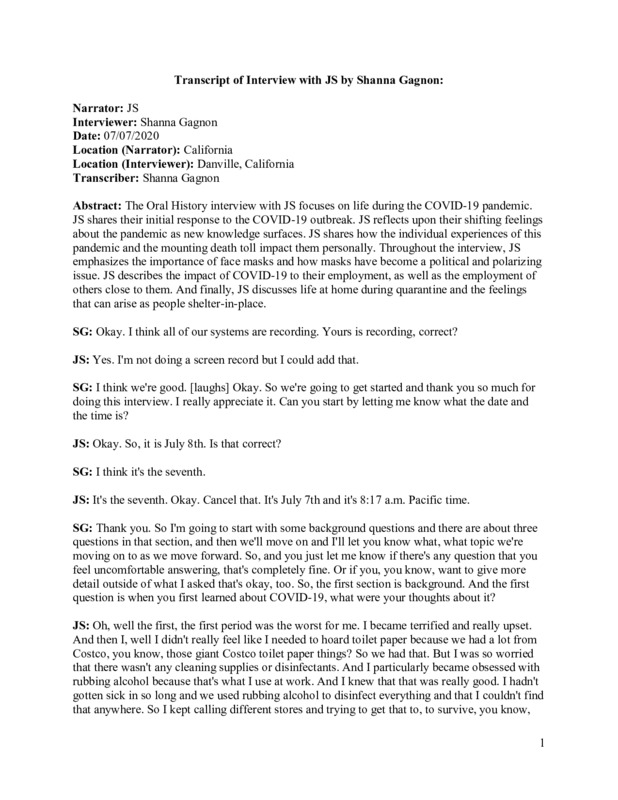
Anonymous Oral History, 2020/07/10
Shanna Gagnon, of California, conducts an oral history interview with Anonymous. In the 30 minute interview they discuss numerous topics about the COVID-19 virus including shelter-in-place, early thoughts and feelings about the pandemic, consumer behaviors, supply chain concerns, employment, ventilators, death, face masks, politics, infection rates, social distancing, college, stimulus, deferred rent, and home and family life. -
 05/25/2020
Sandra Smith Oral History, 2020/05/25
Interview with Sandra Smith. This interview is the fifth in a collection compiled by Glennda McGann, a volunteer researcher for the IUPUI Arts and Humanities Institute COVID-19 Oral History Project -
 11/08/2020
Christina Mena Oral History, 2020/11/08
Christina Mena, a nurse in San Antonio, shares her experiences of working in a cardiac clinic during the pandemic. -
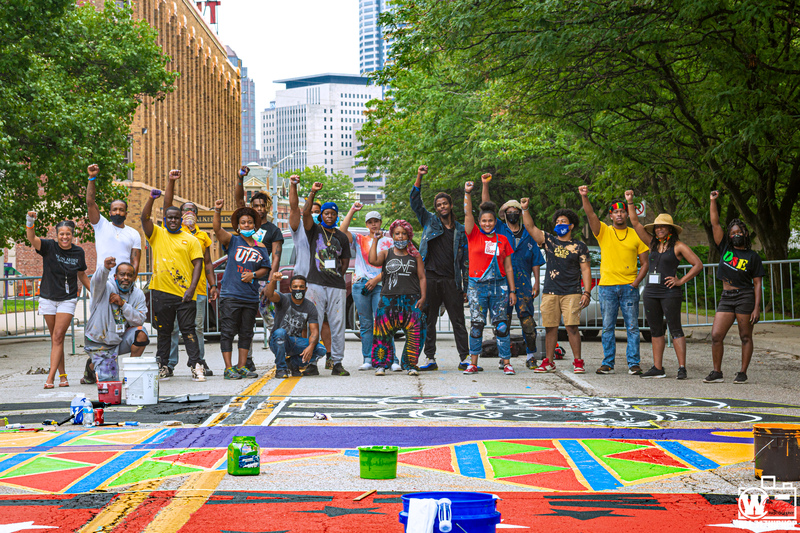 09/02/2020
Wildstyle Paschall Oral History, 2020/09/02
The interviewee in this oral history is a Black man who self identifies as an artist whose primary medium is photography; he is also an avid writer and local, community engaged, thought leader. In this interview, he shares his story of growing up in the United Northwest Area (UNWA) of Indianapolis and his experiences of COVID-19, activism and protests for racial justice, particularly following the killings of Dreasjon Reed in Indianapolis and George Floyd in Minneapolis. -
 11/20/2020
Joanne Jahkne-Wegner Oral History, 2020/11/20
C19OH -
 11/10/2020
Kenneth and Wendy Moran Oral History, 2020/11/10
C19OH -
 05/26/2020
Judy Cherniak Oral History, 2020/05/26
Judy Cherniak discusses how the COVID pandemic changed life for her during the opening months of the pandemic in Toronto, Canada in 2020. She touches on family life, her job loss, the local economy, news media, fake news, isolation, mental health, homelessness, and how she filled her time at home in isolation. -
 11/02/2020
Pamela Ross Oral History, 2020/11/02
This interview was recorded as part of the COVID-19 Oral History Project, a project of the IUPUI Arts and Humanities Institute and The Cultural Ecologies Project. -
 2021-03-08T12:38
Danny Denial Oral History, 2021/03/08
Self-description: “Audio visual artist that lives in Seattle, Washington, specifically in the realm of music and film, and also the intersection of the two. A lot of my work involves amplifying experiences and voices that are often underrepresented, primarily in the Black and LBGTQ+ community. And that’s something that overtime my work has been diving deeper and deeper into over the years, which is something that I think as an artist, I’ve only really come to terms with in the last few years. But it’s been definitely both empowering for me and illuminating to see it reflected back in the ways that people have responded to the work.” Other biographical details: late 20s, from Los Angeles. Some of the things we discussed include: The dysphoric experience of Black artists filtered through white talking points. Unstable work and income as an artist--audio and visual--pre- and mid-pandemic. 2019 was the first year that work as an artist and in performance communities was stable. Releasing the album Fuck Danny Denial in 2020 (https://dannydenial.bandcamp.com/album/fuck-danny-denial). Pandemic specific economic penalties of musicians in the case of live streams for Seattle Pride and Folsom Street Fair. The burden on artists to make ethical calls about canceling performances in the early stages of the pandemic, and needing to wear “new hats”, like health safety inspector. The pandemic as a shared experience of stoppage, and the need for adaptation. Aging and changing awareness about one’s needs for health care. Working to build equitable opportunities for artists. Since 2015-2019 doing gigs and video projects on contracts. Media outlets’ poor representations of the summer protests, acts of civil disobedience, and the autonomous zone in Seattle. Funding the serial project Bazooka (http://web.archive.org/web/20210622155802/https://ca.gofundme.com/f/dannydenialbazzooka) The ethical decisions associated with wanting to participate in amplifying and uplifting the BLM movement without exploitation for personal gain, engaging as a citizen. Witnessing a friend’s experience of hospitalization due to COVID-19. The value in studying patterns of human friendships and how the pandemic disrupted the conditioning of existence and the importance of local histories of resistance in Seattle. Cultural references: Pan’s Labyrinth, Smash Mouth’s super spreader event, Portland International Film Festival, The Tape Deck Podcast, Punk Black, Darksmith, Taco Cat, Alice and Chains, Duff McKagan, Pearl Jam, MoPOP, Shaina Shepherd, and TheBlackTones. -
 2021-05-09
Fred O'Gorman Oral History, 2021/05/09
Interview conducted by a nephew with uncle regarding the COVID response as it occured in the Republic of Ireland. Interviewee Fred O'Gorman discussed topics ranging from business closure and government response to personal and communal attitudes and behaviors in relation to pandemic in Ireland. The discussion also discussed ongoing vaccine rollout in Ireland and the dynamics of mental health through the course of the pandemic. -
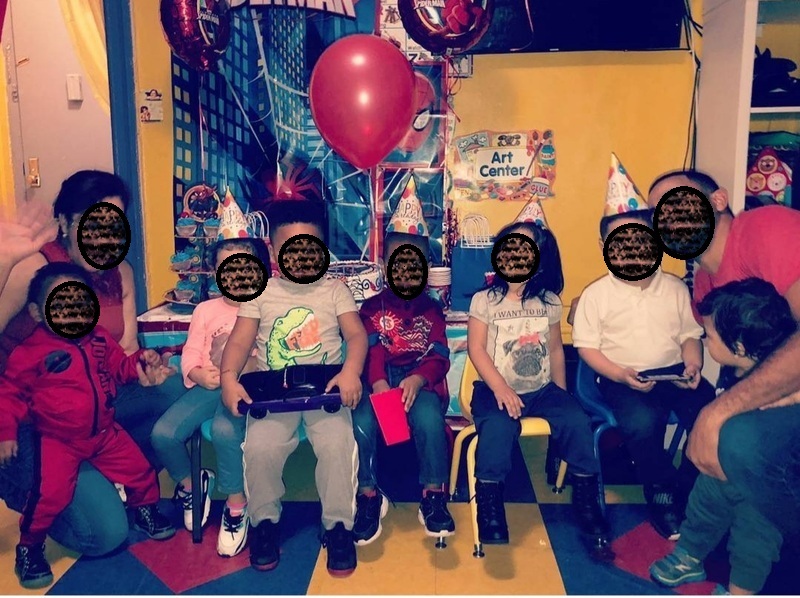 2020-03-15
Daycares empty during the Pandemic
For my primary source I selected a picture of a daycare. This daycare is where my kids used to go. Before the pandemic started, I used to take them there because I have to go to work. One of them was 7 months old and the other one was 5 years old. I used to take them to the daycare six days a week except Sunday, then go to work and when I finish working, pick them up in the daycare around 5pm. I selected this source because I want Historians of the future to know how the pandemic hit ‘’daycares’’. This photograph was before the pandemic. I took it in the daycare in a birthday party that we did for my son. There is the babysitter, her assistant and other kids that used to go to the day care. I feel Historians will learn how difficult was the life for mothers who have to go to work and leave their kids in daycare and what happened to me when the day care was closed. Everything was normal until I heard about COVID 19.I have been working in a hospital and in march 15 2020 my Babysitter told me that in 3 days the daycare was going to close for undefined time because of the covid 19.I was scared to go to work because I did not want that nothing happened to my kids. I had to go to work in the hospital, but I did not want to because I know that I was going to be more exposed to the virus and I may bring it to my kids. But the other reason was that I don’t have nobody to take care of my kids after they close the daycare. In addition, my Babysitter also told me that she was desperate because she was not making money in the daycare. I decided to stay at home with my kids. I remember that the school also was closed. But I was not getting pay when I stay at home. It was a very difficult time for me because I had bills to pay, including the rent. I was feeling bad because I have some savings, but 2 months after march I realized that I did not have money to pay the rent. I realized that I need to go back to work, even thought I was thinking that I was going to be on risk to get the COVID, I found somebody to watch my kids and then I went back to work. I pray God for protection every day, in the bus, streets and the train. In august the daycare opened again, the Babysitter was happy because she was going to work again, but I was scared because I did not know if anybody in the day care could be sick and get my kids sick. I have to take my kids to the daycare, but it was not like before that Babysitter had many kids in the daycare, only my two kids were in the daycare. Today, my son is back to school and the other one is still going to the day care, but every day I pray for theme because I know that other kids are with them, and I don’t know who may be sick and they are always on risk, but I don’t have other choice because I need to work to get money to pay my bills as I say before. When I arrived home, I leave my shoes on the front door, go straight to wash my hands, take clothes of, take a shower and them pick them up in the daycare. Every day my kids are on risk, but I am also on risk at work. The situation is difficult, but we have to continue our lives, be wise and do our best to keep our family safe all times.