
Items
Search full-text
futcoins 26 Besuche die Website Buyfc26coins.com. Beste Qualität..N7Ft
-
 2021-07-22
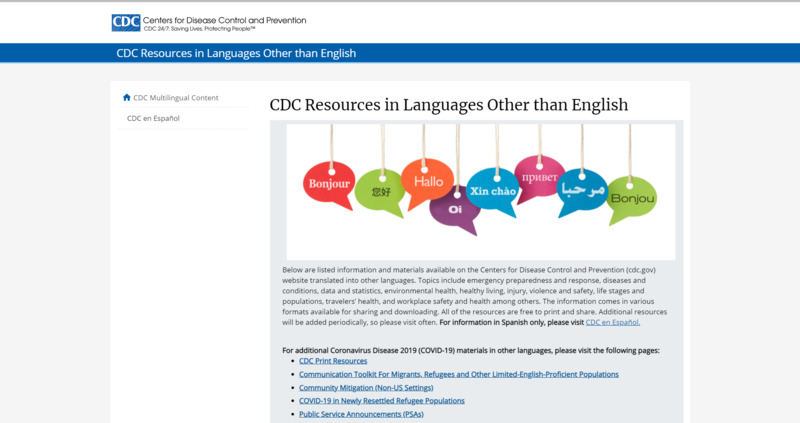
CDC Resources in Languages Other Than English
Information on COVID-19 must be available to all individuals if the US as a society and as a country are to successfully deal with this virus and prevent deaths and illness. This information must be available in a variety of languages other than English to meet the needs of those who are not proficient in the English language. The CDC created a website with a wealth of information and materials for individuals in languages other than English, including materials for migrants and refugees. The CDC also has a website for Spanish-speaking individuals. -
 2021-04
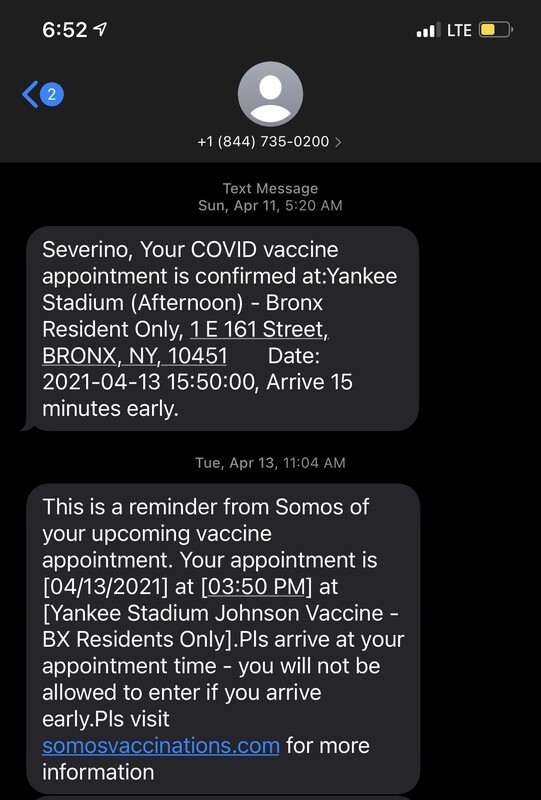
Decide to get my covid vaccine
Getting my Covid vaccine. -
 2021-02-28T10:55
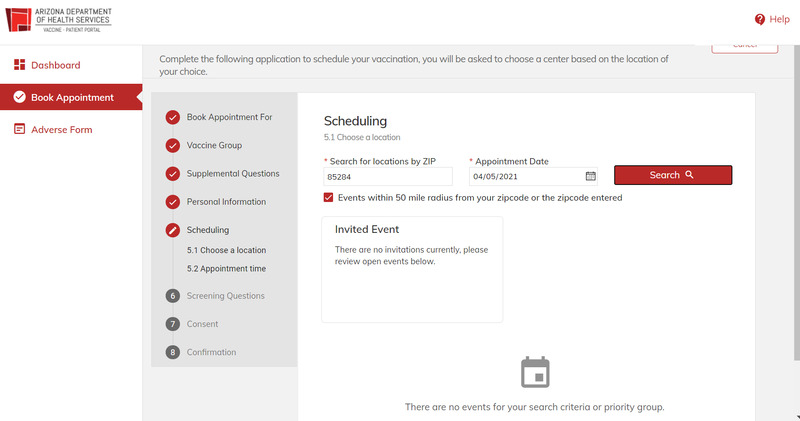
No shots for you!
This picture shows what I get when I try to schedule a COVID-19 vaccination through the Arizona Department of Health Services website. I'm basically out of luck for the time being. It is good that a vaccine is available now and the end of the pandemic is in sight, but the process is frustrating. While I understand that our state agency had to develop their website in a short time, they've known for months that vaccines were on the way. Their site is needlessly complex, buggy, and non-informative. I initially got hung up on a page that required me to enter my health insurance information; it took several tries and a few phone calls to figure out exactly what I needed to enter in each of the fields. Once I get through, I can't find an open appointment. There is no indication on the webpage, but it seems that the system returns no open appointments for me because I am not yet eligible. My mother who is more than 75 years old has managed to get an appointment and get her first shot. I'm concerned that many other people, particularly the elderly who need the vaccination more than others, will not get access to them because they will not be able to navigate through the website. I have read a number of media reports about this. It seems like poor planning to set up a process that relies on individuals to use the internet without offering an alternative. -
 2020-06-01
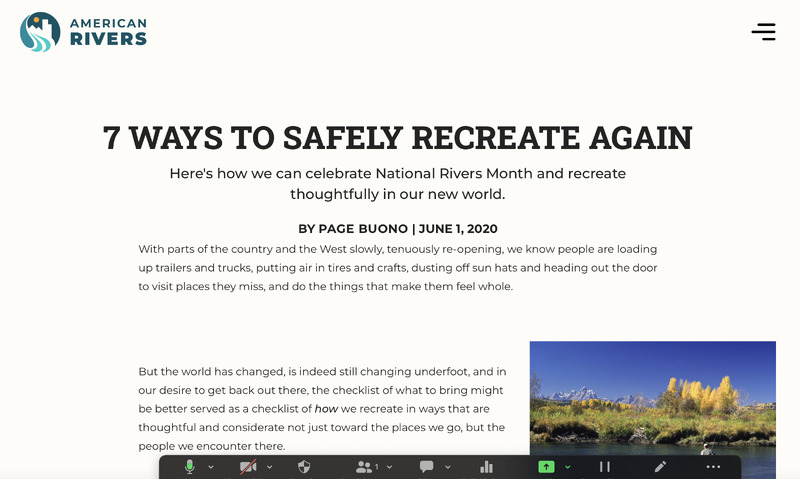
Take this time to explore your own town
Staying home all summer when you’re used to travel and exploring can leave you weary and unable to think of things you can do. I turned to google for some ideas and happened upon a website that gave great ideas for exploring locally. I live in Monterey, California and spent last summer exploring antique shops, boutiques, and interesting restaurants. I’ve never considered myself someone who enjoys the outdoors, but I had to try some of the ideas on this webpage because I was simply tired of being cooped up. There are so many places to explore. I took the time to explore 17 Mile Drive and Pebble Beach early in the day when few people were there. I must’ve stayed for hours just walking along the beach or the little trails. -
 2020-10-30
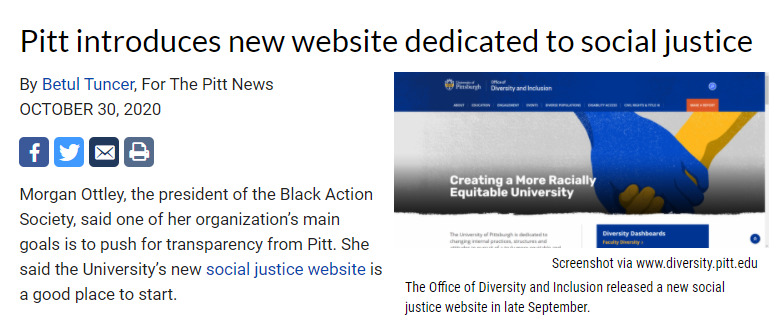
University of Pittsburgh Active for Social Justice
This article demonstrates the active voice of Black students to access diversity and social justice at the University of Pittsburgh (Pitt). The website's creation is a way for students to actively notify Pitt of any kind of social bias shown. Protests for social justice across the nation have acted as a catalyst for Universities to become more aware of social justice reforms within their institutions. -
 2020-10-22
Museum Awareness and COVID-19
I have been recently researching digital archives and their effective helpfulness in the midst of crises and pandemics, such as COVID-19. While discovering new sources for research, I came upon a community that is treasured by society yet sufferers immeasurable when neglected, museums. From what I have put together in following archives and museums, there is a difference and the difference is impactful: People interact with archives while museums interact with people. Archives can be easily engaged through any format and do not struggle to adapt to a rapidly evolving society. Museums and their charm center on one core energy source, in-person engagement, interaction, and display. Museums attempting to permanently shift to online have the risk of fading into another informational website (Advertising is a dense fog). The attraction is the ability for people to see artifacts and art in person. I personally love museums and I know that without them, history seems to lose some of its luster as well. I found this website, American Alliance of Museums: COVID-19 Resources and Information for the Museum Field, while searching through museum resources and listening to museum and art directors discussing the future of their work. It is a tool for anyone from a visitor to a museum director in staying connected to updates on openings and closures as well as how museums are encouraged to keep up with their audiences. Though a permanent solution isn’t found to the situation or even COVID-19 for that matter, I have found that the need to keep moving forward is not just surviving, but living. This resource created by AAM might be the catalyst for museums to evolve into online forms successfully; that would be joyful news in difficult times. I have saved this link to a web page saver, Wayback Machine, so it can be accessed at any time even if the page is removed or recreated. Thanks for reading! -
 2020-09
Jewish Melbourne: Temple Beth Israel's 'Yachad'
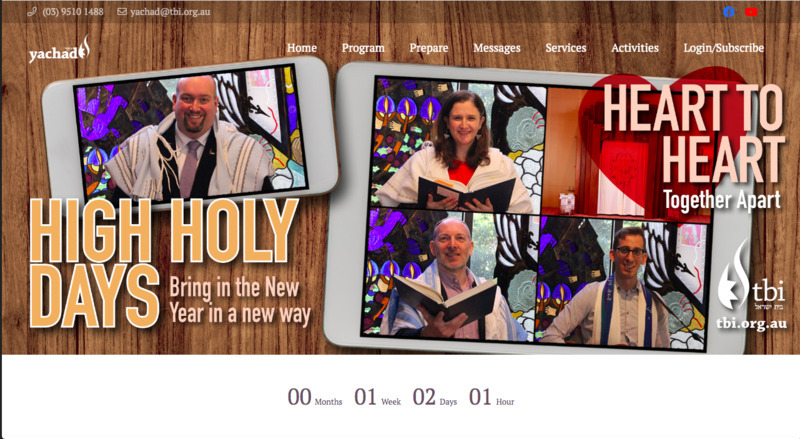
Temple Beth Israel created a website - Yachad - in order to bring community together during Covid times. The website hosts livestreams and recordings of services, as well as reflections, opportunities to hear the shofar, music, share recipes, order a machzor, and offer a blessing. There's messages from the rabbis, information about the High Holy Days services, and activities for children. They explain: "In many ways Covid-19 has taught us that community matters now more than ever! We are proud to launch this digital platform which will host our High Holy Day offerings for you and your family. Yachad, (“together”) in Hebrew, draws its name and purpose from “Shir La’Ahava”, a song by Israeli band Gaya. The lyrics of Shir La’Ahava which begin with the words yachad – lev el lev, (“together – heart to heart”), capture the optimism, love and unity which we hope will define our High Holy Day celebration this year." -
 04/13/2020
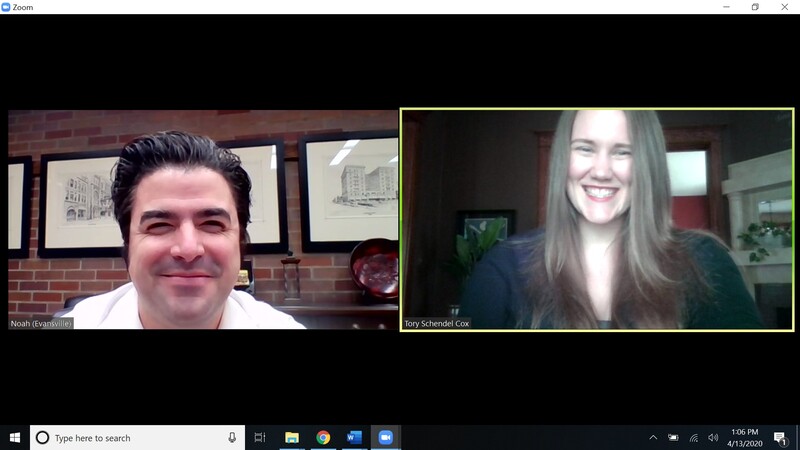
Cultural Insights: Interviews in the Creative Sector #19 … Noah Stubbs, City of Evansville
In response to COVID-19, the Evansville Museum of Arts, History and Science launched the mini-series, "Cultural Insights: Interviews in the Creative Sector," to highlight colleagues and professionals working in the same or similar field of museum professionals. -
 03/27/2020
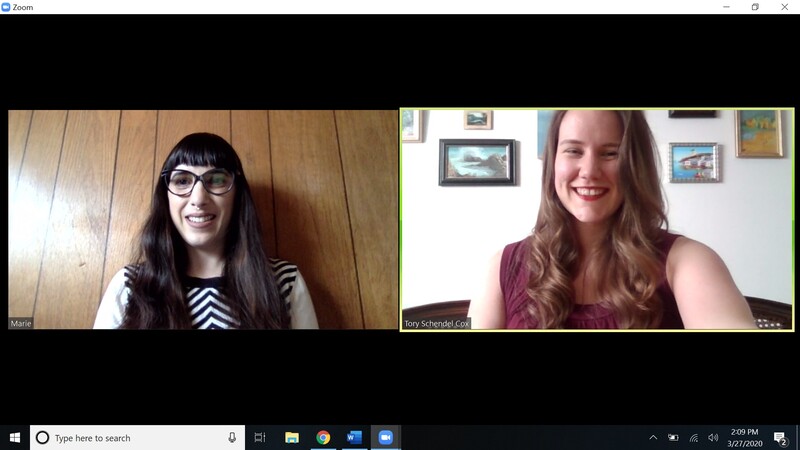
Cultural Insights: Interviews in the Creative Sector #15 … Marie Angel, California Academy of Sciences
In response to COVID-19, the Evansville Museum of Arts, History and Science launched the mini-series, "Cultural Insights: Interviews in the Creative Sector," to highlight colleagues and professionals working in the same or similar field of museum professionals. -
 2020-04-01
REALM Project
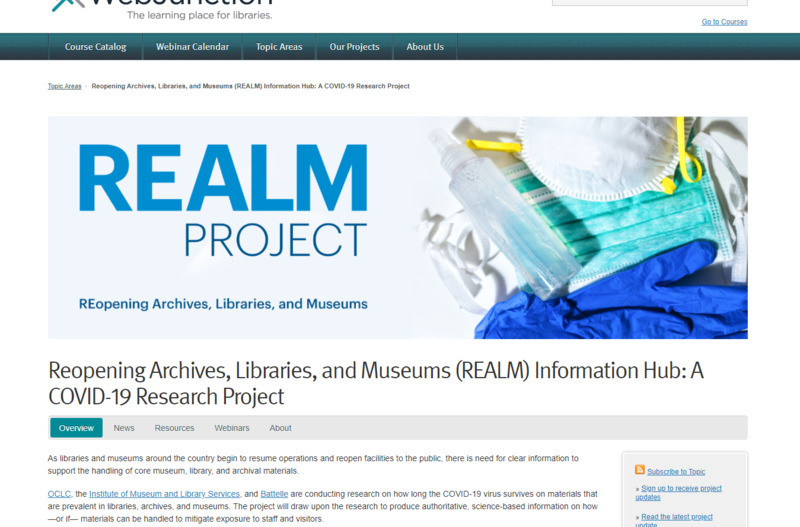
The Reopening Archives, Libraries, and Museums (REALM) main website where one can access all of the reports, digital materials, results, and resources of the REALM project From their website: "As libraries and museums around the country begin to resume operations and reopen facilities to the public, there is need for clear information to support the handling of core museum, library, and archival materials. OCLC, the Institute of Museum and Library Services, and Battelle are conducting research on how long the COVID-19 virus survives on materials that are prevalent in libraries, archives, and museums. The project will draw upon the research to produce authoritative, science-based information on how—or if— materials can be handled to mitigate exposure to staff and visitors. To achieve these goals, the REALM project will: - Collect, review, and summarize authoritative research that applies to materials commonly found in the collections and facilities of archives, libraries, and museums - Ongoing consultation and engagement with a project steering committee, working groups, and other subject matter experts from archives, libraries, and museums - Laboratory testing of how COVID-19 interacts with a selection of materials commonly found in archives, libraries, and museums; and identifying methods of handling and remediation - Synthesize the above inputs into toolkit resources that support reopening and operational considerations - Share project information and toolkit resources through the project website and amplified by member associations and support organizations that serve archives, libraries, and/or museums." -
 2020-06-07
Making Us Matter Launches Official Website
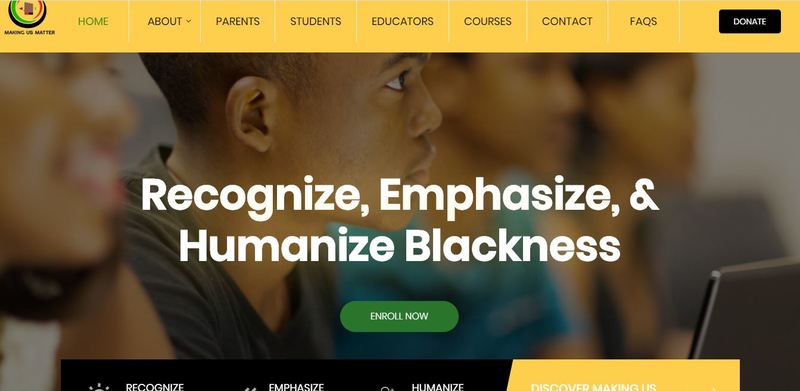
Amidst school closures across the country due to the COVID-19 pandemic, University of San Francisco doctoral students, Eghosa Obaizamomwan Hamilton and Gertrude Jenkins, founded and launched Making Us Matter Virtual High School in March 2020. While educational equity issues compounded as a result of nation-wide school closures, Hamilton and Jenkins built an educational platform in which a collective of Black educators would create challenging and empowering curriculum focused on social justice and Blackness. Making Us Matter is offered, free of charge, to any student interested in curriculum focused on Black-inclusion. While educational institutions have scrambled in their attempts to serve students during the COVID-19 pandemic, Making Us Matter is a shining example of how educational leaders can disrupt education and build learning experiences that challenge the shortcomings of traditional educational models. -
 2020-03-16
Hate and Assault Against Asians
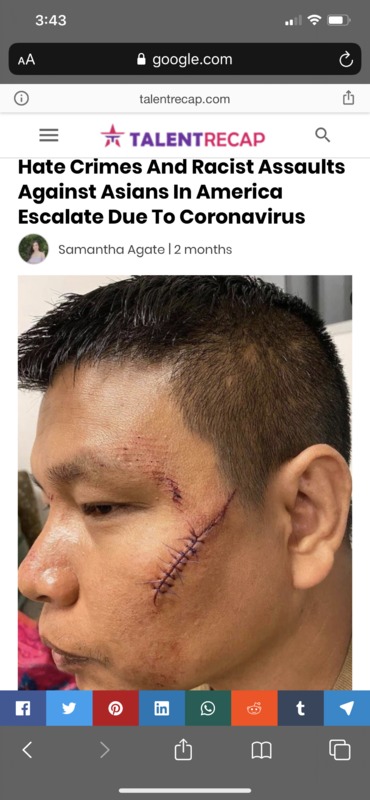
This was found on a website called talent recap.com, “Hate Crimes and Racist Assaults Against Asians In American Escalates due to Coronavirus”. It introduces the viewers to several events that had happened during the coronavirus and how many asian descents are discriminated for “being the cause of the coronavirus”. During this pandemic I have noticed how so many people are being assaulted from other ignorant people about how they started this virus and that they should be tortured or blamed for the things that has happened. This is important to me because one time when I was in public with my sister to get some groceries, we came with gloves and masks on because we know we have a weak immune system and we also tend to get sick easily so we came protected, but when we went in the meat isle to get steak, a couple was standing there with no gloves on or masks stared at us and walked by saying “Go back to your homeland you chink” while i was speaking in Vietnamese to my mom. I was so angry at that time but I remained calm because we were in public at that time, however it angers me that in events like the one on the website shows how a father and his kids were attacked, in this case stabbed, because they were asians that were seen in public. And it sucks that so many innocent asian people are harmed so much because of others being prejudice based on their ancestry of being an Asian. -
 04/08/2020
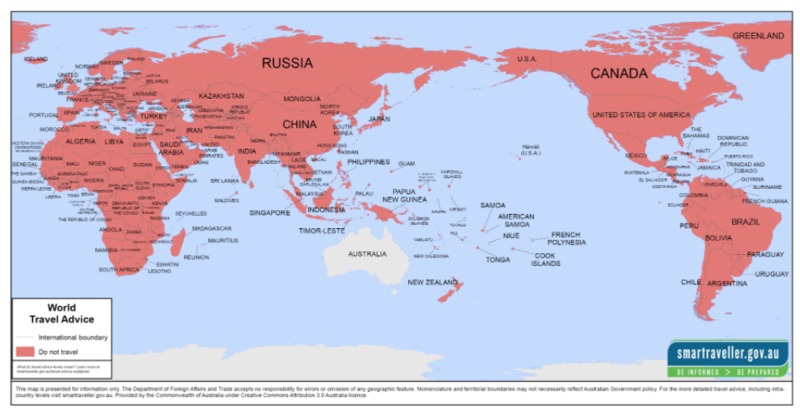
Australian 'Smart Traveller' World Travel Advisory Map
SmartTraveller is the Australian Government's travel advisory website. This may be a historical first: every continent on the SmartTraveller map is red. The government's official advice is 'Do Not Travel' for everywhere in the world. It's a striking visual that sums up the universality of the pandemic experience. -
 2020-03-23
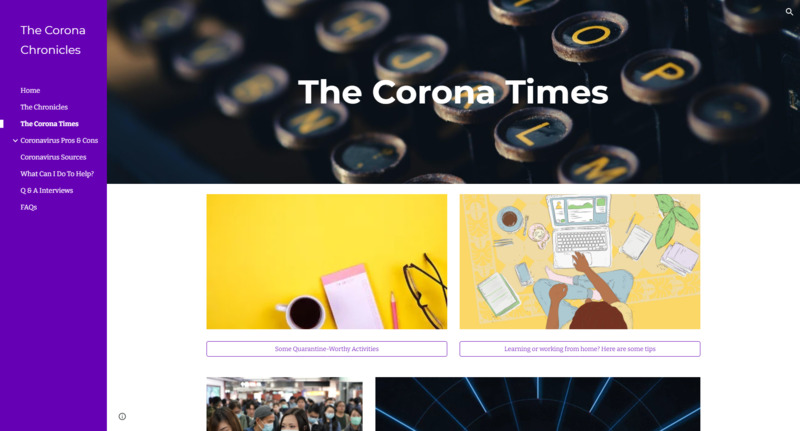
The Corona Chronicles
This is a Google Sites website that I made about the coronavirus with my experiences, feelings, thoughts, information on Covid-19, and interviews. It was originally a school project, however I have expanded on it much more since. -
 2020-03-17
Texas Tech University Additional Measures to Mitigate the Ongoing Risks to Public Health 03/17/2020
Another update to measures Texas Tech is taking during the pandemic. -
 2020-03-07
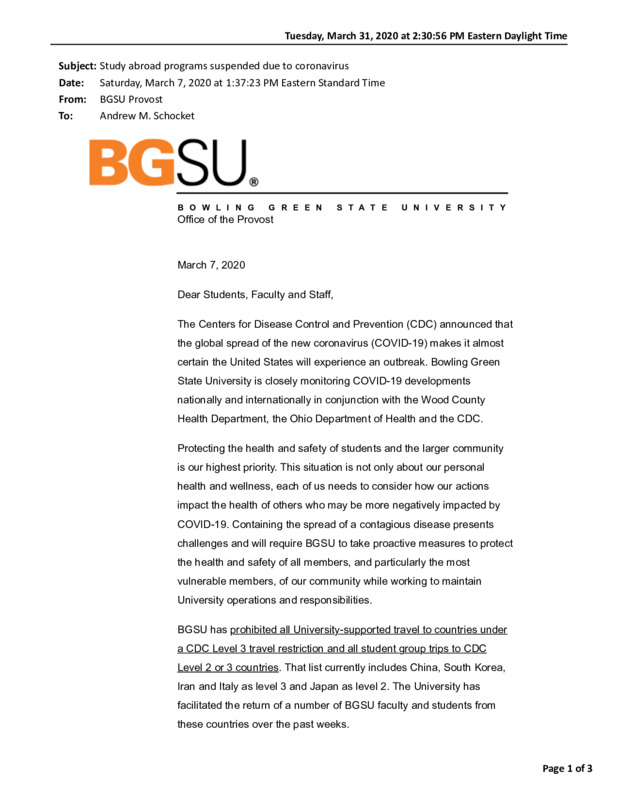
BGSU Study abroad programs suspended due to coronavirus
Bowling Green State University Provost Joe Whitehead announces that university travel will be restricted, and spring break travel has been suspended. #HIST4800 -
 2020-03-20
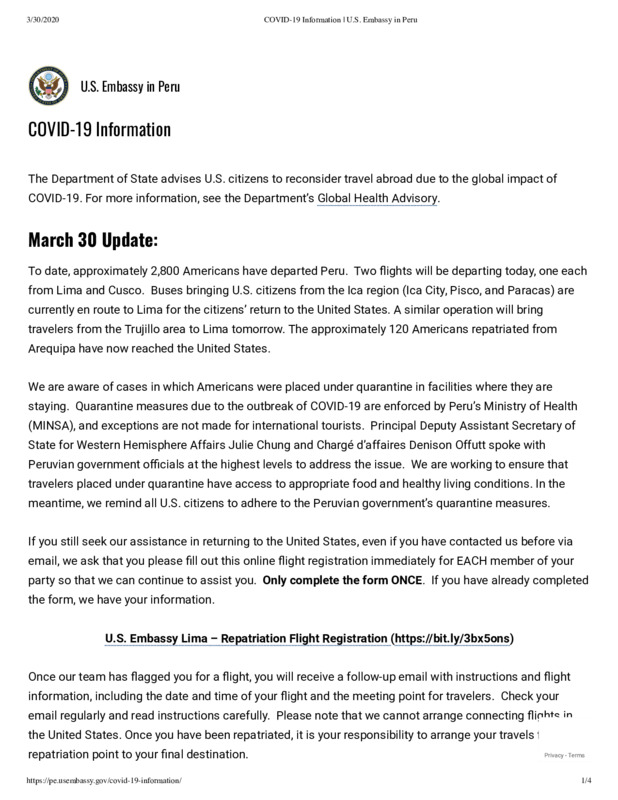
U.S. Embassy: 2 flights from Peru to U.S.
March 20: 2800 Americans have left Peru, and there are two flights leaving Peru today one from Lima and Cuzco. Website contains a form to register for a repatriation flight. -
 2020-03-27
PJ Kennedy School Weebly Website
Text and images from the PJ Kennedy School Weebly created for communication during the COVID-19 school closures. -
 2020-03-28
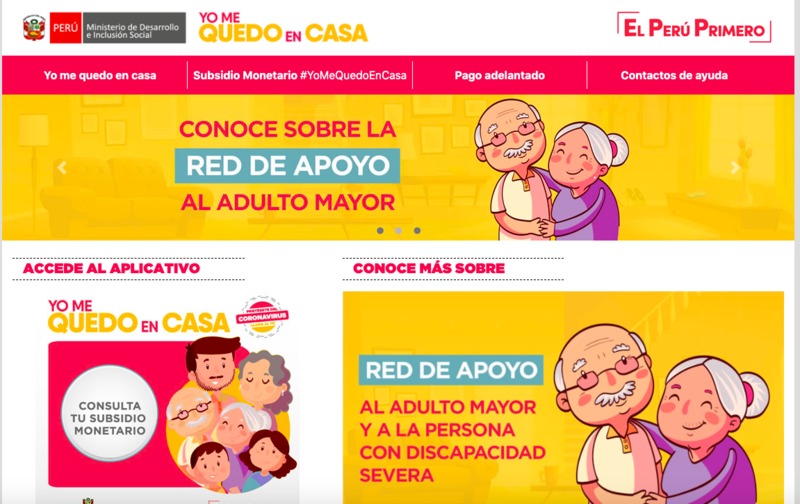
#Yomequedoencasa website
Peruvian website promoting the public health campaign. Peruvians can see if they qualify for the government subsidy of S/ 380 (approximately $111.50) http://yomequedoencasa.midis.gob.pe/ -
 2020-03-26
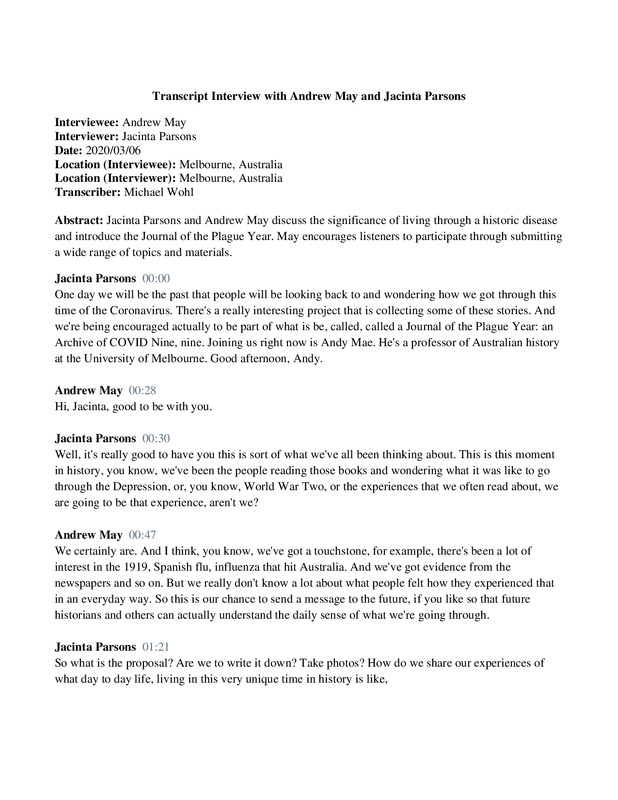
Interview about the project
Radio interview by host Jacinta Parsons with Professor Andy May from the University of Melbourne about 'A Journal of the Plague Year' project. -
 2020-03-15
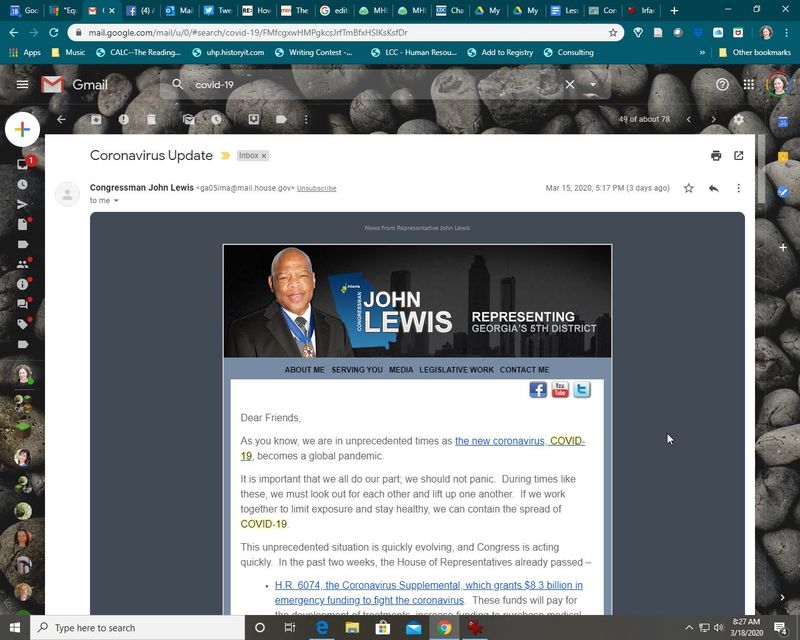
Email from Congressman John Lewis
This is an email from Congressman John Lewis to his constituents explaining how he and his team are doing there part to care for all, as well as listing resources people can refer to if needed. -
 2020-03-16
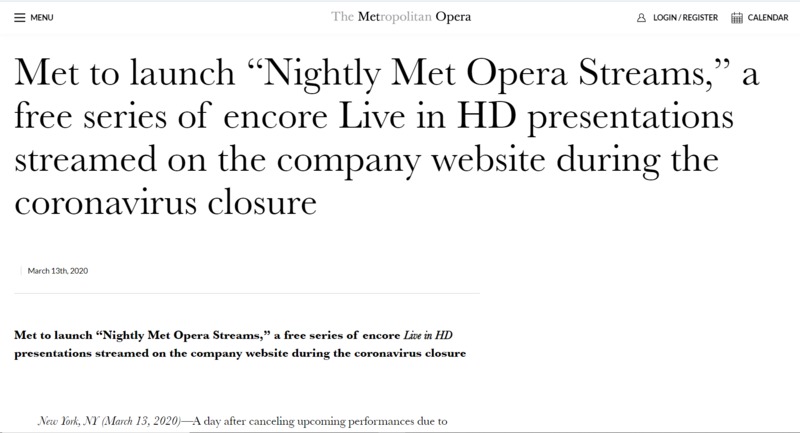
The Metropolitan Opera Offers Free Nightly Streams on Their Website During Coronavirus Closure
Article posted on The Metropolitan Opera's official website announcing free nightly streams of videos of past performances after cancelling their upcoming live performances. The article states that the Opera's aim is to provide comfort to people during difficult times. -
 04/16/2020
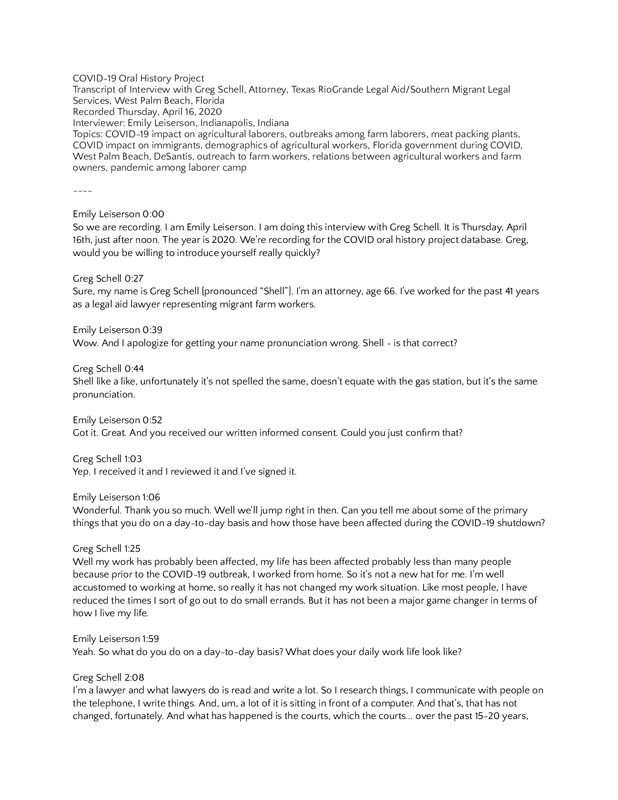
Greg Schell Oral History, 2020/04/16
-
 12/02/2021
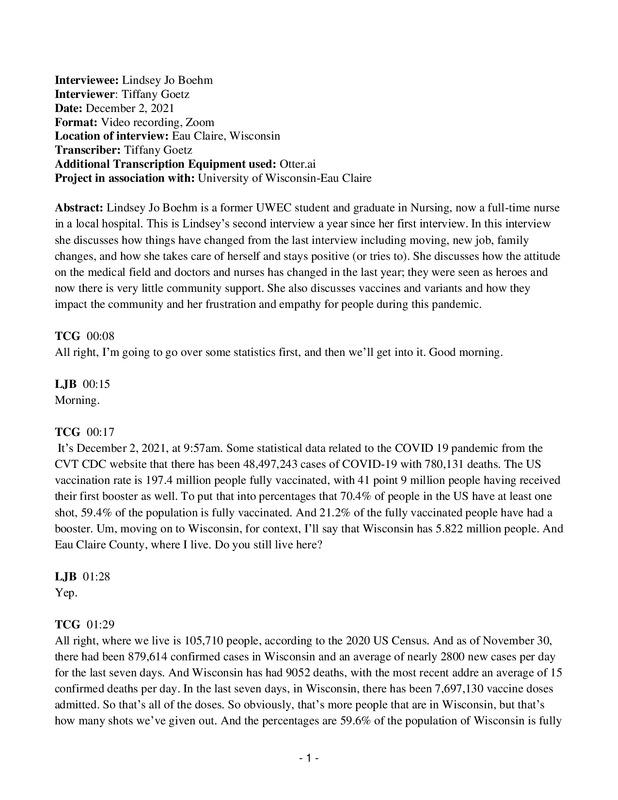
Lindsey Jo Boehm Oral History, 2021/12/02
Lindsey Jo Boehm is a former UWEC student and graduate in Nursing, now a full-time nurse in a local hospital. This is Lindsey’s second interview a year since her first interview. In this interview, she discusses how things have changed from the last interview including moving, a new job, family changes, and how she takes care of herself and stays positive (or tries to). She discusses how the attitude in the medical field and doctors and nurses has changed in the last year; they were seen as heroes and now there is very little community support. She also discusses vaccines and variants and how they impact the community and her frustration and empathy for people during this pandemic. -
 09/23/2020
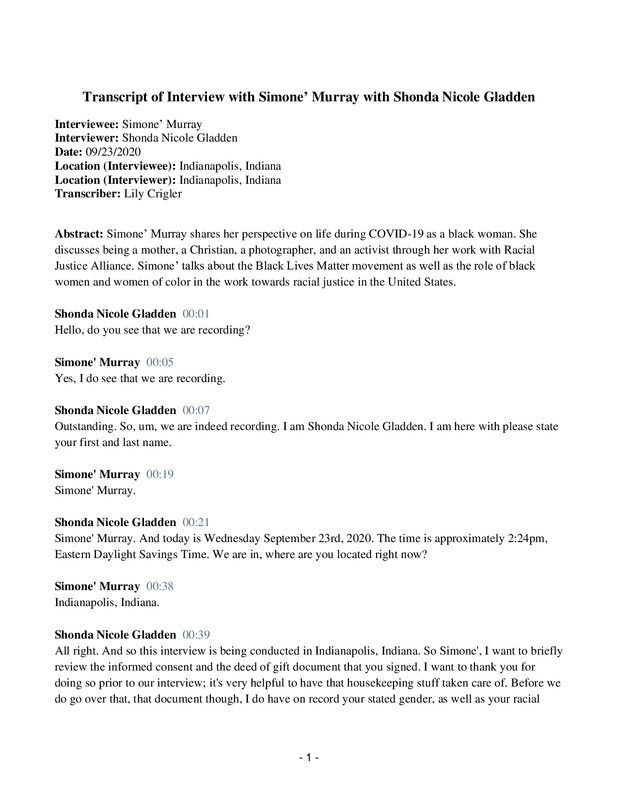
Simone' Murray Oral History, 2020/09/23
-
 09/23/2020
Marla McCartney Oral History, 2020/09/23
Marla McCartney, former Chief Executive of an unnamed charitable organization, is interviewed by Marion Lougheed as part of an oral history project. The interviewee is asked about her experiences in the workplace and at home during the pandemic, and about her personal opinions on the handling of the pandemic by the public and government. -
 2021-03-14
Alex Smith Oral History, 2021/03/14
Self-description: “I’m an artist, writer, musician, and an off-and-on again activist, lecturer, worshopshop leader. I’m coming out of Philadelphia. My work revolves around concepts relating to Afrofuturism; for lack of a better term: superheroes and the conceptual nature of superheroes and the idea of the vigilante and the people’s champions and heroes can walk among us. I use [aesthetics and the immersive ideas of] from science fiction, cyberpunk, solarpunk, biopunk, and Afrofurturism to empower people of color, queer people and to project us into the future and our ideas and culture into the future as well. I use different mediums to do that, my bands Solarized (a sort of noisy punk rock band) and Rainbow Crimes (indie rock, but a little crazier and noisier than many excursions into that). I have written a short story collection called ARKDUST. And I do collage work and soundscapes and curate events like Laser Life, which was a queer sci-fi reading that me and my friends in a collective that I’m in called Metropolarity put together. That’s my praxis right now: a little bit of everything. I view my work as if I’m creating for 18 or 19 or 20 year old Alex, who probably needed some queer Black sci-fi in his life. So, I’m projecting these aspects of myself back to the past to not just nourish my community, but to nourish myself.” Personal website: alexoteric.com Other biographical details: Vegetarian, experiences depression, Pew Center for the Arts Fellow, during COVID is the first time in his life he’s had Health Insurance. Some of our discussion touched on: Using art to project hope and remaining hopeful during the pandemic. Afrofuturism as a part of the fabric of activism, how it is imbedded in culture and impacts queer and POC culture. How Afrofuturism exceeds an “aesthetic revival” of representation of Black people in the future and the kind of work that needs to be done to ensure those futures. Deciding to cancel a show he was organizing in the early days of the pandemic to protect the presenters and audience members. The everydayness of people dying because they don’t have healthcare access or can’t afford medicine* outside of the times of COVID-19; racism, sexism, and transphobia in the healthcare system.Corporate interests and their influence on policy. The unreasonable imperative that artists take the pandemic as an opportunity for productivity when many are out of work. It is hard to make art without fuel and without food. Witnesses barriers in the healthcare while caring for his partner after a stroke 5 years ago, the importance of medical bureaucratic literacy in a “Kafka-esque system”. Excitement about getting the vaccine. The pandemic in geopolitical context. Isolation in practice: Safety precautions and research prior to traveling for a funeral. Hope for “science married with activism”. Scholars in the humanities and social sciences need to be more visible, speak in lay person’s terms, do advocacy, and get in the streets. “Nothing is safe unless it empowers.” Other cultural references: Netflix, Zombie Movies, Sabrina the Teenage Witch, Oprah’s interview with Meghan Markle and Prince Harry, Black Panther, Teenage Bounty Hunter, Elon Musk, GoFundMe. A specific reference is made to the need for his sister’s sickle cell anemia medicine in this interview. She dies a few months later. The GoFundMe to cover funeral expenses can be found here: https://www.gofundme.com/f/memorial-fund-for-elizabeth-graham?utm_campaign=p_cp_url&utm_medium=os&utm_source=customer -
2021-03-06
Queer During Quarantine
Transcript of Interview with George Carter by Jessica Carter Interviewee: Lauren Barney Interviewer: Jessica Carter 3/6/2021 Location (Interviewee): Charlotte, NC Location (Interviewer): Phoenix, AZ Transcriber: Jessica Carter This transcript has been provided by Otter.AI w/ a 2nd pass for accuracy. Abstract: This is an interview I did with my friend Lauren about being queer during COVID. JC: All right. Hi, my name is Jessica. I'm an undergraduate student at ASU enrolled in history 494. The date is March 6, and the time is 3:01pm. I'm speaking with Lauren Barney, I wanted to ask you a few questions about your pandemic experience and how that has related to sexuality and gender expression. But before I do, I'd like to ask for your consent to record this response for the COVID-19 archive. The COVID-19 archive is a digital archive at ASU that's collecting pandemic experiences. Do I have your consent to record this response and add it to the archive with your name? LB: Yes JC: Perfect. All right, first, can you tell me your name, age, gender identity and sexuality? LB: Yeah, we do you want my last name too JC: No, it doesn’t matter LB: Lauren, Lauren, I'm 21. Um, I am gay. And I guess a woman. JC: For the archive. I'll also say Jessica Carter. Some variety of gay, non-binary, they/them pronouns 21 as well. Alright. pandemic, thinking you were bi then came out a lesbian? What were, like some of the, I guess, kind of moments that made you think that. LB: Okay, um, I guess a couple. Um, this one's really bad. Definitely Tik Tok. Like, the algorithm, I think just knows something's. And definitely I was like, this is strange. And then, the person I was dating at the time, was, like, literally said to me, like, wow, Lauren, you seem to be much more interested in women than you are in men. And that's when I had a mental breakdown silently to myself. And I was like, Fuck, I would say that was the main one. JC: Yeah, and like, something kind of, like interesting about the Tik Tok algorithm, right? Is that, like, it's based off what you yourself interact with? So it's like, not even something that you can really control? LB: Yeah, I think because it was so subconscious. It's not like I like would purposely like click on certain videos or stay longer on some videos. tik tok just, like, detected all those things, and was like, Wow, JC: so much harder to regulate your behavior when, like, it's on an app. Like you're not like consciously being like, I have to be straight now. LB: Yes, I would agree with you. Also, cuz no one sees your tik tok JC: Yeah, like nobody sees you have like videos, nobody sees what you're interacting with. So it's a completely neutral way for you to consume media, and it becomes so targeted because that's what like social media is now right. Just targeted. advertising. Yes. Um, what? Like, as you were starting to realize while you were still with your ex, though, so what are kind of some of the holdbacks that you had before like coming out and then living your life as a, like a queer person? LB: I think it's like scary when you like, have a perception of yourself as like one thing for so long. That it's like, hard to accept that that's wrong. I think especially when it's because I have had, like, a lot of like, straight passing privilege because I was dating a man, even though I thought I was by like, to just completely be like, actually, I'm giving all that up is like kind of scary. I think there were some other complicating factors for why it was really difficult to leave that relationship specifically. JC: Yeah, and when I like straight up asked you if I was if you were only still with him, because you just didn't want to be a lesbian. LB: Yeah, that was hard to hear. JC: I will be honest, I couldn't imagine going to a wedding with you to what I needed. Yeah. There was no that wasn't in the cards for me needed to not be an occurrence for you to marry him. LB: No, that would have been very bad. I would have been unhappy for the rest of my life as well. JC: So do you think that it's like a specific type of treatment that you accepted, like you were willing to accept, like so much worse treatment than you probably would now in a relationship because you maybe subconsciously wanted to keep that privilege? LB: I think yes. Um, I think for me as well like because I wasn't actually like in First in any man, like the idea of like, leaving, and then dating a man, like, again, was just like something that I, it didn't seem like a thing to me like, it just did not seem like an option. So I was like, Well, I guess we'll just stay here and, you know, have a very bad time. JC: Yeah. How do you think the pandemic specifically kind of forced you to confront? LB: I think a couple ways. I think that because I couldn't go anywhere. And I was living with this person, it was like, I saw that him like, every day. And I think that in and of itself, like, makes apparent a lot of issues. Um, I also think that like, because I was really limited in the number of people I could see because of COVID. Like, there wasn't anyone else that I had to, like, perform straightness for, like, when I was in Texas, like, I didn't have to, like see my family, or like my grandma, and like, behave and look like a certain way. And like worry about, you know, what would my grandma say, honestly, he's probably a little homophobic, but that's a problem for later. JC: Um like, when I was in Georgia, for that ethics bowl thing, I met up with my great aunt and uncle and we got lunch. And I'm, like, losing it, because the only thing I have is men's clothing. And like that really floral Express shirt, and I'm like, Oh my God, is this gonna look feminine? Like for this to like, be okay. LB: Yeah. And, yeah, definitely. JC: Like, because once you start to understand a lot of like, sexuality and gender as being a performance so much for other people, as opposed to yourself and kind of break some of that stuff down. LB: Yeah. I think also because like, when I like before the pandemic, and was like, interacting, like I could, like go out and like meet other queer people. And like other people who were like any identified as like LGBT, but like, during the pandemic, that's like, not possible. So it felt like even more like I was cut off from like, that aspect of myself. And it was like, What is happening here? Something is not right. JC: ah. And I recently just read the lesbian master doc, but like one thing that's like really big is like compulsive compulsory like heterosexuality. Yeah, I thought “I'm too smart.” LB: I read that as well. And that was not I mean, I don't know if it was a good or a bad time. Like, I think on one hand, like, it's a it was good for me to read it. Because it like helps me to be like, this is real. You're not just like making shit up in your brain. That document is Thank God for that document. JC: It's like really helpful. And it's like, caused a lot of reflection for me too. Because, like, for me when I was like, I guess I would like be with a man because like, I've, like, had what I thought or like emotional feelings for men, but like, on reflection, like all really like, mediocre men, like men that I probably would not, like ever be happy with. Yeah. Because like, my perspective is like, well, if somebody like needed me to, like, if the world was gonna end, I guess I could. Yeah. But like, I don't know, like, also just like authenticity, testing your queerness to try to have, like, fully, like, get out of that, if that makes sense. LB: Yeah, it does. I mean, I think for me, like, it's a lot easier now. Because like, back when I thought I was bi. Like, this was like a regular thing. I would literally have like, bouts of anxiety of like, I feel like I'm not gay enough. Like, I don't even know if that makes sense. Just that like I wasn't being perceived as queer. I was just being perceived as straight, which is like fair, because I was in a relationship with a man. And so it like that, looking back on that now, like, makes me realize, like, clearly something was wrong. And like, I knew it was wrong. I just, like ignored it. And so now when I try to authenticity, test myself, I think it's, like, easier to look back on that and be like, no look like, it's fine. JC: Yeah, and it's like, I don't know, because like, the like, the experience of queer women is so different than, like queer men. Do. Sorry. I just I was just saying that like the difference of like queer women is so much different than that of queer men because it's like a relationship that is just not for men in like a patriarchal society where almost like everything is for them. LB: I agree. I think it's like really hard to get out of that like priority. tising relationships with men. Um, no, I agree. I think that's why partly why I feel like such a disconnect from like, womanhood is like, what? I think society views is like what it means to be a woman like I can't exactly access that very easily. JC: Yeah, and like I think the Contra points video like does a really good job of like explaining that because like queer like Butch women, like especially being terfs was like one not something that I was expecting. LB: Yeah JC: But the fact that they feel like they need to, like double down on their femininity that they've constantly been forced to defend as opposed to, like, trans women who they believe just opting into womanhood is like an easier experience. When and I don't know, like, I guess starting to talk about like, gender expression is that compares with like, being queer. Like, for me, a lot of it's been, like, come to been becoming comfortable, like identifying myself as like a trans person. Because like, if you remember, like, I didn't always really, like claim that label. LB: Yeah, yeah, I remember. JC: And just like, I don't know, understanding that and like, what that means, because like, I feel like I have to, like have like, a hard definition. And getting comfortable with knowing that I do. Yeah. Have you done any, like, specific reflecting on like, gender identity stuff? I mean, I have, LB: I mean, I think for me, the reflection is just like, more so been about my sexuality. I'm like, what it means to be a woman because I think it's like, fundamentally different, like, as a lesbian, to be a woman than it was to be a straight woman and be a woman or a bisexual woman and be a woman. Like, I think that's the part that I have a hiccup on and say, like, Well, I suppose. I think that's been kind of the bulk of my thinking JC: My Tik tok, I'll get a lot of videos about break the way that like gender expression for women or for lesbians is like, so fundamentally different than for everybody else, right. And then, like, contrasting that, with how we relate to like, other queer women, if that makes sense, and like building community out of that. LB: Yeah JC: I don't know. That's just something that I've kind of been thinking about with regard to gender. LB: Wait will you explain that a little more. JC: Yeah, just like, because like, we've talked about, like our opinions on how there really is like, no LGBT community, because everybody's experiences so varied. Yeah, but like understanding that like lesbians relate to by women and that there is like that attraction to women, which, like, oftentimes, you have to fight about against being produced as a commodity for men. And then, like understanding like our own, like experiences is so different from that of by women because they still feel validation and can like be in relationships with men. LB: I would agree. Yes, I would agree with that. I mean, like lately Tick Tock has felt like it's a good idea to put on my for you page like videos of these like bi women who just like, wish they were lesbians or like, one day, like, they were like, I don't know, I saw this like specific one. And it was a bi woman being like, somedays I just like wish I was a lesbian. And then some days, I'm like, oh, but this man is hot. And I'm just like, this frustrates me to no end. And I wish you would not make this video. JC: Like, no, yeah, I used to get a lot of those videos. Like it's not easier. LB: Its harder JC: No, yeah. Because like, then you have to deal with like all other stuff. And there's not like there's a difference between the myth of like the greedy bisexual versus the predatory lesbian. LB: Oh, yeah. That Yes, I would agree. JC: One of those. Like, I'll even rank them one of those is explicitly worse and it's not the bisexual. LB: No, I agree. And like I also think that there's like a distinct difference and like, how I related to society when I was like, thought I was bi versus like, now like, I guess this is just like I have to like specifically like ask my therapist like when I first met her, like Are you okay with gay people? Because I live in fucking North Carolina? JC: And yeah. No, yeah. And I've been looking for one to be like an explicit statement on the website. Yeah, I use that all. I'm trying to get like insurance cover therapy. LB: Yeah, I am paying out of pocket for this very nice. She is said she's on the LGBT, whatever one of the acronym letters, and Huh, I don't have to have insurance or because I'm still on my parent's insurance. And there is no way I can be like, Hello, mom and dad, I need to go to therapy, and it's going to be on your insurance because I have some issues, because that is not an option. It's just, it's way more difficult. It fucking sucks. JC: Yeah, and like as compared to me, like my parents, like, want me to get therapy. But like, for me, it's just like, have conversation and like so much family stuff too. Because like my cousin like, Dean, he's like trans. LB: Yeah. JC: And like he was just so assuming that the family was going to be accepting of him. And that's crazy to me. LB: Yeah, JC: when I was 14, I realized I was queer. Like, I did not think I was gonna have a family. LB: Yeah. JC: And he's just like, so optimistic. So also like, trying to be this like, queer role model of positivity. LB: Yeah, I agree. I think that's really hard as because my, one of my siblings is like bi and she's like, not really out to like my parents. And it's like, hard. Because like, I obviously came out first, just to my parents, not to my grandma. But it's like when I talk to her, like, we're both like like because my grandparents on my dad's side are like Trump, Republican. They only watch Fox News kind of people. Like my aunt voted for Trump. And it's like, this. I like danger. JC: No, but like, my Aunt that but like, she's raising my cousin and like, apparently she's like, cool with it. But like, contrasting the political with the reality is so, so difficult to Yeah. like, also, like queer people have such a valid reason to be so wary of therapists and doctors. Like I don't want to get sent to pray the gay away camp, you know? Like, I'm an adult now. So that won't happen to me. But that was a real fear I had when I was younger. LB: Okay, did you have? Did you get your wisdom teeth out? Okay, on a scale of like, one to 10 how terrified were you that you were going to like accidentally come out while you were, JC: Oh I got my wisdom teeth out when I was 20 LB: Oh, shit. Really? JC: Yeah We waited a hot minute. No, but like I was really worried that for I guess, like for the gender identity stuff. I was concerned about that. Because, like, I think my parents would be accepting but I can't even begin to imagine how I'm going to explain what non binary is to like, to like 60 year olds, like I don't. LB: I tried with my mom. She just like, refuses. Oh, she said some really bad politics recently. Like I almost hung up the phone a couple times. Because she, okay. slightly off topic, but she literally said that she was like kind of unbothered by some of the allegations that have come out recently. And I was like, this is very upsetting to me. JC: Against Who? LB: I even remember. She was just like, fine, like, okay, that is not what I want here. JC: First came out is bi my parents like my mom. Like took that as straight light, if that makes any sense. LB: Yes, it does. JC: Like so desperately She wants me to end up with a man and that's just like not gonna. That's not in the cards for us, Nancy? LB: No, my mom does too. Like she has like made comments to like k before? Because my mom asked Kate right because I didn't say like I'm a lesbian and I hate men. To my parents. I was just like I'm dating a girl. That coming out was absolutely horrible, but that's fine. And my mom like asked my sister like how like does Lauren still like men like wanting me to end up with one basically what she said there's just like that is I would literally rather like die I cannot imagine. JC: like these little like tricky comments that like family members will make about um like basically trying to guide you back into being straight without explicitly like hate crime you. LB: Yeah, I mean, for me Like my mom would say this shit like to my face. Like, she'll say like to my sisters. Like, you can't fucking say this shit to Sarah. And like, Kate's just gonna fucking tell me. JC: It's super, super frustrating because like, the reflection that it seems like at least based on like social media trends a lot of queer women have had to go through as a result of COVID as a result of just like not being in the male gaze anymore, right? Yeah, like straight women just haven't had to, and in many cases, like feel just like they're being very cavalier about it. Like an unwillingness to understand and just like a complete inability to empathize. LB: No, I agree. Like, someone's because my Kate is like, literally the straightest person in the entire world. And it's like some of the shoots she says about like, gay women. I'm just like, this makes me not want to hang out with you JC: No, yeah. And like the fear, like I have like a constant like incessant fear of coming off as predatory because I'm, LB: oh, yeah, JC: definitely, like on the more masculine like end of it and like figuring out how to come to terms with that and realizing that that's not like, like a real thing that queer women do. Like where women are men. LB: Yeah. I think it's hard when the like, predominant perception that we have of people who like women are like predatory men. Like, do you remember like, Amanda, I like Kayla's house like Kayla's apartment. JC: If you think I remember any of those little excursions, you'd be incorrect. Can you remind me? LB: Well, wait, she was like, Look at this cute thing I'm wearing and then, you know, what do you remember? JC: Like vaguely? Okay, I'll probably fill in LB: like, both of us were like, wait, Amanda. No, we are like not looking JC: Oh, yeah. No, I do remember this LB: Like, I felt so fucking uncomfortable. JC: No, yeah. In like, it's so weird. Because she was like, look at my outfit. And both of us were like, I physically can't. LB: Yeah, I was like, I would rather die right now. Yeah. No, yeah. JC: And like, just like understanding and like, the way the pandemic has, like, forced you to look at those things is like, super frustrating. Because I definitely feel like it forced, like a lot of queer women to reckon with that before they might have been ready. LB: Yeah, I don't know that I was ready. JC: You needed to be? LB: I agree with you. Because I think if it went on any longer, that would be absurd. And it would just make it way more difficult. And then I wouldn't have had a lot of the experiences that like I had. JC: just wish that like. I don't know that like, even like straight women at all would do that kind of reckoning. Just like think about it. Because like, I feel like a lot for a lot of straight women because I've not seen very many like healthy straight relationships. LB: Yeah, I haven't either. JC: They just like hate their husband. And they're like, Well, why can't like are women like also to take their husbands? Like the rest of us? LB: Like, that's like, so frustrating to me. Because, like, being in a fulfilling relationship where the person doesn't treat you like a piece of shit. It's like, so nice. And this pisses me off like so. Like, it just makes me angry for those women. JC: Even like being in a queer relationship. I took it for so long. LB: Yeah JC: So wild to me too. Because like my like, in that relationship, the perception of like, She's like, the nice like fun one. And Jessica is like, a diet asshole all the time. Yeah, like, I don't know, like, I wish there was like a space where these relationships could be talked about to understand, like, the dynamics that they have. Because like, I think that like an open dialogue would make like straight and queer relationships so much healthier. LB: Yeah, I agree. I think like the is there's so much like stigma around that type of stuff. Like I know, for me, it was like, especially true like, first of all, you have to admit to yourself that there's a problem, which is very hard. And then to like, say that out loud to another person means you like can't ignore it anymore. JC: No, yeah, I remember. One time I got coffee with our dear debate friend. JC: Yeah. And I was with him and I was like, I should be happy. Like I've had this like girlfriend for like three years. I'm like, about to go do a study abroad. Like things should be good, but like my rat brain keeps telling me that I have to break up with her. And like, have you ever thought about maybe breaking up with her? I was like, no. LB: I feel that JC: like the same sense of security that like comes from being in like, a queer relationship because like dating or queer is so much more different to like, depending on like how progressive the area you're in is. Yeah. I don't know, the pandemic has definitely been like good for reflecting but like maybe not in like the healthiest way if you're constantly focused on yourself. LB: No, I agree. I think also because like a lot of people like are missing their, like normal support systems. Like having to do that recognition can be like so much more. I don't want to say like harmful but for lack of a better word, like it can be like a lot harder, I think. JC: Yeah, really stressful. Um, Do we have anything more to say about this or? LB: I don't know. That those were my comments. JC: I don't think so. This is about 25 minutes, so it's probably good. Alright, I'll stop recording. -
 05/12/2020
Auri Rahimzadeh Oral History, 2020/05/12
This is the second interview in a collection by Glennda McGann -
 2020-04-07
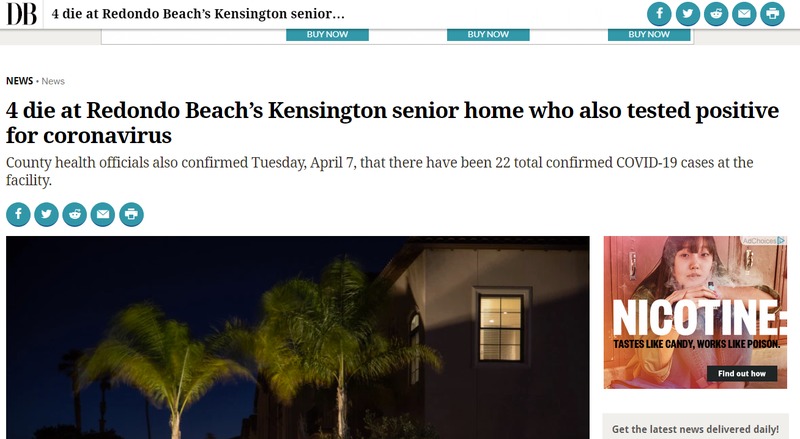
4 residents of the Kengsington senior home in Redondo Beach who died had tested positive for COVID-19.
Several residents at a local assisted living and memory care home have tested positive for COVID-19. Four of those who tested positive have now died. It is not clear if the deaths were caused directly by COVID-19 or by comorbidities. -
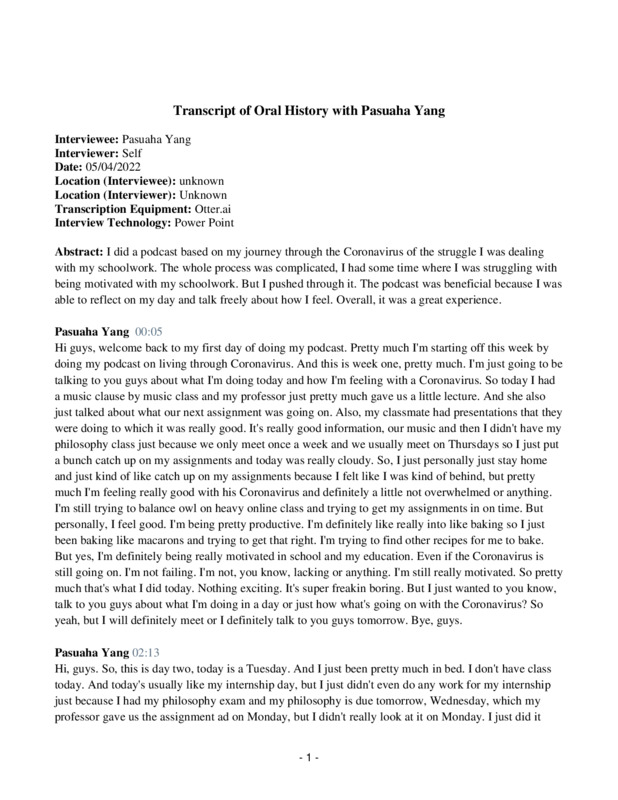 04/06/2020
Pasuaha Yang Oral History, 2020/04/06
I did a podcast based on my journey through the Coronavirus of the struggle I was dealing with my schoolwork. The whole process was complicated, I had some time where I was struggling with being motivated with my schoolwork. But I pushed through it. The podcast was beneficial because I was able to reflect on my day and talk freely about how I feel. Overall, it was a great experience. -
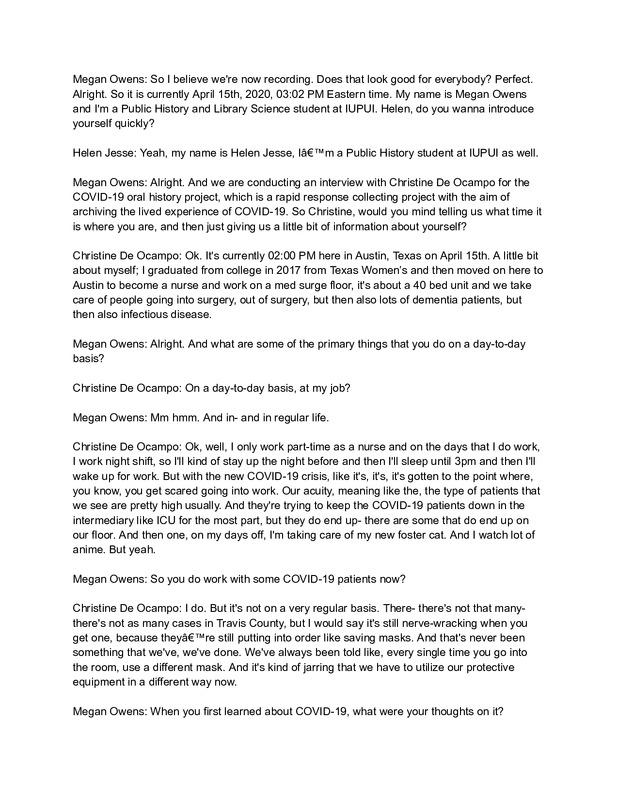 04/15/2020
Christine De Ocampo Oral History, 2020/04/15
-
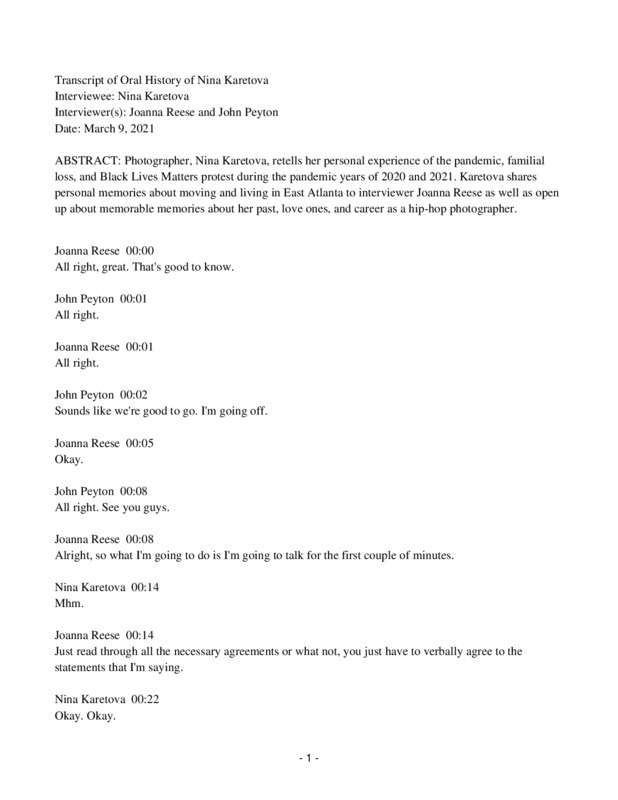 05/02/2021
Nina Karetova Oral History, 2021/03/09
Indiana University advocate, Joanna Reese interviews Atlanta photographer, Nina Karetova. -
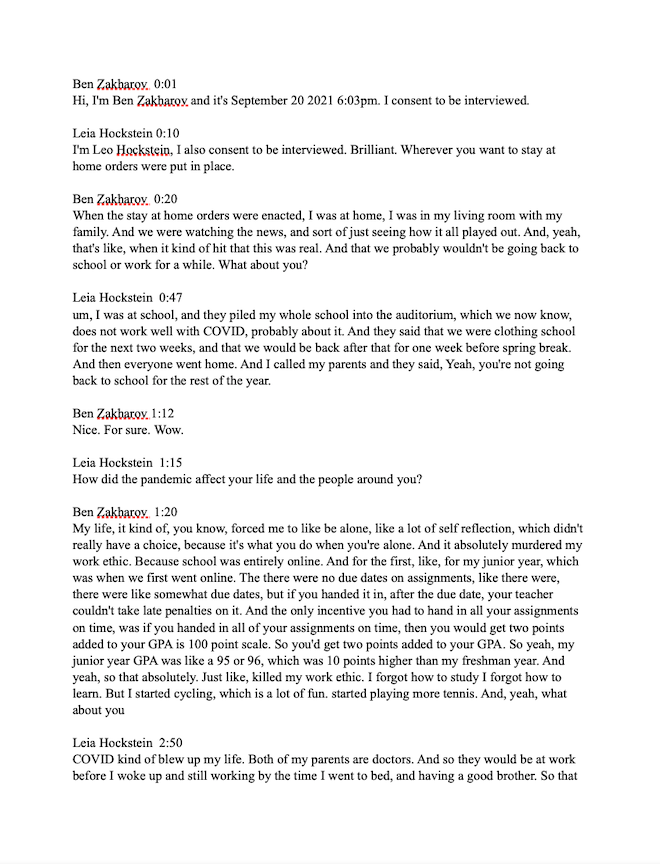 2021-09-20
Benjamin Zakharov and Leia Hockstein Oral History, 2021/09/20
Our interview tell our experiences with the pandemic both personally and in relation to our surroundings from the perspective of a high school senior. -
 2021-04-11
A year of my life...
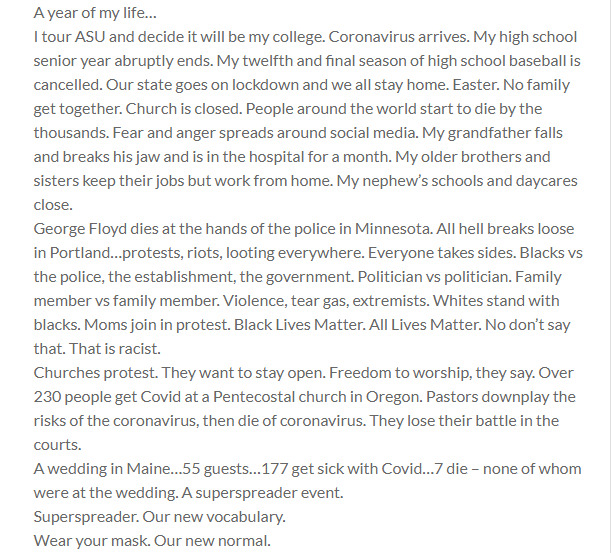
A year of my life… I tour ASU and decide it will be my college. Coronavirus arrives. My high school senior year abruptly ends. My twelfth and final season of high school baseball is cancelled. Our state goes on lockdown and we all stay home. Easter. No family get together. Church is closed. People around the world start to die by the thousands. Fear and anger spreads around social media. My grandfather falls and breaks his jaw and is in the hospital for a month. My older brothers and sisters keep their jobs but work from home. My nephew’s schools and daycares close. George Floyd dies at the hands of the police in Minnesota. All hell breaks loose in Portland…protests, riots, looting everywhere. Everyone takes sides. Blacks vs the police, the establishment, the government. Politician vs politician. Family member vs family member. Violence, tear gas, extremists. Whites stand with blacks. Moms join in protest. Black Lives Matter. All Lives Matter. No don’t say that. That is racist. Churches protest. They want to stay open. Freedom to worship, they say. Over 230 people get Covid at a Pentecostal church in Oregon. Pastors downplay the risks of the coronavirus, then die of coronavirus. They lose their battle in the courts. A wedding in Maine…55 guests…177 get sick with Covid…7 die – none of whom were at the wedding. A superspreader event. Superspreader. Our new vocabulary. Wear your mask. Our new normal. Another suicide in my school district. I turn 18. I am registered for classes at ASU but attending is up in the air. I work as a GrubHub deliverer because everyone is ordering food from home. We get together with family outdoors. I have a graduation party…in July. Graduated seniors get to play a couple of baseball games at the local minor league field. I am undefeated for my senior season. I pitch, hit, and field well. What might have been… August comes. August 15…I move into Hassayampa…115 degrees…new roommate…I start college…I get Covid…so does my roommate…so does our suitemate…and many others…September 8…I move out of Hassayampa…my roommate and I move into an apartment. Life gets better. Fires sweep through Oregon. And California. And Arizona. ASU cancels finals week. Election. All hell breaks loose. Again. I move home before Thanksgiving. My brother-in-law gets sick with Covid 19. My brother and sister-in-law get sick with Covid 19. My first term of college ends. Christmas. Politics. I won. No, I won. Sounds like kindergarten. These people run our government? I delete most of my social media. I am sick of it. I am sick of everybody. Sick of this year. January. ASU cancels spring break. Back to school. Things are different. The newness has worn off. Covid is a drag. School is a drag. I lose my best friend. I go home. I go back. Ice storm in Portland…power out…broken trees. I go home. I go back. Trying to keep going. Trying to survive. Class is a blur. I stare at the screen. The information goes through me. I am not there. I do my homework. I bomb my exams. My grades are ok…but am I learning anything? Who knows? Who cares? School will be over soon. Virtual work. Virtual school. Virtual life. I will finish the year with over 40 credits. I will never have stepped foot in a college classroom. I will never have talked to a college professor. I will have met very few people. Fall will come. I will be starting over. We all will be. I hope. #REL101 -
 3/31/2020
Keith Anthony Oral History, 2020/03/31
This interview discusses the experience of Keith Anthony during the COVID-19 pandemic in 2020. The interviewee discusses how the pandemic impacted his personal life as he reflects on the pandemic’s larger impact. He also speculates on how society will look moving forward. -
 2020-06-22
VICE News: Inmates Dying of Covid
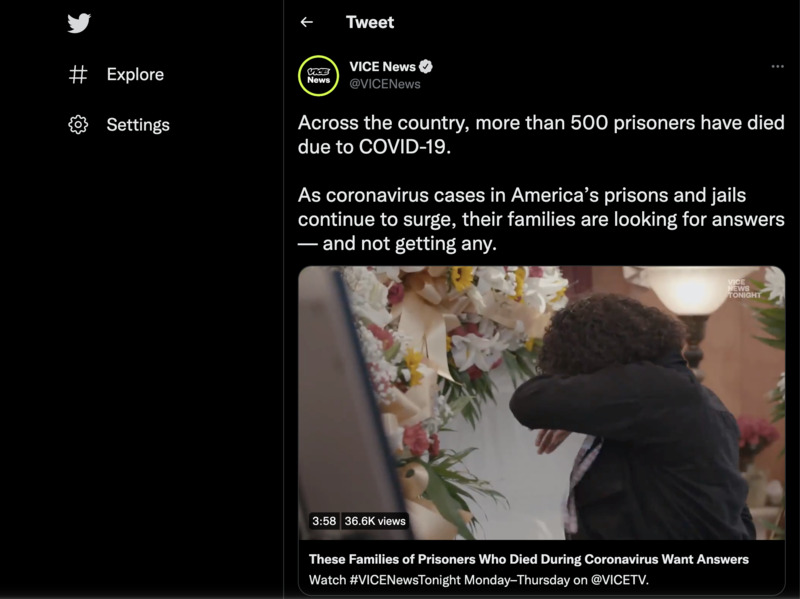
As inmates across the US die, many families are not sure if they have died from covid-19 because inmates are not being tested and finding out after the inmate passes requires families to pay out of pocket for an autopsy. This video follows families in New Jersey, a state whose prison population has been hit hard by covid-19. Covid has shed a light on many inequities across American society and the inequities suffered by inmates and families are terrible in normal times but are even worse due to the pandemic. -
 2020-04-07
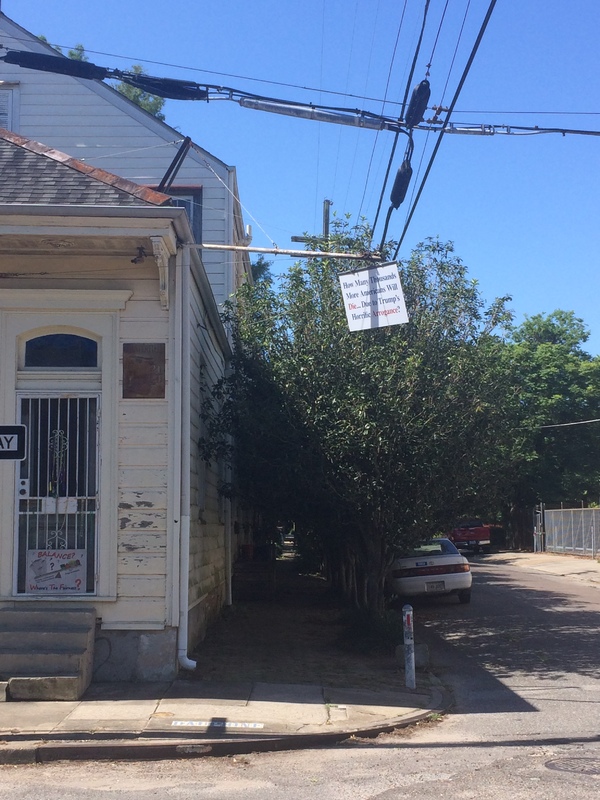
"How Many Thousands More Americans Will Die..." Sign New Orleans, LA
A sign hanging outside of a house reads: "How many thousands more Americans will die... due to Trump's horrific arrogance?" -
 2020-03-27
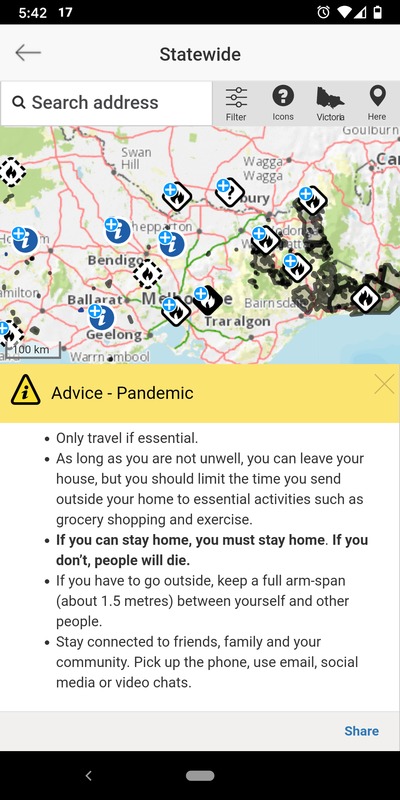
If you can stay home, you must stay home. If you don't, people will die.
I have the VicEmergency app on my phone to warn for bushfires. Around mid March, I started getting daily warning alerts from the app, initially for contagious disease in my area, and then for pandemic in my area. The alerts usually come between 5-6pm and provide information on the latest public health advice and restrictions. On Friday 27 March the alert from the app was particularly striking. One of the instructions, highlighted in bold, told people "If you can stay home, you must stay home. If you don't, people will die." This felt like very dire warning from what is otherwise rather a dry app with very practical instructions. -
 2020-03-29
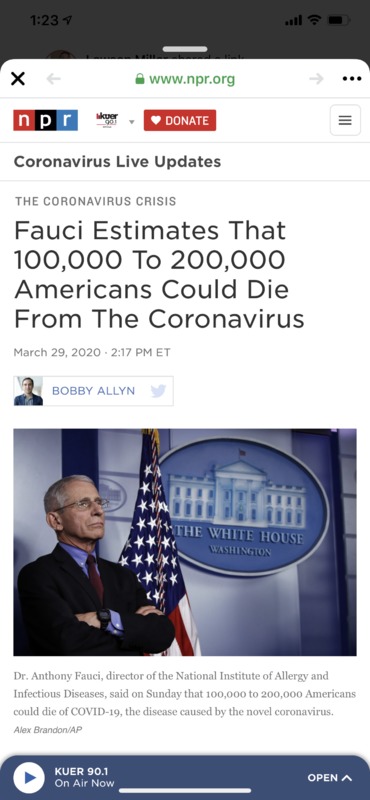
Fauci Estimates That 100,000 To 200,000 Americans Could Die From The Coronavirus
However, Fauci cautioned people not to put too much emphasis on predictions noting that, "it's such a moving target, that you could so easily be wrong and mislead people." -
 12/14/2021
Anonymous Oral History, 2021/12/14
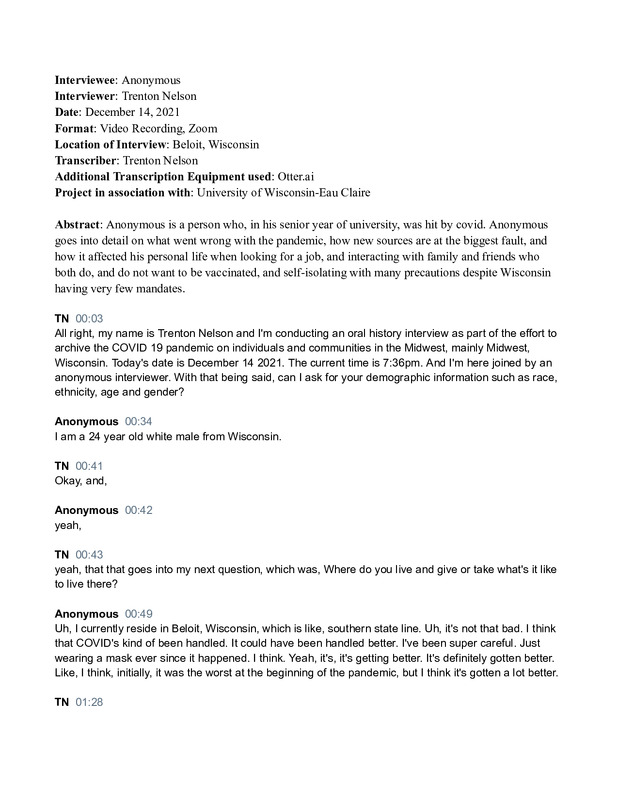
Anonymous is a person who, in his senior year of university, was hit by covid. Anonymous goes into detail on what went wrong with the pandemic, how new sources are at the biggest fault, and how it affected his personal life when looking for a job, and interacting with family and friends who both do, and do not want to be vaccinated, and self-isolating with many precautions despite Wisconsin having very few mandates. -
 11/26/2021
Betsy Stangel Oral History, 2021/11/26
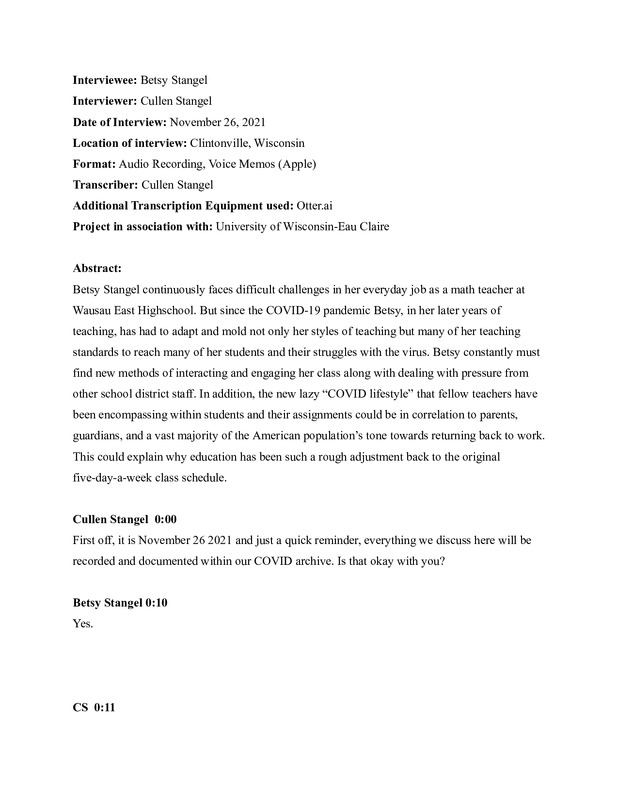
Betsy Stangel continuously faces difficult challenges in her everyday job as a math teacher at Wausau East Highschool. But since the COVID-19 pandemic Betsy, in her later years of teaching, has had to adapt and mold not only her styles of teaching but many of her teaching standards to reach many of her students and their struggles with the virus. Betsy constantly must find new methods of interacting and engaging her class along with dealing with pressure from other school district staff. In addition, the new lazy “COVID lifestyle” that fellow teachers have been encompassing within students and their assignments could be in correlation to parents, guardians, and a vast majority of the American population’s tone towards returning back to work. This could explain why education has been such a rough adjustment back to the original five-day-a-week class schedule. -
 2021-08-11
Venturing to California Once LIve Concerts Resumed
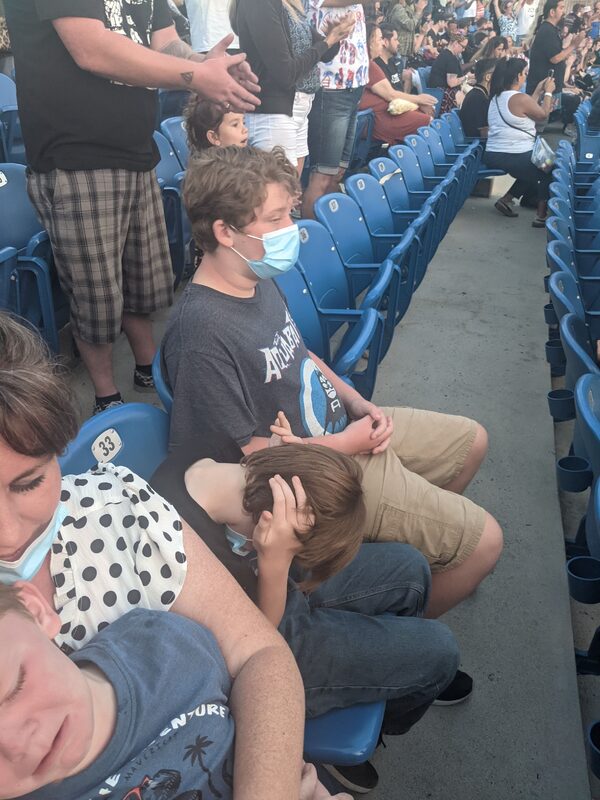
As pandemic restrictions began to ease up, we decided to travel with our family from Arizona (where things had been less strict) to California (where things had been more strict) to see a concert. Many of the music artists we enjoy had only been performing via live stream for the prior year and a half, but now a band we enjoyed was having an outdoor concert at a large venue. After buying tickets though, we worried because we began to see information on the venue's website that indicated only California residents would be permitted. We tried calling, but there were no responses. We went on the trip, not knowing if we would be turned away. Luckily, the website for the event updates the day off and we were able to enter. It was an awkward feeling as masks were still required for an outdoor event, but the vast majority of participants didn't have them on. The picture is my son in outdoor seating wearing his mask despite everyone around us not. This was much less an act of social defiance or morally based compliance, and more of confusion about what was really expected and fear of stepping across unclear lines in a neighboring state. -
 2022-07-11
LGBTQ+ VA Healthcare in Arkansas in the wake of COVID
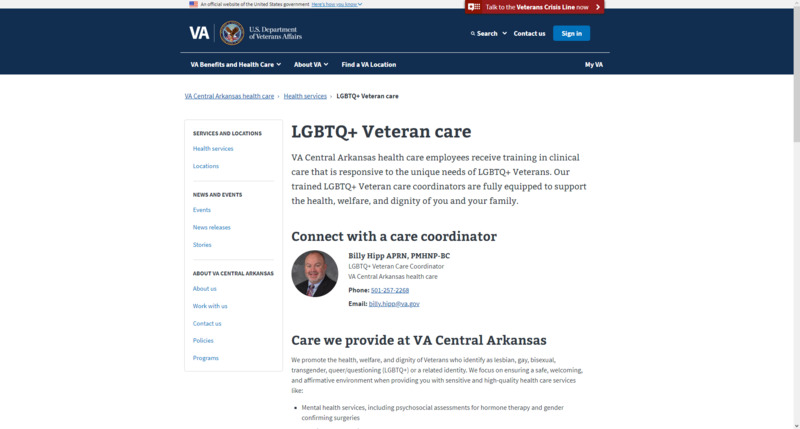
This is the Arkansas Veterans Affairs website listing specific resources for LGBTQ+ veterans in Arkansas. This site places a specific emphasis on Central Arkansas due to the heavy LGBTQ+ population in that area. In order to combat COVID-19, this site focuses on not only concerted vaccine rollout for LGBTQ+ vets, but also lists mental health resources in order to combat COVID-19. I think this shows a particular vulnerability to a select group and how COVID-19 can reach anyone. Indeed, it is essential that at-risk groups such as the LGBTQ+ community are not overlooked in the age of COVID, and it is encouraging to see the VA take steps to assure this is the case. -
 2021-06-25
Pandata falsehoods putting children at risk
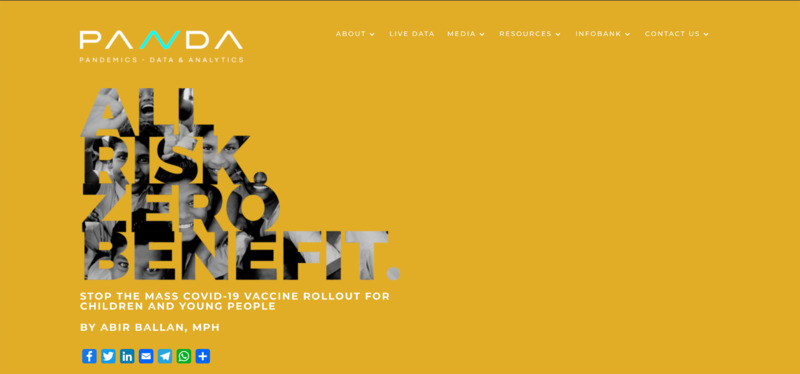
The attached link is to an anti-covid vaxx website, specifically about not vaccinating children. The first thing you see is a list of 10 reasons not to vaccinate children, followed by a video. The main message is vaccines for children are not safe. (Which I would personally like to point out is false.) They are pushing the idea that vaccines are coercive and dangerous. The video is titled “What about the kids?”, and the page it’s listed on is titled “All Risk Zero Benefit.” First, we can look at the title of both of these to see tactics of persuasion. “What about the kids?” Exactly, what about them? This creates an emotional appeal to listen to the message, surely everyone would care about kids, and surely you want the best for them? “All Risk Zero Benefit”, a short title, to the point, definitive word choice. There is no room for argument with “zero benefit”. The video itself flashes between different news outlets and interviews with ‘experts’, Doctors. There is the continued tactic of “The other doctors don’t want you to know this”, or “The government is trying to control you”. This is truly stupid and disgusting. If you watch the video, all the clips are from either Fox ‘news’, The Epoch Times, or from something called Brees Media. Fox and Epoch are both conservative right-wing outlets. I looked into Brees Media, as I hadn’t heard of it before. It is a former BBC employee who now created a company that teaches people how to create media content. She (Anna Brees, the owner) has several tweets and Instagram posts that push this anti-vaxx mentality. People tend to trust BBC, at least more so than other news sources, so by continuing to use the Ex-BBC in her bios on everything it begins to create a buy-in for people. -
 07/14/2020
Amanda McMullen Oral History, 2020/07/14
C19OH -
 11/24/2020
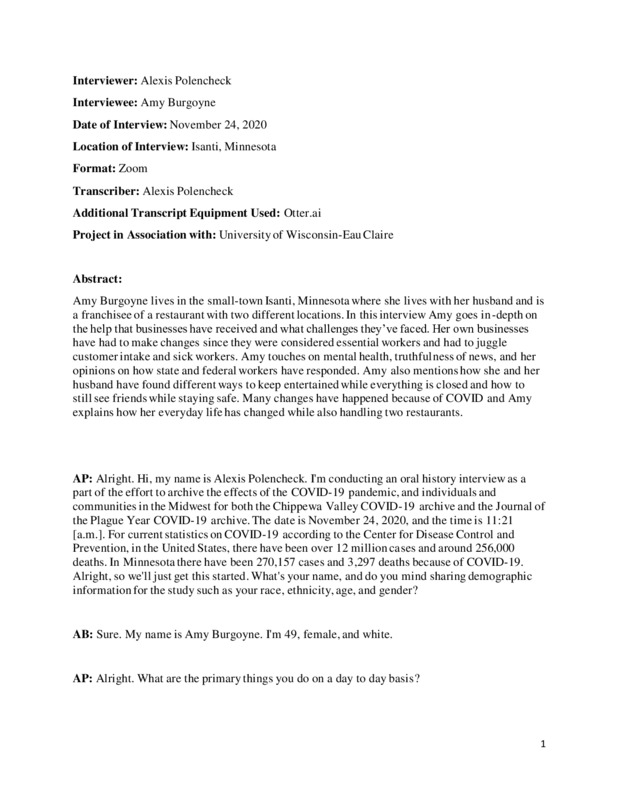
Amy Burgoyne Oral History, 2020/11/24
C19OH -
 10/27/2020
Henry Wathan Oral History, 2020/10/27
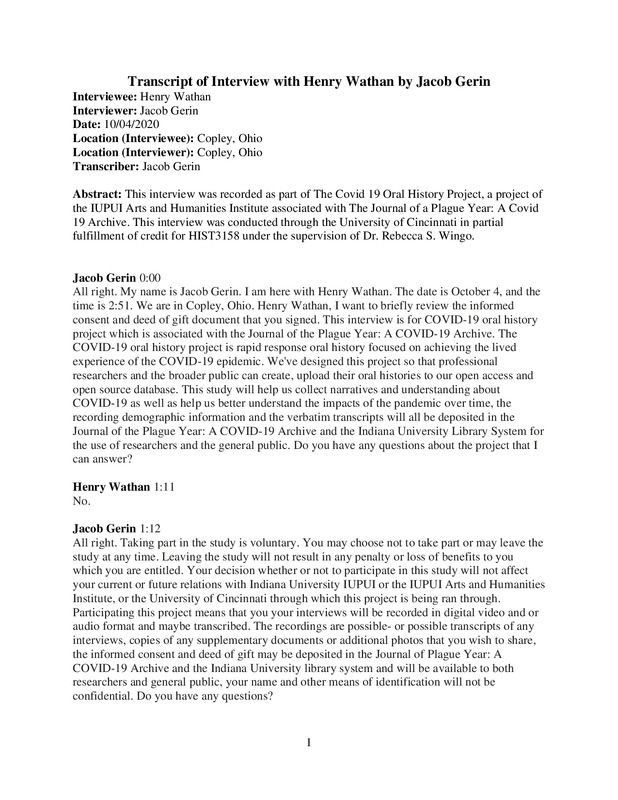
This interview was recorded as part of The Covid 19 Oral History Project, a project of the IUPUI Arts and Humanities Institute associated with The Journal of a Plague Year: A Covid 19 Archive. This interview was conducted through the University of Cincinnati in partial fulfillment of credit for HIST3158 under the supervision of Dr. Rebecca S. Wingo. -
 2021-05-06
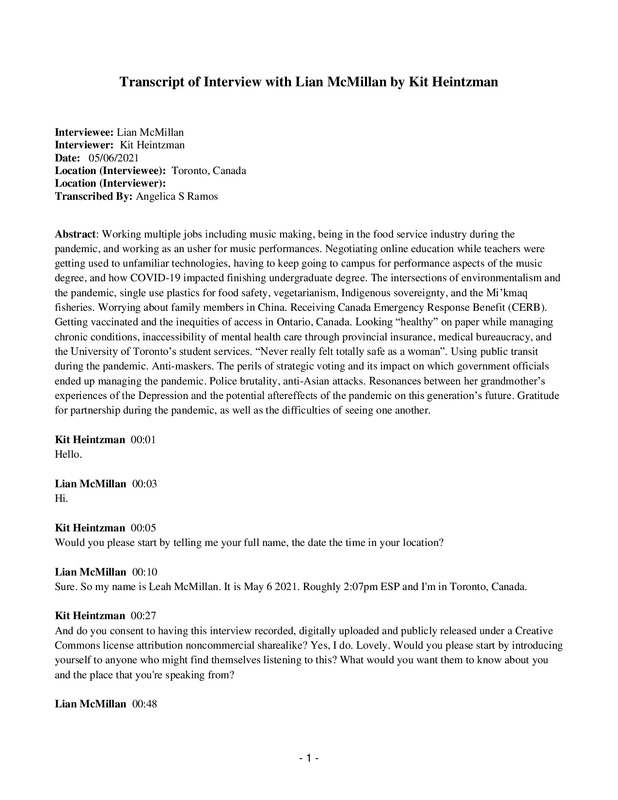
Lian McMillan Oral History, 2021/05/06
Self Description: “I’m a 21-year-old musician. I just recently graduated from U[niversity] of T[oronto] a week ago, and I graduated with a classical percussion degree. I play for a band called cutsleeve. We’re a group of east Asian, queer sound musicians. I’m a mixed race woman, my father is white, and my mother is Chinese. I’ve lived in Canada, the [United] States, and I lived in Shanghai for a few years. I’m a dog owner.” -
 2021-09-20
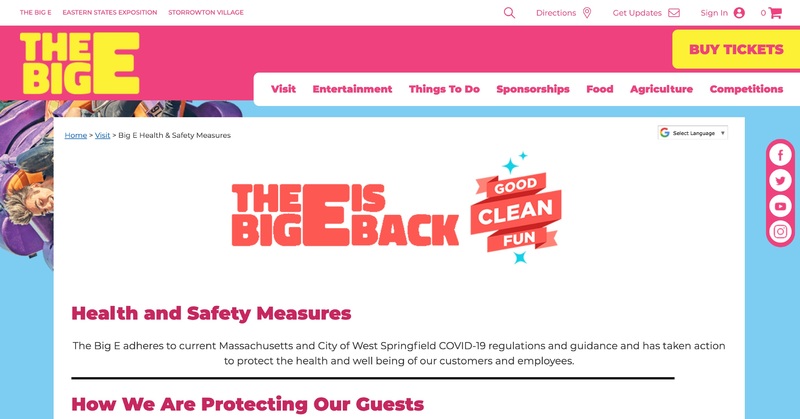
The Big E Health and Safety Measures Web Page
This page on the Big E's website lists the health and safety measures put in place at the Big E, known formally as the Eastern States Exposition, which is a New England fair held annually in West Springfield, MA. The fair was cancelled in 2020 due to the pandemic, so it has a series of health and safety measures in place in attempt to make attendance safe in 2021.