-

2020-12-01
To return to New Zealand in late 2020 I had to complete 14 days of hotel quarantine. Luckily, my hotel had a fenced off area of the carpark that we were able to use for exercise for an hour each day. This strava activity shows a run I did around the very small carpark (one of six during the two weeks), which involved running in my mask and staying a few meters from the other people in the space. Without these bursts of activity, two weeks in a hotel room would have been much less bearable.
-
2020-03-20
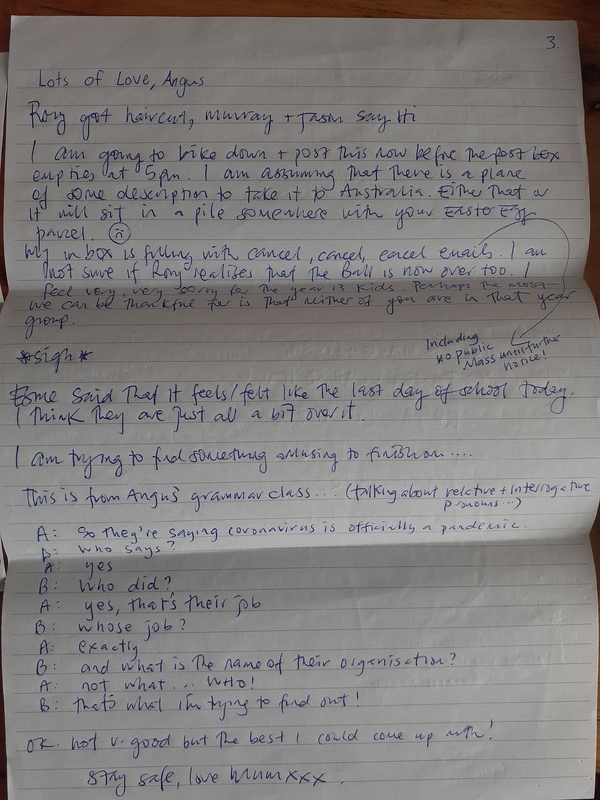
With lots of extra time to spare during the lockdowns, my Mum started writing letters to me as a way to share news. This was a lovely way to stay in touch between Australia and New Zealand, although by the time the letters made it through the very very slow postal system they were weeks out of date. This particular letter from the very start of the pandemic captures the novelty and chaos of the situation very well -- most events are starting to be cancelled, the border between NZ and AU has shut, and everyone is slowly coming to terms with what's happening.
-
2021-09-18
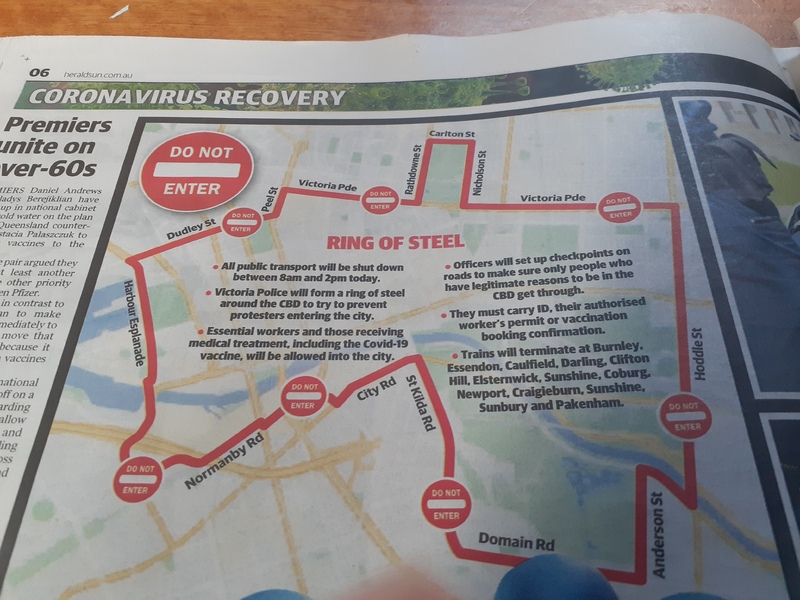
This photo shows a newspaper article published during Melbourne's 2021 lockdown. Following significant anti-lockdown protests in the CBD, the police enacted a 'ring of steel' around the CBD to prevent further protests. I was actually turned around at one of the checkpoints (unaware that the city had been shut) earlier that morning on my morning run. This was one of the most dystopian moments from the whole pandemic and highlighted the lengths the government was willing to take to stop the protests in Melbourne.
-
2022-10-31
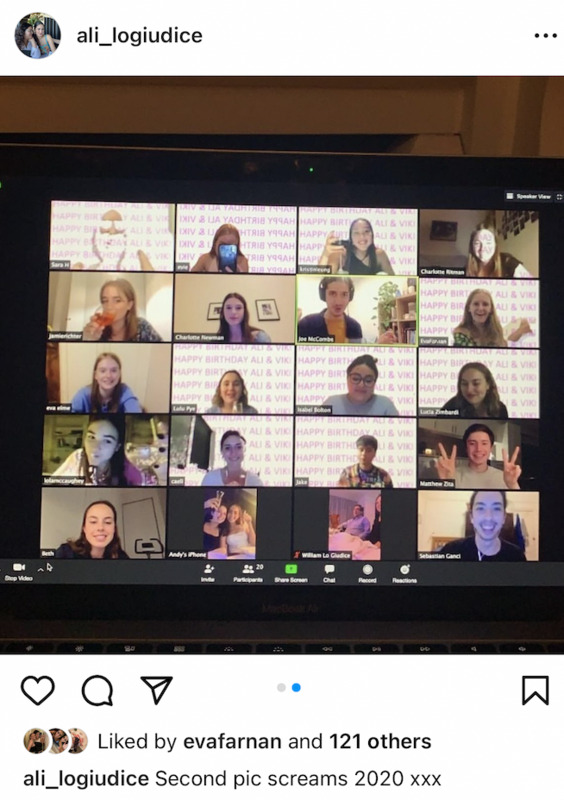
I’ve selected 5 different photos which give a little insight into being a tertiary student during the COVID19 pandemic. I started my Bachelor of Art degree in March of 2020, fresh out of high school. I was so incredibly excited and had a great first few weeks (I think one or two) and O-Week. I was lucky enough to go on a first year Arts student camp in February, where I made a handful of friends that I am still close with today; it was this small social interaction that really served as the bulk of my Uni social life for my degree because ‘going online’ severely stunted my ability to connect with new people. In the screenshot of a Zoom conference call, I am having a zoom call with some of the people I meet on this camp, a kind of ‘reunion’ during the first lockdown in 2020.
Reflecting on some of the other limitations on the social life of a young student who is very social, I have included a screenshot of an Instagram post I did in April of 2020. It was my 19th birthday, and my ‘obligatory’ birthday post for the year looked a lot different to other years. Rather than being out celebrating with friends in real life, we did a group zoom call where we sang Happy Birthday and my friends watched me cut my cake through a screen. Some people got dressed up, donning dresses and a full face of makeup, to just wash it off when you clicked the camera off for the night. It was lovely to connect but looking back at these pictures now just leaves me with a strange, eerie feeling.
I have included a picture of my university set up, a table in our garden and my dog, Margot. I found it really hard to study in my house all the time, so I would often try to move around to different study zones in my house. I really focused on my study during lockdown, it felt like it was a productive use of time and something I could channel my thinking into. However, thinking so much about University, and always having it in my home (it was not like I was moving between a ‘home space’ and a ‘study space’) was really tiring and draining. Every day just felt the same. I have decided to take a gap year next year rather than moving straight into post-graduate study because I don’t want to feel that same kind of burn-out again.
Finally, I have two pictures which encapsulate some pass times during lockdown. One is my sister painting my bedroom walls; we did a lot of home improvement and beautification, giving ourselves little tasks and jobs that we could complete and feel satisfied with. The other picture is my sister and dog on the beach during a winter’s eve walk. I included this picture because her mask is visible. This picture was taken when there were restrictions about the quantity of family members you could walk with, the time you could leave your house, the necessity of wearing a mask and how far you could go from home. When this picture was taken, we had a curfew in place in Victoria (I think you had to be home before 10pm), you could only walk with household members, but only in groups of two at a time, you could not go further than 5km away from your home and you had to wear a face mask even when just walking your dog to a quiet beach. Reflecting on these harsh rules and the feelings I had at the time makes me feel quite sad as I feel like I missed out on so many experiences that I was promised with my university degree.
My experience as a Bachelor student was so far from what it should have been; so while I am extremely proud to be graduating in a few weeks, proud that I loved what I studied, felt empowered by what I learnt and feel like my academic skills have improved so much, I feel sad that I missed out on social connection, a sense of belonging to a school community, meeting people who are outside my regular circles, experiences with clubs and teams, not being able to use campus facilities and spaces. I am so lucky that I was extremely privileged in the lockdown, my family was all healthy, safe, we had minimal arguments, and they made me smile despite the circumstances; my friends were beyond wonderful, and I had a safe place to live and access to my university and learning online. But when I think back to the lockdowns and the impact of them, I still can’t help but get emotional. More than anything, I always find myself shocked about what we all went through and how unique it was.
-
2021-10-22
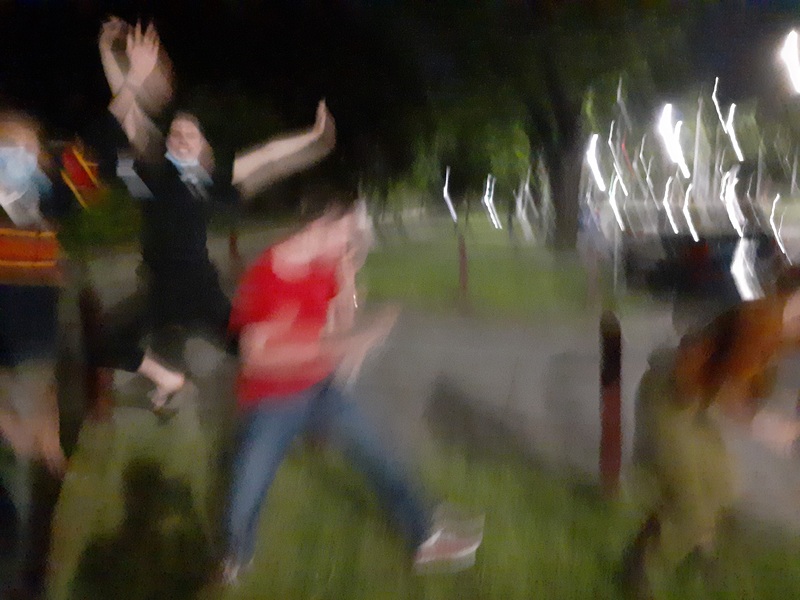
This photo was taken just after midnight on October 22 2021, after the end of Melbourne's final lockdown. With the curfew lifted and fewer restrictions on leaving home we took the opportunity to come out at midnight and celebrate. This photo captures the excitement of the moment, which finally felt like we coming to the end of the most difficult period of the pandemic.
-
2022-10-30
The recent Covid-19 pandemic has had immense local and global ramifications, especially for us Victorians who have experienced the world’s longest lockdowns. It was a significant worldwide event which will certainly be looked back upon by future generations, just as we have analysed previous historical diseases, such as the bubonic plague. But how should archivists determine which sources, and likewise which voices should be permanently preserved within the historical record?
Traditionally, an archive is a collection of documents that archivists have selected to be permanently preserved as sources for future historical or other forms of research. Initially, only scholars with an ambition to conduct historical research had access to archives, but their digitisation and free nature have ensured that anyone is able to access the documents they contain online.
However, the process of creating both physical and digital archives is inherently flawed. Archivists have a formidable power to evaluate which sources are “worthy of inclusion”, and simultaneously which ones are not; essentially what compromises the historical record.
Therefore, although archivists are characterised as unbiased and impartial individuals, they are inextricably influenced by “societal biases” in their decision-making, as they simply have to select what they personally believe will have value to future researchers. It has culminated in them privileging and prioritising the voices of individuals within positions power, which has indefinitely created “gaps within the historical record” through inhibiting the voices of those without it.
Rodney G.S. Carter echoes the problem in asserting that the existence of archival “silences” is the “manifestation of the actions of the powerful”, which has a substantial impact on how marginalised groups produce and likewise form both social history and memory. Ariella Aïsha Azoulay has cautioned readers that “digital archives are no exception”.
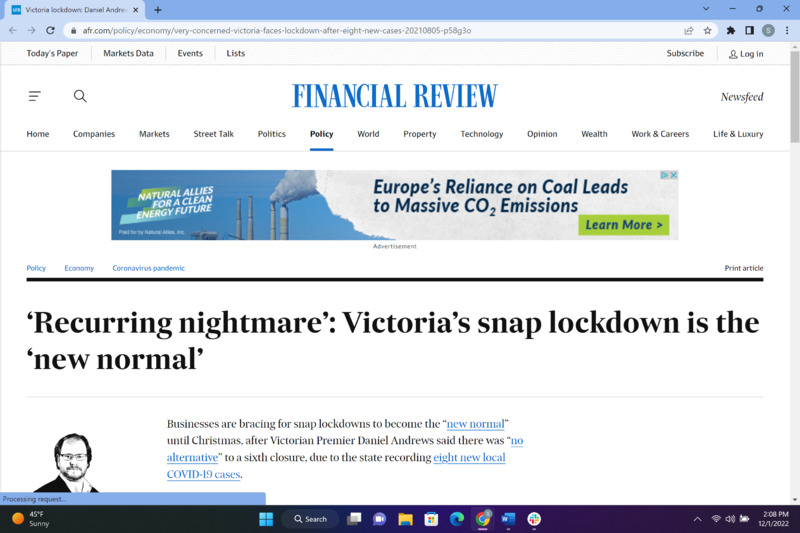
With this in mind, if we consider the 19-month impact of the pandemic upon Victoria, I am certain that archivists will acknowledge the voices of those within positions of power when determining what sources should be preserved. Of particular importance would be those of primary actors that shaped Victoria’s lockdown experience, most importantly the protagonist of the lockdowns, Premier Daniel Andrews (fig.1).
Figure 1. Video of Premier announcing sixth lockdown, cited in Patrick Durkin, “’Recuring nightmare’: Victoria’s snap lockdown is the ‘new normal,’” Financial Review, August 5, 2021, URL: https://www.afr.com/policy/economy/very-concerned-victoria-faces-lockdown-after-eight-new-cases-20210805-p58g3o.
I am aware of the threat of “information overload” both real and digital archives currently face with an abundance of available sources, but I would argue that the preservation of major political statements alongside previously supressed voices would be beneficial to any archive created surrounding the Victorian Covid-19 experience.
A consideration of the experiences of marginalised voices would be imperative to a future historian, as it would enrich historiography by offering insight into the social-political dynamics of the event, and its psychological impact beyond official government and political documents.
I will now consider the value of this “bottom-up approach” in capturing the Victorian pandemic experience from the viewpoint of the common man, me, a historically marginalised group within the realm of archives.
I personally wasn’t too concerned about the first lockdown and its stage three and four restrictions as they would “flatten the curve” of infectious cases, providing our health system with the best opportunity to tackle the fast-spreading virus. Life as we know it changed though with only four reasons to leave home; shopping, exercise, caregiving, and work. The café I worked at had to shift to “take away only”, as many others (fig.2).
Figure 2. The Food Republic Café, “covid update for customers,” Blackburn, March 23, 2020, URL: https://www.facebook.com/thefoodrepubliccafe.
I was still able to work alongside my barista colleague and friend Max which was pretty good, and I was able to perfect my coffee artwork (fig.3).
Figure 3. The Food Republic Café, “promotional post during lockdown 1” Blackburn, April 8, 2020, URL: https://www.facebook.com/thefoodrepubliccafe.
I was also able to continue exercising and riding my bike, but I wasn’t able to see or visit any friends or family, which initially seemed like a fair sacrifice to make for the health and wellbeing of all Victorians (fig.4).
Figure 4. George Vesnaver, Selfie on bike ride, April 10, 2020, photograph, Main Yarra Trail, Melbourne.
However, after being continuously plunged in and out of lockdowns by the time the sixth one came about, I was very angry to say the least as representative within my covid journal entry (fig. 5).
Figure 5. George Vesnaver, Covid Journal Entry, October 27, 2022, photograph, Kew East, Melbourne.
Laura A. Millar’s observation that “the concept of evidence” must be broadened as opposed to its current restrictive and rigid format adopted by archivists has reaffirmed my belief that my experience and that of other regular people should not be forgotten.
My sources may just seem like information to an archivist because of their form, but they are filled with evidence of this historic moment. Their eternal preservation within an archive would serve anyone wanting to write about the Victorian Covid-19 experience in the foreseeable future. For example, figure 2. would enable one to see how government information was disseminated via social media; the confirming and likewise conforming of political decisions. Figure 3. would reveal the way in which people adapted to Victoria’s first initial lockdown via humour, helping us remember attitudes towards the past event. Figure 4. would showcase a sense of normality during unprecedented times, through an ability to continue exercising. But most importantly the response depicted in figure 5. towards figure 1., a first-hand account of the psychological impact of the endless lockdowns instigated by those with political powers.
Winston Churchill once said that “history is written by the victors”, so considering those with and without power survived the pandemic it seems only fair that all our voices should be recognised in the historical record.
-
2021-08-08
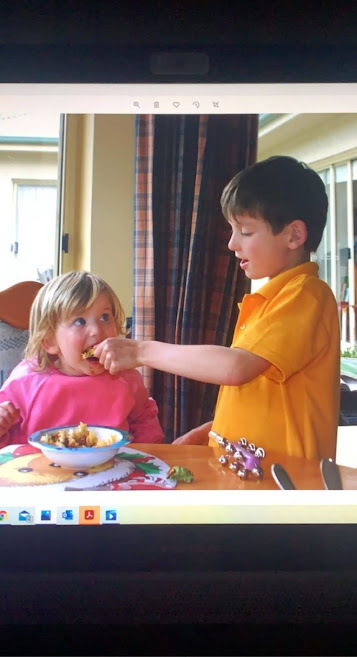
In isolation, I found myself coming closer to my family. I was living in Melbourne at the time, away from my home in Tasmania, but maintained constant connection via video calling and messaging my family. One way I connected with home was by sharing old photos with my sister. This is one she sent me while I was in lockdown. It was taken around 2008. Trawling through thousands of old photos was an easy way to keep occupied during lockdowns, and I’m partially glad that COVID gave me the free time to do so as it was a fun way to bond with family and massage out the homesickness.
-
2021-09-16
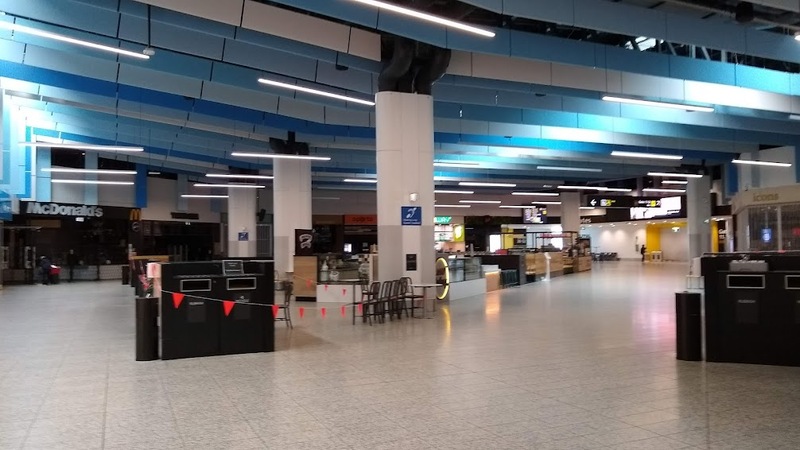
This is a picture of Melbourne Airport (Tullamarine)’s Terminal 4. I flew out of Melbourne to get home to Tasmania just days before rising cases of the Delta variant forced state governments to shut borders once again. I remember the surreal feeling of passing through the airport then. Without the rush of people, the place felt gigantic. My eyes, typically drawn towards the way I needed to go, were able to refocus towards the ceilings, pillars and billboards. It felt like standing in a cathedral. As I was dwarfed by the sheer size of the terminal, I reflected on how COVID was reshaping billions of lives and world history as a whole too.
-
2021-09-15
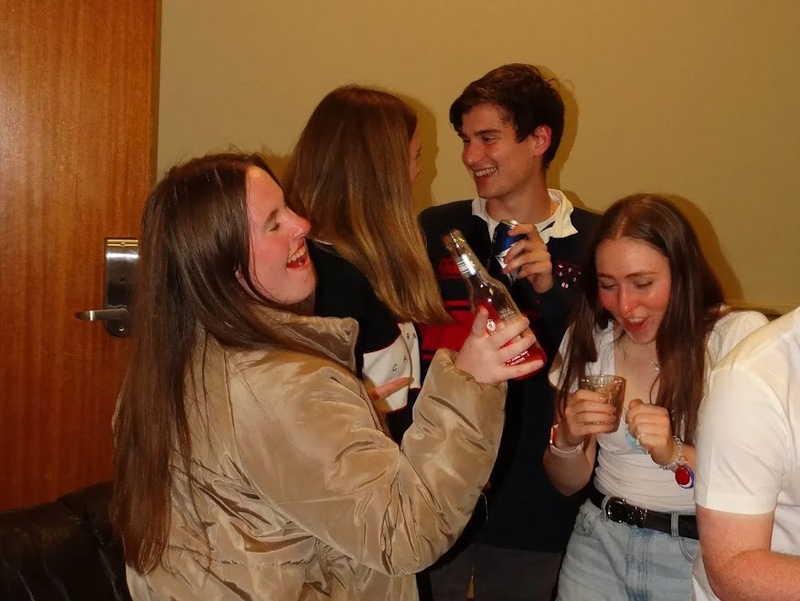
When the new Delta variant led Melbourne’s COVID cases to explode over the second half of 2021, smaller states looked set to shut borders with Victoria. Consequently, I had to leave my new home at in Melbourne to get back to Tasmania in late September. Not knowing when we’d all see each other again, my flatmates held a small party for me. We stayed up until 4am. This is a picture one of them took at the event.
-
2020-04-05
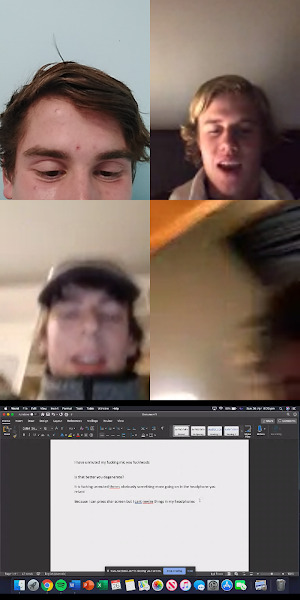
My 20th birthday party, held on Zoom. We tried to convince George that his microphone was muted, and he proceeded to abuse us via Microsoft word and the “share screen” function. While they didn’t compare to real life interaction, Zoom provided many new creative ways to converse which we had a lot of fun exploring.
-
2021-07-23
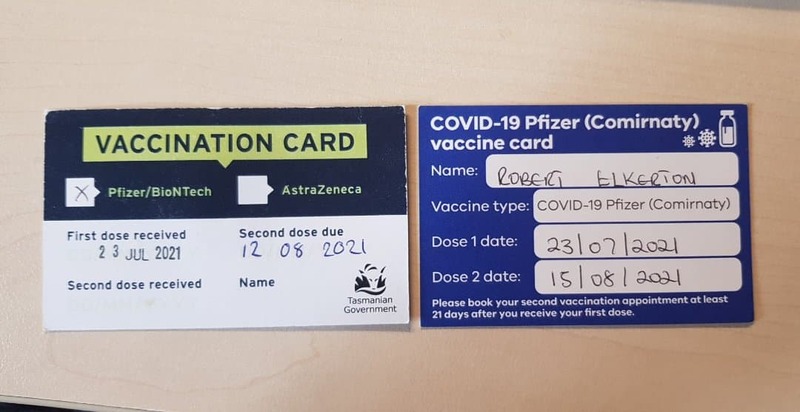
These are vaccination cards, little pieces of cardboard given to you after a COVID vaccination to both remind you of when your next dose is due and to prove that you got the jab. Legal proof was a major part of the COVID pandemic and perhaps one of its most frustrating parts. I despised incessantly needing to prove that I was vaccinated and without any COVID-like symptoms to do everyday tasks like shopping, visiting the doctor or going to my classes. To make it all easier, I kept these cards as proof of my vaccination.
I also kept them as a souvenir. I was cognisant of the fact that we were living through an event which would alter the course of world history, although I didn’t know how. I thought that they would be a nice piece of material history to show people when they ask what living through the pandemic was like.
-
2020-04-04
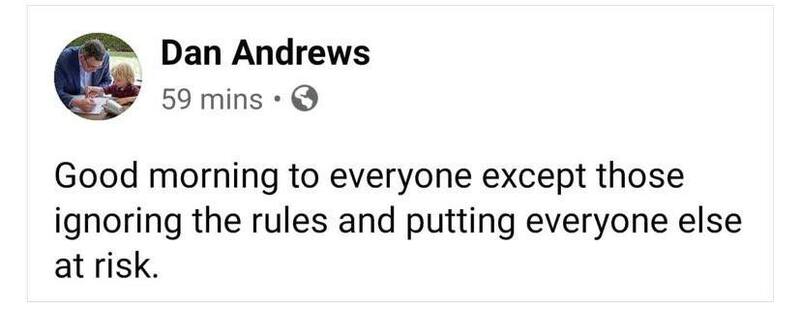
This is a screenshot of a Facebook post made by Daniel Andrews’ public page on 4th April 2020.
This post exemplifies the Victorian Premier’s ability to co-opt social media trends in promoting his own political agenda. Popular in early 2020, the meme followed the template of “Good morning to everyone except,” followed by exclusion of a relatively a niche social group. This screenshot illustrates the subtle use of social media as propaganda by the Andrews government. Andrews’ social media pages are seldom thought of as such, as the skill of his social media team has allowed him to maintain a popular and likeable social media persona. In an age of ubiquitous social media use, the Andrews government has used social media very effectively to protect its legitimacy and justify its methods. For example, the screenshot highlights the use of guilt by the Andrews government to legitimise health restrictions. The government consistently stressed that the pandemic restrictions were for the benefit of the public and necessitated complete compliance. Those who rejected health advice were endangering the entire community and “putting everyone at risk.” This post therein encapsulates sophisticated government propaganda and the co-opting of social media for political purposes.
I selected this post as someone influenced by the sophisticated campaign of government messaging. It lead me to resent rule-breakers and see the prolonged restrictions as a legitimate use of government authority to protect the public. As someone who entered the pandemic as a supporter of the Labor Party and Daniel Andrews personally, I no longer think the severity and length of the lockdowns were necessary. Yet, his social media presence certainly made him likeable, funny, and relatable at the time.
-
2021-08-21
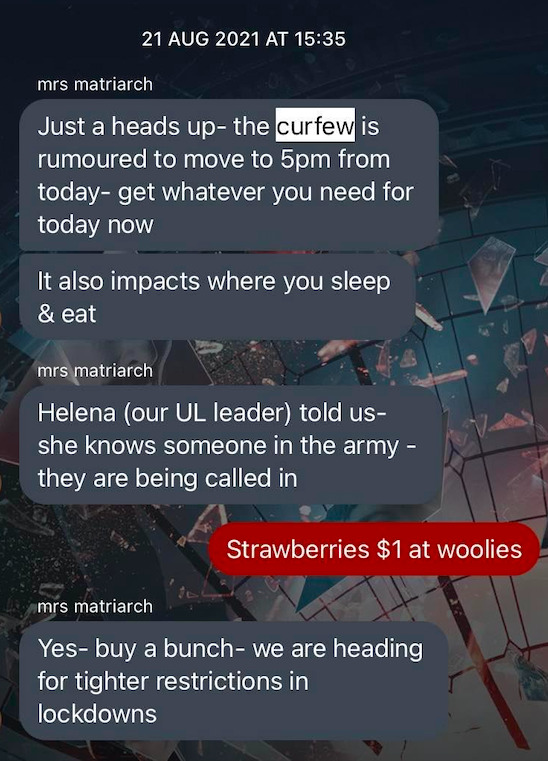
This is a screenshot of a family text conversation in August 2021. The mother, nicknamed “mrs matriarch” on the Facebook Messenger application, is relaying rumours of an intensification of the lockdown restrictions, including the involvement of the military. She also encourages the popular practice of hoarding or panic buying.
This conversation encapsulates popular anxiety around the suddenness of government responses to the pandemic. The user alerts their family based on a rumour that the 8pm Victorian curfew would be moved earlier to 5pm. In hindsight, the 5pm curfew never eventuated. Instead, the 8pm curfew became 9pm, before it was later removed. The user’s fear that the military would be involved further shows the anxiety felt by Victorian residents and the sense of entrapment.
The conversation also indicates the popular phenomenon of panic buying and hoarding. The text reads, “get whatever you need for today now” and “buy a bunch – we are heading for tighter restrictions in lockdowns,” even for a perishable item like strawberries. Rumours had a very real effect on the population, prompting atypical economic behaviours, including the infamous toilet paper hoarding. The low price of strawberries reported by the user also illustrates the strange supply and demand for groceries during the pandemic and excess of fruit that year.
-
2022-02-04
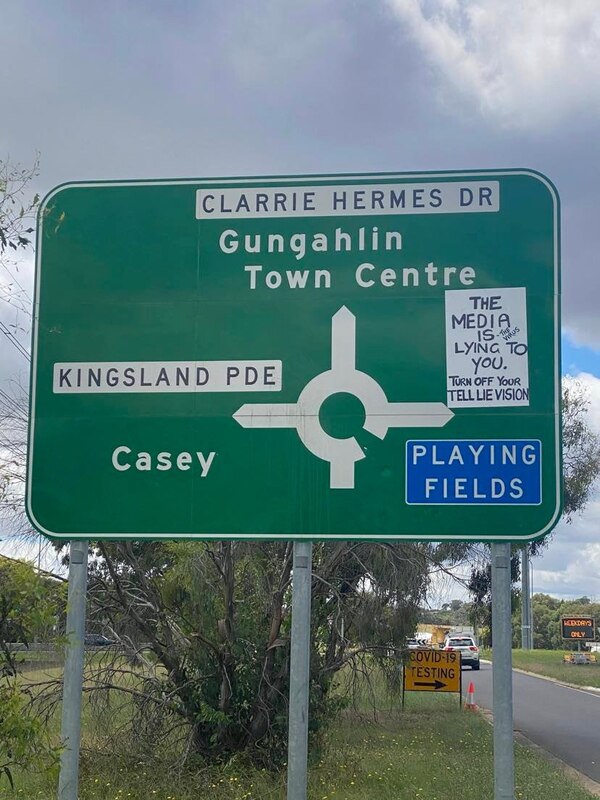
This photograph depicts negative popular responses towards public messaging about the pandemic. On the Canberran road sign, a sticker reads, “The media is (the virus) lying to you. Turn off your tell lie vision.” At the bottom of the corner, a sign points towards a PCR test centre. This photograph was taken in February 2022.
It is likely that this sticker was posted by a Freedom Rally protester. In January 2022, the Freedom Rally attracted thousands of protesters to Canberra in protest of the government’s response to the pandemic. The “Canberra Convoy” drove from all parts of the country to protest in front of parliament house. While the protesters’ concerns primarily revolved around the vaccination mandate and media censorship, the movement evolved to include all manner of political concerns, including housing affordability, the rising mental health crisis, religious freedoms et cetera.
This photograph illustrates how the government measures and media coverage of the pandemic were not universally accepted but rather hotly contested in some places. The Freedom Rally, for example, attracted over 100,000 people to the nation’s capital. The photograph further shows popular anger towards the media coverage of the pandemic. The Australian Broadcasting Channel in particular attracted the ire of the anti-vaccination and anti-mandate movement for contributing towards increased fear of the virus and support for the vaccine.
-
2020-08-07
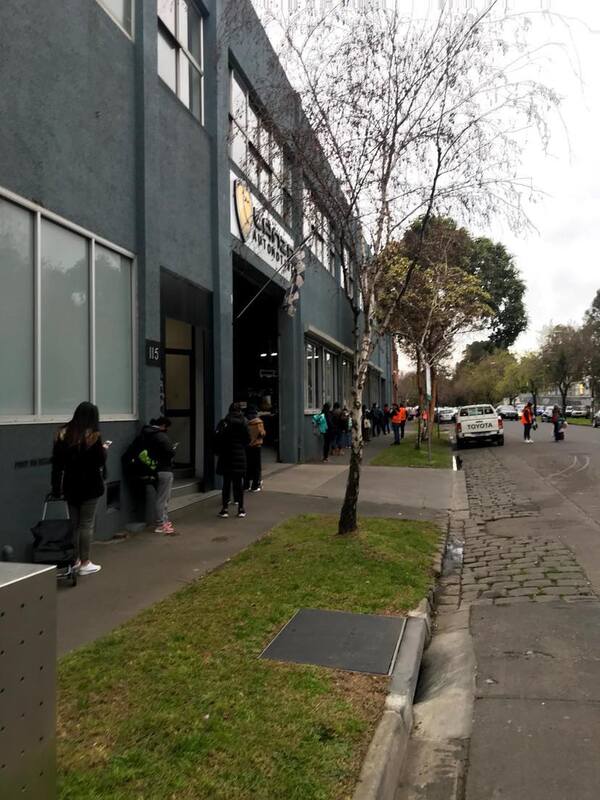
This is a photograph taken of a queue to enter a food relief centre in South Melbourne in August 2020. The queue was several hundred metres long.
As lockdowns began to ravage Melbourne, most businesses were forced to close, resulting in many people losing their jobs. Where this food relief centre had services around 100 people at the start of 2020, this number swelled to over 2000 by the height of the pandemic.
Among the most vulnerable demographics affected by the pandemic restrictions were international casual workers and students. Where citizens were eligible to apply for various emergency relief payments, such as Job Keeper or Job Seeker, migrants did not have access to these resources. This food bank only required a form of identification to register the recipients.
Several pandemic related restrictions are shown in this picture. The recipients are socially distanced, standing on makeshift markings spaced 1.5 metres apart by government restriction. They wear masks; a government requirement both indoors and outdoors at the height of the pandemic in Victoria. The food bank volunteers wear neon orange high-visibility vests and hold QR codes for the recipients to register on their own devices. I have volunteered at the food relief centre since 2020, performing the same role as the volunteers in the photograph.
Where mainstream historical narratives and media may focus on how the lockdowns affected citizens, it is important to remember how migrants too were affected by the pandemic and had little to know support from the Australian government.
-
2020-08-18
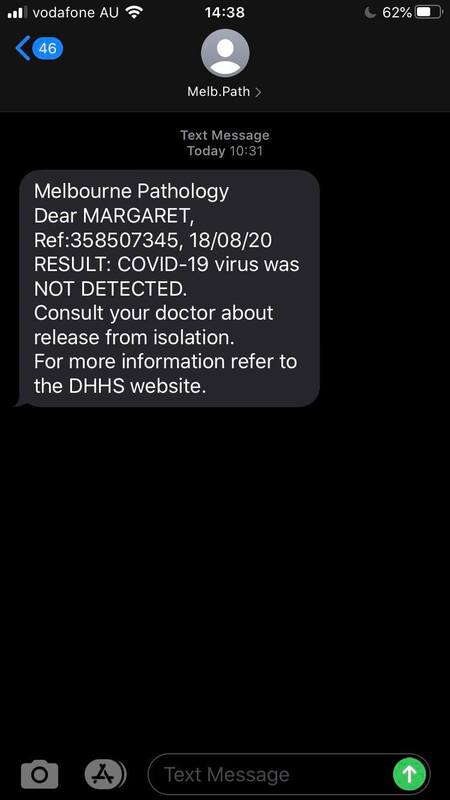
This is a screenshot of a negative PCR test result from August 2020. At this time, test results would typically take 24 hours to process, with the government requiring that the patient isolate until they received the result of their test.
I, like most residents in Melbourne, suffered a profound emotional impact from the bombardment of public messaging about the pandemic. The advertising campaigns by the state government as well as opinions expressed on social media suggested that a failure to follow health protocols would result in tremendous negative effects. For example, failing to get tested could be the reason that someone's grandmother died from exposure to the pandemic. With such high stakes attached to my everyday behaviour and compliance to health orders, whenever I felt even slightly unwell, it would trigger a barrage of intense anxiety. The health order to self-isolate for a week after a positive test result, as well as the Andrews governments' policy of reopening contingent on the number of positive test results in the community, further increased anxiety around any form of cold symptoms.
To the day, this image evokes feelings of fear and relief. Something so mundane as a text message represented either a ticket to freedom or a binding health order. In this case, the text message represented a reassurance that my sickness was the regular, boring sort, and that I was not an accidental killer of grandmothers. It represents the use of everyday technology, both sophisticated and mundane, in the pandemic response.
-
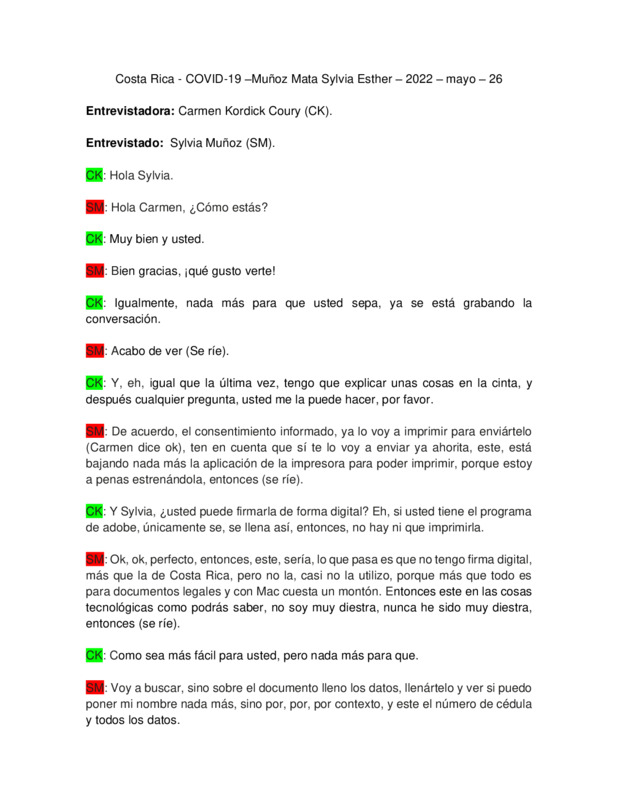
05/26/2022
En esta entrevista Silvia Muñoz Mata es entrevistada por Carmen Kordick Coury concerniente al covid-19 en Costa Rica. Para empezar, Silvia habla de las cosas que habían cambiado desde el año anterior. Habla de su hogar y como se sintió cuando se enfermó. De la vacuna, teorías conspirativas, y del gene antivacunas incluyendo su novio. De allí, Silvia habla de su trabajo, de la salud mental, el abuso y violencia doméstica. Hablan de cuestiones sociales y el tema de la economía, gente sin trabajo y inflación. Pasan el tema de la inflación, la política, las elecciones y los candidatos. También hablan del gobierno, pensiones de lujo, hospitales y salud y el uso de las mascarillas. Para terminar, hablan de las fuentes principales de información y del futuro.
-
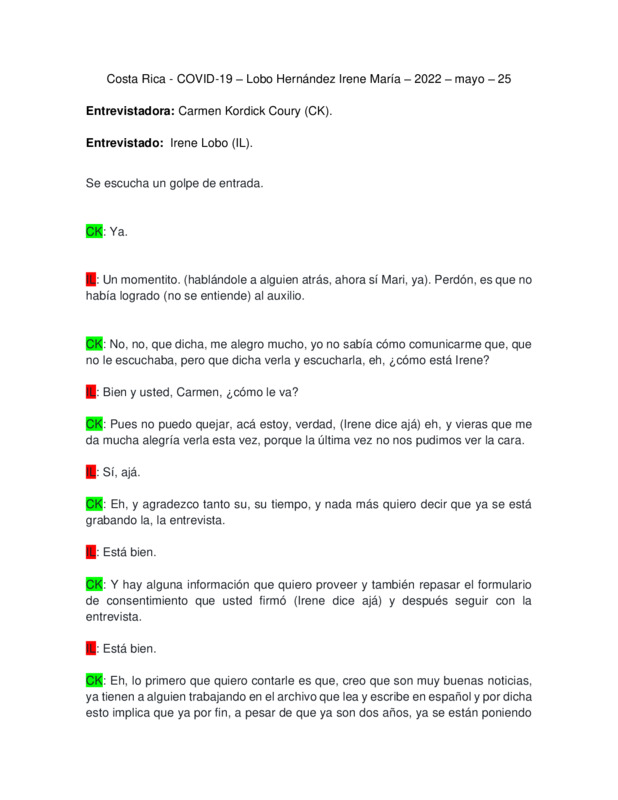
05/25/2022
En esta entrevista Irene Lobo Hernández es entrevistada por Carmen Kordick Coury concerniente al covid-19 en Costa Rica. Para empezar, hablan de lo que ha cambiado desde el ano anterior. Habla de su trabajo de abogada, del desempleo y la economía. Irene también habla del gobierno, de las vacunas y de gente que no confía en las vacunas. Habla de las elecciones y los candidatos. De gente conocida que se han enfermaron y unos que han fallecido por la pandemia. Irene también habla de las formas de celebrar la vida de su hermana que falleció el año anterior, habla de su familia y el uso de las mascarillas. Para terminar, habla de sus fuentes principales de información, la información falsa y sus deseos para el futuro.
-
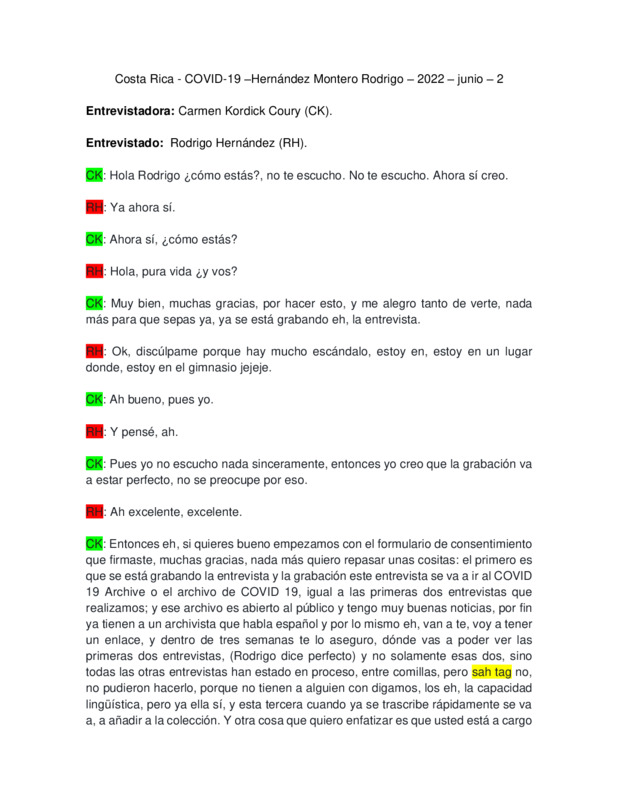
06/02/2022
En esta entrevista Rodrigo Hernández Montero es entrevistado por Carmen Kordick Coury concerniente al covid-19 en Costa Rica. Empiezan con que había cambiado desde el ano anterior. Hablan del gobierno, de la vacuna y su experiencia cuando el se vacuno. Habla de sus compañeros que aún no se habían vacunado y de como le fue a su familia cuando se enfermaron del covid. Rodrigo también habla de la caja, describe su trabajo de odontólogo, habla de sus pacientes y del uso de equipo de protección. Habla de sus compañeros del trabajo y su vida social. De la economía, la inflación y la pobreza, De allí, Rodrigo habla de su hogar y familia, del uso de la mascarilla y de las fuentes de información. Para terminar, habla de las elecciones y del futuro.
-
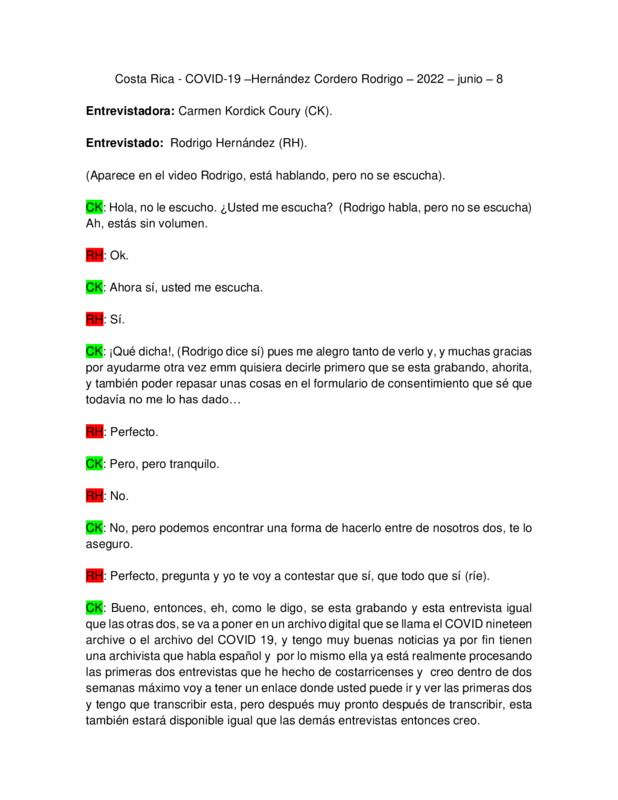
06/08/2022
En esta entrevista Rodrigo Hernández Cordero es entrevistada por Carmen Kordick Coury concerniente al covid-19 en Costa Rica. Para empezar, hablaron de cosas que han cambiado desde el ano anterior. Hablaron de su negocio, inflación, y el gobierno. De allí hablaron del gobierno, la vacuna, y la mascarilla. Hablaron de La Caja, su vida social, y su familia. De las elecciones, fuentes principales de noticias y estudios cerebrales. Para terminar, hablaron de la juventud y de sus pensamientos del futuro.
-
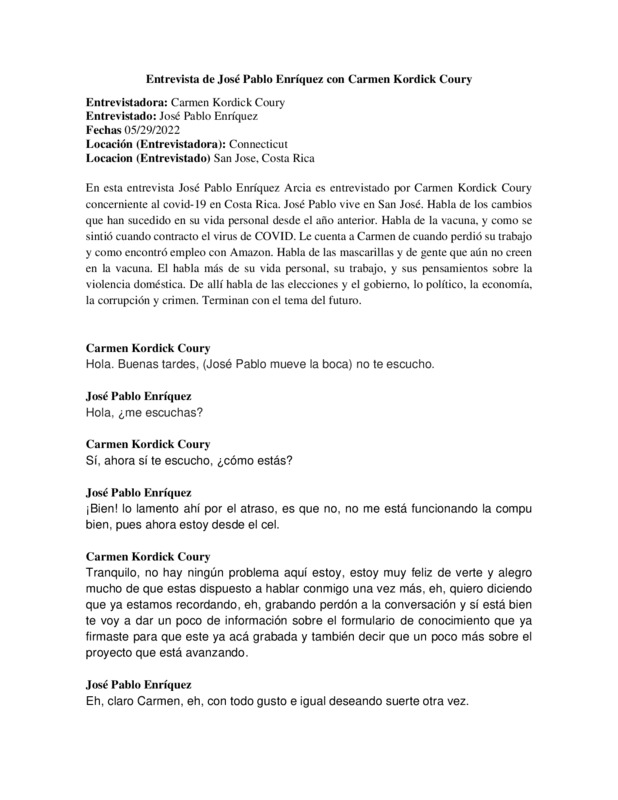
05/29/2022
En esta entrevista José Pablo Enríquez Arcia es entrevistado por Carmen Kordick Coury concerniente al covid-19 en Costa Rica. José Pablo vive en San José. Habla de los cambios que han sucedido en su vida personal desde el año anterior. Habla de la vacuna, y como se sintió cuando contracto el virus de COVID. Le cuenta a Carmen de cuando perdió su trabajo y como encontró empleo con Amazon. Habla de las mascarillas y de gente que aún no creen en la vacuna. El habla más de su vida personal, su trabajo, y sus pensamientos sobre la violencia doméstica. De allí habla de las elecciones y el gobierno, lo político, la economía, la corrupción y crimen. Terminan con el tema del futuro.
-
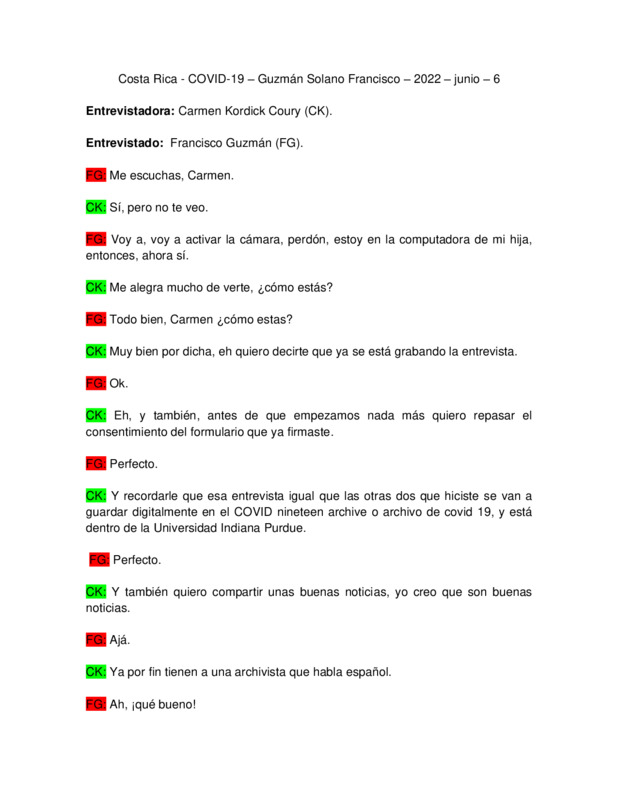
06/06/2022
En esta entrevista Francisco Guzman Solano es entrevistada por Carmen Kordick Coury concerniente al covid-19 en Costa Rica. Empiezan con los cambios que había pasado desde el ano anterior. Francisco habla de su familia y vida social. Hablan del uso de las máscaras, vacunas y la información falsa. De allí, hablan de la economía y la inflación, del gobierno y las elecciones. Hablan del crimen y las drogas. Para terminar, hablan de las fuentes principales de noticias y el futuro.
-
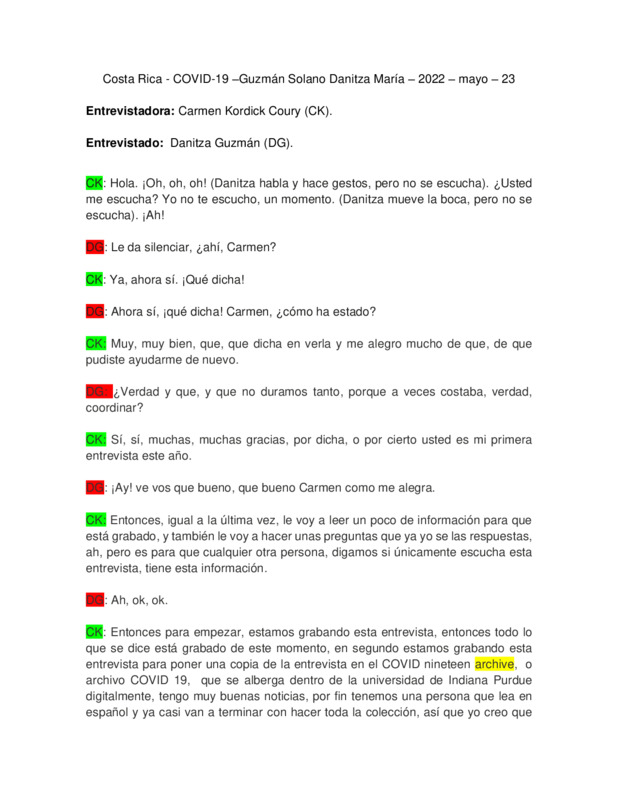
05/23/2022
En esta entrevista Danitza Guzman Solano es entrevistada por Carmen Kordick Coury concerniente al covid-19 en Costa Rica. Hablan de los cambios que han ocurrido desde el año anterior. Hablan del ministerio de educación, de sus estudiantes y de las mascarillas. De la salud mental, el estado mental de sus estudiantes y como van en sus estudios. Danitza también habla de la información falsa y el gobierno. Habla de su familia, su comunidad y su vida social. También hablan de la economía y fuentes de información donde ella recibe sus noticias. Para terminar hablan de las elecciones, lo político, y el futuro.
-
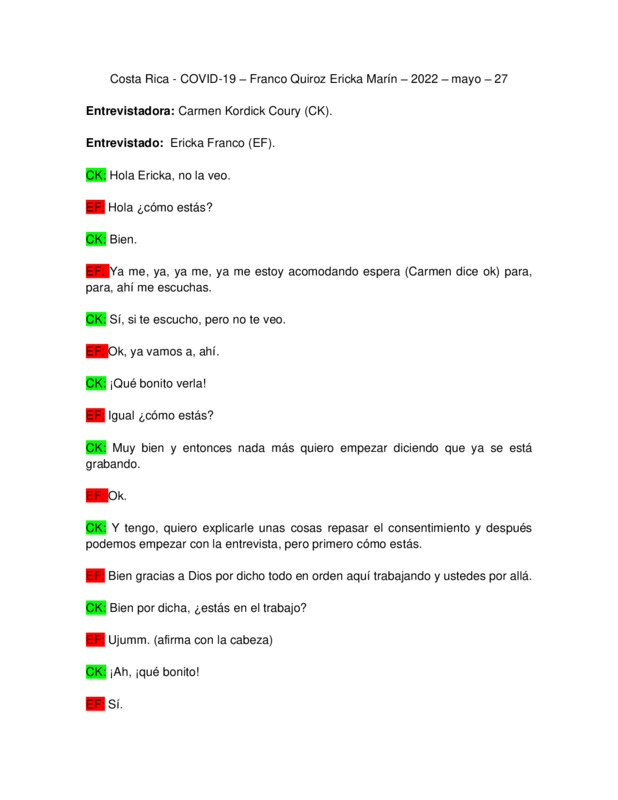
05/27/2022
En esta entrevista Erika Franco Quirós es entrevistada por Carmen Kordick Coury concerniente al covid-19 en Costa Rica. Hablan de los cambios que habían pasado desde el año anterior y cuenta que ella empezó ir al trabajo presencialmente tiempo completo. Habla de las vacunas y mascarillas. Erika habla de su trabajo como orientadora para un colegio técnico profesional y también habla de los estudiantes. De allí, ella habla del gobierno, cuenta que ella contracto COVID, y habla de la gente que no se quiere vacunar. Habla de su vida social, fuentes de información donde ella se educa, y la economía. Para terminar, ella habla de las elecciones, salud mental y el futuro.
-
06/08/2022
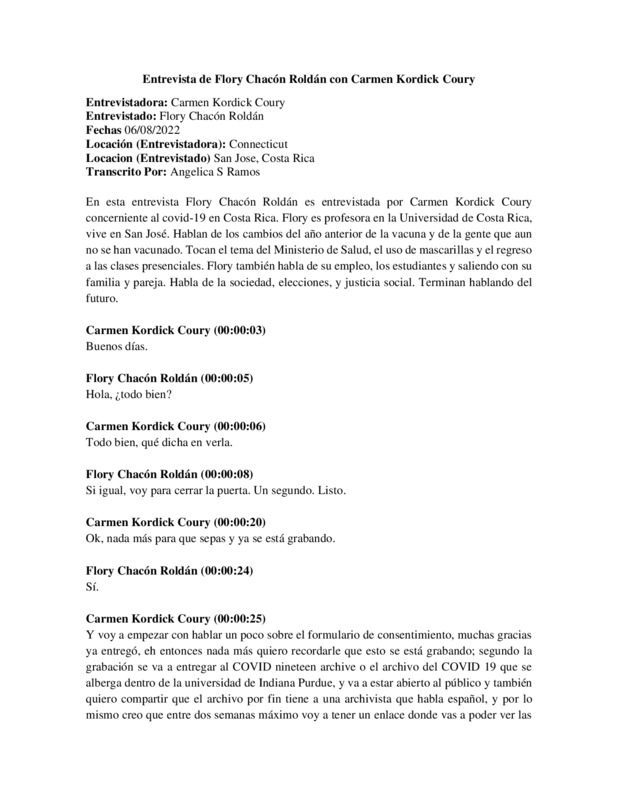
En esta entrevista Flory Chacón Roldán es entrevistada por Carmen Kordick Coury concerniente al covid-19 en Costa Rica. Flory es profesora en la Universidad de Costa Rica, vive en San José. Hablan de los cambios del año anterior de la vacuna y de la gente que aun no se han vacunado. Tocan el tema del Ministerio de Salud, el uso de mascarillas y el regreso a las clases presenciales. Flory también habla de su empleo, los estudiantes y saliendo con su familia y pareja. Habla de la sociedad, elecciones, y justicia social. Terminan hablando del futuro.
-
2020-01-01
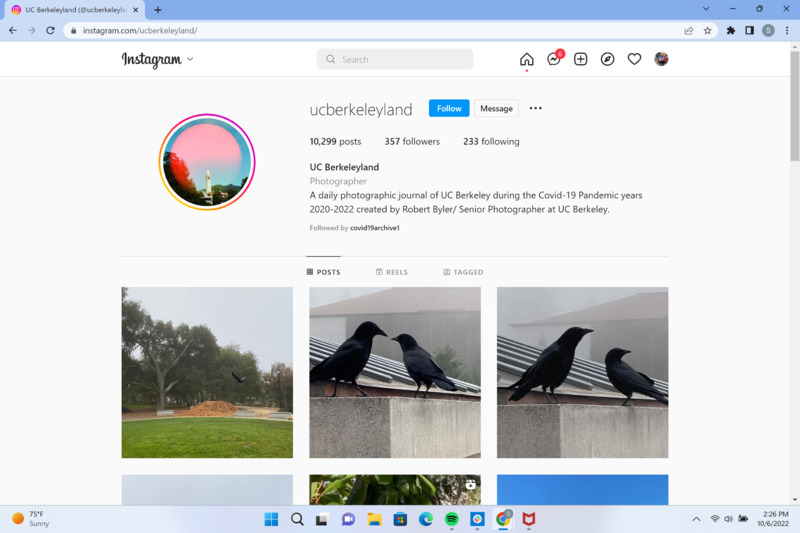
Daily photographic journal golf UC Berkeley during the Covid-19 Pandemic years 2020 through 2022
-
05/24/2022
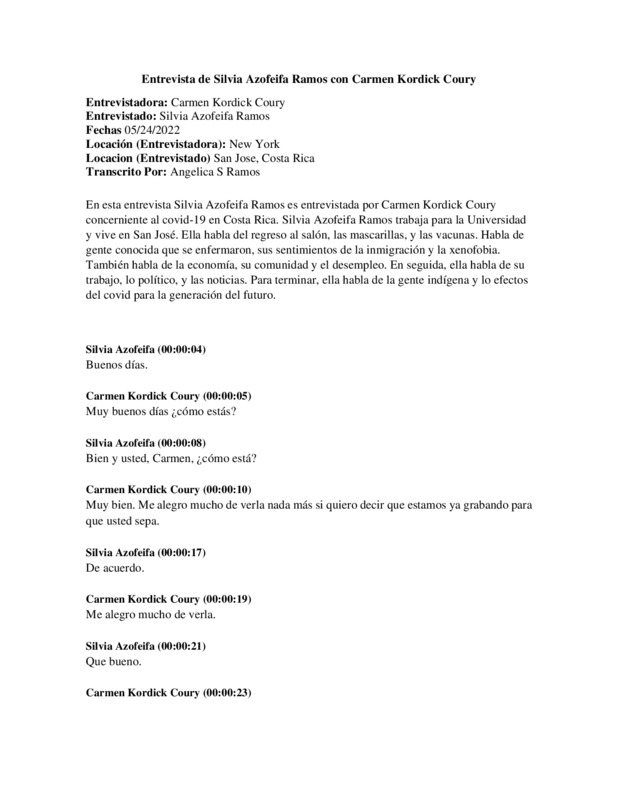
En esta entrevista Silvia Azofeifa Ramos es entrevistada por Carmen Kordick Coury concerniente al covid-19 en Costa Rica. Silvia Azofeifa Ramos trabaja para la Universidad y vive en San José. Ella habla del regreso al salón, las mascarillas, y las vacunas. Habla de gente conocida que se enfermaron, sus sentimientos de la inmigración y la xenofobia. También habla de la economía, su comunidad y el desempleo. En seguida, ella habla de su trabajo, lo político, y las noticias. Para terminar, ella habla de la gente indígena y lo efectos del covid para la generación del futuro.
-
2022-09-21
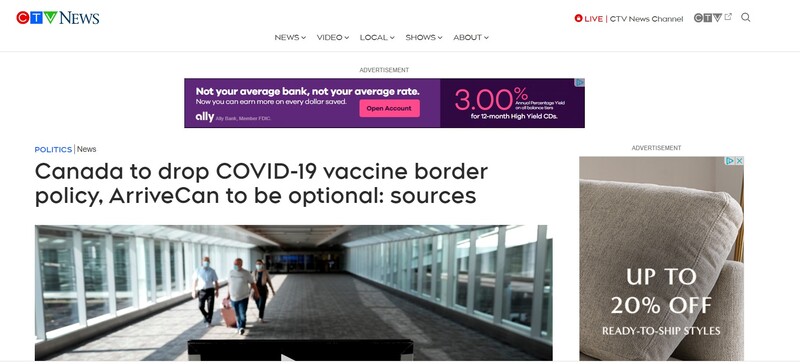
This news article reports Canada's plan to drop its COVID-19 vaccine border requirements, make the ArriveCan application optional, and possibly end COVID-19 testing for travelers by the end of September 2022. This news shows how the COVID-19 pandemic impacted travel and border relations between countries (Canada and US).
-
2022-02-02
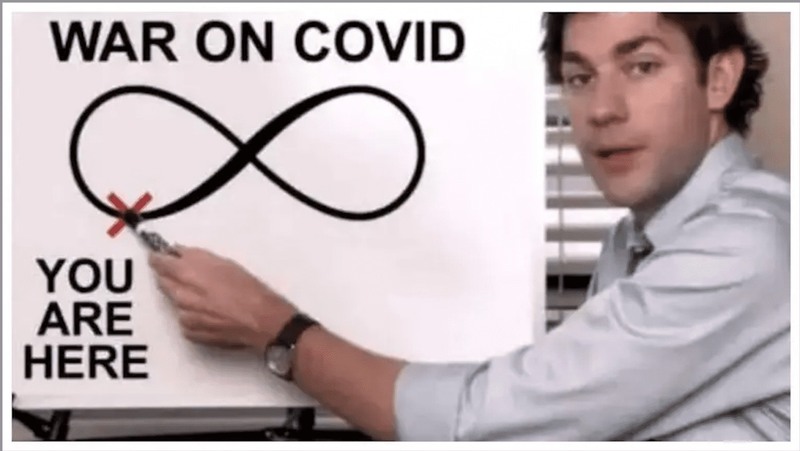
The image describes the cyclical nature that came with the Coronavirus due to various variants developing. This repetition can lead to people living stagnant and restricted lives. Such occurrences may result in feelings of hopelessness and futility. Sadly, one person alone cannot stop the spread of the virus, yet individuals continue to suffer.
-
2022-08-30
Political divisions greatest threat to U.S.; 7 Billion weapons left in Afghanistan; Opioid $ penalties; $300 billion college loan forgiveness; college tuition up 6x inflation; 16% of voters would not have voted for Biden; election not stolen at voting booth; Democrats gaining fast on midterm elections; Trump welcomes embrace of QAnoners
-
2022-09-10
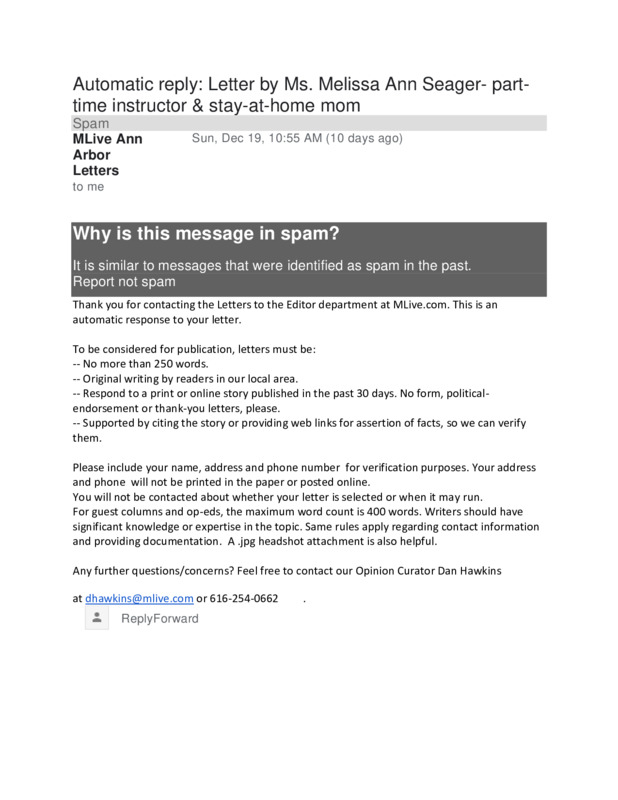
• I am by Profession a Part-time Instructor of Creative Writing. I received my master’s degree in creative Writing from Concordia University. Right now, sine the Coronavirus crisis hit, I have been a full-time Stay-at-Home Mom with our two lovely daughters, Emily 8 and Lisa 10! They have been having the hardest time since the Coronavirus Situation hit our Country. Many times, Emily will say to me ‘Mommy, I’m scared, when will this crisis end? I’m Sorry, because I really don’t know what to say to her, at that age!! When I was a little girl, we didn’t have to face such a crisis! The closest thing we had was in 1961, to hide under our school desks, during siren drills!
• Mentally, lately I have, personally been having frequent bouts of Severe Depression, whereby I feel like crying a lot, but my daughters and my husband, Dennis, kisses me, comforts me and tells me not to Worry!!
• My Father-in-Law has recently been admitted to the hospital, after he began having severe stomach pains, after helping my Mother-In-Law to lift several boxes of heavy furniture! He was in the hospital for a series of Tests, after which it was discovered that he had damaged his Kidneys and 1-2 months of Intense Physical Therapy, combined with daily Anti-Biotics!
A Group of Ladies that I belong to at my Church, have been commenting, “Boy Melissa, you simply don’t seem like your Cheerful, jolly, Loving self, are you sure you are alright?? Is there anything that We can do to help you and Dennis?
• I typically work Outside-the-Home, but lately, because of our two daughters, I have chosen to work remotely from Home! But their smiles 😉 make it all worthwhile!!
• My Husband and I are both, definitely practicing Social Distancing!! My girlfriends All Admire the ‘Courage-Of-My-Conviction!’ They tell Me Openly that they feel that I AM TRULY ONE OF THE BRAVEST WOMEN THAT THEY KNOW!! Although Dennis and I have to frequently visit his parents only via Skype! This is often-times distressing!
• Because of this, We hardly-Ever, if Ever, Go Outside Our Home, so We have had to cancel Running of All Errands, and We absolutely do no Travelling and Outside trips, (Except the get-the-mail), and So we Obviously pursue All of Our Leisure, Social Activities, and all such Celebrations like Thanksgiving, and Christmas, on-line via Zoom!
• Personally, I Definitely think that the Government could have done a lot more in the wake of this Covid-19 GLOBAL PANDEMIC. Of course, I am relieved now that we are going to have a Wonderful New Administration in Washington, D.C.! I just hope to-GOD THAT THEY DO NOT “TAKE THEIR EYES OFF THE BALL!!”
• As the Mother of two young girls, it pains me very much so just think about ‘what kind of future my daughters are going to have, if we fail once again to ‘Nip this crisis in the bud’?
• Definitely, I am hopeful that as a World Community, we will all be coming much closer together!! This makes me smile too!
-
2020-10-08
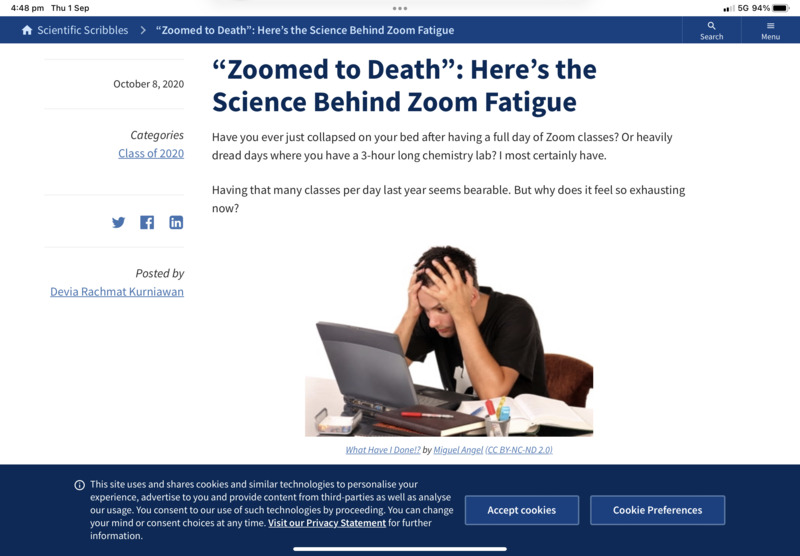
Students all over Australia experienced struggles with the pandemic affected learning environments, one of the most challenging at the a University of Melbourne was the use of Zoom calls for learning and how it impacted motivation to learn and overall fatigue.
-
2020
Our adult son died of cancer at the end of 2018. We were devastated. Our lives were disrupted and upended, while everyone else went on as if everything was normal. Anyone who has lost a family member or friend knows what this is like.
Way too many people found out in 2020 what that is like. In 2020, other people were inconvenienced. A lot. I’ll acknowledge that it was tough on everyone, but it’s nothing compared to losing a loved one. When we realized that the pandemic disruption really didn’t faze us, we realized that we were going to be OK. We had faced the unbearable; this was trivial by comparison. So was losing my job. We were privileged that 2020 and 2021 gave us a chance to reset, to recharge, to reboot. To make ends meet, I now work and live on another continent, away from my wife. It’s incredibly difficult. We’ve dealt with worse situations. We’ll be OK.
-

2020-08-11
The American response to the global COVID-19 Pandemic was multi-faceted. However, of specific importance to the nation were the changes made to public education. As the Pandemic resulted in the closure of businesses, teachers and students were required to continue their educational programs online from the privacy of their homes. Although the effects of distance learning will continue to be seen, virtual learning severely limited the ability of students and teachers to use sensory perception as a tool for learning and instruction.
First, distance learning no longer enabled American teachers to utilize the sensory perception of “proximity.” Throughout public education “proximity” is used to encourage student engagement with both instruction and content. Many teachers will walk their classrooms during student activities and use sensory perception to sensorially inform students that they are near to them and are assessing their engagement. Teachers use this strategy as a reinforcement tool to develop students’ ability to stay on task. Yet, during the COVID-19 Pandemic, social distancing policies made “proximity” not only impossible, but also illegal, limiting to what extent teachers could use sensory perception to foster engagement and learning.
Second, not only were educators no longer allowed to use the sensory perception tool of physical proximity, but also many educators were forced to rely solely on the sensory perception of sound. School districts throughout the state of California, for example, did not permit educators to require their students to verify their attendance in live video format. The result was educators and students were engaging predominantly through speaking and listening. Furthermore, being denied the sensory perception of sight, educators could not assess to what extent students were engaging with instruction and activities.
In conclusion, the COVID-19 Pandemic enacted emergency response strategies which directly affected the education of Generation Z. For both students and educators, sensory perception became more limited for every student. Yet, the sciences, including social science, are built upon the empirical information a human being receives through them. Perhaps this video will serve as evidence to answer the question, “To what extent were students denied the right to sensory information and science?”
-
05/04/2020
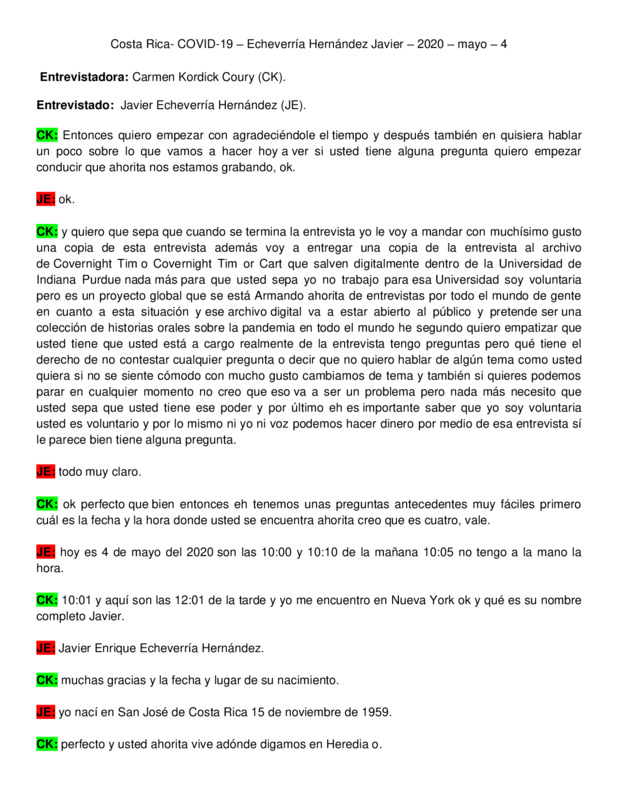
En esta entrevista Javier Hernández Echeverria es entrevistado por Carmen Kordick Coury concerniente al covid-19 en Costa Rica. Para empezar, hablan de la primera ves que Javier se dio cuenta de la pandemia, de cómo se sintió y sus preocupaciones. Habla de su hogar y las formas en que su vida ha cambiado, también habla de su trabajo de ingeniero agrónomo. De allí, hablan de la economía, de su familia y comunidad. Hablan del gobierno, cambios en su barrio y el uso de las mascarillas. También hablan de gente conocida que se han enfermado, gente que aun viajan y las fronteras cerradas. Para terminar, hablan de las fuentes principales desinformación, corrupción del gobierno y cambios en como ve su familia sus amigos y su comunidad.
-
2021-10-05
It was late October 2021. The quiet and muted reactions to my provocative liberal bumper stickers on my Toyota Prius became louder and louder as the pandemic restrictions concluded. I was drinking my kale smoothie when I heard loud shoutings while waiting for the light to turn green. I immediately felt fear as I thought a violent incident was happening outside. I looked to my right and left and noticed an angry truck driver. As I pulled my window down, I thought about how much life had changed during these last two years. Folks crippled with COVID anxiety and forced inside had returned to the jungle that is car traffic. The result? Anger at the other side. Anger at those they deemed responsible for their restricted life. Anger at those who they believed were trying to muzzle and isolate society. The noises subsided, and I noticed I had just thrown my medium Burger King Drink at the car. Was I the angry road rager? Yes.
-
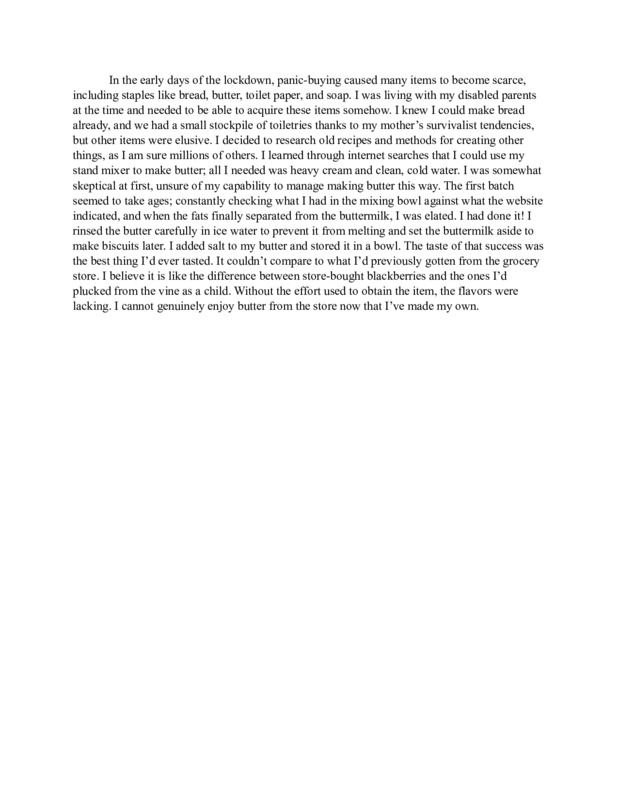
2020-03-25
Class assignment for Arizona State University, HST 643, and Sensory History
-
2020-03-26
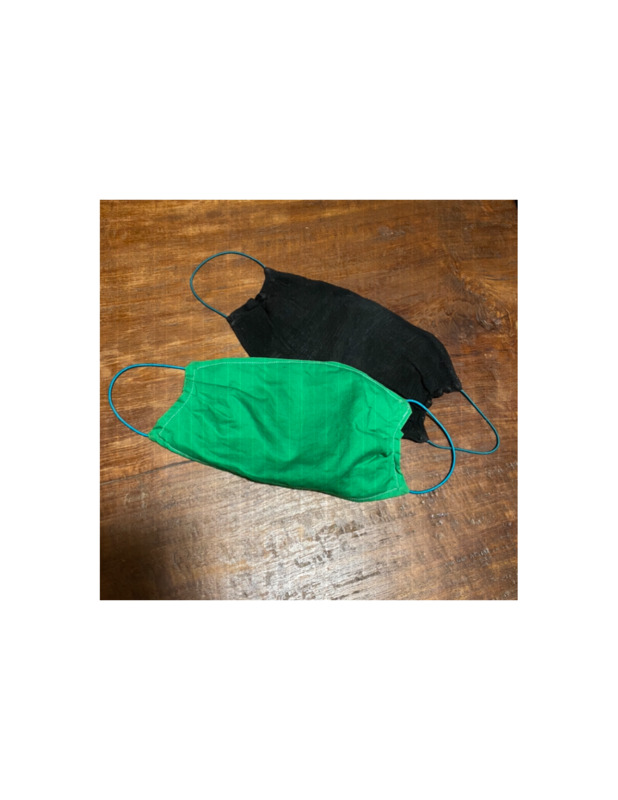
I moved back in with my parents right before lockdown during the Covid-19 pandemic never imagining how long it would go on for. Since my mother is a teacher she was at home with my younger sister and me during the entire lockdown. My father still went to work because he works for a city and was part of the emergency response to the pandemic. I remember going to the grocery store with my sister and seeing the empty shelves unsure of when they would be restocked. I remember the panic of needing face masks and not being able to find any. That is when my mother decided she would make face masks for us, our extended family and to donate. She pulled out the sewing machine, which originally was for when my grandmother would come visit, and set it on the dining table. My grandmother used to sew all the time when she would visit us and make my sister and I dresses and even matching dresses for our dolls. It was always a sound I had associated with her. I helped my mother in ordering and looking up information on which materials were recommended by health officials, then she set to work, making hundreds of face masks.
Every morning I would wake up to the sound of the sewing machine and my first thought would be of my grandmother. As time went on I associated the sound with the pandemic, more specifically lockdown. My mother enjoys doing different craft projects and she really enjoyed making the face masks. It was a fun activity that I also enjoyed helping her with. She made face masks for my dad’s work which were donated to the fire and police departments. We also mailed masks to our extended family in New Mexico, California, and Mexico. We wore the masks ourselves if we had to go anywhere during lockdown. The sound of the sewing machine became a regular occurrence during those early weeks of quarantine. The sewing machine, especially the sound, used to only represent my grandmother making gifts for us. In Mexico, where my grandmother still lives, she used to have a small business making and selling clothing as a way to earn extra much needed money. It wasn’t just a hobby at that time, but a necessity for her and her family.
The sound of the sewing machine, became something I not only associated of my grandmother but of the beginning of quarantine and the importance of knowing certain basic skills. Knowing how to sew, and even being able to use a sewing machine, may seem like an unimportant skill nowadays, which was something I used to think. However, that skill helped my grandmother and decades later is still helping the rest of our family.
-
2020-11
I was working at Target in Fullerton, CA while I was going to school for my bachelors degree, as the first year of covid-19 was winding down to its end. On my lunch break, I would usually grab a drink from the Starbucks located inside the store at the front. Usually working there would be a young woman around the same age as myself. Around this time of year I would get myself an iced peppermint mocha, and the first time that I got one there, I asked how much it would be, but the barista smiled behind her mask and said there was no charge. I thought this was a nice perk of the job and thought nothing of it. This became a regular thing until one day I ordered a drink with a different barista working behind the counter. He took my order and then expectantly told me how much my drink would be. I expressed my confusion, but he insisted, and I did not argue. I paid for my drink and went back to the break room. I told some of my coworkers how the barista had made me pay for my drink, and I was met with a confused "yeah... we all pay for our drinks." I probed a little more, and they all assured me that it was not a part of our job to get free drinks at the Starbucks. I smiled as I thought of the usual barista and how special she had made me feel. I was the only one who did not have to pay for my drink while she was working. Maybe that meant that she had feelings for me, or maybe she just decided to express a subtle act of kindness to me in particular. Either way, I felt deeply appreciated in a way that almost no one else made me feel during that year.
In a time when strangers could almost have no meaningful interactions, with their faces almost entirely obscured by masks, this person that I didn't even know made me feel more seen than any stranger had in previous years. That peppermint mocha tasted sweeter than any of the others had because of her, even though it was the only one that hadn't been made by her. I still remember the sensation of it.
-
2020-07-21
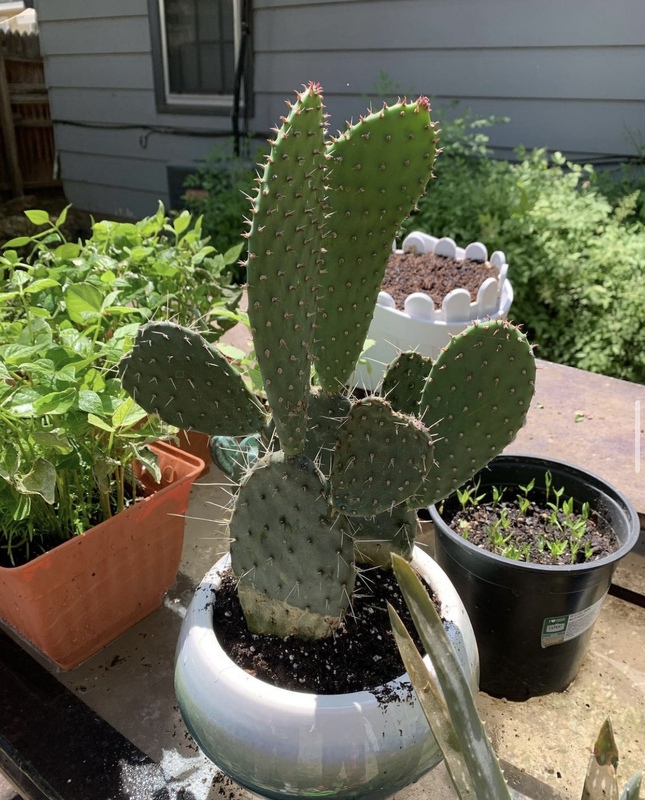
I decided to start a garden during the pandemic with my girlfriend at the time (now wife). It was my senior year of college and life changed drastically in the spring when the pandemic hit. My wife and I had somewhat recently started dating at this point and suddenly we had to go on lockdown together to avoid any potential spread to her family since we both were required to go in person for our jobs. We went from dating to living together in an instant and it made us grow even closer. Together we tried to find quarantine hobbies to bide our time originally thinking that quarantine would only last a few months. I remember one day suggesting we start a garden in the backyard. My yard in Lubbock got so much sun it was just perfect for a garden. We slowly built a garden adding various plants from cactus and aloe vera to hot peppers, bean sprouts, and sunflowers. I loved going out there and caring for all the plants with my wife it was a real bonding experience. It was beautiful watching the whole process of our plants transform from little seeds to baby sprouts. I remember the way the new sprouts smelled crisp as they became verdant green and leafy. When we would water them on a particularly hot day it had a scent that reminded me of rainy summer days in Dallas when it got humid. I enjoyed getting to start this hobby that I most likely wouldn't have picked up at the time if I kept to my usual college routine. It was also a good distraction for both of us from the worries and anxieties of the pandemic.
-
2020-05-01
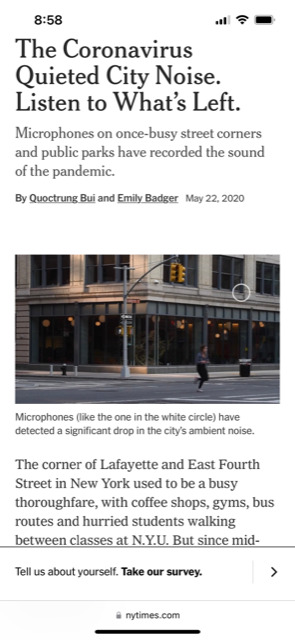
This story is nothing that many of you may not be familiar with, notably of those in metropolitan-like areas. Plus, I can not say that this story is anything deeply descriptive and the likes thereof, but it certainly had an impact on someone like me (along with others) that live in a city, notably if you are especially in or around New York City, the city that never sleeps. What brings me back to this? Well, not exactly the link that I provided that actually shows (at the time of course) a live-time recording of midtown Manhattan and its eerie sound, which is paradoxically a "sound" of a hovering-like quiescent stillness of keen silence (but a silent ambiance that was somewhat peculiarly enchanting) . Or rather, as the title alludes to, a sound that was "naught".
At the time, it became so normal if you will (especially around 40 days since the lockdown went into effect), that it became a coincidentia oppositorum of sorts. One might ask, where is such a "unity of opposites" in effect whereby this was simply a "change" in the dynamics of your "said" environment? To start, the Newark (NJ) area is nothing BUT a concoction of familiar and somewhat pleasing noise as I sit in my half-airconditioned room, from the constant sound of public transportation busses passing by and their intrinsic slight familiar screeching stop, the talk of those a few floors down walking the streets, the constant sound(s) of cars flowing by, the sound of the famous pathway train into NYC in the faint distance (though it stops at Jersey City first), those at the corners (as inappropriate as it may sound) calling out that they got "x, y, and z" near Broad and Market Street, so forth and so on, to "almost" nothing! It was like something straight out of the novel Brave New World and other such pally stories of the sort. To me and many others around our surrounding areas, this was a moment in history that stood out, one that I can not recall in similarity since Tuesday, September 11th. 2001. Because the unity of these non-coherent opposites is in the simple fact that the innate aspect of a pandemic lockdown of a such magnitude as we had is quite obviously "silence" if you will, which is the opposite of what is immersed in a city of almost 300,000 (and that is of course not including the amount of citizens in neighboring metro-areas both east, north, and south of my location), nevertheless, they formed one coherent form of a dialectical force. Because it soon became a "norm" and it happened at quite an expedient rate in the larger scheme of things. Nothing was more "quiet" and "surreal" then the tragic events of 9/11, as it did not take some time for a similar situation to occur, as the event was so dynamic that everything I am speaking of happened at once, but and more importantly, day by day the city quickly gained back its ingrained normative environment. But the reason I arbitrarily picked the date of 5/1/2020, rather then use the date of the article, is because it was in early May where this began to slowly engulf me and took me back to one quite sunny day around noon (maybe a tad later), where all of this, "all of this" being that of what I speak of, struck me finally as something transformative (but far less than cathartic to say the least).
I hope you enjoyed my little tidbit of what kind of impact COVID had on me (be it a self-like precept, photograph, video, etc...), particular using my experience in a sensory course of description. Sure, there was obviously other aspects that came into play with COVID-19 that eventually impacted us, but most of them were later on as the days moved by, while rather this experience was the first and the one that will stick with me anytime I think back to the pandemic. And the beauty of it, or rather lack thereof, all happened while simply sitting near my bed (hence against the window) while putting on my prosthetic legs.
Cheers to you all!
-
2020-03-20
Disneyland popcorn comes in a variety of colors and flavors- and with the opening of Galaxy’s Edge in 2019, my new favorite popcorn stand was ushered into being. This stand carried popcorn that had fruity pebble flavoring on its salty kernels, a little sticky, but delicious nonetheless. It was spring break at ASU, and currently, I was enjoying this sweet-salty concoction with not a care in the world, in Disneyland with my family. I was standing under the sad shade of a newly planted tree when my father turned to me, mouth agape, and proceeded to hand me his phone despite the sticky residue I was attempting to warn him about.
His cell phone screen, with its glaring blue light and notifications rapidly appearing across the top, shouted a message at me I would much rather ignore: “The CDC has declared COVID-19 a worldwide pandemic.” Given that my father works in medical software, he quickly snatched the vibrating, ringing phone back and began an onslaught of calls that sounded identical, almost always culminating in “I don’t know what this means.”
All around us, the previously carefree park patrons were beginning to reach into their pockets to investigate the commotion, and finding the same or similar results. Gasps and shouts were heard all around us, and the sound of feet moving quickly increased. Coughs were now akin to fire alarms and sent crowds scattering on the wind. Large throngs of people began to move towards the park exit, but I was keen on finishing my treat. After all, why rush out with hundreds of people when you can stroll out with dozens?
We only remained in the park for about an hour after that, my parents endlessly debating the pros and cons of driving to Arizona right that minute. Would they close the borders between states? Would they get a refund for the cost of the hotel? What would we do with my little sisters’ birthday cake, sitting in a mini fridge and awaiting a dull butter knife later that evening? Families all around us were having the same sorts of conversations, a concert of panic arising in the Happiest Place on Earth.
As my parents squabbled and people scattered, I was struck by the monumental meaning of this moment. Disneyland was going to close- and it previously closed for events like 9/11 and the assassination of President Kennedy. Something was very, very wrong...and I figured I should stop eating my popcorn that had seen unknown hands and unknown places.
-
2020-03-14
Disneyland popcorn comes in a variety of colors and flavors- and with the opening of Galaxy’s Edge in 2019, my new favorite popcorn stand was ushered into being. This stand carried popcorn that had fruity pebble flavoring on its salty kernels, a little sticky, but delicious nonetheless. It was spring break at ASU, and currently, I was enjoying this sweet-salty concoction with not a care in the world, in Disneyland with my family. I was standing under the sad shade of a newly planted tree when my father turned to me, mouth agape, and proceeded to hand me his phone despite the sticky residue I was attempting to warn him about.
His cell phone screen, with its glaring blue light and notifications rapidly appearing across the top, shouted a message at me I would much rather ignore: “The CDC has declared COVID-19 a worldwide pandemic.” Given that my father works in medical software, he quickly snatched the vibrating, ringing phone back and began an onslaught of calls that sounded identical, almost always culminating in “I don’t know what this means.”
All around us, the previously carefree park patrons were beginning to reach into their pockets to investigate the commotion, and finding the same or similar results. Gasps and shouts were heard all around us, and the sound of feet moving quickly increased. Coughs were now akin to fire alarms and sent crowds scattering on the wind. Large throngs of people began to move towards the park exit, but I was keen on finishing my treat. After all, why rush out with hundreds of people when you can stroll out with dozens?
We only remained in the park for about an hour after that, my parents endlessly debating the pros and cons of driving to Arizona right that minute. Would they close the borders between states? Would they get a refund for the cost of the hotel? What would we do with my little sisters’ birthday cake, sitting in a mini fridge and awaiting a dull butter knife later that evening? Families all around us were having the same sorts of conversations, a concert of panic arising in the Happiest Place on Earth.
As my parents squabbled and people scattered, I was struck by the monumental meaning of this moment. Disneyland was going to close- and it previously closed for events like 9/11 and the assassination of President Kennedy. Something was very, very wrong...and I figured I should stop eating my popcorn that had seen unknown hands and unknown places.
-
2021-06-12
A long and hot three hour and forty five minute drive to San Luis Obispo was halted short of the two hour mark for a very important celebration. Was it really a time of celebration though? Some could argue that the mood and the hot weather of a summer June 12 afternoon in 2021 was just another day. After the strike of the pandemic, online instruction skyrocketed around the state of California. Other California State schools, resorted to their spring commencement to be online, our school was no different. We stopped our car at a local 76 gas station just off the side of the freeway to celebrate my virtual graduation from Cal Poly San Luis Obispo. My mom pulled up in the parking lot where next to the 76 gas station was a McDonald's with free Wifi which allowed for us to connect to the Zoom meeting. We waited as name after name from the History Department was called, in which you could hear the only the applause and cheers of close family for fellow graduates called before me. The quiet tension in the car while waiting for my name to be called was very obvious in the car. There was no excitement at all. Just another normal day in the hot June sun. Finally, my name was called upon. A description of my goals and my final senior project were mentioned in the ceremony in my honor. All while the bustling of cars, the smell of fast food and the barking and crying of young kids and dogs lingered in the background of the car. My family applauded clapping and crying out my name. Seconds later, the next name was read and I logged off zoom, placed my cap to the side and we continued our drive to San Luis Obispo. Apart of me wondered that day we drove away from the gas station what a true graduation may have felt like, may have sounded like without these troubling times.
-
2020-03-21
It was my first year teaching middle school history. I was bright-eyed, excited, and felt like I had finally found my calling in life. I went into spring break with such an excited feeling about my new career path. Coming from retail, I could finally have time to spend with my family and not have to worry about making a quota. Then the email came. We would be moving to distance learning and I would not get the chance to finish my first year as an educator with my first group of kids. The sound I most remember was the Google Meets login when someone joined. That sound will forever be associated with the pandemic. The sound I had never heard before became the sound that brought me joy as I was finally able to make sure my students were okay. I remember that sound and immediately checking to see who was logging in. It brought mixed feelings of compassion, empathy, and sadness. Even as we started to get back into the classroom, nothing would ever be the same as it once was. But that sound, that one quick sound, brought on the emotions of this educator. And I hope I will never have to hear that sound again.
-
2020-08-01
In August of 2020 while attending a course in Virginia I lost both my sense of smell and sense of taste. For 6 months I tasted nothing, and smelled nothing in the food I ate, or the candles, soaps, drinks, I bought. I did not smell trees, or grass, or flowers. Only habitual hygiene assured me that I myself did not give off an odor that I could not even detect if it was there. I slowly "relearned" smell and taste (that is my theory anyway). Much like it is difficult later in life to learn a language or change your perceptions, now many things are lumped together for me in terms of distinction. All citrus smells the same to me. Onions, garlic, and often other people smell exactly the same. I can no longer stand the taste of anything peach or mango flavored, though I still enjoy the fruits themselves. Having gone so long without smell or taste, it negatively affected every day life. Relationships, conversations, memory, awareness, and even my ability to focus deteriorated and made me realize how integral our senses are socially and physically. Some smells that I distinctly remember initiating a sense of nostalgia no longer elicit the same reaction in me. This is deeply saddening, as I suspect a significant portion of my memories are inaccessible or at least markedly more difficult to recall without a fragrance to tease it out.
-
2020-08-08
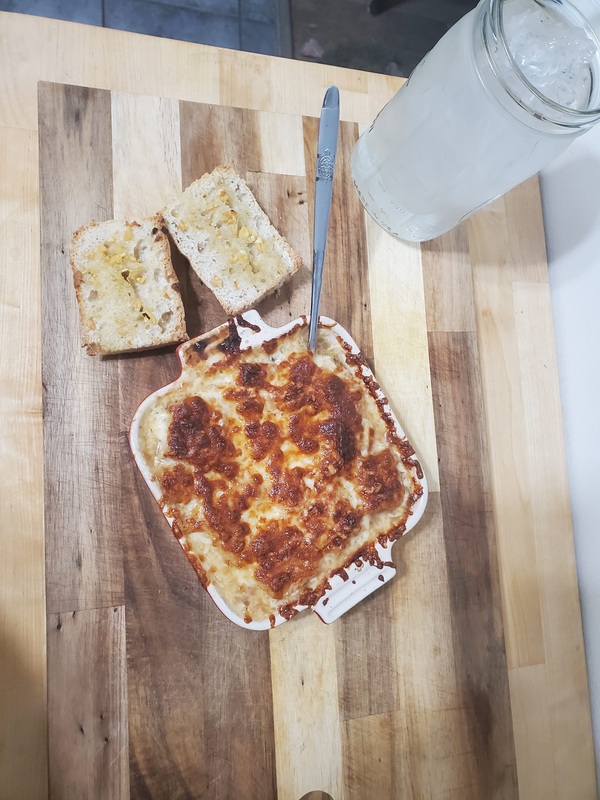
I have loved to cook for as long as I can remember, but I had a few rough years and stopped cooking. With the onset of stay-at-home orders for the COVID-19 Pandemic, I went from 60-hour work weeks between my two jobs to nothing. My mind and hands were itching to do something, anything. As many of the grocery stores started to have supply shortages and I now had a much more limited budget; I had to get creative. So, I began to cook. I started slowly with fancy coffee drinks and eggs and moved to bread and pasta. Nationally people were baking bread so I thought well I’ve got the time I might as well try. What started as something I had learned to dread suddenly became my day’s highlight. I was cooking again! The dance of moving through my small kitchen. The clank of pots and pans and knives and wooden spoons in metal bowls playing in time to Otis Redding. The joy of tasting a recipe and nailing both the flavors and the serving size (many recipes serve 4-6, I live alone). It was truly a full-body experience. I soon realized that I hadn’t repeated any meals in about two weeks and decided to challenge myself to go as long as possible without repeating a recipe, if a meal required a repeat that portion simply didn’t count in my tally. I ended up making over 225 different recipes.
-

2021-09-16
Travel had always been in my blood. I can even remember the first time I was legally allowed to board a plane on my own without having to wear a silly "Unaccompanied Minor" badge around my neck. The idea of getting on an airplane and landing in a completely new place only hours later would always thrill me. Unfortunately, when the pandemic hit, travel started to look a little different. The freedom I once felt when I stepped foot on a 737 began to feel more like an anxiety-filled hassle. Normally, I would have been found jet-setting across the U.S. to the big cities on the east and west coasts where the parties lasted all night long, but that was no longer possible.
I started to remembered how I had always wanted to visit Lake Tahoe. I'd always seen the outdoorsy girls on my Instagram feed post pictures of the clear, blue water. Maybe this was my chance to take a break from the major hubs and slow down my pace. One thing remained, though. I still didn't want to face those airports. That's when I made one of the biggest decisions of my young life. I packed up my Jeep and started out on what would become 3 weeks across our American highways - just me, a Jeep Wrangler, and the open road. I never could have expected what I would discover while driving. I truly gained a new appreciation for the world around me and realized I much preferred travel by wheel than by wing. Here I thought the freedom I felt when traveling was at risk of becoming obsolete, when in reality it was the opposite. Any time there was a unique store along the road or a picturesque landscape, I simply stopped. I never could have done that in an airplane! When I finally made it to the beach at California's gorgeous Lake Tahoe, I was speechless. It was everything I could have imagined and more. The views, the smells, the sounds - breathtaking. It was in those moments, I got my freedom back in the middle of a pandemic.
-
2020-03-05
Living in Las Vegas and working in a hotel and casino, I got used to a few things; the sounds of the slot machines and the (albeit unpleasant) aroma of cigarettes and cigars. After being brought back to work after the shutdown, what I immediately noticed was how much quieter the casino floor was with all of the restrictions in place. There was a limit to how many guests we could have in, and social distancing meant only every other machine could be used. While wearing a mask and having plexiglass in front of my station, I had to get used to projecting my voice so that guests could hear me while I was trying to help them. Even now, I still wear a mask and have to actively make an effort to be heard.
-
2022-08-22
During the pandemic, I opted to order all of my groceries online to be delivered. I have never been much of a take-out person and mostly cook at home, so I really love to pick my ingredients when grocery shopping. Missing the in-store grocery shopping experience over the past few years, I sometimes go out to gather my fresh foods, especially after the normalizing of social distancing and mask regulations. Though I still prefer to wear a mask, even when regulations are occasionally loosened, a sensory occurrence that I did not expect to miss or lack as a consequence of mask-wearing is the importance of smell in my food-gathering habits. Being able to check the ingredients for both flavor and freshness qualities by smelling them is such a natural instinct that most lifeforms use to find their food. I never considered myself someone who actively smells things very often, so this sensory roadblock surprised me, as I initially chose to go to the store to get better foods than those that had been delivered to me. I have often come home and found that the asparagus or meat that I had just bought had that unpleasant odor of food past its prime, even though its appearance and texture seemed just perfect. I also miss being able to smell the full intensity of the fresh-cut flower bouquets that proclaim the seasons when going out grocery shopping.
This temporary lessening of sense-of-smell from wearing a mask has been a bit of a hinderance in such ways, but it has been beneficial in many others. For example, I have dust allergies and used to become very stuffy after visiting my library due to the book dust—especially since, as a history and art history graduate student, all the books that I want or need to check out are usually the oldest or dustiest ones! Not being able to smell or breathe-in these things has helped me dramatically in my experience of information gathering. I can now spend hours looking over books that I wouldn’t have thought of opening before and have found some wonderful sources for my research. Though of course many historical texts are fully available in online formats and an invaluable resource, I often feel the same way about visiting my library as I do visiting my grocery store—I hope to find something myself that might work even better for my own project, either culinarily or academically.