-
2020-04-06
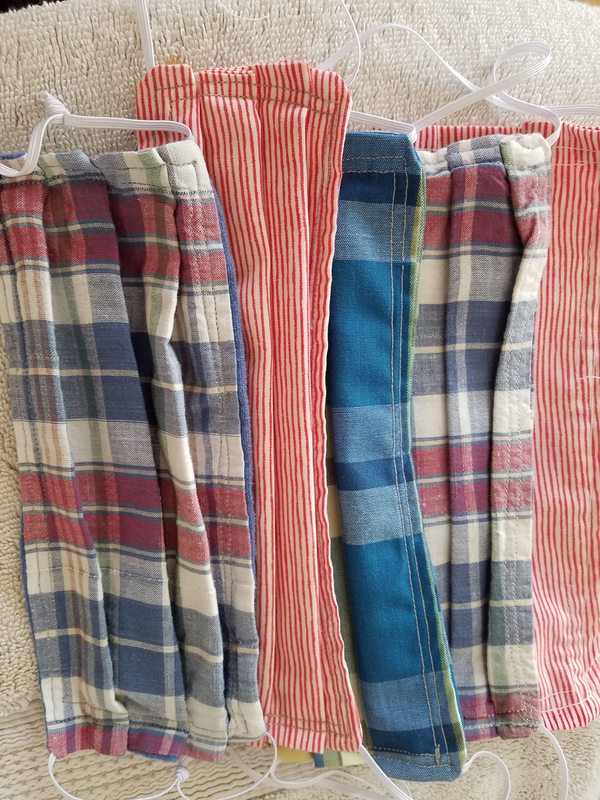
Homemade face masks, now encouraged or required in most grocery stores and other public spaces.
-
2020-04-08
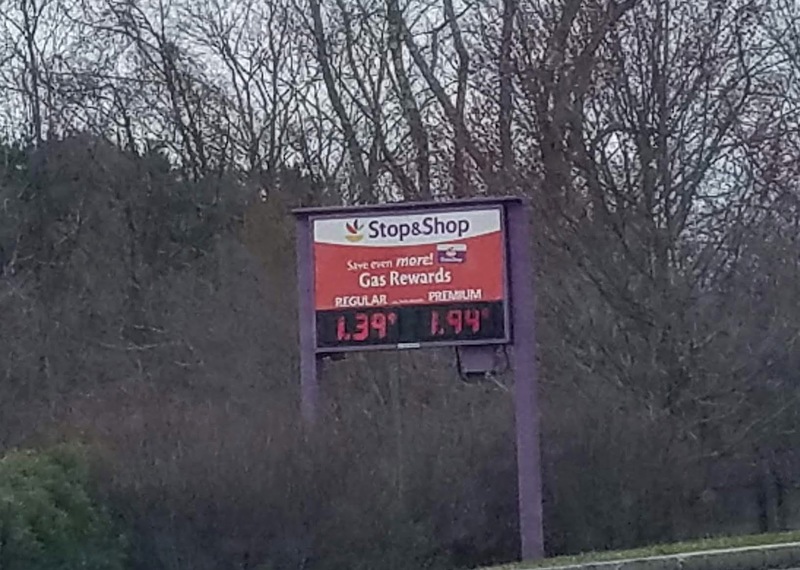
With stay-at-home orders in place, gas prices drop dramatically. For comparison, the price in this area was about $2.69 a year ago, and about $2.52 on Jan. 9th (2020).
-
2020-04-12
With having to stay inside all the time, it can get pretty difficult to keep yourself busy. Of course, there's always school work you have to do, but what do you when all of that is done? How do you keep yourself from losing it in times like this. Well, recently, my sister has taken up painting. When she finishes up her school work, she goes to the garage and starts painting all sorts of stuff. It's even gotten to the point that friends of hers have made personal request, and she's almost starting to make her own little business. I even requested something. I would've put it here, but she hasn't finished it yet :/ I think it's cool she's finding a creative outlet in a time like this. Beats doing nothing anyway.
-
2020-04-09
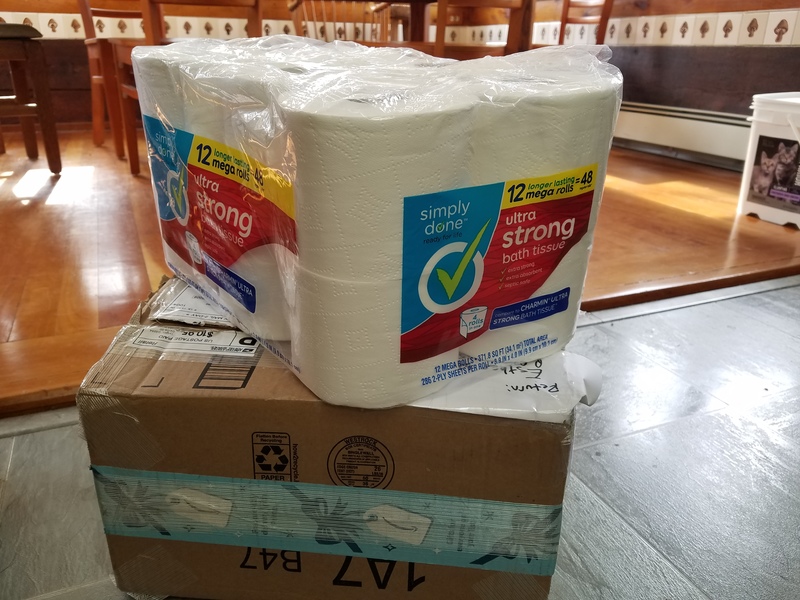
A friend in need is a friend indeed: a friend from out of state ships us some toilet paper, as there is none to be had locally and shipments from Amazon take about 4-6 weeks to arrive.
-
2020-04-01
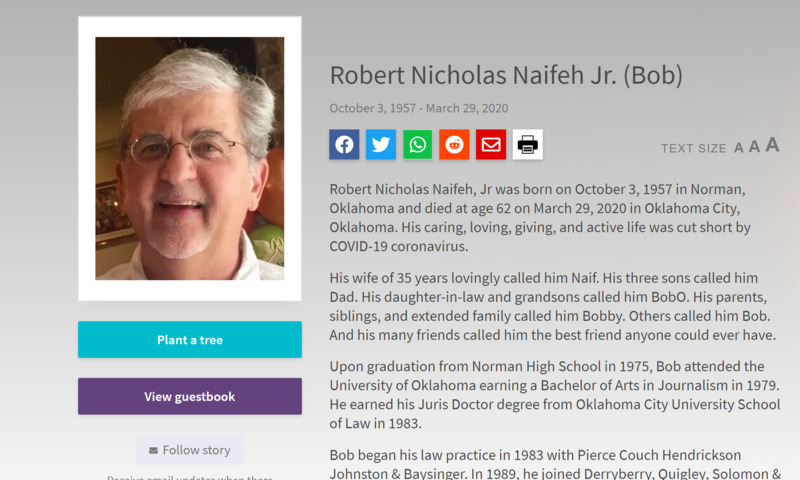
My father's obituary
-
2020-04-08
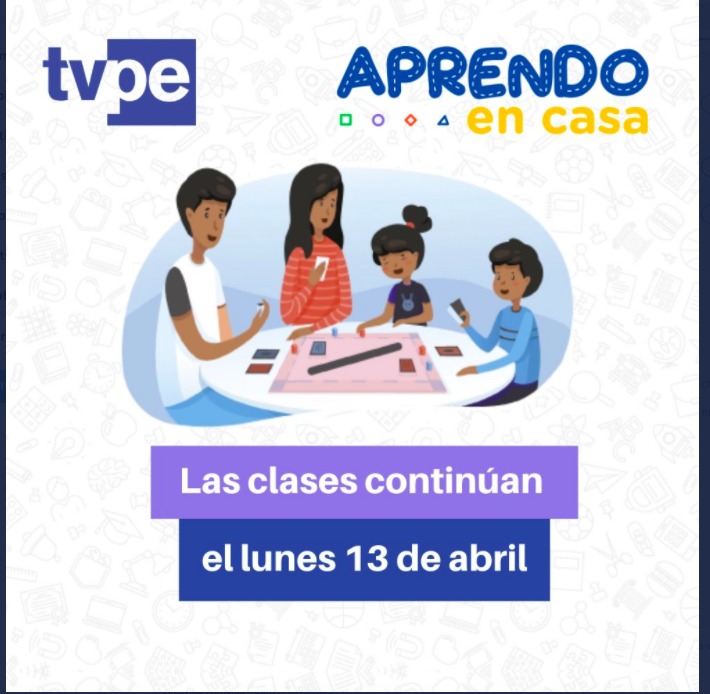
#AprendoEnCasa regresa el lunes 13 de abril, pero la educación no debe parar. No olvides que puedes encontrar material educativo como actividades escolares y lecturas en http://aprendoencasa.pe 👧🏻👦🏻
#YoMeQuedoEnCasa
-
2020-04-11
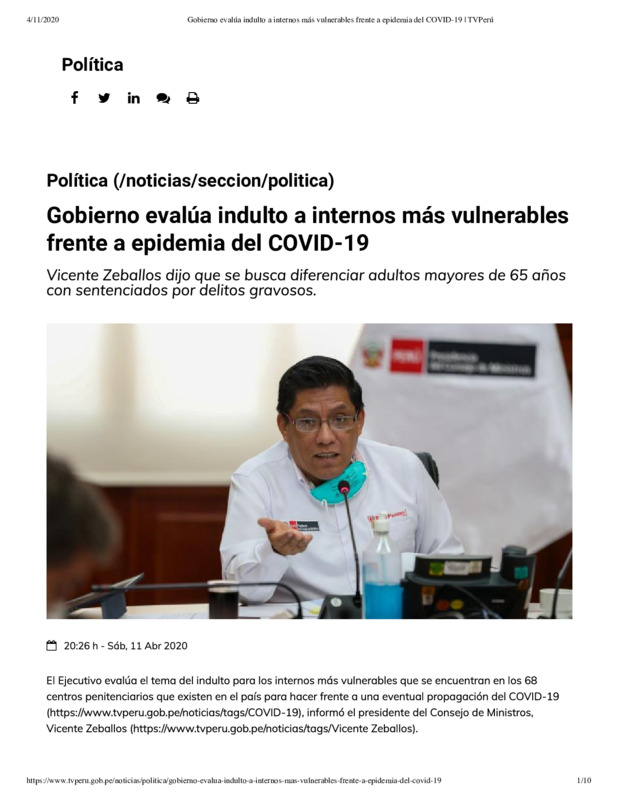
El Ejecutivo evalúa el tema del indulto para los internos más vulnerables que se encuentran en los 68 centros penitenciarios que existen en el país para hacer frente a una eventual propagación del COVID-19, informó el presidente del Consejo de Ministros, Vicente Zeballos.
-
2020-04-11
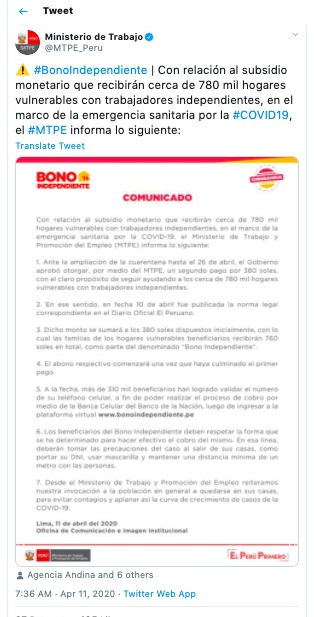
Ministerio de Trabajo
@MTPE_Peru
Warning sign #BonoIndependiente | Con relación al subsidio monetario que recibirán cerca de 780 mil hogares vulnerables con trabajadores independientes, en el marco de la emergencia sanitaria por la #COVID19, el #MTPE informa lo siguiente:
-
2020-04-11
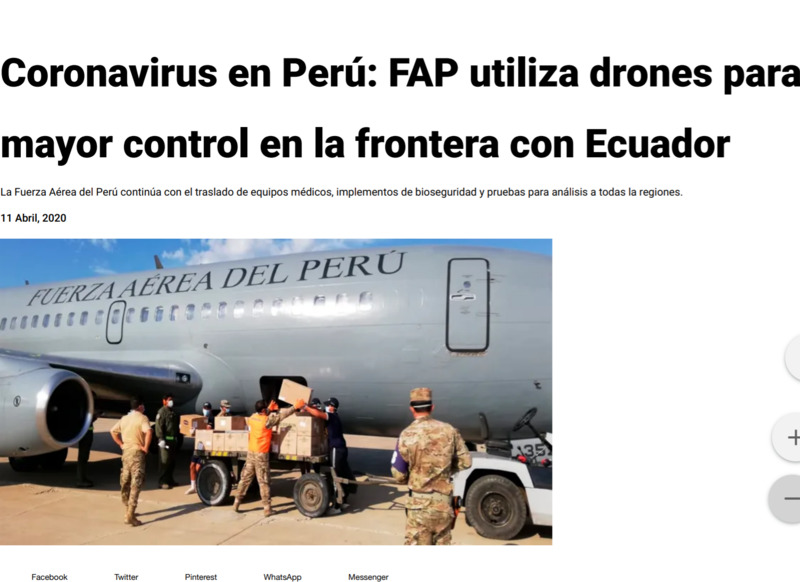
De acuerdo con el Comando Conjunto de las Fuerzas Armadas, se detectó 22 puntos de cruce ilegal, es por ello que se ha reforzado la seguridad y control de la frontera con el país vecino. Con el apoyo de drones que permitirán monitorear mejor las zonas con cámaras de alta resolución.
Asimismo, se cuenta con la vigilancia de personal militar con su respectivo equipamiento, incluso los vehículos del Ejército son blindados con visión nocturna para enfatizar el resguardo durante la noche, cuando existe el mayor riesgo.
Por otro, cabe indicar que la FAP sigue cooperando con el traslado de los implementos y equipos médicos para bioseguridad del personal de salud, Fuerzas Armadas y la Policía Nacional, además de distribuir las pruebas de descarte a las regiones del país.
-
2020-04-11
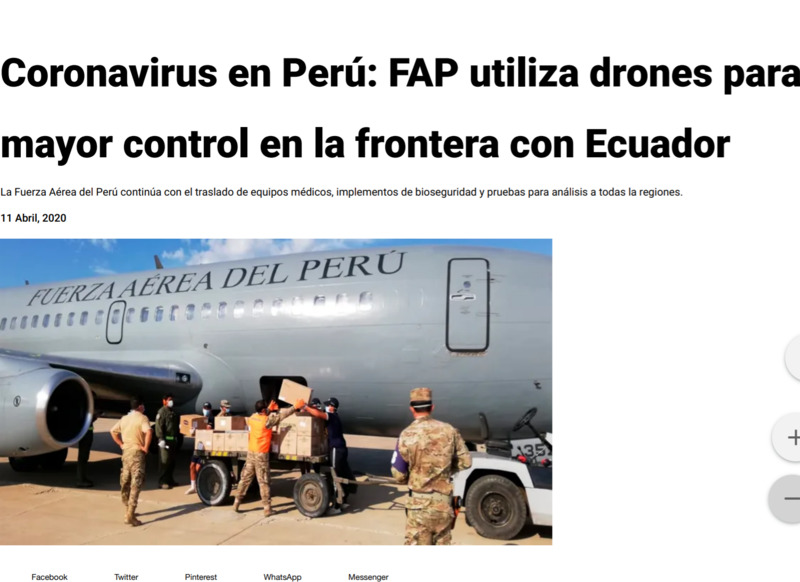
De acuerdo con el Comando Conjunto de las Fuerzas Armadas, se detectó 22 puntos de cruce ilegal, es por ello que se ha reforzado la seguridad y control de la frontera con el país vecino. Con el apoyo de drones que permitirán monitorear mejor las zonas con cámaras de alta resolución.
Asimismo, se cuenta con la vigilancia de personal militar con su respectivo equipamiento, incluso los vehículos del Ejército son blindados con visión nocturna para enfatizar el resguardo durante la noche, cuando existe el mayor riesgo.
Por otro, cabe indicar que la FAP sigue cooperando con el traslado de los implementos y equipos médicos para bioseguridad del personal de salud, Fuerzas Armadas y la Policía Nacional, además de distribuir las pruebas de descarte a las regiones del país.
-
2020-04-11
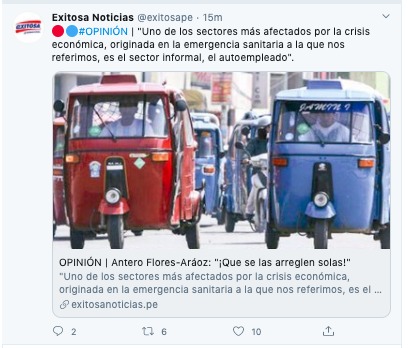
"Uno de los sectores más afectados por la crisis económica, originada en la emergencia sanitaria a la que nos referimos, es el sector informal, el autoempleado".
-
2020-04-11
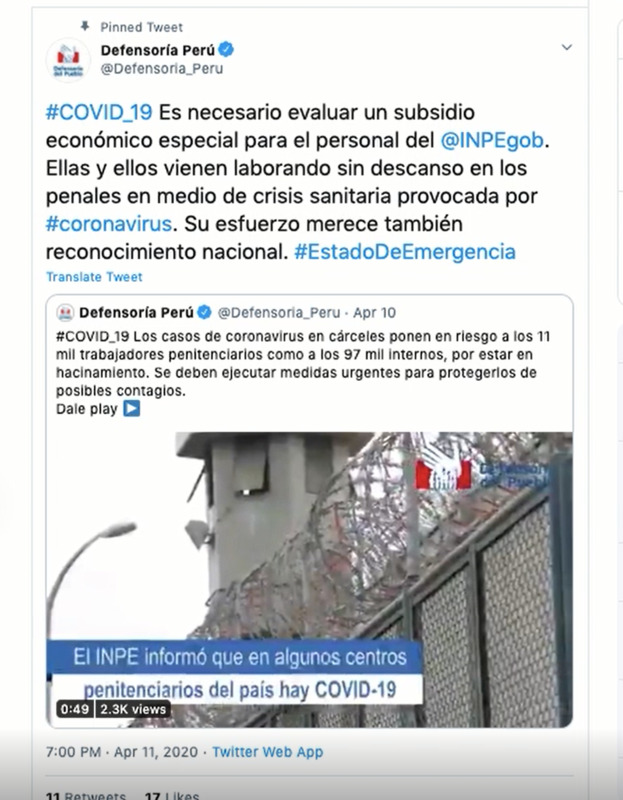
#COVID_19 Es necesario evaluar un subsidio económico especial para el personal del @INPEgob. Ellas y ellos vienen laborando sin descanso en los penales en medio de crisis sanitaria provocada por #coronavirus. Su esfuerzo merece también reconocimiento nacional. #EstadoDeEmergencia
-
2020-04-11
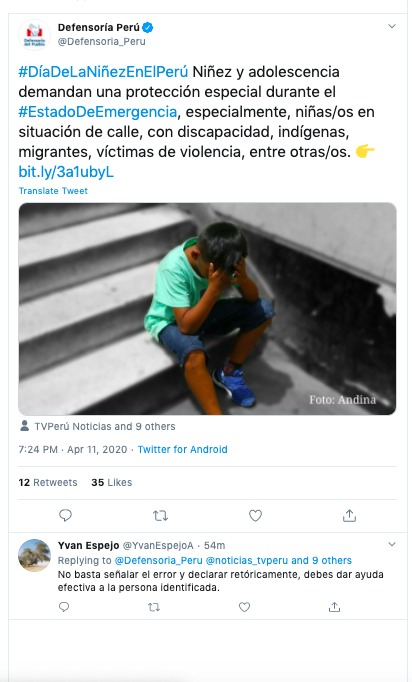
#DíaDeLaNiñezEnElPerú Niñez y adolescencia demandan una protección especial durante el #EstadoDeEmergencia, especialmente, niñas/os en situación de calle, con discapacidad, indígenas, migrantes, víctimas de violencia, entre otras/os. Right pointing backhand index https://bit.ly/3a1ubyL
-
2020-04-11
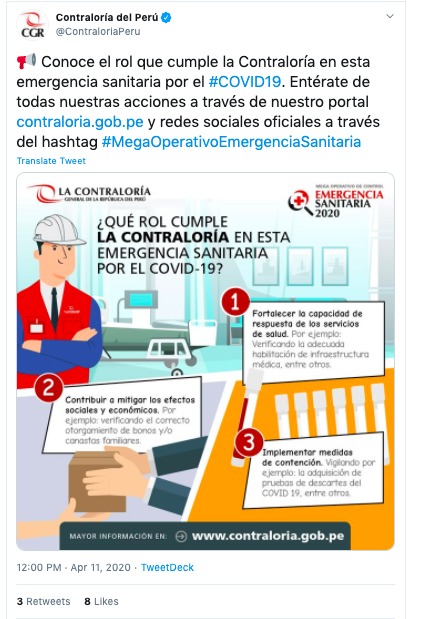
Public address loudspeaker Conoce el rol que cumple la Contraloría en esta emergencia sanitaria por el #COVID19. Entérate de todas nuestras acciones a través de nuestro portal http://contraloria.gob.pe y redes sociales oficiales a través del hashtag #MegaOperativoEmergenciaSanitaria
-
2020-04-11
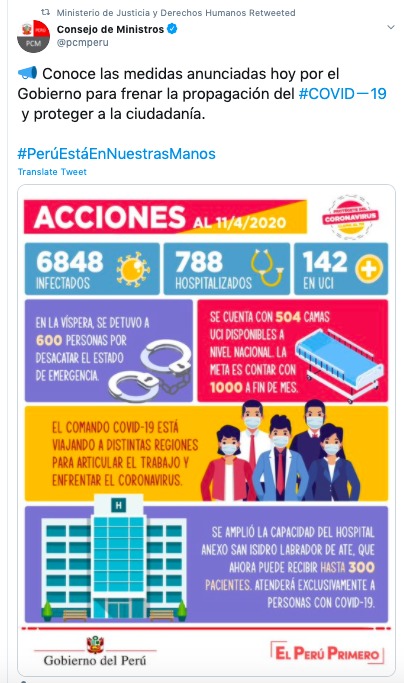
Cheering megaphone - Conoce las medidas anunciadas hoy por el Gobierno para frenar la propagación del #COVIDー19 y proteger a la ciudadanía.
-
2020-04-10
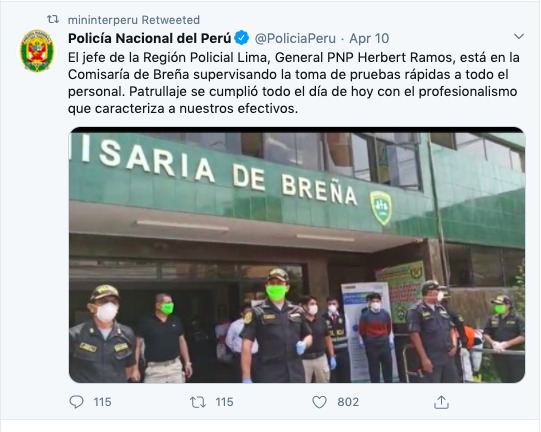
El jefe de la Región Policial Lima, General PNP Herbert Ramos, está en la Comisaría de Breña supervisando la toma de pruebas rápidas a todo el personal. Patrullaje se cumplió todo el día de hoy con el profesionalismo que caracteriza a nuestros efectivos.
-
2020-04-10
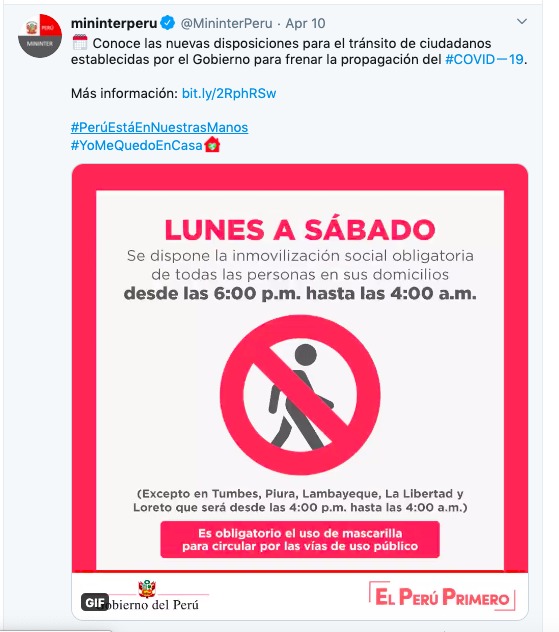
Conoce las nuevas disposiciones para el tránsito de ciudadanos establecidas por el Gobierno para frenar la propagación del #COVIDー19.
-
2020-04-10
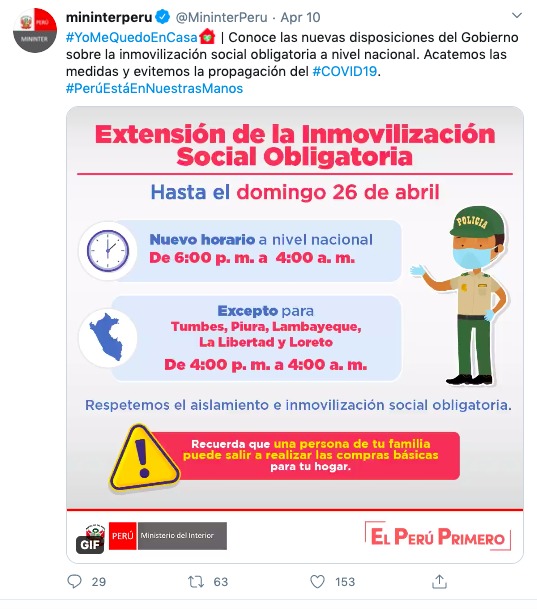
#YoMeQuedoEnCasa | Conoce las nuevas disposiciones del Gobierno sobre la inmovilización social obligatoria a nivel nacional. Acatemos las medidas y evitemos la propagación del #COVID19.
#PerúEstáEnNuestrasManos
-
2020-04-11
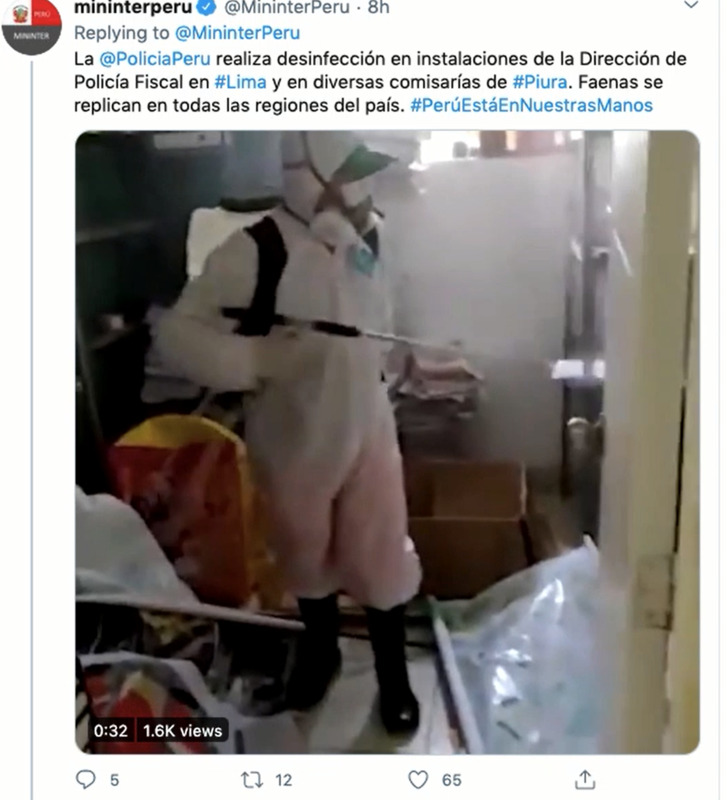
@PoliciaPeru realiza desinfección en instalaciones de la Dirección de Policía Fiscal en #Lima y en diversas comisarías de #Piura. Faenas se replican en todas las regiones del país. #PerúEstáEnNuestrasManos
-
2020-04-11
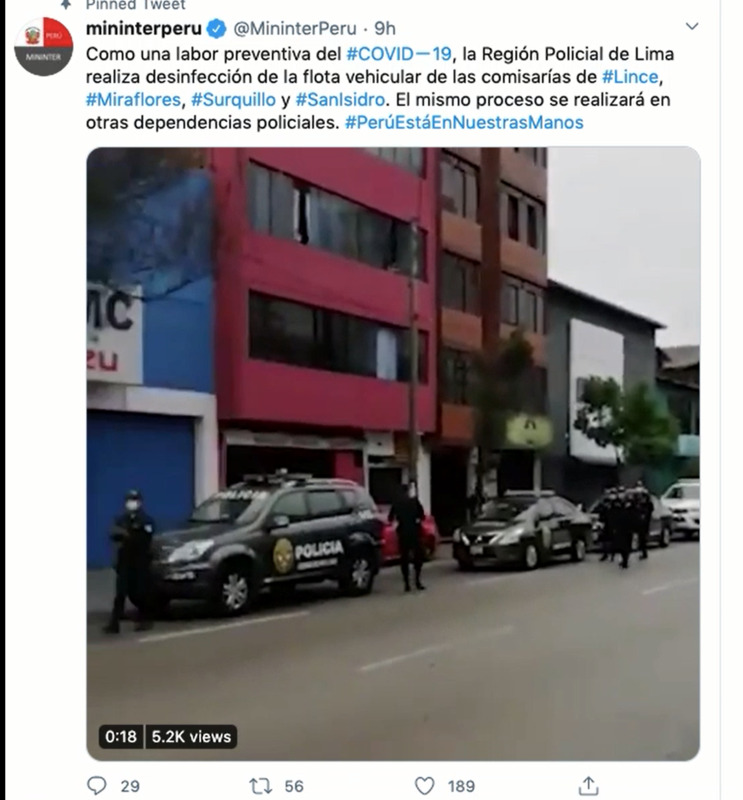
Como una labor preventiva del #COVIDー19, la Región Policial de Lima realiza desinfección de la flota vehicular de las comisarías de #Lince, #Miraflores, #Surquillo y #SanIsidro. El mismo proceso se realizará en otras dependencias policiales. #PerúEstáEnNuestrasManos
-
2020-04-11
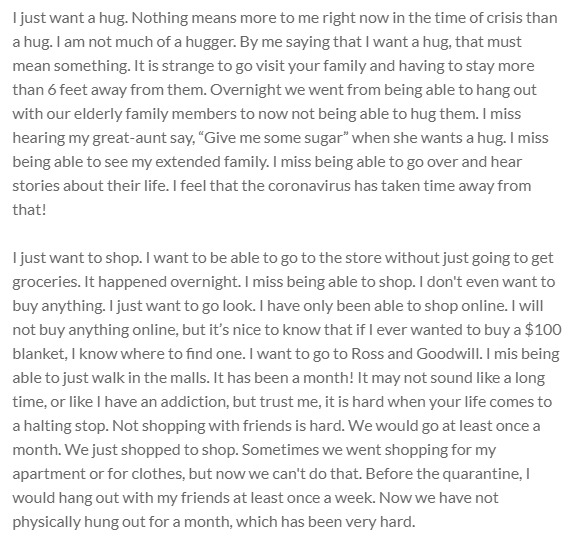
I just want a hug. Nothing means more to me right now in the time of crisis than a hug. I am not much of a hugger. By me saying that I want a hug, that must mean something. It is strange to go visit your family and having to stay more than 6 feet away from them. Overnight we went from being able to hang out with our elderly family members to now not being able to hug them. I miss hearing my great-aunt say, “Give me some sugar” when she wants a hug. I miss being able to see my extended family. I miss being able to go over and hear stories about their life. I feel that the coronavirus has taken time away from that!
I just want to shop. I want to be able to go to the store without just going to get groceries. It happened overnight. I miss being able to shop. I don't even want to buy anything. I just want to go look. I have only been able to shop online. I will not buy anything online, but it’s nice to know that if I ever wanted to buy a $100 blanket, I know where to find one. I want to go to Ross and Goodwill. I mis being able to just walk in the malls. It has been a month! It may not sound like a long time, or like I have an addiction, but trust me, it is hard when your life comes to a halting stop. Not shopping with friends is hard. We would go at least once a month. We just shopped to shop. Sometimes we went shopping for my apartment or for clothes, but now we can't do that. Before the quarantine, I would hang out with my friends at least once a week. Now we have not physically hung out for a month, which has been very hard.
-
2020-04-10
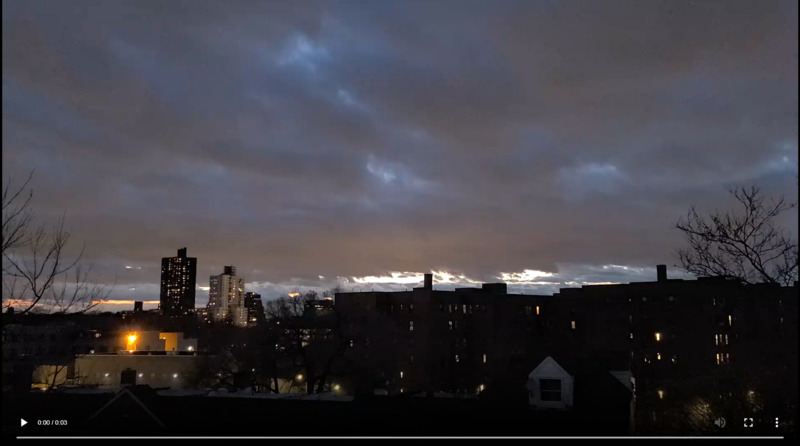
time to appreciate nature, and its vastness
-
2020-04-05
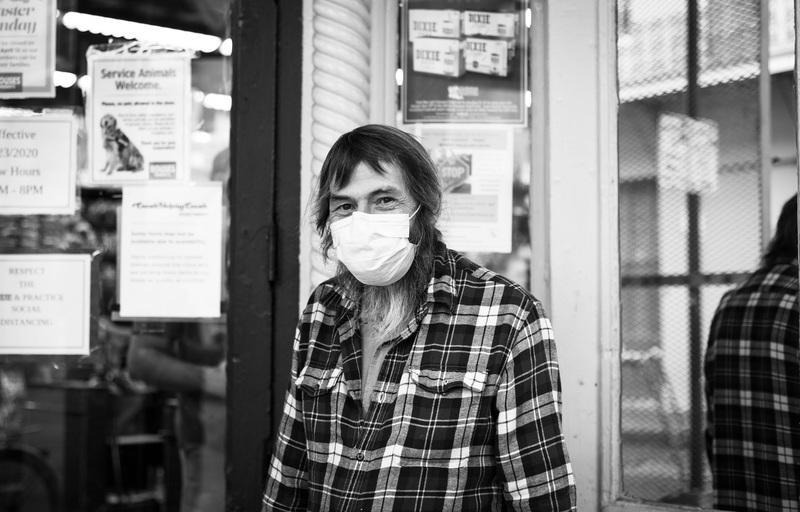
A grocery store worker stands at the door ready to assist customers, and limit the number of people entering the building.
-
2020-04-11
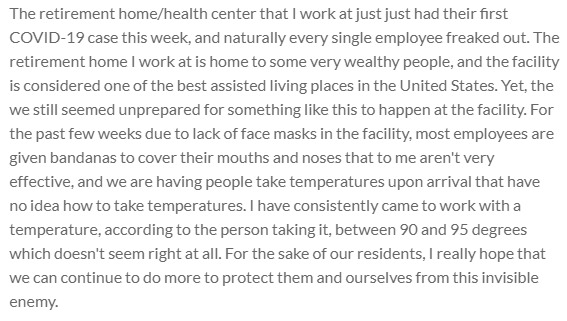
The retirement home/health center that I work at just just had their first COVID-19 case this week, and naturally every single employee freaked out. The retirement home I work at is home to some very wealthy people, and the facility is considered one of the best assisted living places in the United States. Yet, the we still seemed unprepared for something like this to happen at the facility. For the past few weeks due to lack of face masks in the facility, most employees are given bandanas to cover their mouths and noses that to me aren't very effective, and we are having people take temperatures upon arrival that have no idea how to take temperatures. I have consistently came to work with a temperature, according to the person taking it, between 90 and 95 degrees which doesn't seem right at all. For the sake of our residents, I really hope that we can continue to do more to protect them and ourselves from this invisible enemy.
-
2020-04-12
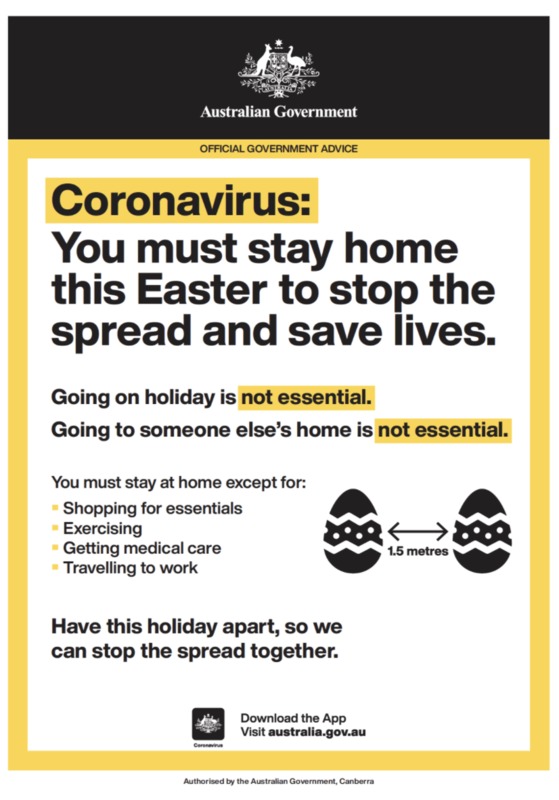
Australian Government poster advises people to stay at home over the Easter weekend unless shopping for essentials, exercising, getting medical care, or travelling to work
-
2020-02
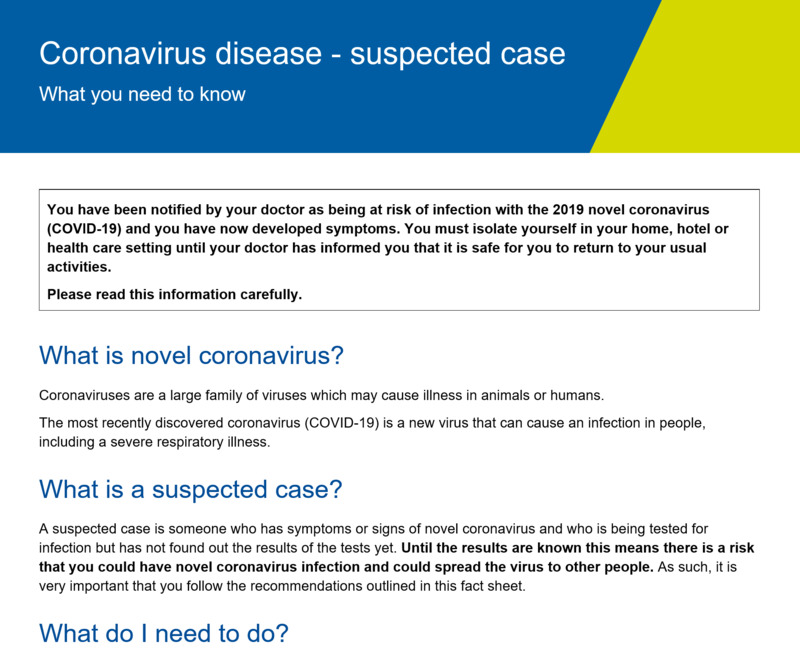
Government fact sheet for people who have been notified by their doctor as being at risk of infection and have now developed symptoms.
You have been notified by your doctor as being at risk of infection with the 2019 novel coronavirus (COVID-19) and you have now developed symptoms. You must isolate yourself in your home, hotel or health care setting until your doctor has informed you that it is safe for you to return to your usual activities.
Please read this information carefully.
What is novel coronavirus?
Coronaviruses are a large family of viruses which may cause illness in animals or humans.
The most recently discovered coronavirus (COVID-19) is a new virus that can cause an infection in people, including a severe respiratory illness.
What is a suspected case?
A suspected case is someone who has symptoms or signs of novel coronavirus and who is being tested for infection but has not found out the results of the tests yet. Until the results are known this means there is a risk that you could have novel coronavirus infection and could spread the virus to other people. As such, it is very important that you follow the recommendations outlined in this fact sheet.
What do I need to do?
Your doctor will arrange for you to be tested for the infection. It may take a few days for the test results to be returned. If your symptoms are serious you will need to remain in hospital isolated from other patients to prevent further spread of the virus.
If your doctor says you are well enough to return home while you are waiting for your test results you will need to stay isolated and monitor your symptoms as described below.
Stay at home or in your hotel room
• Isolate yourself at home until you are advised of the results by your doctor.
– You should not leave your house except to seek medical attention.
– You should stay in a different room to other people as much as possible. Use a separate bathroom if available.
– Wear a surgical face mask when you are in the same room as another person and when seeking medical care.
– Do not go to work, school, university, work or attend public places or events. Do not use public transport or taxi services.
• Where possible, get others such as friends or family, who are not required to be isolated, to get food or other necessities for you.
• If you have difficulties getting food or necessities, call 1800 675 398 for support.
• If you need a translator first call 131 450, then request the hotline on 1800 675 398. More information is available on our website: dhhs.vic.gov.au/novelcoronavirus
• Please keep Triple Zero (000) for emergencies only.
Going outside
If you live in a private house, then it is safe for you to go outside into your garden, balcony or courtyard.
If you live in an apartment it is also safe for you to go outside into the garden while wearing a surgical mask. You should, however, go quickly through any common areas on the way to the garden. Wear a surgical mask if you have to move through these areas.
Monitor your symptoms
If your illness gets worse, you should call the doctor who cared for you or the emergency department where you were assessed. If it is a medical emergency (for example, shortness of breath at rest or difficulty breathing) you should:
• Call 000 and request an ambulance
• Inform the ambulance officers that you may have novel coronavirus, and they should take precautions.
What happens if my test is negative?
Your doctor or a Public Health Officer will advise you if you are can cease your isolation. If you were in self-isolation at the time you developed your symptoms, for example because you have been in contact with a confirmed case or travelled to China, you will need to continue isolation until the 14 days since last contact with the confirmed case or from your arrival in Australia.
You should continue to carefully monitor your health for up to 14 days after your last contact with the confirmed case. Report any new or returning symptoms to your doctor in this period. You may be required to be tested again.
You do not require medical clearance to return to work, university or school. If you have stayed in isolation and remain well, then they are safe to return to their usual activities.
What happens if my test is positive?
A Public Health Officer will contact you to find out more information from you and provide you with further information. You must remain in your home or accommodation until further tests are completed and you have become well. After a discussion, a specialist may be involved to further assess your illness. A Public Health Officer will conduct an assessment to advise when it is safe to return to normal activities.
If your condition deteriorates, seek medical attention:
• Notify the department or Public Health Officer managing your care by calling the number provided to you.
• Follow the direction of the Public Health Officer who may advise you to go to a doctor or a hospital, and will agree with you how you should get there.
• Call ahead to the doctor or hospital and inform them that you are a confirmed case of novel coronavirus.
• If you need to leave your home or accommodation to seek medical attention, put on the mask provided to you.
• When you arrive at the doctor’s surgery or hospital, tell them that you are a confirmed case of novel coronavirus.
If you are experiencing severe symptoms, such as shortness of breath:
• Call 000 and request an ambulance
• Inform the ambulance officers that you have novel coronavirus.
People who you have had close contact with including family members and people you live with will need to isolate themselves for 14 days since their last contact with you.
Looking after your well-being during isolation
Being confined to home for an extended period of time can cause stress and conflict. Tips for looking after yourself include:
• Talk to the other members of the family about the infection. Understanding novel coronavirus will reduce anxiety.
• Reassure young children using age-appropriate language.
• Think about how you have coped with difficult situations in the past and reassure yourself that you will cope with this situation too. Remember that self-isolation won’t last for long.
• Exercise regularly. Options could include exercise DVDs, dancing, floor exercises, yoga, walking around the backyard or using home exercise equipment, such as a stationary bicycle, if you have it. Exercise is a proven treatment for stress and depression.
• Keep in touch with family members and friends via telephone, email or social media.
• Keep up a normal daily routine as much as possible.
• Arrange with your employer to work from home, if possible.
• Ask your child’s school to supply assignments, work sheets and homework by post or email, or if the student can join the class using online options.
• Don’t rely too heavily on the television and technology. Treat self-isolation as an opportunity to do some of those things you never usually have time for, such as board games, craft, drawing and reading.
• If you are struggling to cope you call Lifeline on 13 11 14 or Beyond Blue on 1300 22 4636.
Where can I find out more information?
Call the Department of Health and Human Services on to discuss any questions you have. If you need a translator first call 131 450, then request the hotline on 1300 651 160.
For Victorian updates to the current incident, go to: https://www.dhhs.vic.gov.au/novelcoronavirus
For national updates: https://www.health.gov.au/news/latest-information-about-novel-coronavirus
For international updates: https://www.who.int/westernpacific/emergencies/novel-coronavirus
WHO resources https://www.who.int/health-topics/coronavirus
-
2020-02
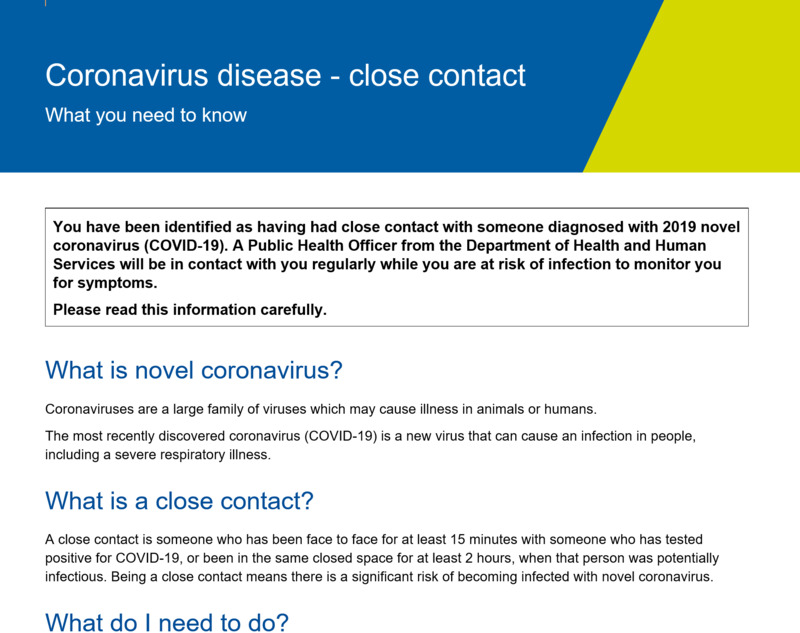
Government fact sheet for people who "have been identified as having had close contact with someone diagnosed with 2019 novel coronavirus (COVID-19)", Version 1.3
You have been identified as having had close contact with someone diagnosed with 2019 novel coronavirus (COVID-19). A Public Health Officer from the Department of Health and Human Services will be in contact with you regularly while you are at risk of infection to monitor you for symptoms.
Please read this information carefully.
What is novel coronavirus?
Coronaviruses are a large family of viruses which may cause illness in animals or humans.
The most recently discovered coronavirus (COVID-19) is a new virus that can cause an infection in people, including a severe respiratory illness.
What is a close contact?
A close contact is someone who has been face to face for at least 15 minutes with someone who has tested positive for COVID-19, or been in the same closed space for at least 2 hours, when that person was potentially infectious. Being a close contact means there is a significant risk of becoming infected with novel coronavirus.
What do I need to do?
Stay at home or in your hotel room
• Isolate yourself at home until 14 days after you were last exposed to the infectious person.
– You should not leave your house except to seek medical attention.
– You should stay in a different room to other people as much as possible. Use a separate bathroom if available.
– Do not go to work, school, university, work or attend public places or events. Do not use public transport or taxi services.
– Where possible, get others such as friends or family, who are not required to be isolated, to get food or other necessities for you.
• If you have difficulties getting food or necessities, call 1800 675 398 for support.
• If you need a translator first call 131 450, then request the hotline on 1800 675 398. More information is available on our website: dhhs.vic.gov.au/novelcoronavirus
• Please keep Triple Zero (000) for emergencies only.
Going outside
If you live in a private house, then it is safe for you to go outside into your garden, balcony or courtyard.
If you live in an apartment it is also safe for you to go outside into the garden while wearing a surgical mask. You should, however, go quickly through any common areas on the way to the garden. Wear a surgical mask if you have to move through these areas.
Monitor your symptoms
• Monitor your health until 14 days after you were last exposed to the infectious person.
• Watch for any of these signs and symptoms:
– fever
– cough
– shortness of breath
• Other early symptoms can include chills, body aches, sore throat, headache, runny nose, muscle pain or diarrhoea.
You will be contacted daily by a Public Health Officer to check whether you have had symptoms.
What if I develop symptoms?
If you develop any of the symptoms listed above:
• Call a doctor or hospital and inform them that you have had contact with a confirmed case of novel coronavirus and you have symptoms.
• Put on a mask if you have one.
• Keep yourself away from others (for example, in a different room).
• Do not go to work, school, university, work or attend public places or events. Do not use public transport or taxi services.
• When you arrive at the general practice or hospital, tell them again that you are a contact of a confirmed case of novel coronavirus.
Your doctor or staff at the hospital emergency department will ensure you are wearing a mask and take you through to a room away from others.
The doctor will contact our department on 1300 651 160. They may organise to take nose and throat swabs to send for testing for the novel coronavirus.
If you are experiencing severe symptoms, such as shortness of breath:
• Call 000 and request an ambulance.
• Inform the ambulance officers that you have been in close contact with a confirmed case of novel coronavirus.
How can I prevent the spread of the virus?
Practising good hand and sneeze/cough hygiene is the best defence:
• Wash your hands often with soap and water before and after eating as well as after attending the toilet.
• Avoid all contact with others.
• Cough and sneeze into your elbow.
Should I wear a face mask?
Face masks are not recommended if you do not have symptoms. A facemask will not protect you against becoming infected.
If you are ill, you should put on a mask if you have one to prevent spreading the infection to others. You will be given a mask to wear by your doctor.
Looking after your well-being during isolation
Being confined to home for an extended period of time can cause stress and conflict. Tips for looking after yourself include:
• Talk to the other members of the family about the infection. Understanding novel coronavirus will reduce anxiety.
• Reassure young children using age-appropriate language.
• Think about how you have coped with difficult situations in the past and reassure yourself that you will cope with this situation too. Remember that self-isolation won’t last for long.
• Exercise regularly. Options could include exercise DVDs, dancing, floor exercises, yoga, walking around the backyard or using home exercise equipment, such as a stationary bicycle, if you have it. Exercise is a proven treatment for stress.
• Keep in touch with family members and friends via telephone, email or social media.
• Keep up a normal daily routine as much as possible.
• Arrange with your employer to work from home, if possible.
• Ask your child’s school to supply assignments, work sheets and homework by post or email, or if the student can join the class using online options.
• Don’t rely too heavily on the television and technology. Treat self-isolation as an opportunity to do some of those things you never usually have time for, such as board games, craft, drawing and reading.
• If you are struggling to cope you call Lifeline on 13 11 14 or Beyond Blue on 1300 22 4636.
Where can I find out more information?
Call the Department of Health and Human Services on to discuss any questions you have. If you need a translator first call 131 450, then request the to be put through to the department on 1300 651 160.
For Victorian updates to the current incident, go to: https://www.dhhs.vic.gov.au/novelcoronavirus
For national updates: https://www.health.gov.au/news/latest-information-about-novel-coronavirus
For international updates: https://www.who.int/westernpacific/emergencies/novel-coronavirus
WHO resources https://www.who.int/health-topics/coronavirus
-
2020-02-11
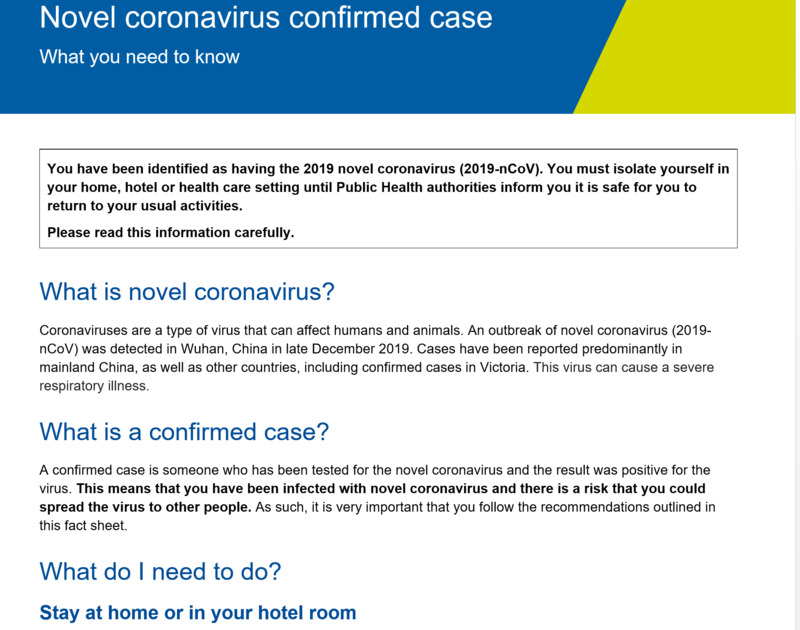
Government advice to people who have "2019 novel coronavirus (2019-nCoV)".
-
2020-03-23
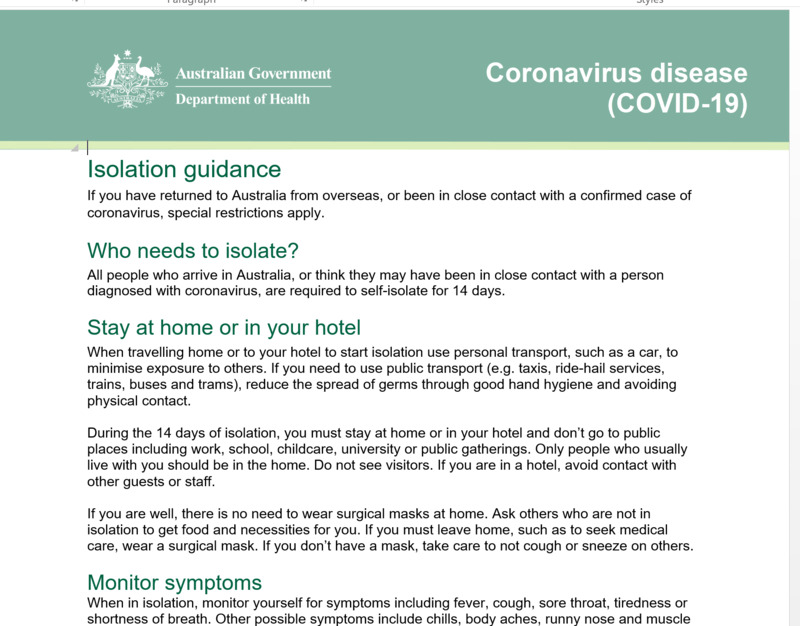
Australian Government fact sheet with guidance on self-isolation, Version 14
Isolation guidance
If you have returned to Australia from overseas, or been in close contact with a confirmed case of coronavirus, special restrictions apply.
Who needs to isolate?
All people who arrive in Australia, or think they may have been in close contact with a person diagnosed with coronavirus, are required to self-isolate for 14 days.
Stay at home or in your hotel
When travelling home or to your hotel to start isolation use personal transport, such as a car, to minimise exposure to others. If you need to use public transport (e.g. taxis, ride-hail services, trains, buses and trams), reduce the spread of germs through good hand hygiene and avoiding physical contact.
During the 14 days of isolation, you must stay at home or in your hotel and don’t go to public places including work, school, childcare, university or public gatherings. Only people who usually live with you should be in the home. Do not see visitors. If you are in a hotel, avoid contact with other guests or staff.
If you are well, there is no need to wear surgical masks at home. Ask others who are not in isolation to get food and necessities for you. If you must leave home, such as to seek medical care, wear a surgical mask. If you don’t have a mask, take care to not cough or sneeze on others.
Monitor symptoms
When in isolation, monitor yourself for symptoms including fever, cough, sore throat, tiredness or shortness of breath. Other possible symptoms include chills, body aches, runny nose and muscle pain.
What do I do if I get sick?
If you develop symptoms (fever, a cough, sore throat, tiredness or shortness of breath) within 14 days of returning to Australia, or within 14 days of last contact of a confirmed case, you should arrange to see a doctor for urgent assessment.
You should telephone the health clinic or hospital before you arrive and tell them your travel history or that you have been in contact with a confirmed case of coronavirus.
You must remain isolated either in your home, hotel or a healthcare setting until public health authorities inform you it is safe for you to return to your usual activities.
How can I prevent the spread of coronavirus?
Practising good hand and sneeze/cough hygiene and keeping your distance from others when you are sick is the best defence against most viruses. You should:
• wash your hands frequently with soap and water, including before and after eating, and after going to the toilet
• cover your cough and sneeze, dispose of tissues, and wash your hands
• avoid contact with others (stay more than 1.5 metres from people)
• stay at home if unwell.
Going outside
If you live in a private house, it is safe for you to go into your garden or courtyard. If you live in an apartment or are staying in a hotel, it is also safe for you to go into the garden but you should wear a surgical mask to minimise risk to others and move quickly through any common areas.
Advice for others living with you
Others that live with you are not required to be isolated unless they meet one of the isolation criteria outlined above. If you develop symptoms and are confirmed to have coronavirus, they will be classified as close contacts and will need to be isolated.
Cleaning
To minimise the spread of any germs you should regularly clean surfaces that are frequently touched such as door handles, light switches, kitchen and bathroom areas. Clean with household detergent or disinfectant.
Managing the 14 day isolation
Being in isolation can be stressful and boring. Suggestions include:
• Keep in touch with family members and friends via telephone, email or social media.
• Learn about coronavirus and talk with others.
• Reassure young children using age-appropriate language.
• Where possible, keep up normal daily routines, such as eating and exercise.
• Arrange to work from home.
• Ask your child’s school to supply assignments or homework by post or email.
• Do things that help you relax and use isolation as an opportunity to do activities you don’t usually have time for.
More information
For the latest advice, information and resources, go to www.health.gov.au
Call the National Coronavirus Helpline on 1800 020 080. It operates 24 hours a day, seven days a week. If you require translating or interpreting services, call 131 450.
The phone number of your state or territory public health agency is available at www.health.gov.au/state-territory-contacts
If you have concerns about your health, speak to your doctor.
-
2020-04-07
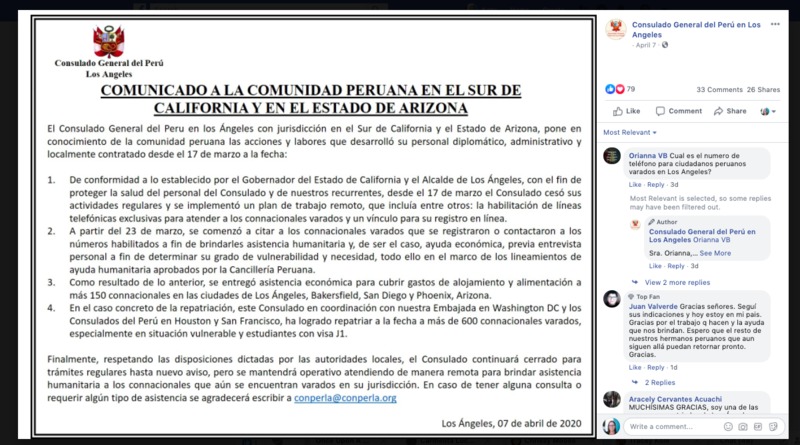
El Consulado General del Peru en los Ángeles con jurisdicción en el Sur de California y el Estado de Arizona, pone en conocimiento de la comunidad peruana las acciones y labores que desarrolló su personal diplomático, administrativo y localmente contratado desde el 17 de marzo a la fecha:
-
2020-04-06
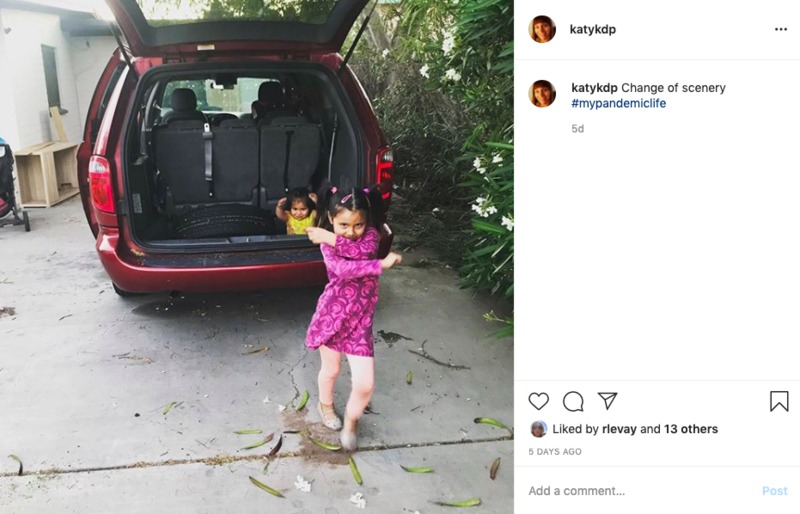
Playing in the van for a change of sceenery.
-
2020-04-11
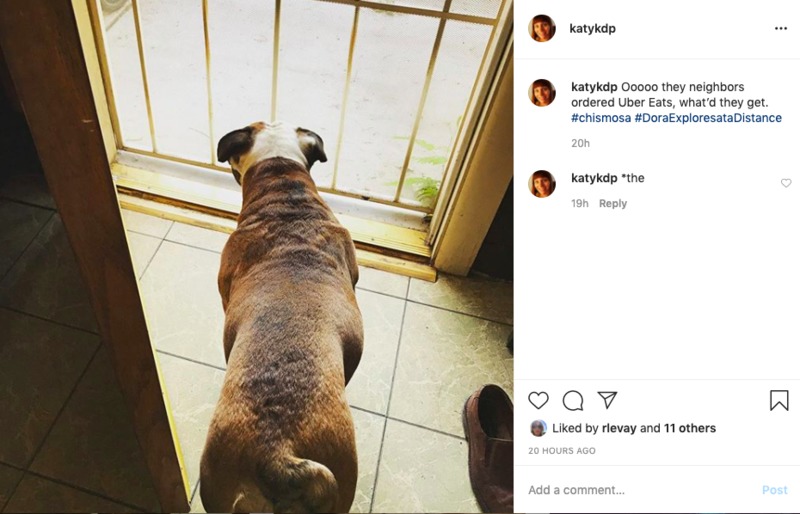
Dora the bulldog explorer spies on neighbors during an Uber Eats food delivery.
-
2020-04-11
Recorded part of a phone conversation between Marco Peralta Urquizo and his cousin Jose Pezo about how things are going in Peru during the lockdown.
-
2020-02-28
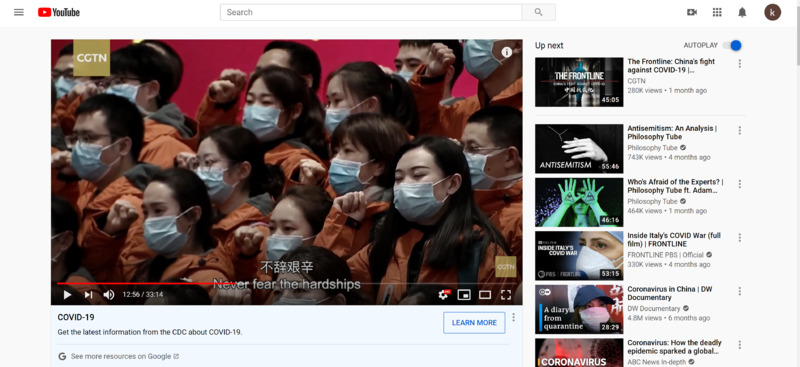
CGTN video posted to YouTube chronicling the COVID-19 outbreak in Wuhan, China. The 30 minute documentary includes interviews with doctors, epidemiologists, and workers, as well as insight into how the Chinese government responded to the epidemic.
-
2020-04-09
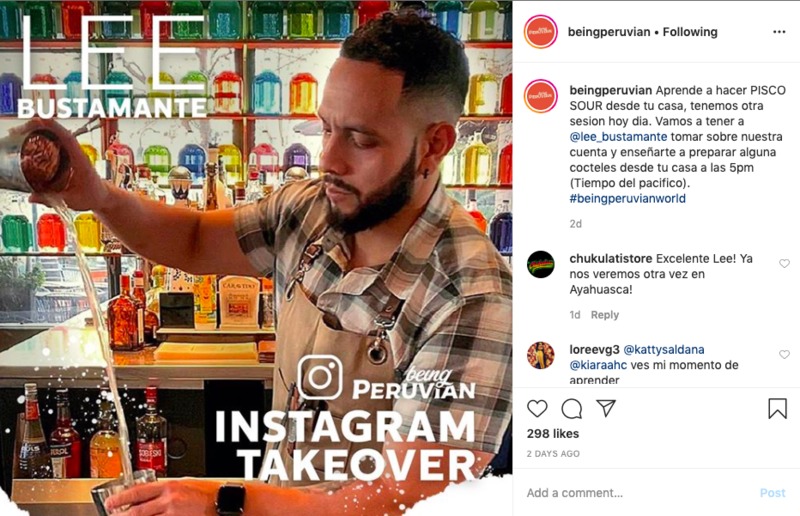
Lee Bustamante shows how to make pisco sour at home
-
2020-04-11
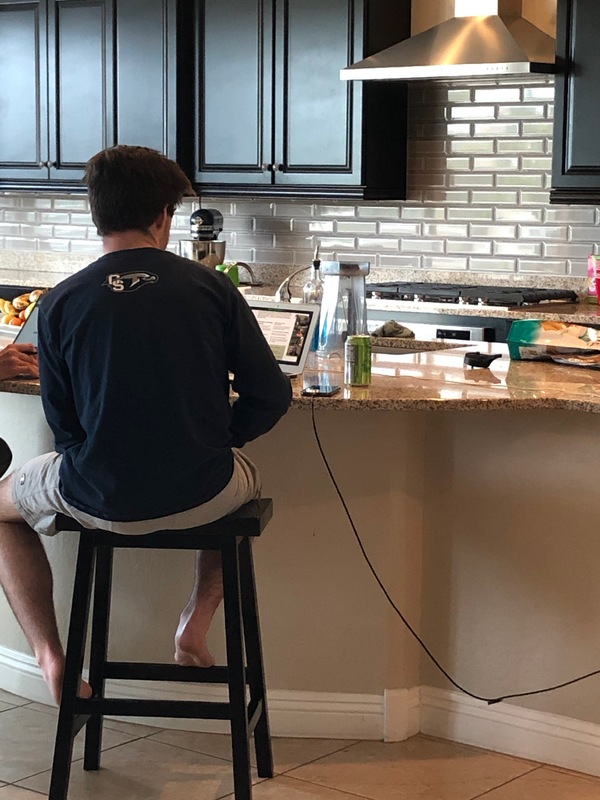
This is my son doing his ASU orientation online instead of in person. He signed up for his orientation in the fall, and he and his dad were looking forward to driving to Tempe and spending the day at ASU and getting ready to start in the Fall. Instead, his orientation is now via zoom. As a High School senior, Covid19 has hit him pretty hard: no last club soccer game, no Prom, no Senior ditch day, no graduation. Visiting ASU for orientation was another thing he was looking forward to that he is now missing.
-
2020-04-10
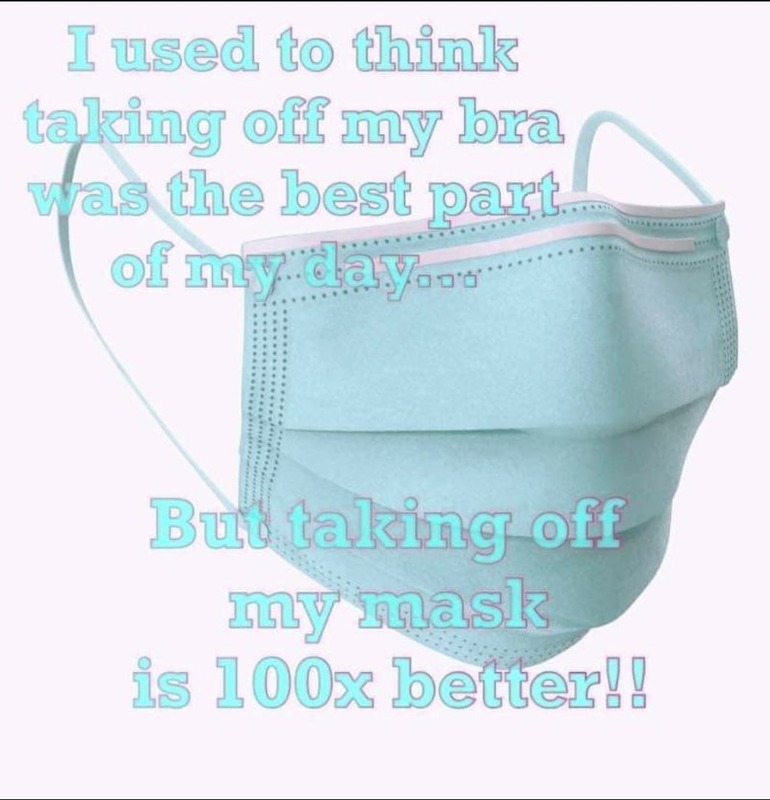
an image of a surgical face mask with the words "I used to think taking off my bra was the best part of my day... But taking off my mask is 100x better!" Shared by a healthcare worker (with a private account) on Twitter.
-
2020-04-09
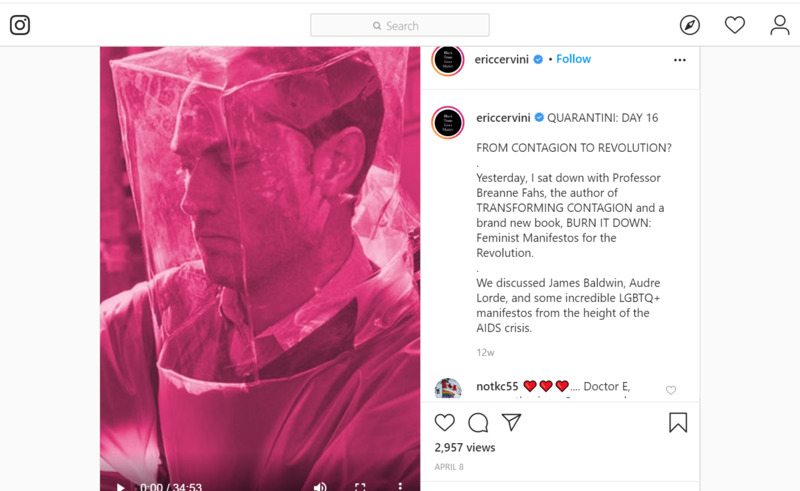
Dr. Cervini has recently received media attention for creating a podcast and book club called "Quarantini," focused on LGBT history, as a response to the Covid-19 pandemic.
-

2020-03-17
It is a tweet making fun of the fondness of the roaring 20's even though they are disastrous like they are now. #FordhamUniversity #VART3030
-

2020-04-10
This depiction is representative of the unnecessary need to hoard toilet paper.
-
2020-03-31
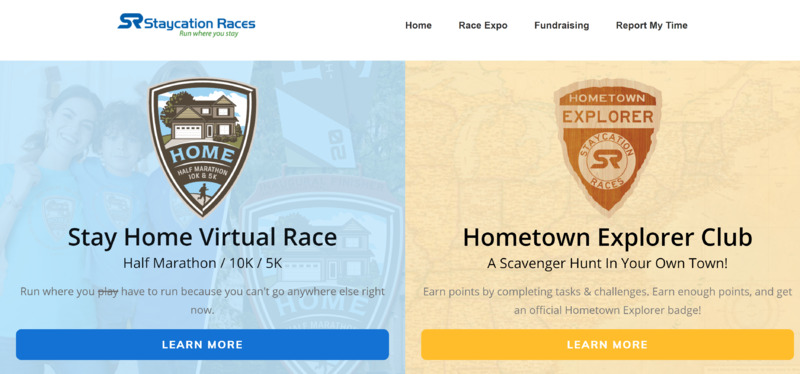
A link to register for a virtual running race
-
2020-04-09
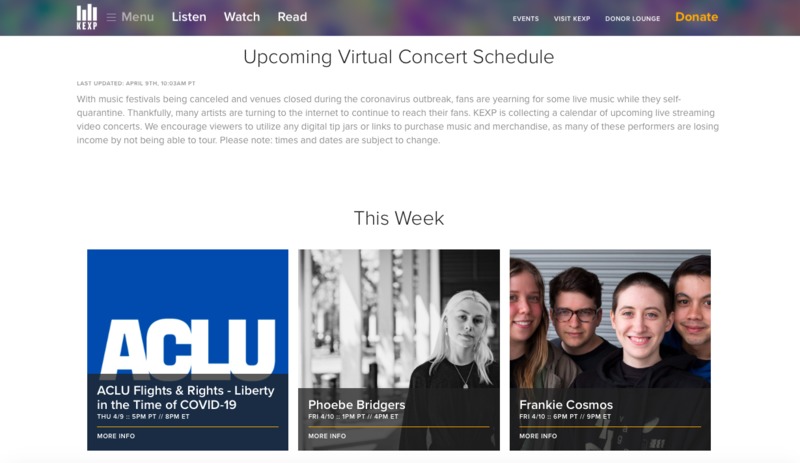
With music festivals being canceled and venues closed during the coronavirus outbreak, fans are yearning for some live music while they self-quarantine. Thankfully, many artists are turning to the internet to continue to reach their fans. KEXP is collecting a calendar of upcoming live streaming video concerts. We encourage viewers to utilize any digital tip jars or links to purchase music and merchandise, as many of these performers are losing income by not being able to tour. Please note: times and dates are subject to change.
-
2020-04-06
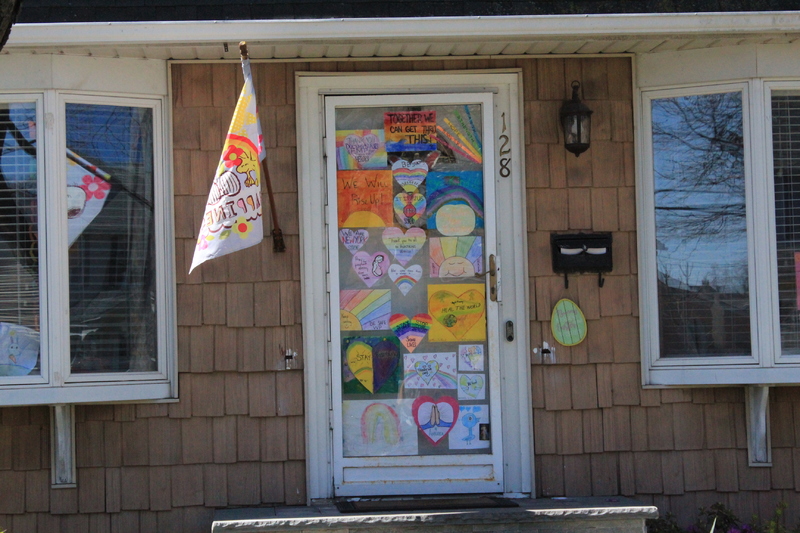
#friendswhogive was started to teach my children that GIVING to others can be just as rewarding as receiving, especially at the Holiday time."- Denise Heckelman, Founder
#friendswhogive organized a "rainbow hunt" for kids. Families can post drawings of rainbows in their window and as children walk and bike ride around they can count how many rainbows they pass along the way.
#FordhamUniversity #VART3030 #RainbowSeries
-
2020-04-06
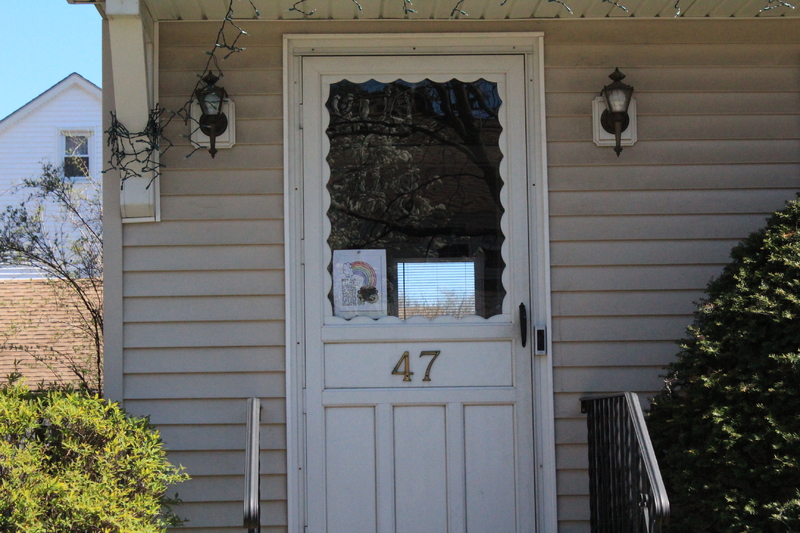
#friendswhogive was started to teach my children that GIVING to others can be just as rewarding as receiving, especially at the Holiday time."- Denise Heckelman, Founder
#friendswhogive organized a "rainbow hunt" for kids. Families can post drawings of rainbows in their window and as children walk and bike ride around they can count how many rainbows they pass along the way.
#FordhamUniversity #VART3030 #RainbowSeries
-
2020-04-06
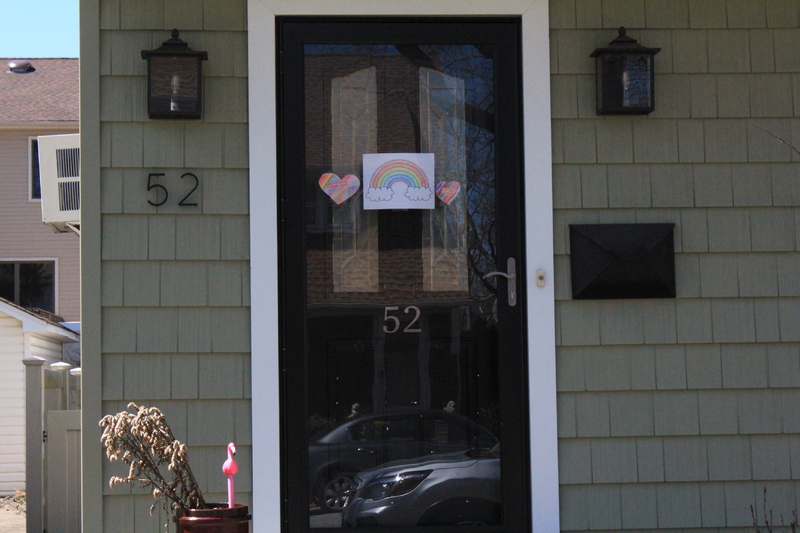
#friendswhogive was started to teach my children that GIVING to others can be just as rewarding as receiving, especially at the Holiday time."- Denise Heckelman, Founder
#friendswhogive organized a "rainbow hunt" for kids. Families can post drawings of rainbows in their window and as children walk and bike ride around they can count how many rainbows they pass along the way.
#FordhamUniversity #VART3030 #RainbowSeries
-
2020-04-06
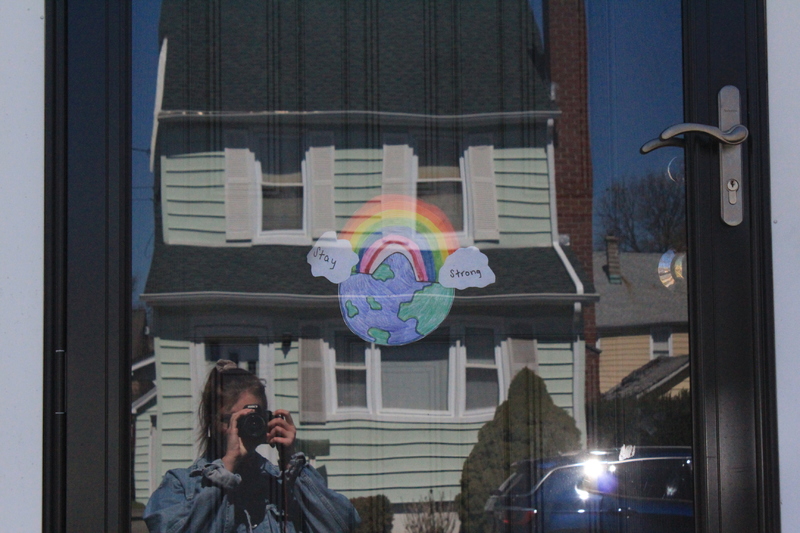
#friendswhogive was started to teach my children that GIVING to others can be just as rewarding as receiving, especially at the Holiday time."- Denise Heckelman, Founder
#friendswhogive organized a "rainbow hunt" for kids. Families can post drawings of rainbows in their window and as children walk and bike ride around they can count how many rainbows they pass along the way.
#FordhamUniversity #VART3030 #RainbowSeries
-
2020-04-06
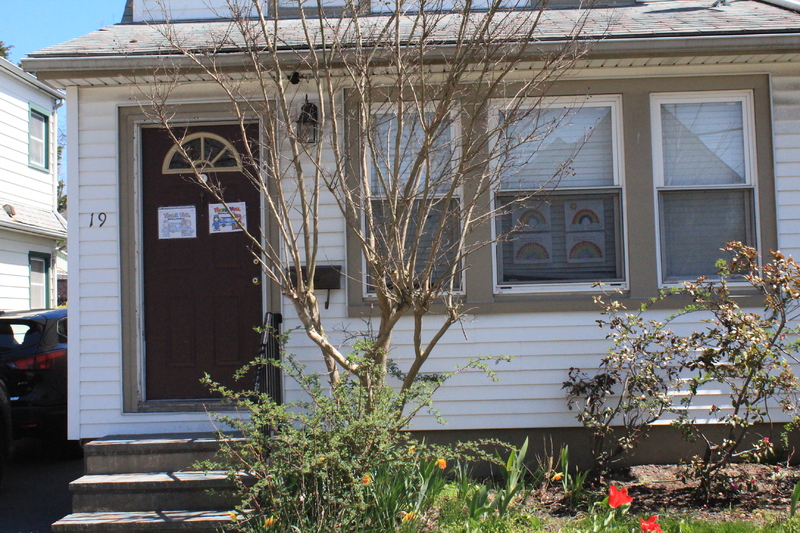
#friendswhogive was started to teach my children that GIVING to others can be just as rewarding as receiving, especially at the Holiday time."- Denise Heckelman, Founder
#friendswhogive organized a "rainbow hunt" for kids. Families can post drawings of rainbows in their window and as children walk and bike ride around they can count how many rainbows they pass along the way.
#FordhamUniversity #VART3030 #RainbowSeries
-
04/06/2020
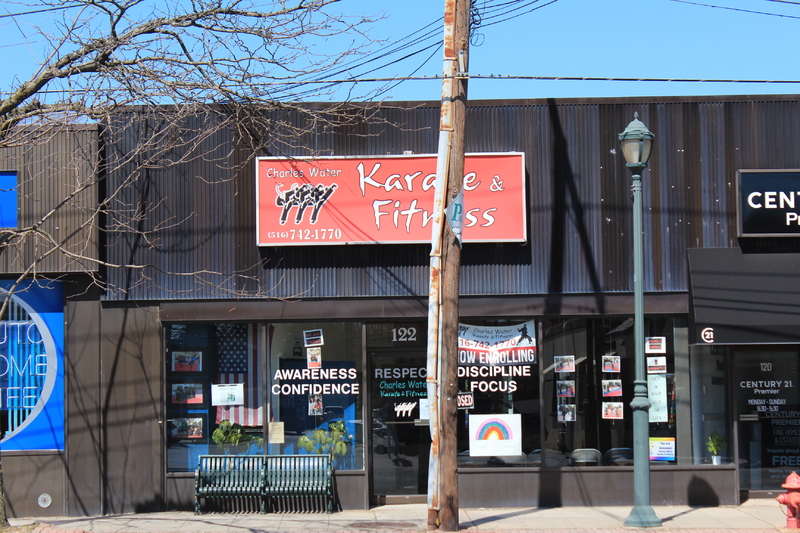
#friendswhogive was started to teach my children that GIVING to others can be just as rewarding as receiving, especially at the Holiday time."- Denise Heckelman, Founder
#friendswhogive organized a "rainbow hunt" for kids. Families can post drawings of rainbows in their window and as children walk and bike ride around they can count how many rainbows they pass along the way.
#FordhamUniversity #VART3030 #RainbowSeries
-
2020-04-06
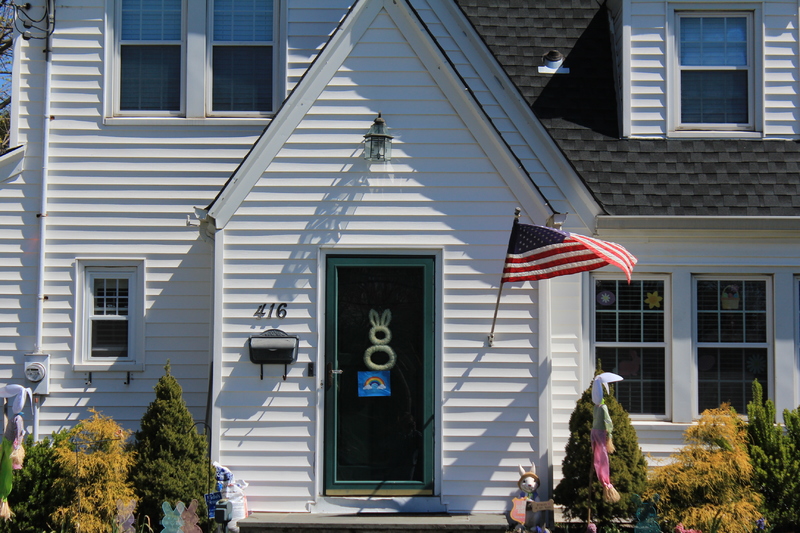
#friendswhogive was started to teach my children that GIVING to others can be just as rewarding as receiving, especially at the Holiday time."- Denise Heckelman, Founder
#friendswhogive organized a "rainbow hunt" for kids. Families can post drawings of rainbows in their window and as children walk and bike ride around they can count how many rainbows they pass along the way.
#FordhamUniversity #VART3030 #RainbowSeries
-
2020-04-06
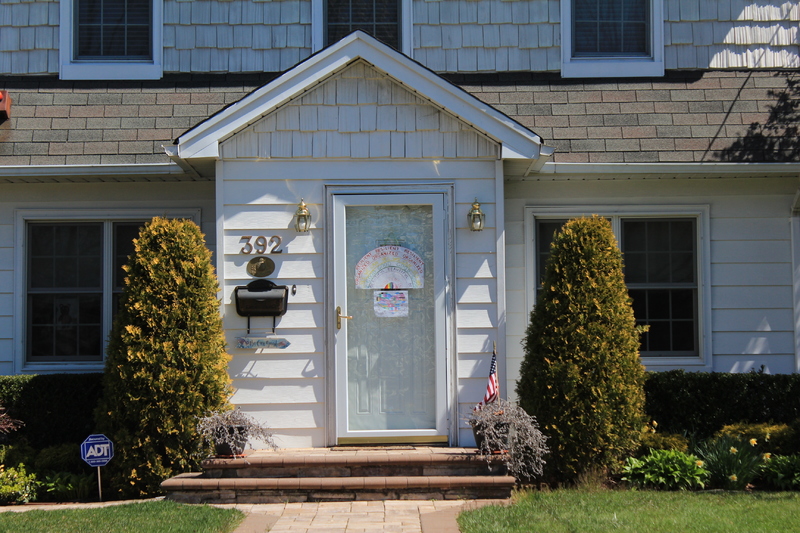
#friendswhogive was started to teach my children that GIVING to others can be just as rewarding as receiving, especially at the Holiday time."- Denise Heckelman, Founder
#friendswhogive organized a "rainbow hunt" for kids. Families can post drawings of rainbows in their window and as children walk and bike ride around they can count how many rainbows they pass along the way.
#FordhamUniversity #VART3030 #RainbowSeries