-

2021-05-24
Ever since I was a kid, I waited for the day I would get to walk across the stage inside a huge stadium to receive my diploma, with my family and friends watching. That day did not turn out quite as expected. My senior year began in August of 2020, during the height of COVID. No one knew when or if we would be going back to school in person. We lost football games, homecoming, the senior trip, and almost two semesters of getting to spend time in class with friends. We missed out on finally being a senior. All we could hope for was to be able to have more than a drive-thru graduation. Our class was lucky enough to be able to go back to school for a few months and we got to have an in-person graduation on the football field. Even though there were only just under 200 students per day over the course of our 4-day graduation ceremonies, it was definitely an experience I will never forget. I was grateful that I got to walk across that stage with my family watching. I was grateful that I got to watch my friends who I have known for years, and with who I began this journey, get their diplomas as well. This photo encapsulates the moment that we had officially graduated. As we went in for a masked-up embrace, I thought about so much I had to go through to get to that moment. All of the highs, lows, long nights up studying, fun school events, losing friends who were near and dear to my heart, and making it through what is supposed to be the best year of high school during a worldwide pandemic. It was a bittersweet moment, marking the end of one journey, but the start of the next. I do not know what the future holds, but I hope to never have to experience more masked goodbyes.
-
2021-12-08
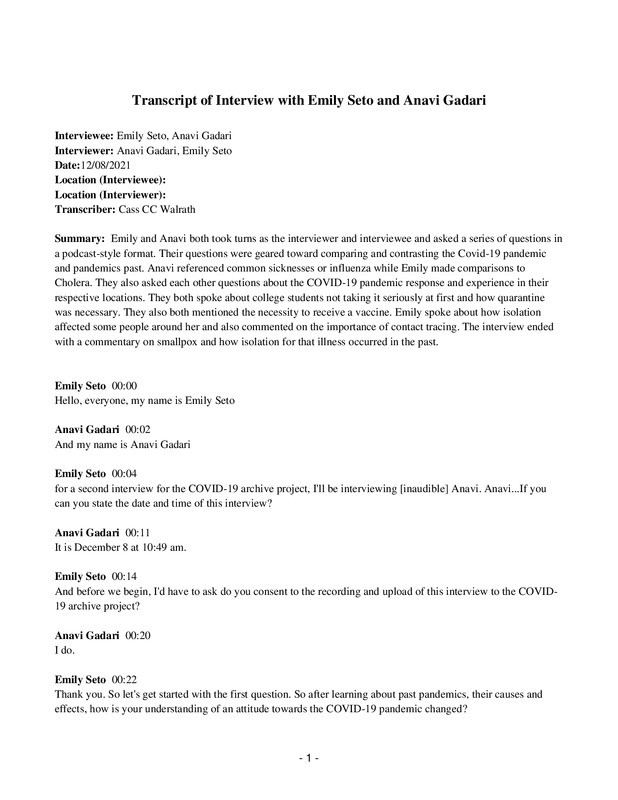
Remembering past pandemics and comparing and contrasting them to covid-19
-
2021-12-08
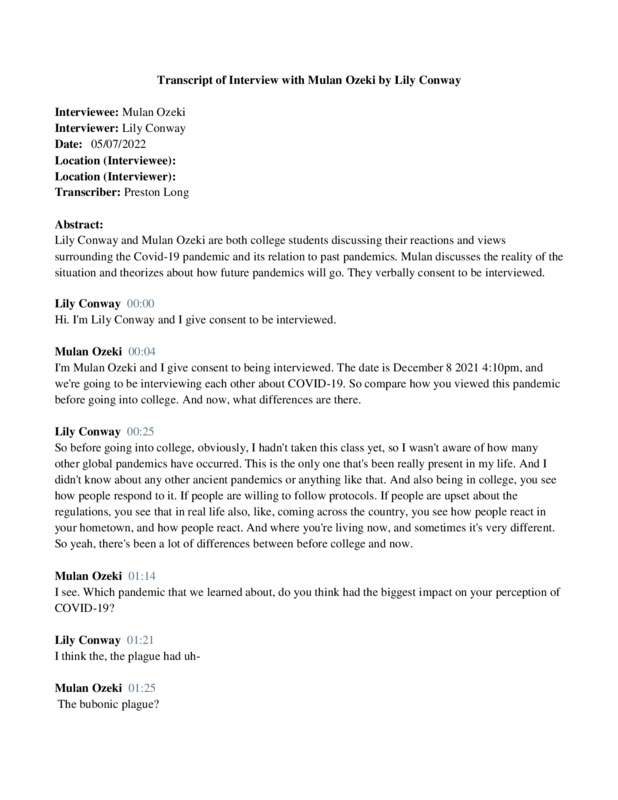
It says how educating yourself on the past can always provide insight on current struggles.
-
2021-12-08
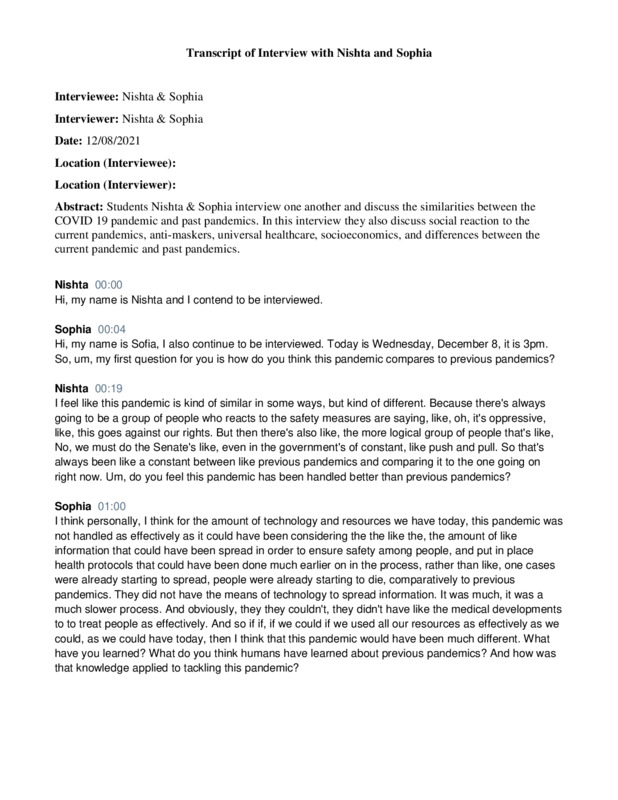
This interview is about our thoughts and understandings of the Covid-19 pandemic after having taken a semester-long course about the history of pandemics spanning from the black plague until the Spanish flu. We've discussed how we think the world could have handled this pandemic differently, the similarities and differences between this pandemic and previous pandemics, and how this pandemic affected our personal lives.
-
2021-11-01
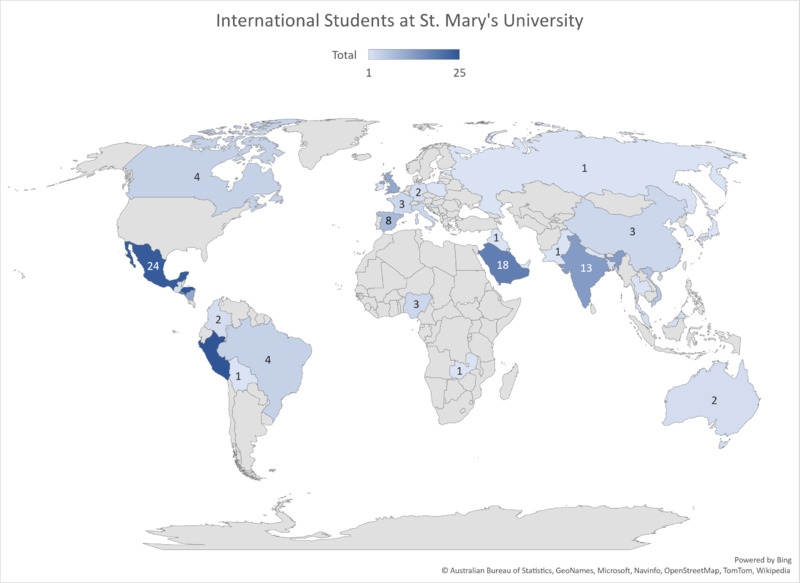
This map shows how many international students St. Mary's University has in Fall 2021. This year St. Mary's received approximately 50 new international students which is only half of the total they were supposed to have in Fall 2021. In Spring 2022 they hope to receive more than 30 international students, making this map just bigger.
The biggest amount of International Students St. Mary's has come from Peru and Honduras, with a total of 25 students. Mexico goes in second place with 24 students and in third place, Saudi Arabia with 18 students.
-
2021-12-08
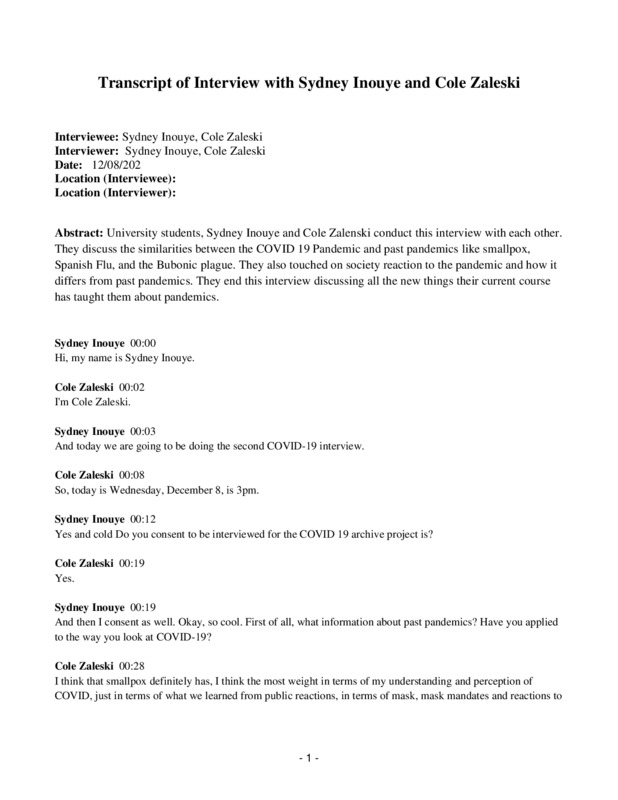
We are discussing the comparisons between COVID-19 and previous pandemics, as well as how the pandemic has impacted our first year of college.
-
2021-12-08
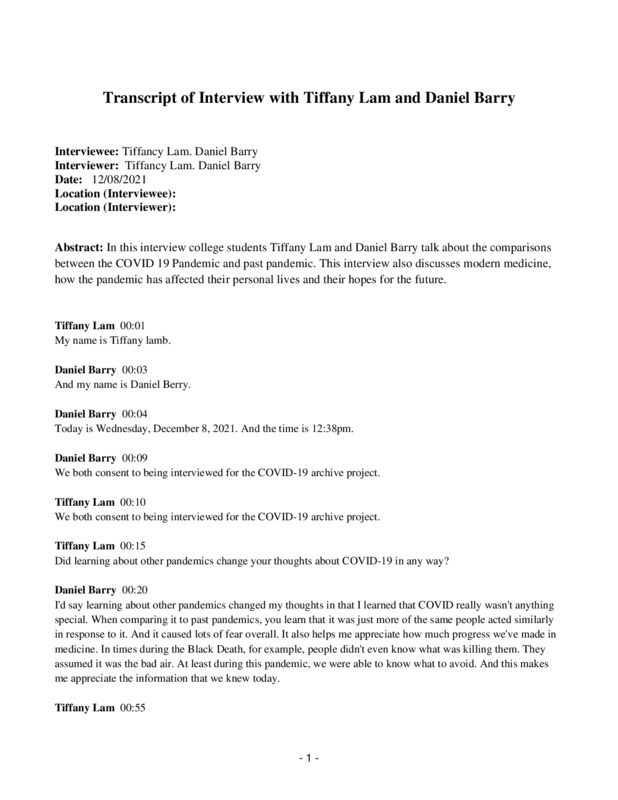
It connects the COVID pandemic to past pandemics, and the future.
-
2021-12-08T10:16
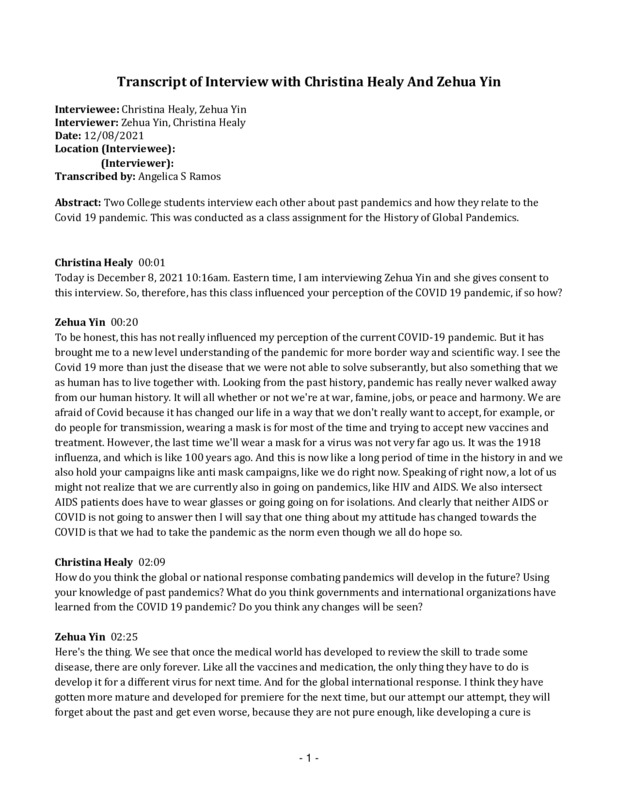
This is an interview of two college students from a class over the History of Global Pandemics
-
2021-12-08
This podcast covers the ways that learning about past pandemics has affected our attitude toward, or perception of, the current pandemic.
-
2021-12-04
Most consider dying during the pandemic the end of the story, but for my family and myself, the death of my sister was the undoing of our culture. On March 13, 2021, just over a year since Covid-19 was declared a pandemic, my younger sister took her own life after a life-long battle with epilepsy, anxiety, depression, and PTSD. She was the youngest of my five siblings, aunt to fourteen nieces and nephews, and mother to two sons. My entire family, with the exception of one sister, all live within minutes of one another. Although we were raised as a close-knit family, disagreements had developed, resentments grew, and we all allowed “social distancing” to justify our lack of contact and communication for almost the entire year. And just like the rest of the nation, our family was divided by political and pandemic beliefs.
As I mentioned above, my sister overcame her relentless struggles every day for almost forty years and on March 13, 2021, she lost that battle. Since that day, we have all theorized how the isolation brought on by the pandemic must have played a major role. However, we are only left with assumptions as she didn’t leave a note. What I do know for certain, is my family and I had no idea how to grieve during the pandemic. Social distancing, occupancy restrictions, stay-at-home orders and mask mandates challenged every aspect of how our Hispanic culture grieves. After an entire year of living in isolation, coming together as family, came with conflicted feelings of cultural proclivity and the health of our loved ones.
As my family rushed to my parents’ home upon hearing the tragic news, there was a twinge of apprehension as we sought comfort one another’s arms. By midafternoon, their home was overcome with family overwhelmed with anguish, while instinctively gauging six feet distance. While notifying friends and family, tears and words of comfort gave way to requests to leave a note at the makeshift shrine in the front yard in lieu coming inside. Making arrangements meant we had to settle for any location willing to allow all forty of us at the memorial. Non-family members would only be allowed to walk through to say their last good-bye, once the family left the building to not exceed occupation restrictions. The cemetery would only allow fifteen people at the gravesite, not the dozens of friends and family who wanted to share their condolences. My mom, still reeling with loss, wanted to include those she loved and who loved my sister and chose a plot next to the street so the other family members could stand off the property while my sister was laid to rest. Following the burial, instead of opening our home and coming together to celebrate her life, we selected a secret location that wouldn’t be known to non-family members.
Nine months later, despite continued cases and deaths, Covid restrictions have lessened and most people have resumed their lives as they were pre-Covid. For my family and I, losing my sister still feels unreal. I saw her in her final resting place, but grieving in my culture looks and feels so different than what I experienced. We find comfort and healing in community and in each other’s arms. We open our home to friends and family and welcome their offerings of condolences. We come together to share food, memories, and loss and we find healing. The pandemic unraveled all we knew about how to deal with loss, and the grief remains in isolation, unable to transition into acceptance.
-
2021-12-07
We took a class about global pandemics, and we are explaining how our perspectives on pandemics have changed.
-
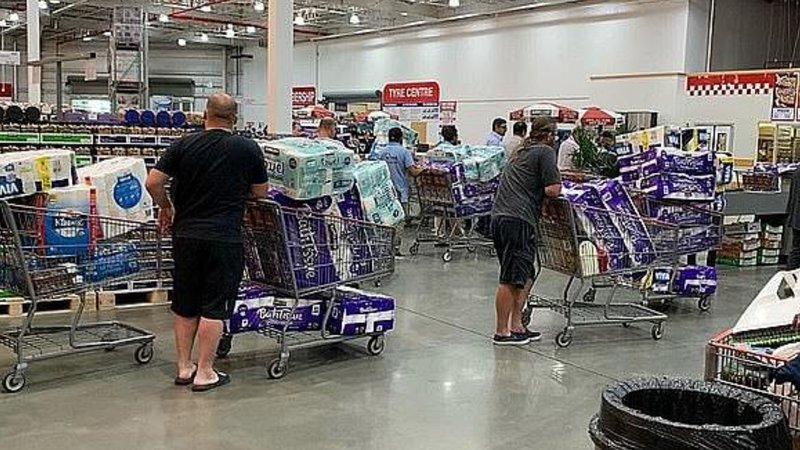
2020-03-09
I uploaded a photo of the toilet paper shortage during the covid-19 pandemic. I found this photograph the best suited to show the effects of the pandemic. Shortages are occurring everywhere since the pandemic has started which is also affecting our supply chain. This is important to me because the photograph shows struggles we individuals had to face from covid-19.
-
2021-12-07T13
After learning about four major pandemics, we discussed how our views of the COVID-19 pandemic have changed over the course of the semester, and how our perceptions of pandemics as a whole have changed.
-
2021-12-07
Marc & Niccola discuss their experiences with COVID-19 and relate it to past pandemics that they learned about in class
-
2020-03-06
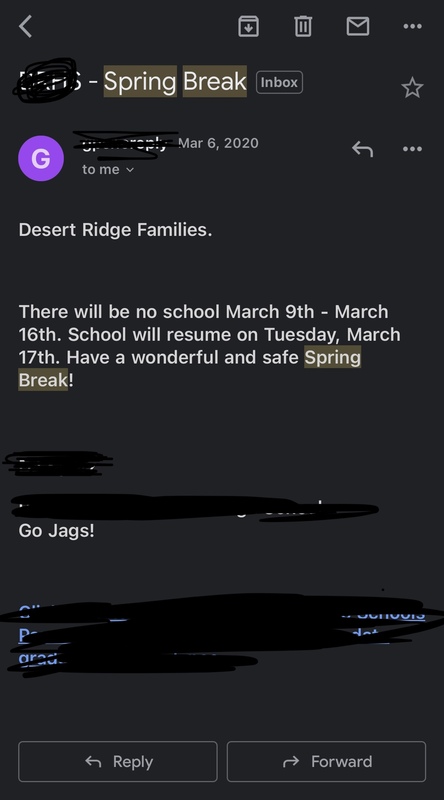
I was at my grandmas house with my siblings because my parents had work that day and needed someone to watch us. I was watching tik tok when our phones buzzed. I was in a cushy white lazy boy chair with a white throw blanket wrapped around me. The email detailed that we would get an extra week of spring break. We were so happy we got an extra couple days of break thinking we’d go back after a week or two. While this email isn’t the exact email they sent us that told us they were extending spring break, it shows how we were supposed to have a normal spring break. There was only supposed to be one week of spring break, but now I know the exact spot where I was sitting when the world nearly fell apart.
-
2021-12-06
Elsa Hanson and Amberley L. interview each other about how they think COVID-19 compares to past pandemics. They also discuss how the public has dealt with the pandemic if there will be long term effects of the pandemic, and what precautions they have been taking.
-
2021-12-06
It explains how past pandemics have affected how we view COVID-19.
-
2021-12-06
Northeastern University students, Suhani Rathi and Lilly Daughterty interview each other in this school assignment. In this interview they take turns comparing the COVID 19 pandemic to past pandemics. They discuss the similarities.
-
2021-11-26
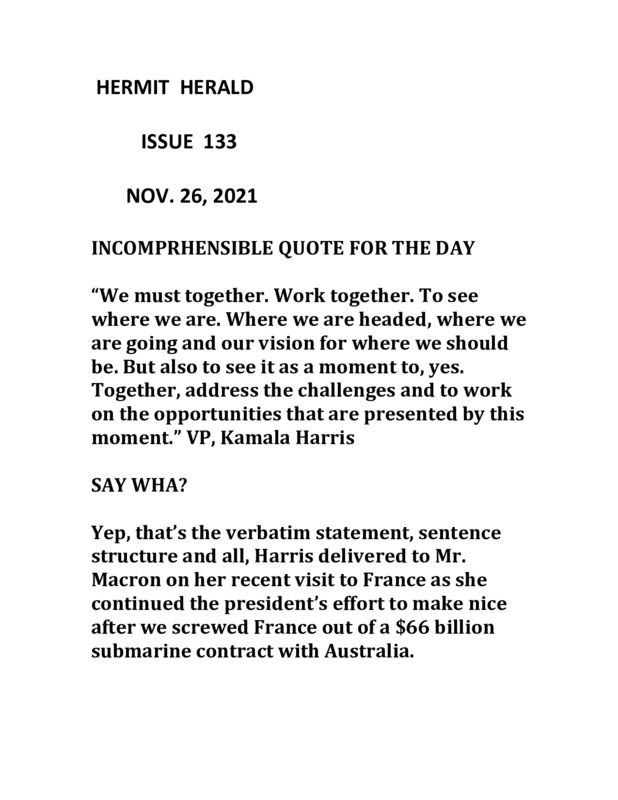
Kamala Harris, dazed and confused
-
05/06/2021
Christine Bethke interviews Charlene Bethke. They discuss vaccinations, what Charlene’s career has been like as a public accountant, COVID fears, COVID guidelines, the news/media, social distancing, and dealing with anti-maskers/COVID skeptics in the workplace.
-
05/06/2021
Liz Haynes discusses her life pre-COVID and how she has been affected during COVID as a cancer survivor. She talks about her love of travel and hopefully future plans, politics (local and federal), and ends with positive outlook for the future.
-
05/02/2021
Rose Yang is a dental assistant and licensed realtor in Milwaukee, Wisconsin. Rose is interviewed by Kristopher Strebe in regard to her work, personal life, and role as a healthcare provider during the pandemic. Rose goes into depth about her jobs’ protocols against the pandemic and defends why she believes that pandemic will never be truly over for health officials working in healthcare.
-
05/02/2021
Indiana University advocate, Joanna Reese interviews Atlanta photographer, Nina Karetova.
-
03/19/2021
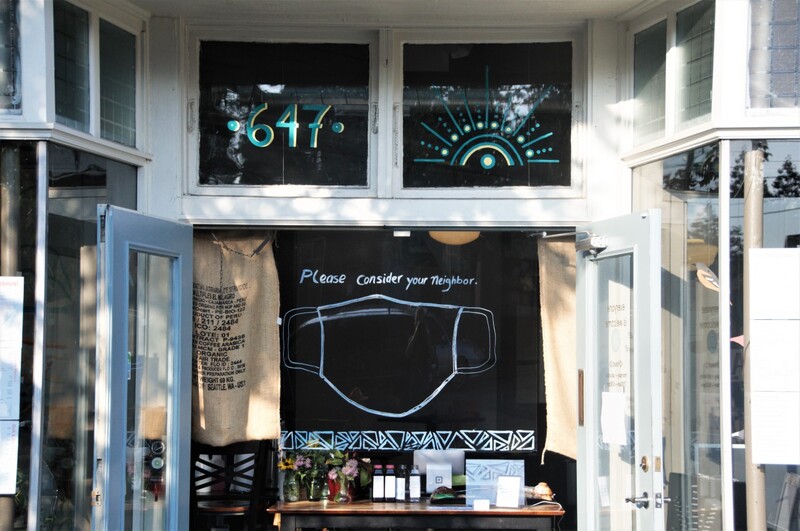
Jeff Litsey is a resident of the Fountain Square Neighborhood in Indianapolis with his wife and two children. Jeff discusses how the pandemic has affected his family life and schedule while also discussing how the neighborhood dynamics have evolved during the pandemic. Jeff talks about the challenges of running a small, locally owned, coffee shop during the pandemic in the Fletcher Place neighborhood of Indianapolis. This includes revenue, business plan evolution, government assistance, adjusting employee’s hours and pay, and helping employees and customers feel safe during the pandemic. He also illustrates how the neighborhood community helped his employees through tips that rolled into a community employee assistance plan. Additionally, Jeff discusses his anxiety that increased during the pandemic from running a business and worrying about how his shop could affect others and himself. This extended to worrying about his family. He discusses how the hobbies of art, hiking, and birdwatching helped him feel better. The interview ends with his hopes for all people to have healthcare and a home.
-
04/25/2021
Tamara Harris was born in Milwaukee, Wisconsin and raised in Black River Falls, Wisconsin and is now a retired teacher of the Chippewa Falls Middle School living in Chippewa Falls, Wisconsin. In this interview, Tamara describes how the Covid-19 pandemic has affected her daily life, relationships with long-distance family, and participation with the community. Tamara also describes how attitudes have changed during the pandemic and how she has dealt with these changes. Tamara has 7 adult children, 9 grandchildren, as well as many other family members spread throughout the Midwest.
-
04/07/2021
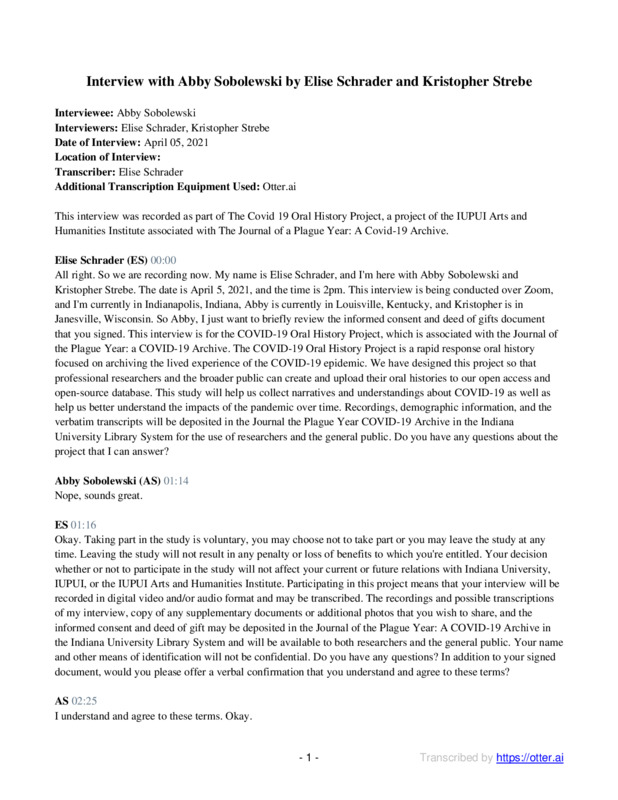
[Curator's Note] Abby Sobolewski talks about her family, education, and work. She then answers questions about how the COVID-19 pandemic has affected her job as a teacher, her everyday life, and her family.
-
05/16/2020
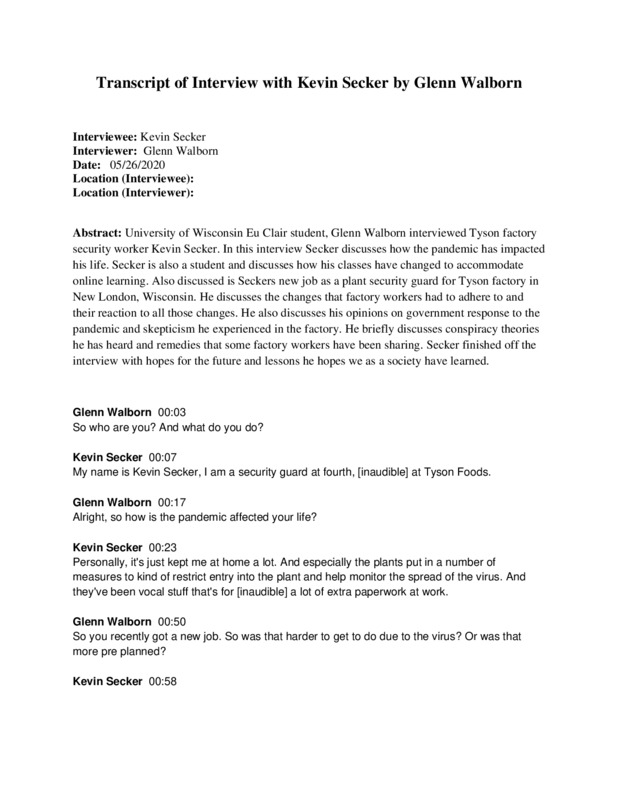
University of Wisconsin Eu Clair student, Glenn Walborn interviewed Tyson factory security worker Kevin Secker. In this interview Secker discusses how the pandemic has impacted his life. Secker is also a student and discusses how his classes have changed to accommodate online learning. Also discussed is Seckers new job as a plant security guard for Tyson factory in New London, Wisconsin. He discusses the changes that factory workers had to adhere to and their reaction to all those changes. He also discusses his opinions on government response to the pandemic and skepticism he experienced in the factory. He briefly discusses conspiracy theories he has heard and remedies that some factory workers have been sharing. Secker finished off the interview with hopes for the future and lessons he hopes we as a society have learned.
-
11/30/2020
C19OH
-
12/08/2020
C19OH
-
04/23/2021
This interview is done with Gary Lato who is 69 years old and has lived in Stanley, Wisconsin his whole life he is a retired mailman of 34 years. Here I discuss with him how COVID has affected those around him in his community as well as how it has affected him. Primarily I am getting his thoughts on the entire issue since he says he lives a mostly hermit lifestyle. During the interview, he spoke as an observer of all these things going on in the community and what he is noticing from his perspective. From Garys’s point of view as an older member of the community, he sees all this as something that is going to pass and just run its course. He also touches on how most in his area in the country are mainly just staying out of it and going about their lives as normal and not worrying about it in general. He also goes on to note how this is affecting people in a big way, due to there being restrictions on many aspects of life. He ends the interview with his own spiritual view, that if you have spiritual views may agree or disagree with them.
-
05/12/2021
C19OH
-
05/03/2021
Keely Berg interviews Jeremy Amble, a 51-year-old entrepreneur who was paralyzed due to a spinal injury suffered in 1991. During the course of the interview the two discuss Jeremy’s disability and how it has impacted his life over the past 30 years and how that changed during COVID. Then the two discuss how COVID has affected small businesses, farming, registered nurses, and the working from home craze. After this, they discuss family life, recreation, and hobbies and how these common aspects of life have changed due to COVID. Later skepticism of COVID by family and friends is discussed and how maybe social media and political figures may have played into aspects of vaccine skepticism and mask wear refusal. Lastly, Keely and Jeremy discuss experiences with the vaccine and the future of life post-COVID.
-
05/07/2021
C19OH
-

05/06/2021
C19OH
-
2021-12-05
Two college students conduct this interview with each other to compare the COVID 19 pandemic with past pandemics. They discuss government response and society reaction.
-
2020-02-21
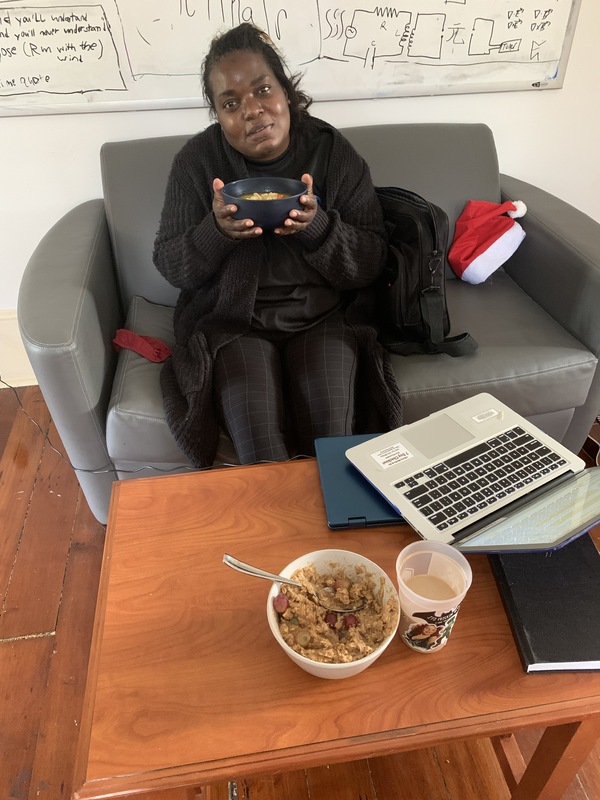
My name is Georgetta Jones, and I am a cashier at the College of Charleston City Bistro. Also, I work at a Daycare; Devine Daycare. As soon as Covid-19 started, I contracted it (February 2020) due to my being an 'essential worker' at my job. I was horribly laid up for fourteen days, and, as this was before the vaccines were released, I was afraid & certain I was going to die from this terrible disease. Fortunately, due to my rare blood type (O+), I had natural immunity to the virus, and was able to recover quickly after the fourteenth day; I went back to work on the 15th day. COVID-19 is a horrible virus, & it is shameful not to see people take it seriously. Due to my vitamins & water, I was able to get better quickly; it is important to take the natural precautions to protect oneself against the disease. If we as a country (and the world) are to overcome this deadly disease, we must trust in medicine, trust the doctors, trust science, and, most importantly, trust each other.
-
2021-12-03
Student Jorge Martinez relates how his experience as a St. Mary's University student living on campus for the first time in Fall 2020 amid the pandemic. Jorge was able to contact the office of student retention and Student Life to support the challenges he was facing during the pandemic.
-
2021-12-03
I conducted an interview with Jacob Guerra. It was my pleasure listening to his perspective and learning more about his insight in reference to COVID 19.
-

2021-12-03
We are both students in college. In our History of Pandemics class, we learned about past pandemics (namely the Bubonic Plague, Smallpox, Cholera, and Influenza pandemics) and how they impacted society. This course also challenged us to compare and contrast the current pandemic to those of the past, while considering how mankind may fare in pandemics moving forward. We discuss these things and more in the interview recording.
-
2021-12-01
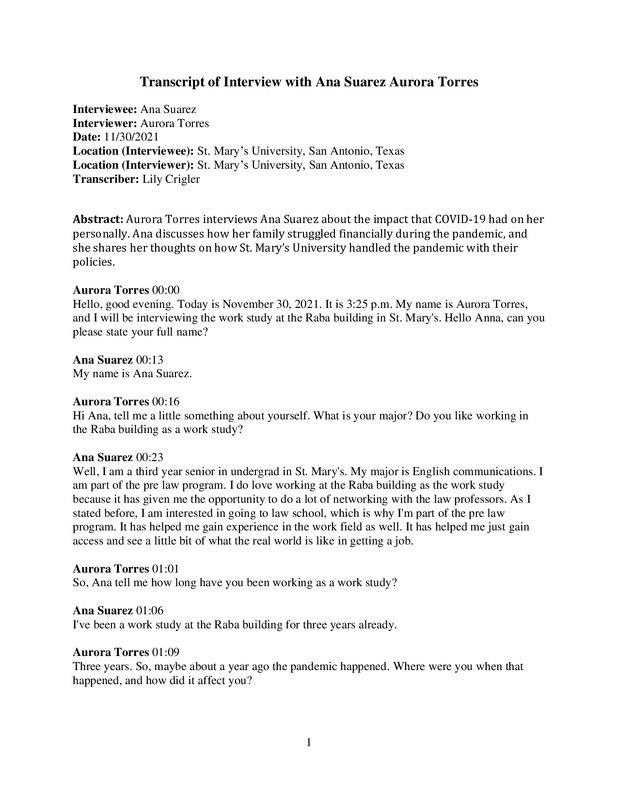
I interviewed a student that attends St. Mary’s University and is a work study in the Law School. I wanted to get her voice out and get an idea of what her perspective was on this ongoing pandemic. Hearing her and speak about where she was when the pandemic struck really reminded me that we all faced the same problems and that no one knew what the outcome was going to be. As a student in college, I’m sure that it was just as hard to know that schools would be shutting down and having no clue as to what the next step would be. Going back home and attending class virtue was hard especially if some did not have the resources for online fees, or laptops, etc. Hearing from Ana, and knowing that she struggled financially while in quarantine and making ends meet really makes us think that everyone had it hard. But in the long run she was able to go back to school and received the vaccination and made sure she followed all the policies that were in effect at the University. At least make it feel like some things were back to normal.
-
2021-12-03
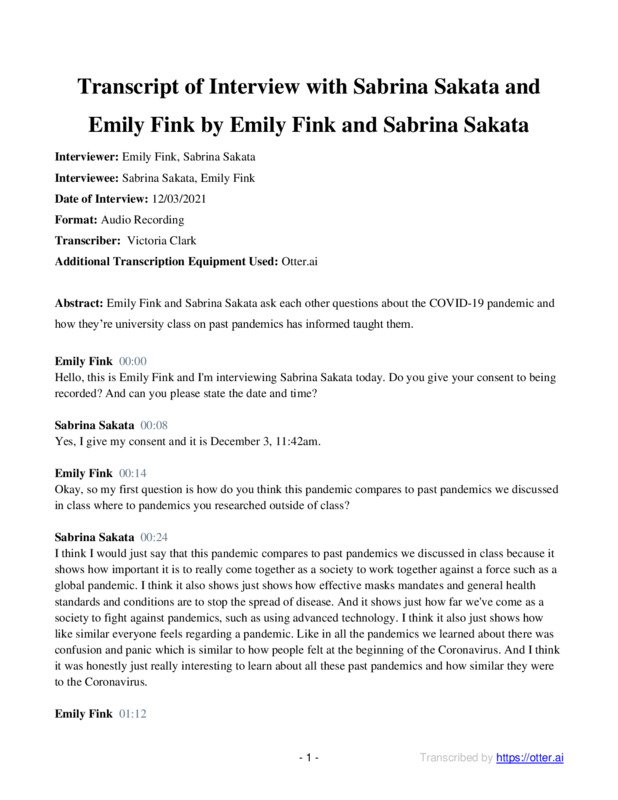
how past pandemics relate to the current COVID-19 pandemic
-
2020-03-12
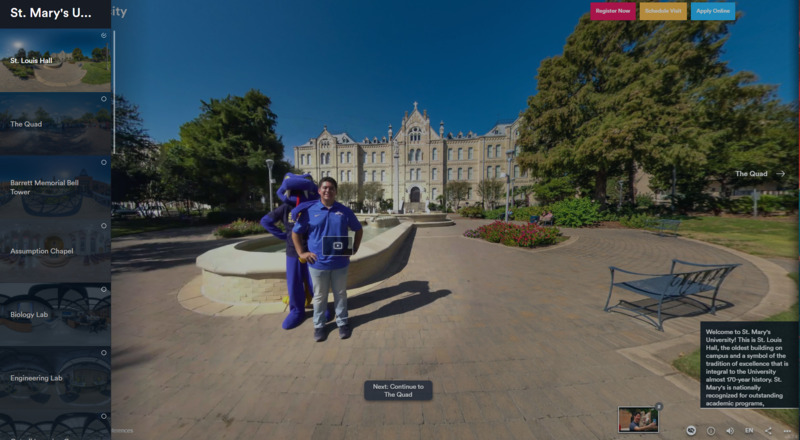
Choosing a university to go to is a life-changing choice. For most it is also a difficult one. With coronavirus restrictions in place, many students could not tour the schools they wanted to in person. It was because of this many schools began offering virtual tours. St. Mary's was one of these schools. I personally toured St. Mary's virtually. I didn't mind this option because I was already pretty sure I wanted to go there. The virtual tour was eye catching and easily accessible. I could see though how a virtual tour could be impersonal for others who were struggling to make a choice. It's not easy to capture an experience through a computer screen.
-
2021-12-03
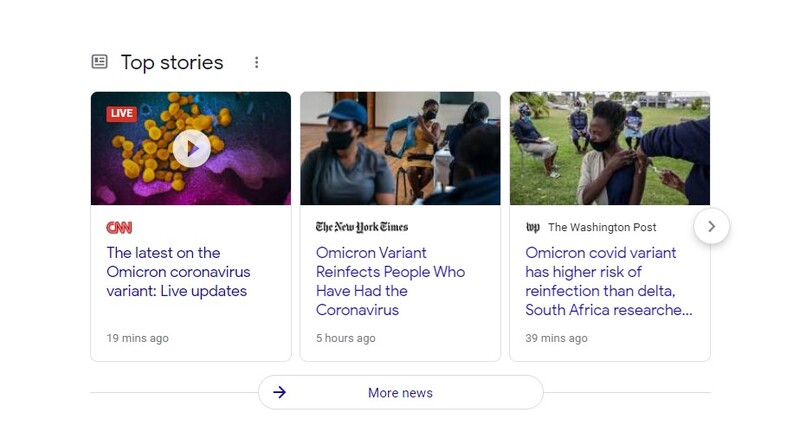
The new variant known as Omicron has started to appear in the U.S. as the WHO (World Health Organization) is more worried about its high number of mutations and labeled it as the "variant of concern."
-
2020-01-23
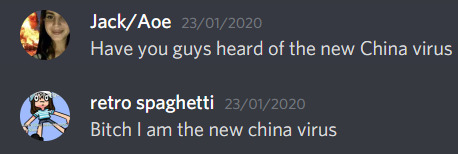
During January, my friends and I heard about the new virus and were fascinated. We joked and memed and speculated about it, however we never expected it to blow up this fast.
-
2021-11-29
This is an oral interview with two employees of the Office of Students retention at St. Mary's University. This showcases how the office of student retention played its part in guiding the transition from in-person to online and back to in-person classes throughout the pandemic. Their dedication to supporting students throughout the pandemic enriched the student experience for rattlers coming back to campus after an all online semester.
-
2020-08-11
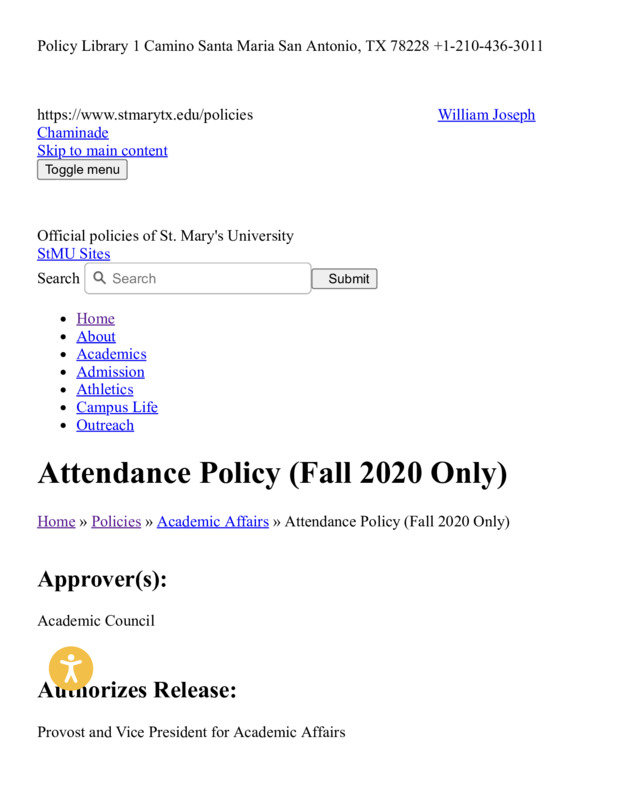
I think I speak for most students when I say that when we were sent home during Spring 2020, I was confused about how we were supposed to go about things from now on. Personally, that confusion increased when they announced we would be returning virtually for Fall 2020. What about the students with younger siblings? What about the students who had sick family members? What about the students who had to get another job when their parents lost theirs? What about the students who were not able to access the internet? The attendance policy created specifically for Fall 2020 displays the different accommodations the university was able to provide for students asking these questions as well as many others that pertained to their specific situation. It was a tough time for everyone and each of us had our unique circumstances. This is one of the ways our university showed their support in the best and only way they knew how.
-
2021-11-30
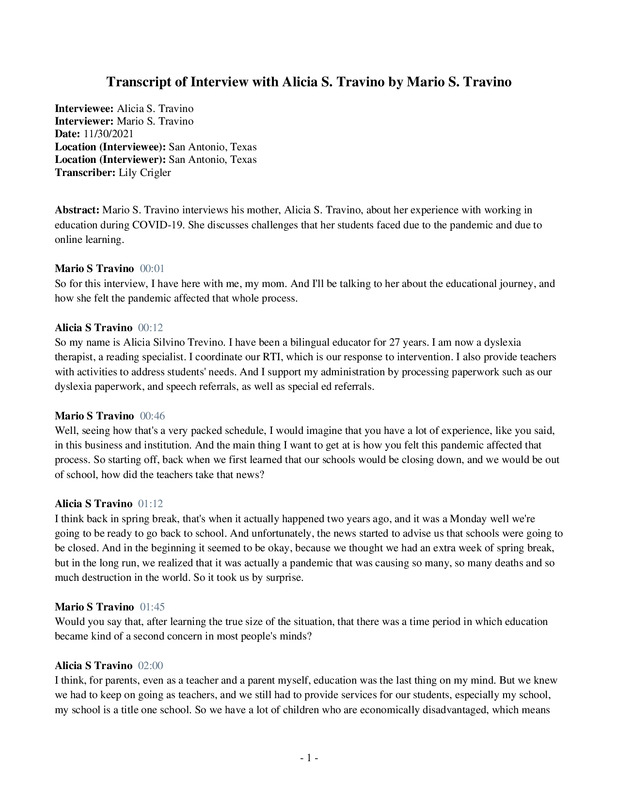
The sometimes overlooked part of this pandemic has been the experience of the educators and their side of the story. Here I sat with my mom to gather her experience and thoughts on what's been a rough year. We talked about the changes she witnessed and how it affected not just the kids but herself and the teachers around her as well.
-
12/09/2020
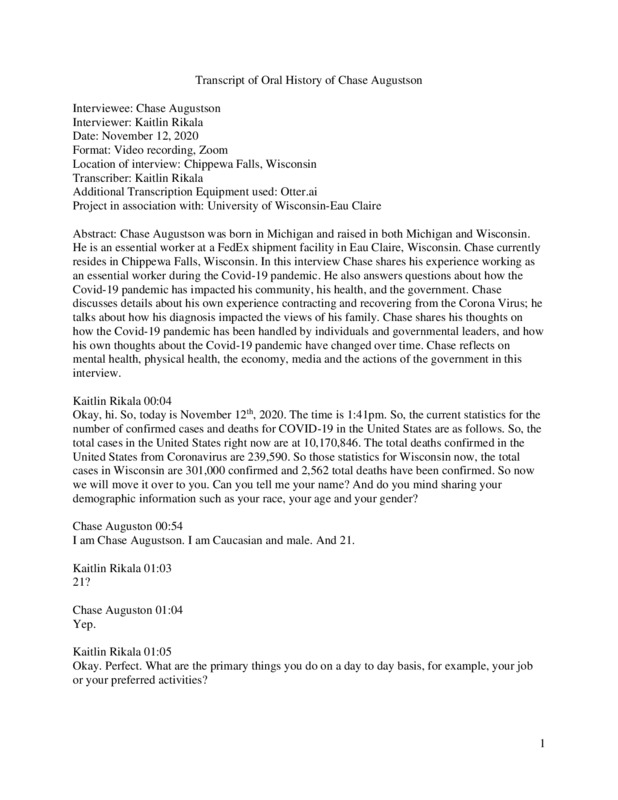
C19OH
-
05/21/2020
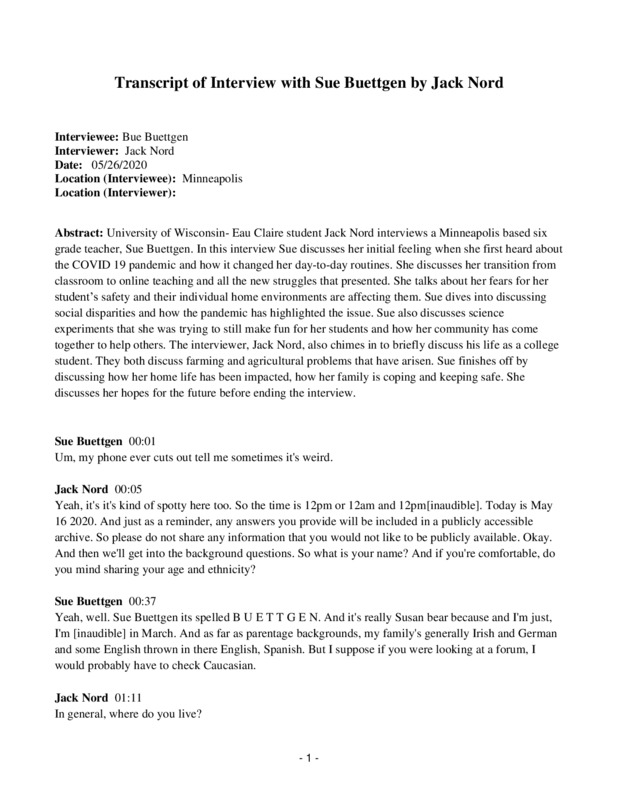
University of Wisconsin- Eau Claire student Jack Nord interviews a Minneapolis-based six-grade teacher, Sue Buettgen. In this interview, Sue discusses her initial feeling when she first heard about the COVID 19 pandemic and how it changed her day-to-day routines. She discusses her transition from classroom to online teaching and all the new struggles that presented. She talks about her fears for her student’s safety and their individual home environments are affecting them. Sue dives into discussing social disparities and how the pandemic has highlighted the issue. Sue also discusses science experiments that she was trying to still make fun for her students and how her community has come together to help others. The interviewer, Jack Nord, also chimes in to briefly discuss his life as a college student. They both discuss farming and agricultural problems that have arisen. Sue finishes off by discussing how her home life has been impacted, how her family is coping and keeping safe. She discusses her hopes for the future before ending the interview.
-

09/30/2020
This interview consists of a perspective of a white male from Vermont living in Florida for the school year, whom has experienced COVID from the rural suburbs of Vermont, to the maskless warzone that is Florida. His perspective is one from a gamer, only knowing the interviewer though playing videogames together.