-
2020-05-20
C19OH
-
2020-05-20
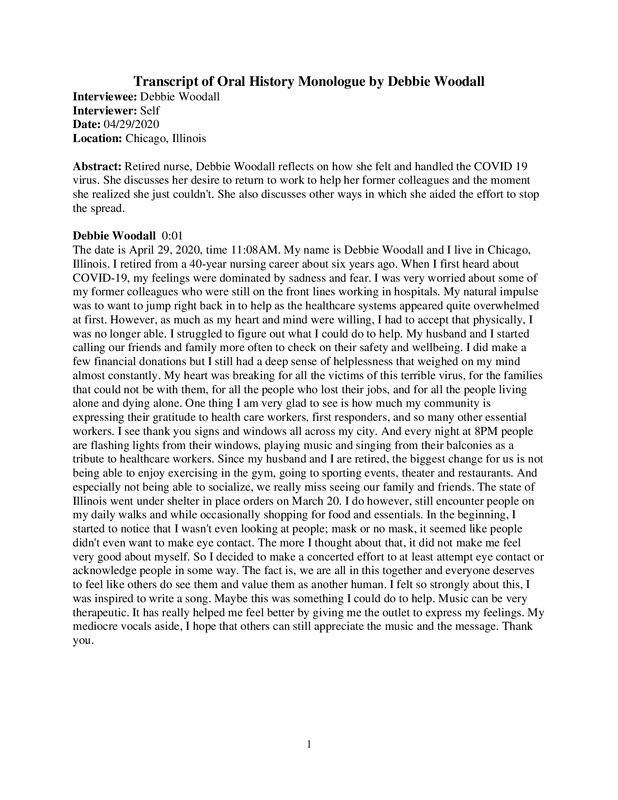
Retired nurse, Debbie Woodall reflects on how she felt and handled the COVID 19 virus. She discusses her desire to return to work to help her former colleagues and the moment she realized she just couldn't. She also discusses other ways in which she aided the effort to stop the spread.
-
05/20/2020
C19OH
-
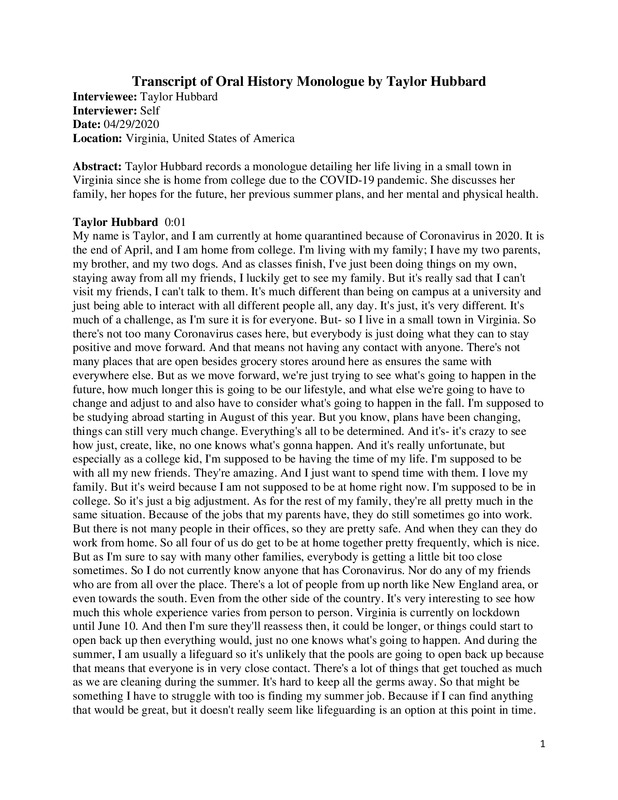
2020-04-29
C19OH
-
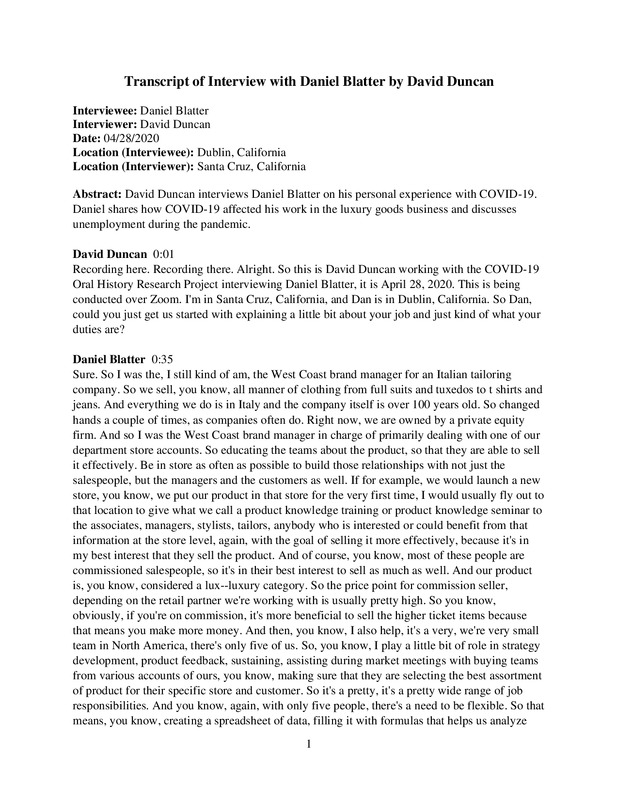
04/29/2020
C19OH
-
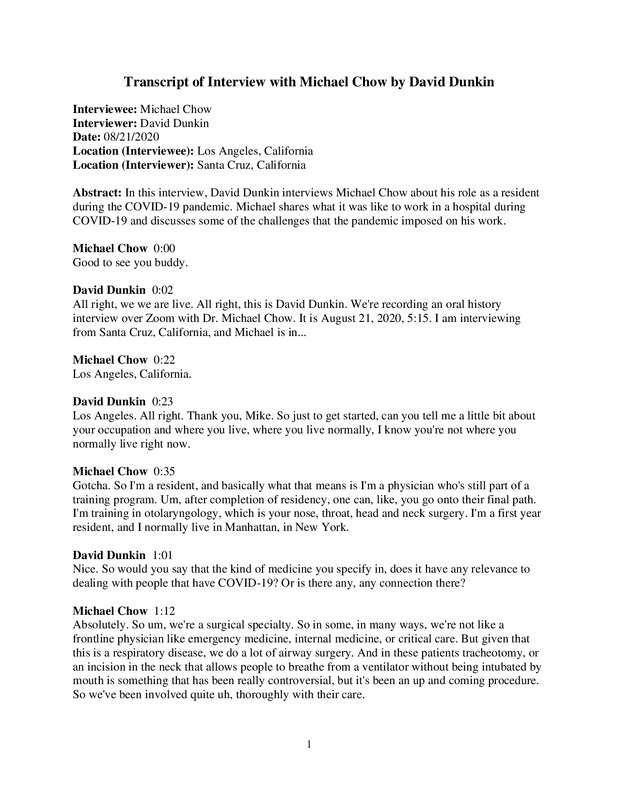
2020-08-21
C19OH
-
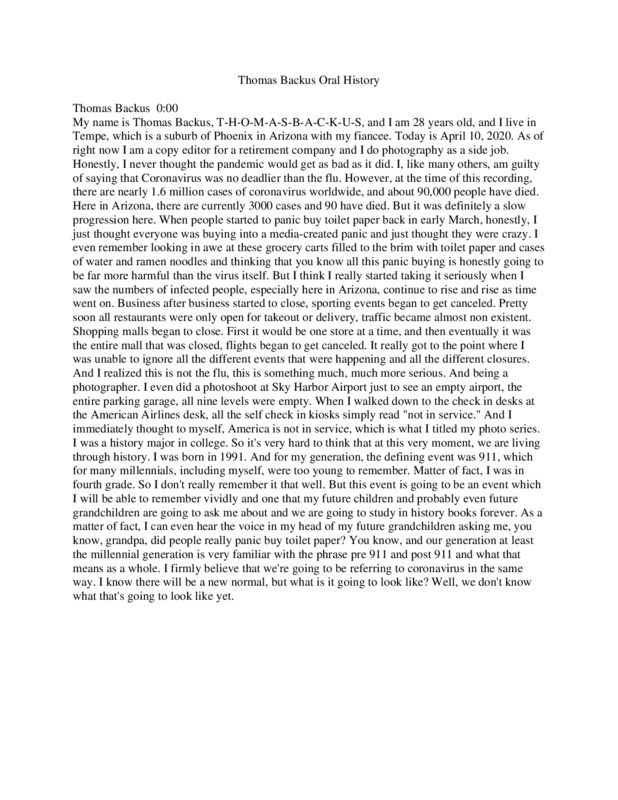
04/10/2020
Thomas Backus of Tempe Arizona reflects on what life was like when the COVID 19 hit and how it impacted his life.
-
2021-11-21
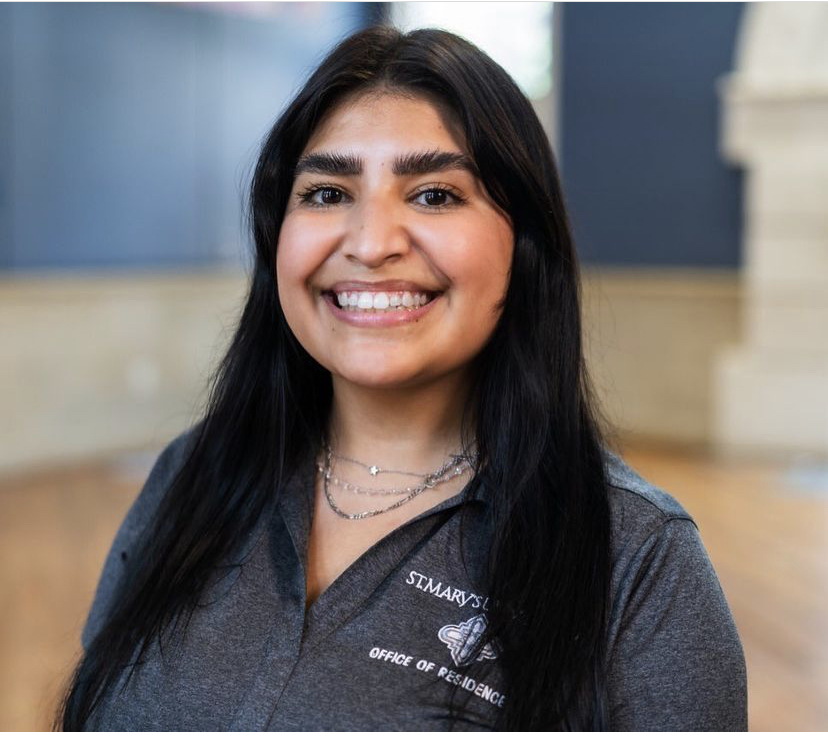
The covid-19 pandemic has changed the college experience for all students. It changed the way we work, study, socialize, etc. How we adapt and adjust to attending university during the pandemic differs per person and their previous experience. For Andrea Moreno, an experienced resident assistant, the pandemic still left things uncertain. However, her unique experience and “normal” first year experience allowed her to remain as a resource for residents. Despite the move to online during Spring 2020, Moreno still reached out to students to check-in. Andrea Moreno also said that the Office of Residence Life even served as a resource for student staff like herself. Although the pandemic changed many things about the college experience, St. Mary’s University office of Residence Life and student staff (resident assistants) still manage to serve the campus community.
-
2021-11-22
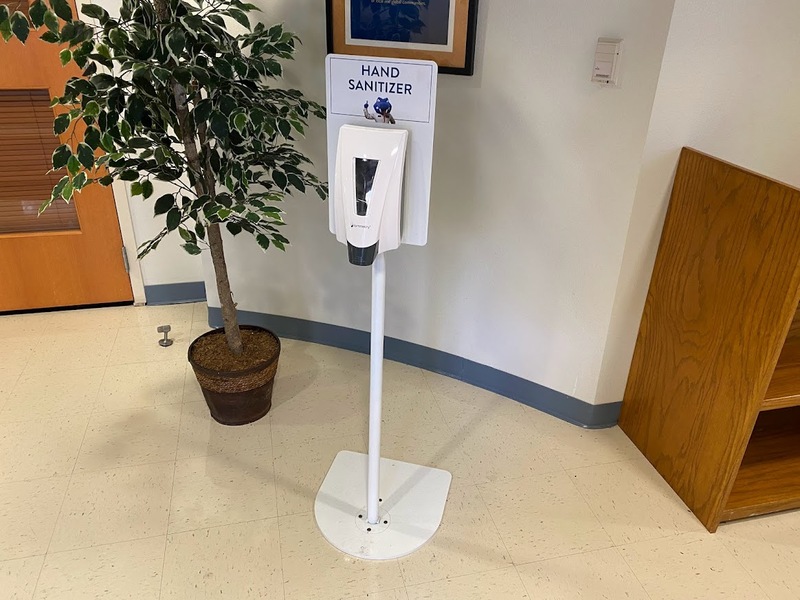
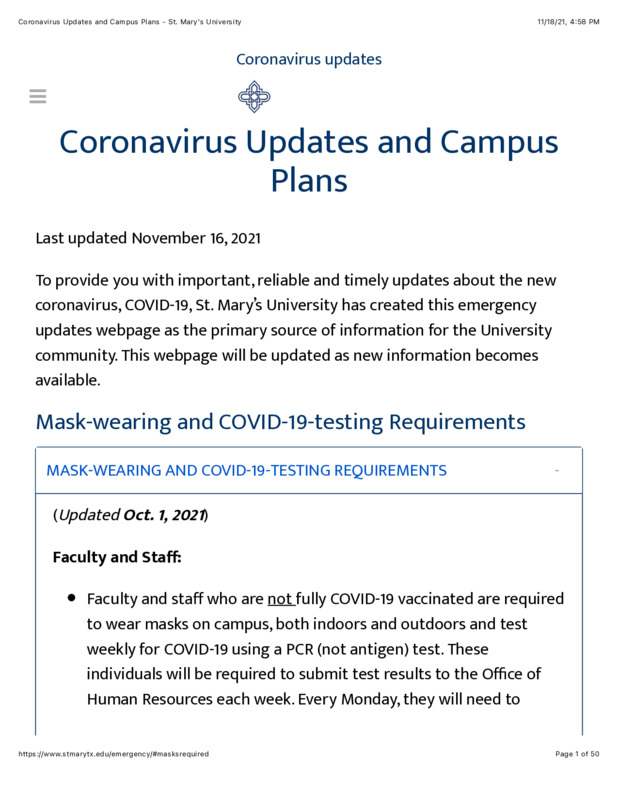
St. Mary's University made some major changes in preparations for the return of students and staff on campus for this Fall semester of 2021. Signs posted as a reminder to wear your masks and new hand sanitizing stations have eased the fear of Covid potentially outbreaking in the university. Updates on their website have helped students and staff keep updated on new rules to prevent the spread and habits that we can maintain to keep everyone healthy and safe.
-
2021-08-17
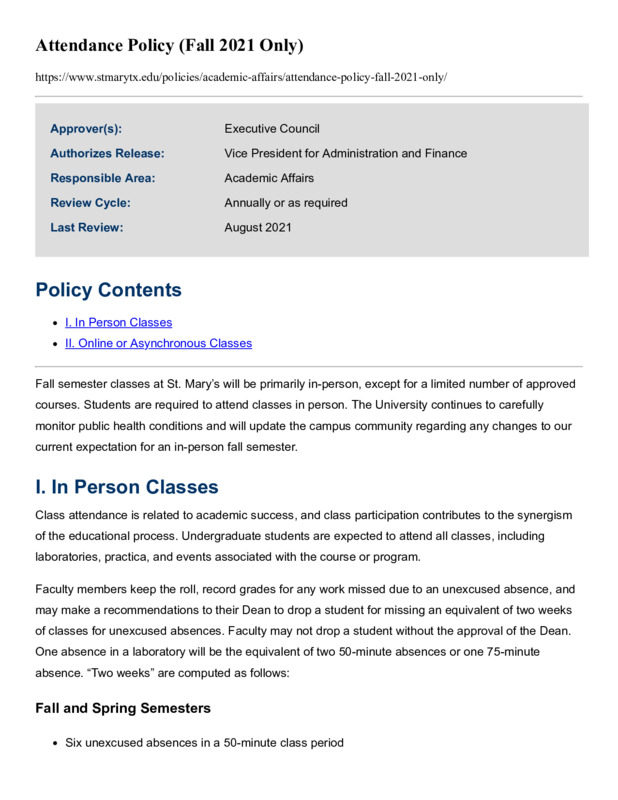
As students and faculty returned for a fully in-person college experience, the university had to keep certain guidelines in place to ensure the safety of the St. Mary’s community. However, university officials had to keep in mind that we are still in the middle of a pandemic and students and faculty are still being affected. Fall 2021 was definitely a unique experience for everyone as we returned from a weird year and a half of hybrid courses. This semester was our little taste to going back to normal, or even more so, we got a taste of the new “normal.”
-
2021-10-21
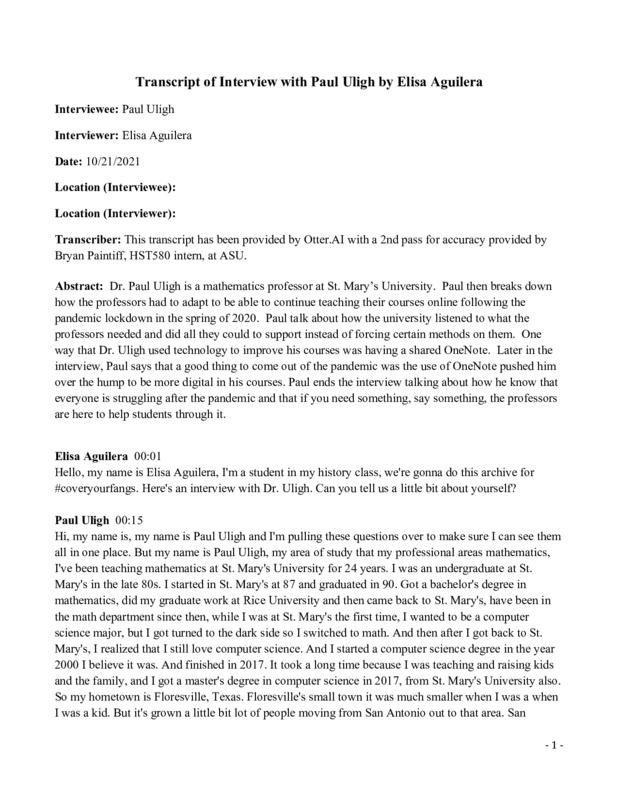
I strongly believe that every perspective matters. We as students do not see what professors had to go through. We were aware of the situation, but I believe an interview with a professor from St. Mary’s University could help students to see the magnitude of the pandemic. COVID-19 affected all of us and that is why I think we should see everyone’s perspective and that includes the professor’s perspective. We can see Dr. Uhlig’s point of view with this interview and how the pandemic affected his profession.
-
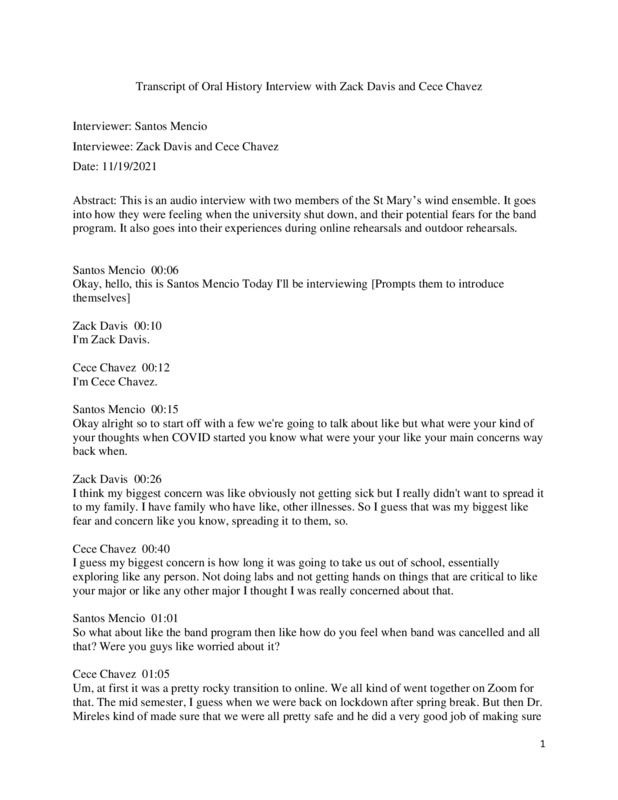
2021-11-19
This is an audio interview with two members of the St Marys wind ensemble. It goes into how they were feeling when the university shut down, and their potential fears for the band program. It also goes into their experiences during online rehearsals and outdoor rehearsals.
-
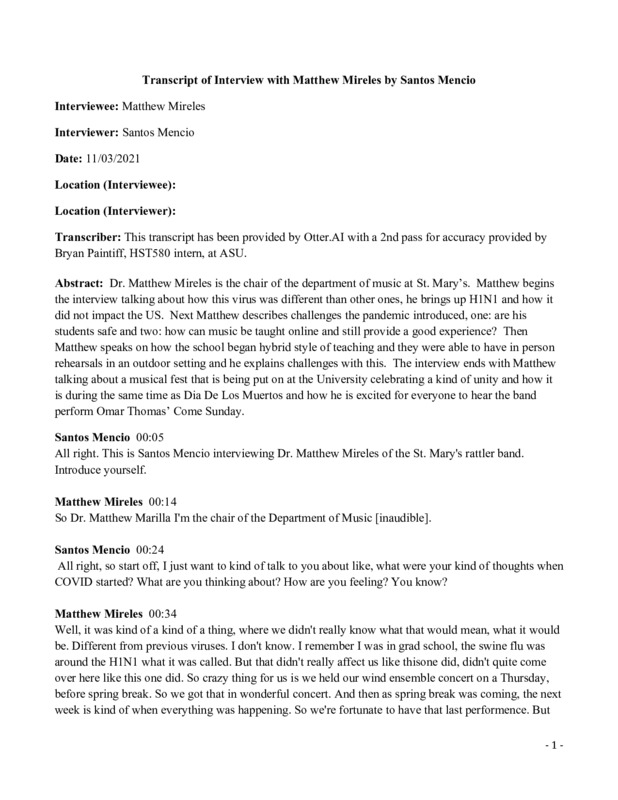
2021-11-03
This is an audio interview with Dr. Matthew Mireles, the St Marys Music Department Chair. It goes into the challenges he faced managing the music department, what he was feeling throughout COVID. It also goes into what his priorities were after the initial lockdowns and what his main goals were when it came to getting the band program back to normal.
-
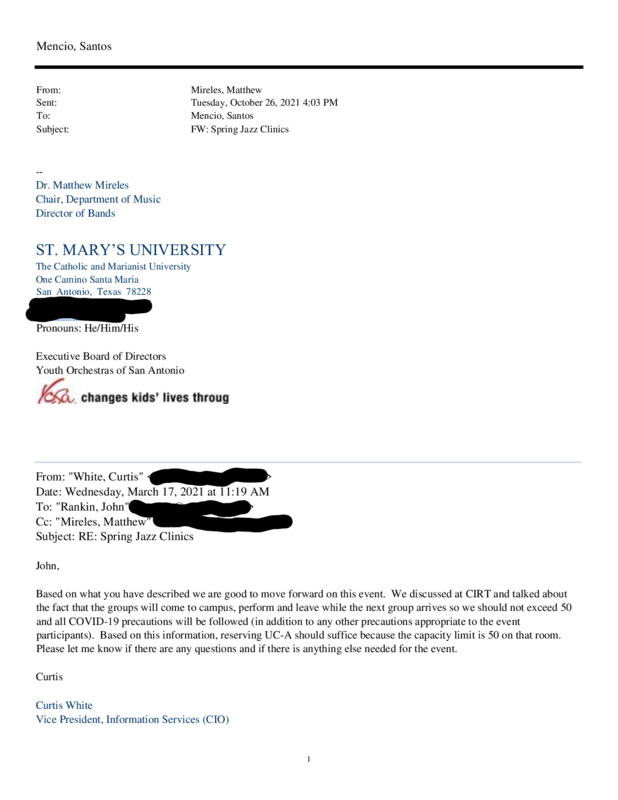
2021-03-17
This is an email getting the approval from the university to hold the St. Mary’s spring jazz clinic. It details the protocols the music department was planning to enact to ensure a safe environment for all of the bands coming to perform at the university. This email is significant in that even a full year after the start of COVID there were still certain restrictions on what the band could or couldn’t do, and the band required confirmation from the university that their protocols were sufficient.
-
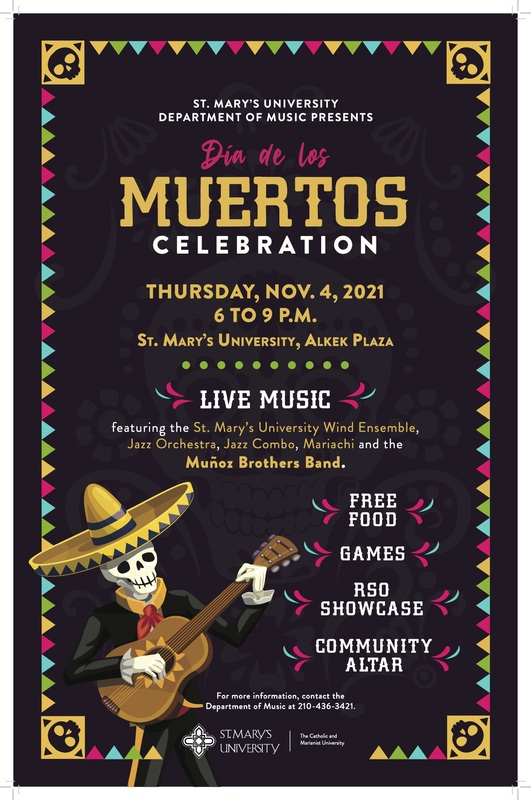
2021-11-04
This is a poster put up by the university to advertise the upcoming Dia De Los Muertos performance by the band. This would the first real performance by the band since the beginning of COVID. While it would be outdoors, it represents the beginning of the return to normal for the Rattler band.
-
2020-09-04
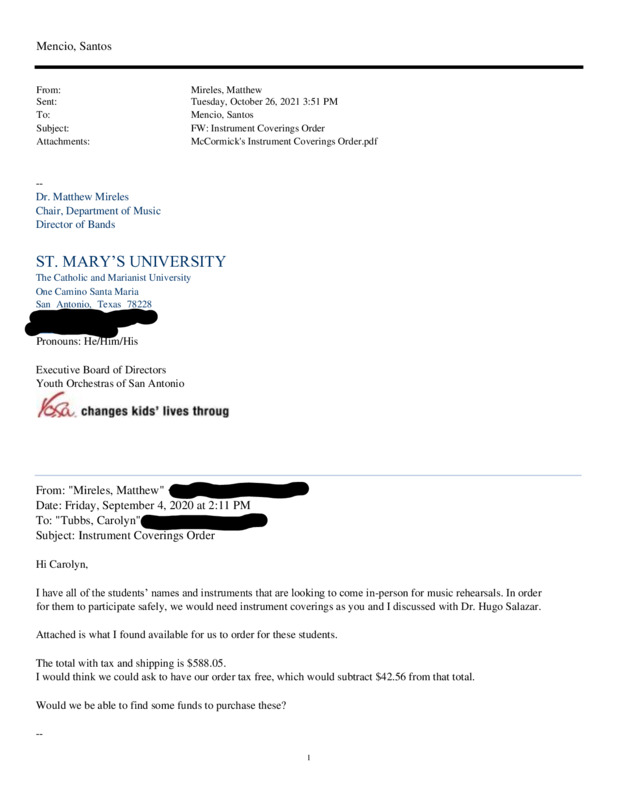
This is a set of emails containing information regarding the ordering of instrument coverings for the band in the late Fall 2020 semester. These instrument coverings were intended to be used to minimize the risk of COVID transmissions during outdoor in-person rehearsals that were to begin shortly after their arrival. They represent some of the steps taken by the band to protect students as they worked to facilitate a more normal style of band rehearsal.
-
2020-08-11
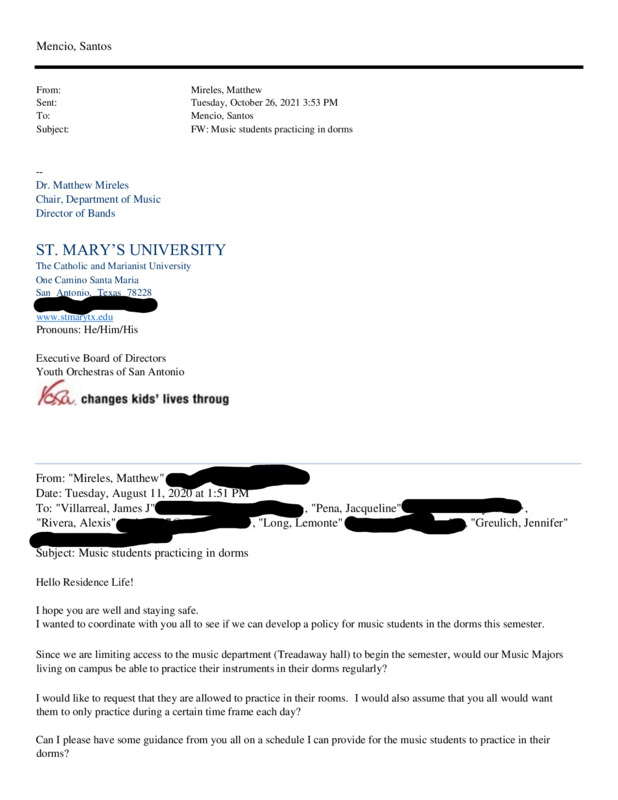
This is a series of emails between the music department head and St. Mary’s residence life discussing a way for band members living on campus to practice their instruments without disturbing other residents. These emails are significant as it demonstrates the lengths the music department was working to find ways for band members to continue regularly practicing their instrument even in the midst of COVID.
-
2020-03-02
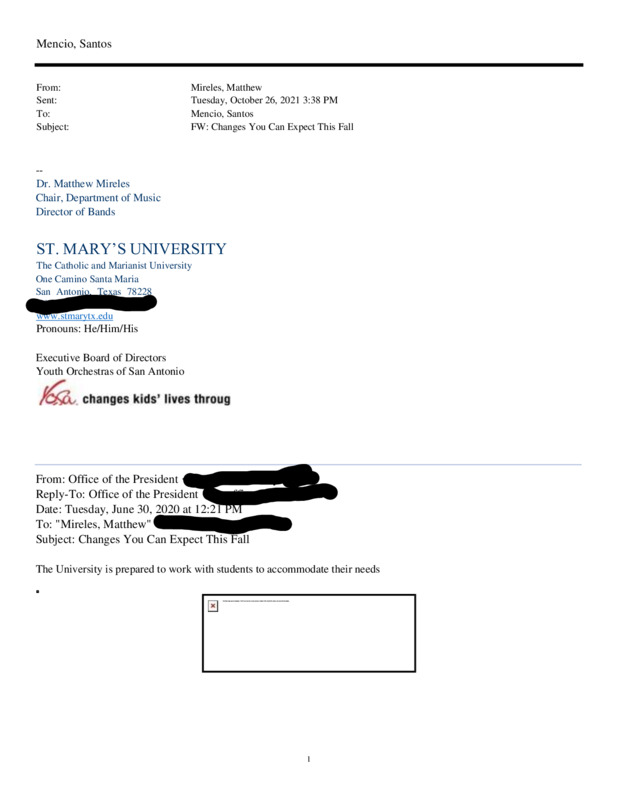
A series of emails from the university president explaining university policies for the upcoming fall 2020 semester. What is significant about these emails is how it demonstrates the university and the music department’s steps to try and maintain the ability to hold in-person events on campus when COVID was at its height in 2020.
-
2020-03-12
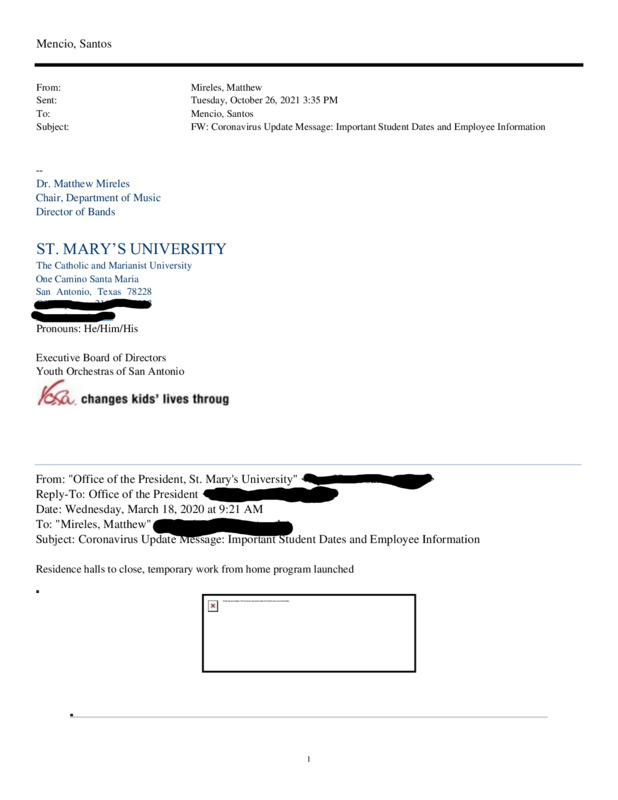
This is a collection of emails between the music department chair, other members of the music department, the University President, and members of the band program. These emails represent the initial steps taken by both the university and the music department during the first few weeks of covid. It gives us insight into where their priorities were and exactly how they intended to protect members of the band.
-
2020-09-01
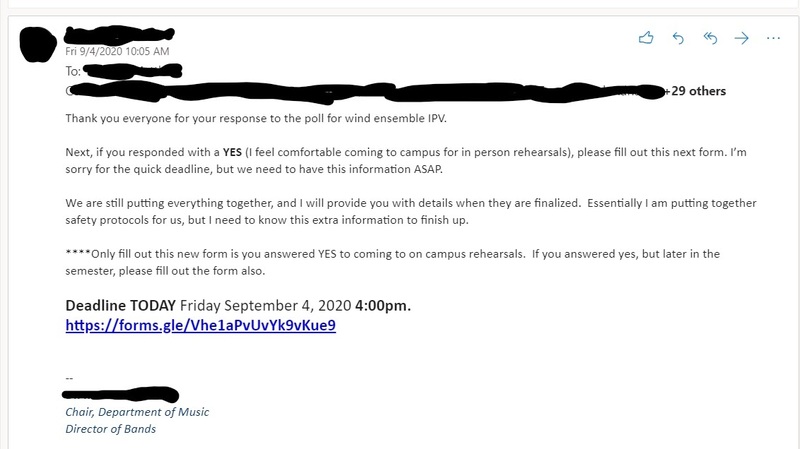
These are a series of emails sent out by the band director at St. Mary’s University regarding whether or not members of the band wanted to try to begin in-person rehearsals again. COVID-19 was slowing down at the time and virtual band practice left much to be desired so there were hopes that if enough people were in favor of in-person rehearsal that something could be worked out.
-
2021-04-07
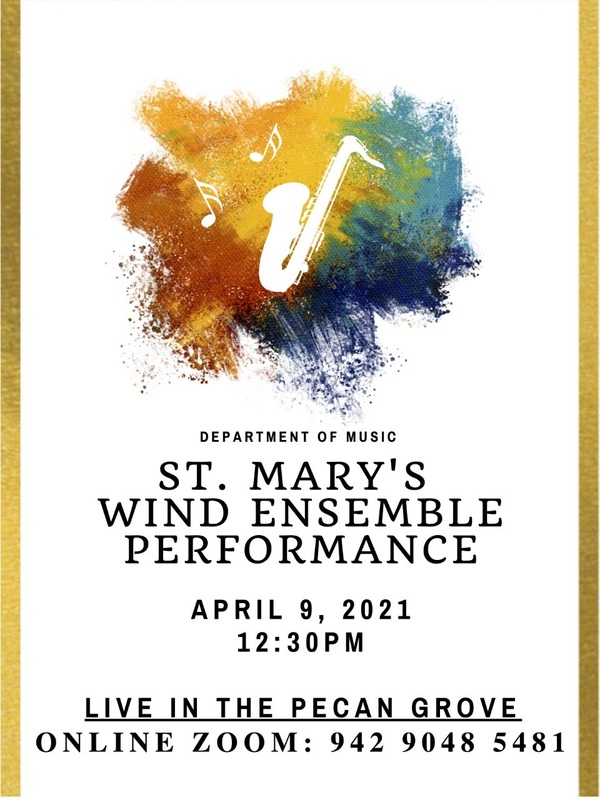
This image is advertising the spring 2021 wind ensemble concert at St. Marys University. The location of the performance was in the Pecan Grove, one of the outdoor areas at the university. This is a sign that the band is trying to return to normal. However, there are several indicators that precautions are still being taken. The outdoor location tells us that the band is trying to protect both members of the band and those in the audience. The included zoom link also tells us that the band is considering those who might be uncomfortable with attending in person. So the band is clearly in a transitionary period, where they are trying to move back to normal but haven’t quite reached it yet.
-
2020-06-19
If you were around on May 30, 2020, you would know that it really did feel like the world was ending. Cities across the country were ablaze with rebellious fire, police and military covered the streets, bridges were lifted. All this during a global pandemic. To be there to be a part of it all, it felt like the world was ending.
So, what do you do when the world is ending?
There are many answers to this question and while I chose to answer it in multiple ways, one of the primary answers was this: documentation.
I documented what felt like the end of the world. Through words, videos, photographs, tweets. Any way I could.
But through documenting the end of the world, I encountered some of the most beautiful moments. Moments of peace, of beauty, of love, of collective and mutual care.
One of those moments is pictured here.
-
2021-08-16
Returning to campus in Fall 2021 after three semesters at home has been interesting, to say the least. It has been a semester of transition and relearning for students, faculty, and staff. Fall 2021 semester has required learning to be away from family again, living in dorms, being in a classroom, etc. As a first-time resident assistant during this time of great change and uncertainty, there has been a learning curve. Being a resident assistant and working for the office of residence life has made it clear that covid-19 changed the way students experienced college. It's evident that the current student population (first-year students to fourth-year students) do not share a “normal” first-year experience. Fall 2019 first-year students never experienced a complete spring semester on campus. Fall 2020 first-year students had the option to live on campus but all classes and all or most campus resources were virtual. Fall 2021 first-year students are the first group to experience St. Mary's as it is now with its current policies. As a resident assistant during this time, it is imperative to take these unique experiences into account when serving as a campus resource. Covid-19 has also required the implementation of policies to keep the community safe. For the dorm halls, resident assistants are the ones to uphold and enforce policies that require residents to wear facemasks outside of their personal living spaces. So, in an already complicated and uncertain time, resident assistants must hold each other and their peers accountable.
-

2020-03-14
During this interview, I am talking with my classmate Sarah Uhlig about our experience in the program of Empower: Ecuador, since we were both on it together. The main purpose of this interview was to get an insight into what it was for another student like me, to have missed a trip to Ecuador due to COVID-19. Just to clarify, this was not any trip. This was a missionary trip for which we were preparing ourselves to go for most of the semester. As the trip was canceled, we recognized that the program was much more than just traveling to Ecuador. Rather, the program was about our personal lives and the way in which we relate to others around us that are in different seasons and circumstances in life. Another very important thing, was self-reflection into how we were utilizing our gifts and field of interest to not only serve others but be present with others. Many things were learned from this course and Sarah, will be sharing with you her experience despite the challenges and messiness that COVID-19 brought.
-
2021-11-16
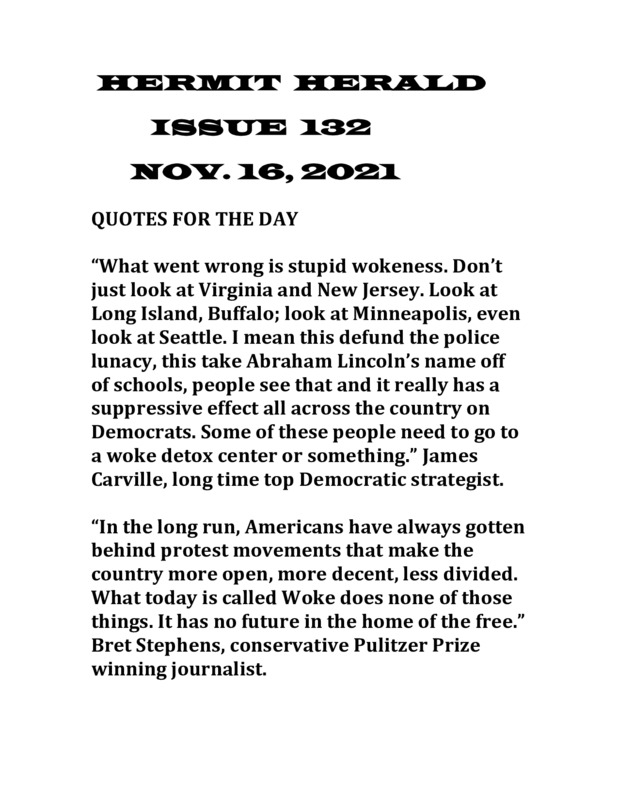
Wokeness, big Democrat problem
-
2021-10-04
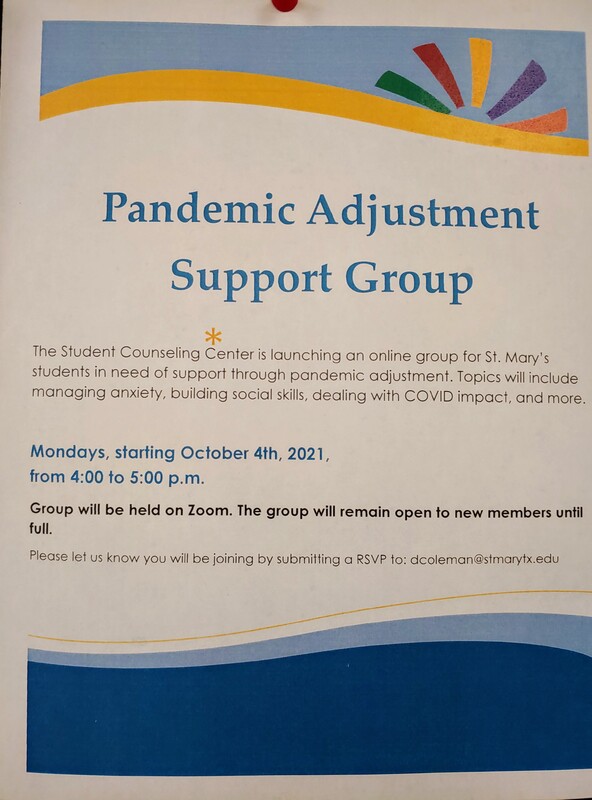
This photo shows support that was available during the pandemic for those who were needing that extra support or developing coping skills. I'm sure it was a great feeling to know that these services were available for those who were needing this extra support during COVID-19 pandemic.
-
2021-11-17
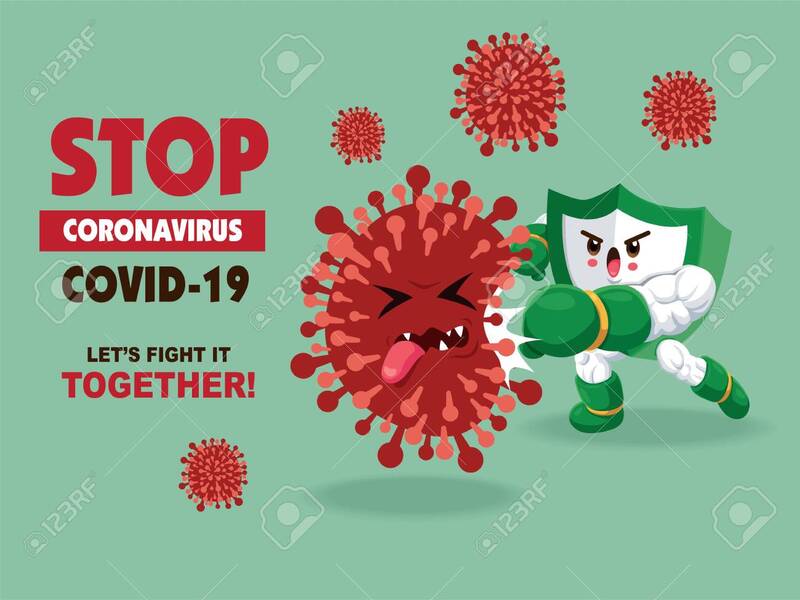
This particular photo makes me feel like we're taking every effort to help eradicate the spread of covid-19. Although the photo is cartoonish I think that it still sends a great message to get the word out to help stop covid-19 virus. Also letting us know we can all do it together by taking the proper precautions. To help eradicate the spread of covid-19.
-
2020-08-12
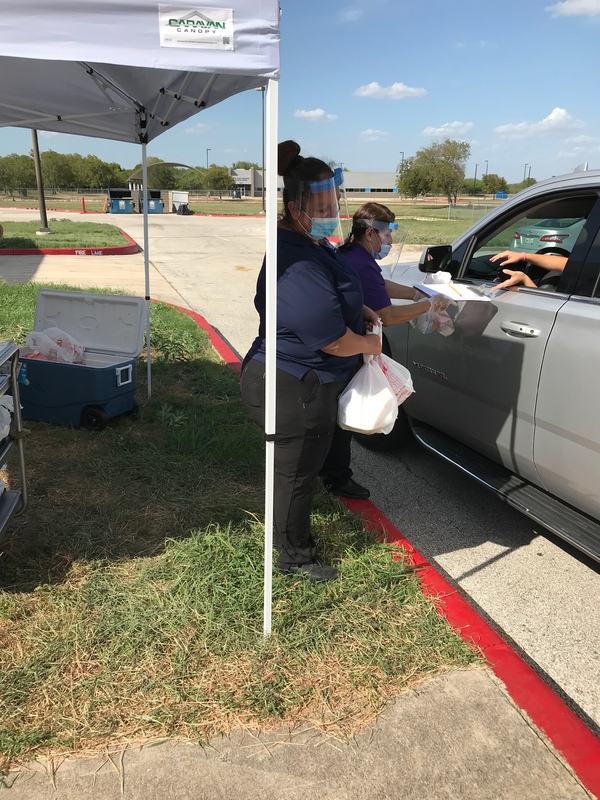
With the closing of schools, many students no longer had access to a warm and healthy lunch provided by the federal government. Kids from lower income families often rely on school to provide them with at least two meals a day, but because of COVID-19 they no longer could eat certain breakfast like oatmeal and lunch such as, carne guisada, that they have been used to consuming. In order to address this problem, schools began setting up times for parents to come and collect food for their kids three times a day. Ultimately, due to lack of personal time, parents were picking up breakfast, lunch and snacks for three days on Friday.
-
2020-08-11
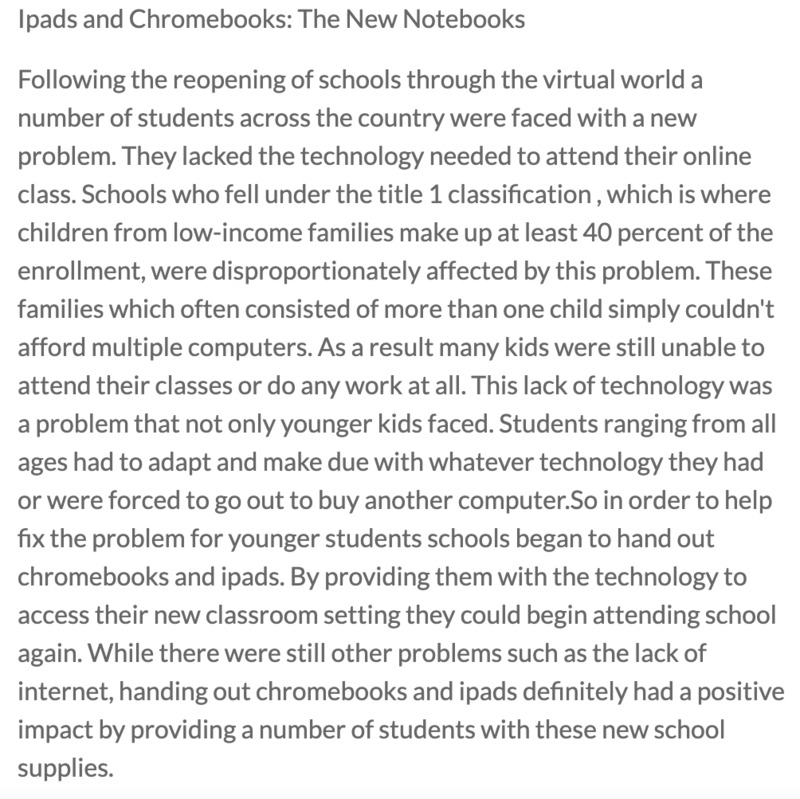
Following the reopening of schools through the virtual world a number of students across the country were faced with a new problem. They lacked the technology needed to attend their online class. Schools who fell under the title 1 classification , which is where children from low-income families make up at least 40 percent of the enrollment, were disproportionately affected by this problem. These families which often consisted of more than one child simply couldn't afford multiple computers. As a result many kids were still unable to attend their classes or do any work at all. This lack of technology was a problem that not only younger kids faced. Students ranging from all ages had to adapt and make due with whatever technology they had or were forced to go out to buy another computer.So in order to help fix the problem for younger students schools began to hand out chromebooks and ipads. By providing them with the technology to access their new classroom setting they could begin attending school again. While there were still other problems such as the lack of internet, handing out chromebooks and ipads definitely had a positive impact by providing a number of students with these new school supplies.
-
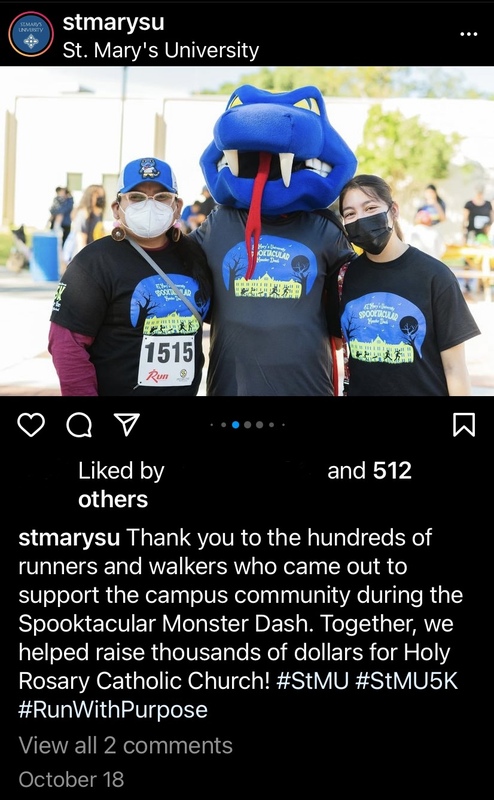
2021-10-18
This screenshot shows an Instagram post from St. Mary's University. The screenshot is in regards to the University's annual marathon for the neighborhood, depicting an in-person event with evidence of masks and other restrictions/changes due to COVID-19. Seeing as the event is back to being held in person, it has both clear similarities and clear differences in respect to the years before, further proving the fact that the pandemic is ongoing and continued adaptation is necessary before we will be able to overcome.
-
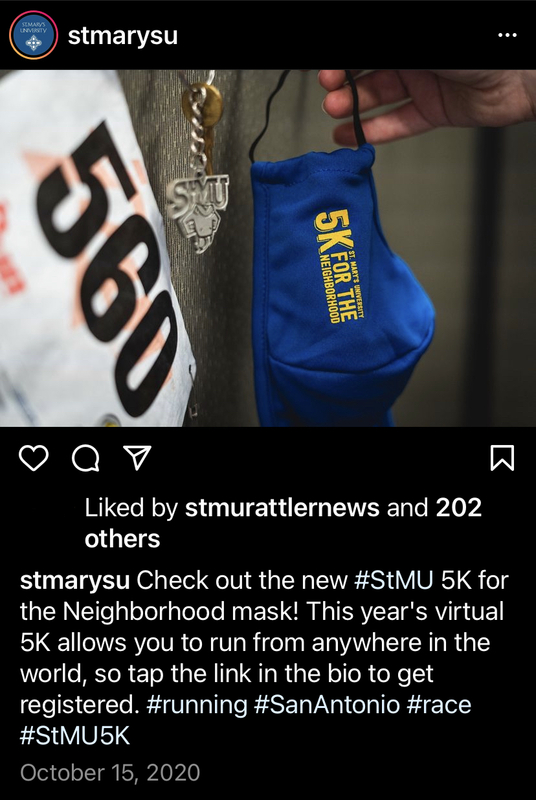
2020-10-15
This screenshot shows an Instagram post from St. Mary's University. The screenshot is in regards to the University's annual marathon for the neighborhood, announcing a virtual marathon this year, that participants can do from anywhere. This is different from the years past, as well as from the years to come, further proving the fact that the pandemic is ongoing and continued adaptation is necessary before we will be able to overcome.
-
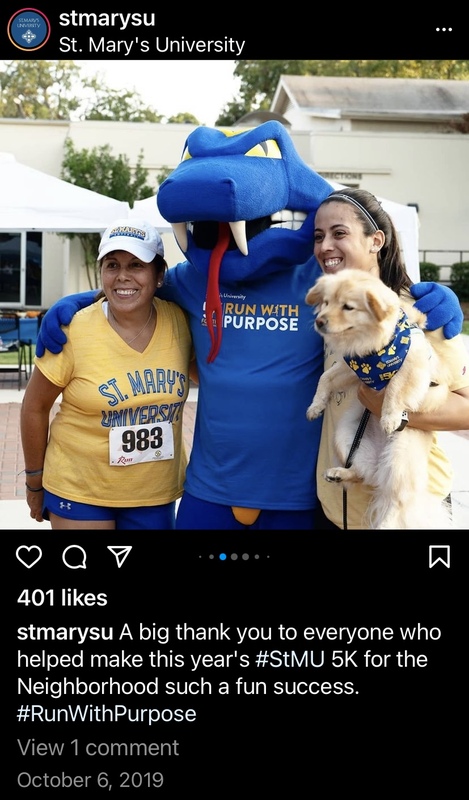
2019-10-06
This screenshot shows an Instagram post from St. Mary's University. The screenshot is in regards to the University's annual marathon for the neighborhood, announcing a virtual awards ceremony. Seeing as this event is clearly being held in-person, with little social distancing and no evidence of masks, it is different from the years before, further proving the fact that the pandemic is ongoing and continued adaptation is necessary before we will be able to overcome.
-
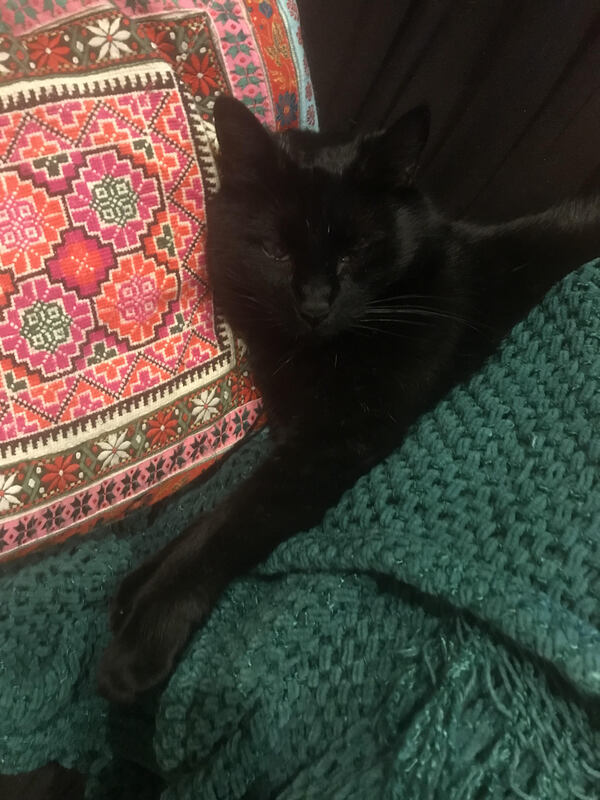
2021-10-01
October 1, 2021, I woke up with a mild headache and a stuffy nose. I didn't think much of it—I had started drinking coffee again and needed a cup, and I’m mildly allergic to my own cats. My headache went away after I had my coffee, and my congestion ceased after I took my Claritin.
After working remotely and basically not socializing for all of 2020 and up through August 2021, I was happy to be out and doing things again. In August, I started working and attending class in-person again, as well as spending time with friends. I still masked up and washed my hands according to guidelines, but it did seem like standards for that were slipping. I take public transit most days, and I’d seen a number of people who either weren’t wearing masks or not wearing them properly. But I still thought I was fairly safe since I followed COVID-19 recommendations, was fully vaccinated, and my campus has an extremely high vaccination rate (100% of students are vaccinated or have exemptions, and 98% of faculty/staff).
So when I woke up experiencing what I thought were symptoms of seasonal allergies, I didn’t think anything of it. I went on a date that afternoon, and then out for drinks with friends later that night. I was very tired when I went home that night, but I chalked it up to how I’d over-committed myself in the initial euphoria of being able to participate in things again. Besides, I was sleeping better than I’d slept in years.
The next day, my congestion was worse and I was coughing. I had an intermittent headache, but I assumed it was just a cold. One of my classmates that I sit next to had had one recently, and she’d tested negative for COVID, so I just assumed I’d picked it up from her.
I remained congested and feeling gross that weekend, enough to call out from my shift on Sunday out of an abundance of caution, but I figured I’d be ready to be back by the time I had class and work again on Wednesday. But Monday afternoon I was working on some of my reading and realized I couldn’t smell the new (and very strong) candle in my living room. To test whether it was just the candle or whether it was me, I sniffed my perfume and finally even put peppermint essential oil right under my nose, and...nothing.
Figuring that it was likely I had COVID at this point, I scheduled a test for the next day. I felt bad about having to get there—was it better to take an Uber or a train/bus? Which was safer for everyone involved? I ended up taking a Lyft, but I left the windows down and made sure I had cough drops so I wouldn’t cough.
Once I arrived at the testing center (where I was the only patient), they got me through quickly and told me they’d be doing PCR testing and I could expect my results within a couple days. I called out of work for the week and let my professors know I likely had it. I woke up on Thursday morning to see my results had arrived, and I had tested positive. I called my school for contact tracing, and they notified the classmates I sit next to and my coworkers.
I texted my friends I’d been out with Friday night and the person I went out with, and it was strange to feel almost ashamed. I had behaved responsibly, but I still felt as though I’d done something wrong in contracting COVID. And I was exhausted, tired of coughing, and just wanted my mom.
I continued to improve, and I felt mostly better by the time my isolation period ended on the 11th. My sense of smell had started to come back, so I wasn’t as worried about a permanent loss there. I was a little concerned by the disregard for no-contact delivery I’d requested when getting food/groceries, but it had mostly been okay. My shifts at work had been given away, even though I was better and out of isolation by then. On the bright side, my cats were thrilled to have had me home that much, so at least it was a good experience for someone.
Everyone I notified directly or via contact tracing tested negative, fortunately. When I started going back to things, I just wanted to scream on the train when I saw people not wearing masks or wearing them improperly. I still do, especially as the number of cases rises.
-
2021-05-25
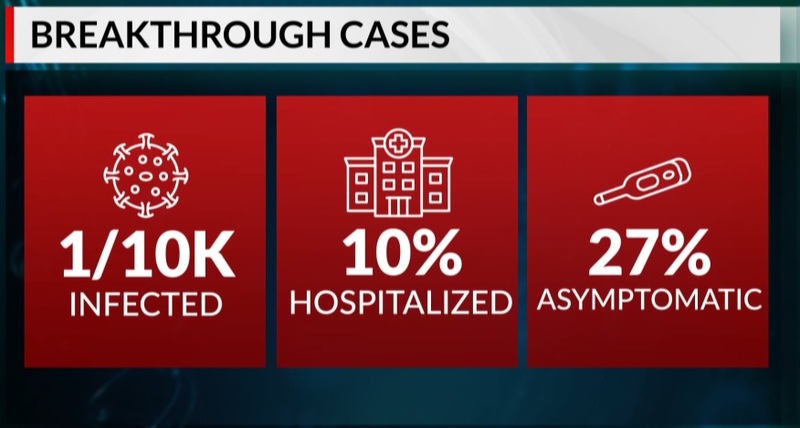
This graphic shows the rates of infection and hospitalization for breakthrough infections for COVID-19 among vaccinated people (as of May 2021)
-
2021-03-26
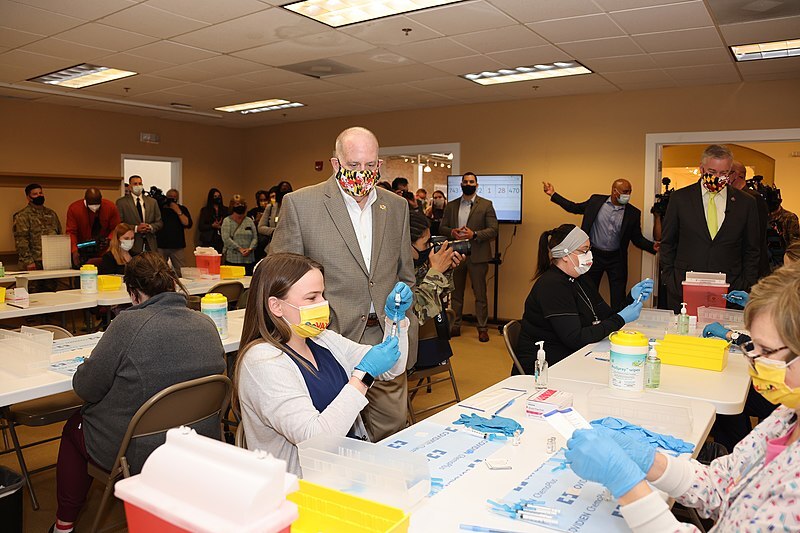
This photo shows a number of people at a mass vaccination event.
-
2021-03-26
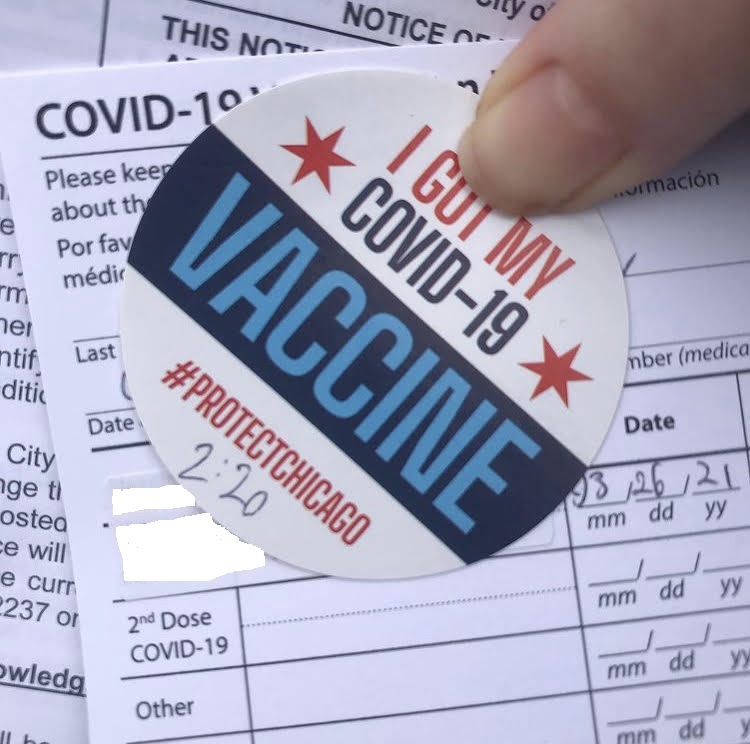
I was excited to get my vaccine as soon as the FDA approved the Pfizer vaccine. However, as a fairly healthy person who worked remotely, I was by no means going to be the first wave of vaccination. Truthfully, I thought I wouldn’t have a chance to get vaccinated until June or so, and I resigned myself to staying inside.
In early March, I got an email from my school—the United Center was hosting a mass vaccination event, and they had more doses than the original target groups could use. I hurried to sign up. It filled quickly; I had a few friends tell me they were unable to get in. I was lucky, and I went to get my first dose near the end of March.
Supposedly, Uber was offering free rides to/from the United Center (up to a certain amount, at least) for those seeking to get vaccinated. However, I kept getting error messages, so I made my way there by other methods. I panicked since I was almost late to my appointment for the first dose, but my worries faded when I arrived. The clinic volunteers kept the roped off lines going quickly and smoothly, though everyone was kept at least six feet apart. Once you’d been fully signed in—you showed your ID, your appointment voucher, got your temperature taken, and were issued an information packet—you waited to be sent to one of the FEMA people doing the vaccinating. I was called and got my first dose over with quickly and without any fuss, and then I was sent off to the tent where you waited to make sure you didn’t have any adverse side effects within the first 20 minutes. I was fine, so I went home with my vaccination card and instructions to return in 3 weeks.
I returned 3 weeks later (in mid-April), and it went even more smoothly! They had worked out even more kinks, and everyone seemed relieved. While I’d been tired and a little sick a couple days after the first dose, the second one presented no problems.
Later, I learned that a few of my friends were not only also part of the United Center mass vaccination event, but were there on the same days! I didn’t see them, but I’m not surprised given the efficiency of the process.
Over the summer, the United Center’s vaccination program closed after it slowed significantly. So while I will be getting my booster shot soon, it won’t be as part of a mass vaccination endeavor. I’m a little reticent, simply because I don’t know what to expect from going to a pharmacy for it!
-
2021-11-13
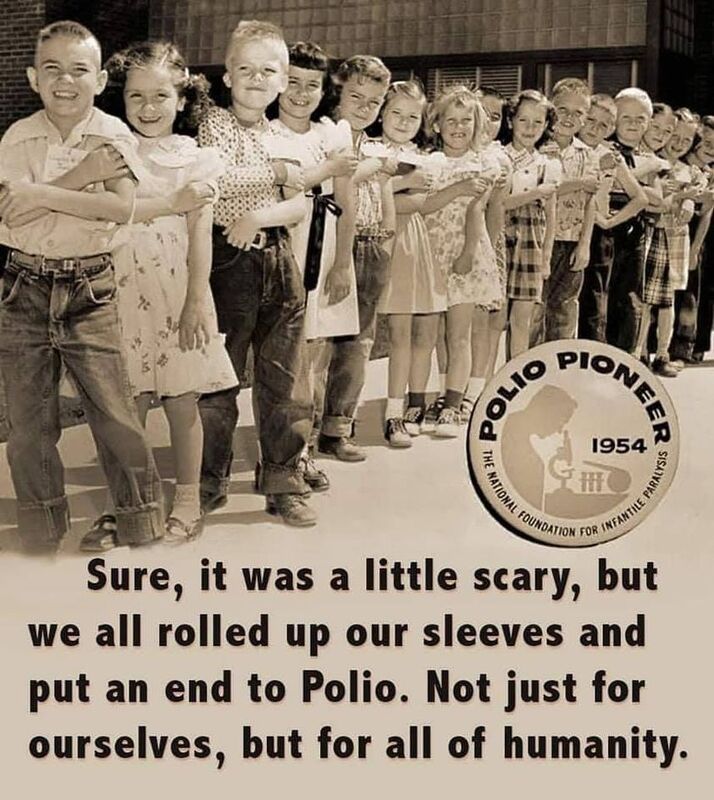
I have a minimum of 2 resolute anti-vaxxers in my extended family. We try to avoid conflict but sometimes their ignorance is just too much for me to bear and I feel like I have to set the record straight. Here's a summary of what's going on in these screenshots from a FB post.
1. Great aunt posts a meme using the experience of the Polio vaccine to promote the COVID vaccine. (meme included)
2. Anti-vax aunt (orange) posts snarkily that in the case of the polio vaccine, it was only rolled out after 60 years of research.
3. I step in (as a historian of public health) and comment that she's mistaken, the polio vaccine went from lab to roll out in 25 years. While mRNA (on which the COVID vax is based) was first discovered in a lab 35 years ago so it stands to reason that the amount of time between lab and roll out is similar.
4. Meanwhile... anti-vax second cousin (purple- daughter of great aunt who made the original post and also resolutely anti-vax) tags anti-vax aunt (orange) and says "amen." as in... she lends her support
5. Anti-vax aunt (orange) responds to my initial rebuff in #3 and says "wrong. it took 35 years to discover it was a virus" (as if that, added to the 25 years of development constitutes 60 years of "research"
6. I step back in and repeat... polio vaccine research began in 1930, and it rolled out in the US in 1954. Surely she doesn't want to go back to the "good old days" when it took 30 years to discover whether something was a virus, really...??
7. I was wrong. Anti-vax aunt (orangs) DOES want that. She says, "Yes, really"
8. pro-vax cousin (light blue-an oncology NP) comments "Wow. That's sad to think about"
9. Anti-vax aunt (orange): ?
10. pro-vax cousin (light blue): is we were not able to identify viruses like we can today. It's sad to think about all of the people that would die unnecessarily.
This exchange went on but I just don't have it in me to continue with screenshots.
Great aunt (original poster) chimes in and says she doesn't care what people's beliefs are but both of her daughters (one of them the anti-vaxxer in purple) families have COVID right now and she's in her 70s and was exposed to both and never caught it. She firmly believes it's because the vaccine works.
Anti-vax aunt claimed she "didn't post a belief, she posted a fact"
I said "no. you posted an incorrect fact that was skewed to make it look like the polio vaccine underwent 35 more years of research than it actually did and I corrected you."
It's amazing to me that technology that has been in development for 35 years (mRNA) is seen with such suspicion because the virus it's being used with COVID-19 is new. So the assumption is that the vaccine is "untested" even though the technology behind it has a robust research history. I'm even more amazed by people who are anti-covid vaccine even though they had their full slew of childhood vaccines on schedule. I have two very close family members who refused to get vaccinated (different family members than the two distant family featured above) and they had all of their childhood vaccines. One of them even told me she fully expected that everyone who was vaccinated with the COVID vaccine will die in a few years or even "sprout dicks" for all she knows.... yes...
It's imperative that we, as a society, figure out how to address misinformation and disinformation. Certainly, facts/statistics/"Research" are open to interpretation to a degree but much anti-vax info out there is politically motivated. It's not coming from scientists who spend their whole lives studying this stuff.... it's coming from PACs and anti-establishment groups who have beef with the US government and/or "Big Pharma" or Western medicine.
-
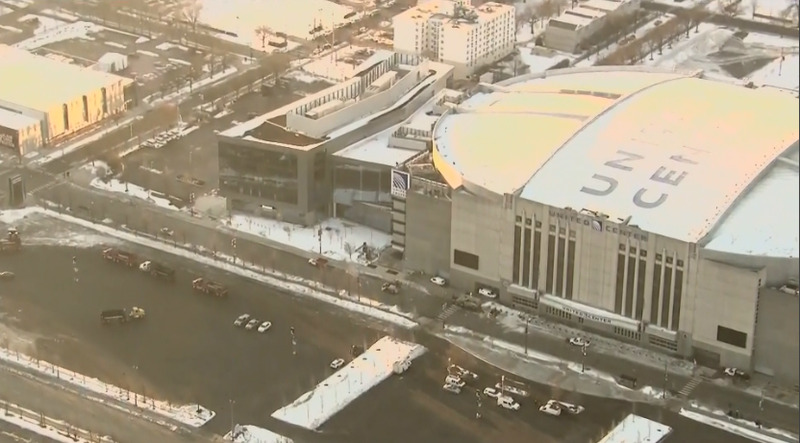
2021-02-26
Parking lots of the United Center will soon host a new mass vaccination site for Illinoisans. Gov. JB Pritzker says the site will have the capacity to give 6,000 doses of vaccine per day.
The home of the Chicago Bulls and Blackhawks will open as a vaccination site on March 10. But, construction is already underway. This will be one of the several community vaccination centers led by the Biden administration. Doses will come directly from the federal government instead of taking vaccine away from the allotment for the state and the city of Chicago.
Leaders explained seniors will have exclusive access to appointments before the site officially opens. However, FEMA hasn’t set dates for those appointments at this time. Reporters asked how Pritzker could guarantee this facility would create easier access for those in need compared to wealthy Chicagoans.
“In the city of Chicago, in Cook County, and across the state, we’ve all made and are continuing to make efforts to attract people of color to people who are most vulnerable to making those appointments, giving them access wherever we can. Having a site in a location like the United Center makes it more easily accessible,” Pritzker emphasized.
Chicago Mayor Lori Lightfoot said rideshare service Uber will provide 20,000 free rides to help people get to the site. Information about scheduling appointments for vaccinations should become available in the coming days.
“With this new site, we’ll now be able to take our vaccination success to a whole new level and bring to bear the historic and inclusive recovery that is soon to come,” Lightfoot explained.
Getting Black and brown residents vaccinated
Still, the state has a significant issue getting Black and Latinx Illinoisans vaccinated. U.S. Sen. Dick Durbin explained a recent study showed minority neighborhoods in Chicago had a vaccination rate of 5%. The majority-white areas of Chicago currently report 13% of the population vaccinated. Durbin says the United Center site should help.
“The faster we can get people vaccinated, the more quickly we can escape the grip that this pandemic has had on our nation for so long, the less likely we’re gonna see mutations and variations which we have to fight in different ways,” Durbin added.
The Springfield native said the federal government could provide more help with vaccine distribution bypassing the American Rescue Plan. President Joe Biden has asked Congress to approve the $1.9 trillion package with specific portions going to mass vaccination sites and $1,400 stimulus checks.
Pritzker noted things are getting better in the long battle with COVID-19.
“Someday not too far from now, we’ll be at the United Center not for a life-saving shot, but for a game-winning shot,” Pritzker said.
-
2020-06
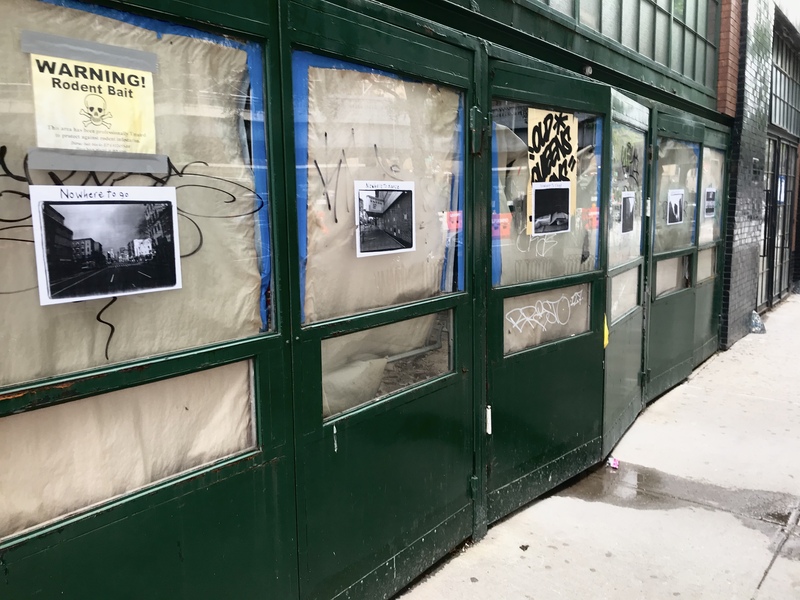
A shuttered storefront in the predominant art gallery section of Chelsea that has paper signs some which say, "Nowhere to Go", "Nothing to see". During this time, the stores in the Chelsea area were closed - either temporarily or indefinitely. Simultaneously, many were boarded up in fear of looting or protest which added to the eerie apocalyptic atmosphere.
-
2021-11-10
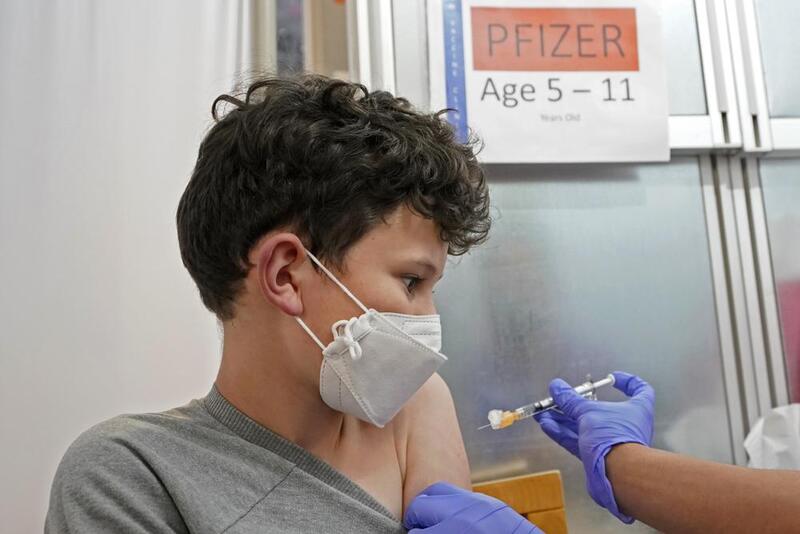
The campaign to vaccinate elementary school age children in the U.S. is off to a strong start, health officials said Wednesday, but experts say there are signs that it will be difficult to sustain the initial momentum.
About 900,000 kids aged 5 to 11 will have received their first dose of the COVID-19 vaccine in their first week of eligibility, the White House said, providing the first glimpse at the pace of the school-aged vaccination campaign.
“We’re off to a very strong start,” said White House COVID-19 coordinator Jeff Zients, during a briefing with reporters.
Final clearance for the shots was granted by federal regulators on Nov. 2, with the first doses to kids beginning in some locations the following day.
The estimated increase in vaccinations in elementary school age children appears similar to a jump seen in May, when adolescents ages 12 to 15 became eligible for shots.
Now nearly 20,000 pharmacies, clinics and physicians’ offices are offering the doses to younger kids, and the Biden administration estimates that by the end of Wednesday more than 900,000 of the kid doses will have been given. On top of that, about 700,000 first-shot appointments are scheduled for the coming days.
About 28 million 5 to 11 year-olds are now eligible for the low-dose Pfizer vaccine. Kids who get their first of two shots by the end of next week will be fully vaccinated by Christmas.
The administration is encouraging schools to host vaccine clinics on site to make it even easier for kids to get shots. The White House is also asking schools to share information from “trusted messengers” like doctors and public health officials to combat misinformation around the vaccines.
A initial surge in demand for vaccinations was expected from parents who have been waiting for the chance to protect their younger kids, especially before the holidays.
About 3% of newly eligible children in the U.S. got first shots in the first week, but the rate of vaccinations in varied widely around the country, as it has for adult vaccines.
California Health and Human Services Secretary Dr. Mark Ghaly said Wednesday that more than 110,000 Californians ages 5 to 11 have received their first coronavirus shot — 9% of kids that age in the state.
“We are starting to see this pick up and I’m really encouraged about what this means for our state,” Ghaly said.
On the other ends of the spectrum, Idaho reported just 2,257 first shots, or 1.3% of the newly eligible kids there.
In West Virginia’s Cabell County, high demand led local health officials to start setting up vaccination clinics in all the county’s public middle schools. A spokeswoman for the county health department said there were some lines for vaccines in the first few days after the doses were approved for kids ages 5 to 11, but that things have slowed since then.
Some experts say that nationally, demand could also begin to recede soon. They note polling data suggests only a fraction of parents have planned to get their kids shots immediately, and they suspect the trend will play out like it did earlier this year when kids ages 12 to 15 were first able to get shots.
In the first week after vaccines for that age group were authorized in May, the number of adolescents getting a first shot jumped by roughly 900,000, according to an American Academy of Pediatrics review of federal data. The next week, it rose even further, to 1.6 million.
“There was an initial burst,” said Shannon Stokley of the Centers for Disease Control and Prevention.
But then the number dropped steadily for months, interrupted only briefly in early August as the delta variant surged and parents prepared to send children back to school.
Adolescent vaccinations have since flagged considerably, to just 32,000 getting their first shots last week. Only about half of adolescents ages 12 to 17 are fully vaccinated, compared to 70% of adults.
It’s unlikely that vaccination rates in young kids will be as high as what’s seen in adults — or even in adolescents, some experts said, unless they are required for school.
Part of the reason is that adults are far more likely than children to suffer serious illness or die from COVID-19, they noted. “Parents may have the perception it may not be as serious in young children or they don’t transmit it,” said Stokley, the acting deputy director of the CDC’s Immunization Services Division.
But more than 2 million COVID cases have been reported in U.S. children ages 5 to 11 since the pandemic started, including 66 deaths over the past year, according to CDC data. “We’re going to have a lot of work to do to communicate to parents about why it’s important to get children vaccinated,” she said.
Zients said the effort to vaccinate younger kids is still ramping up, with new clinics coming on line. Government officials expect the number of children who are vaccinated to keep rising in the days and weeks ahead, he said.
“We are just getting started,” he said.
Earlier this year the White House set — and missed — a July 4 goal to have at least certain percentage of U.S. adults vaccinated. Officials have not announced a similar target for kids.
Dr. Lee Savio Beers, president of the American Academy of Pediatrics, called the new numbers reassuring and said the rollout appears to be going smoothly for the most part. She noted however that with a lower dose and different vials than for older kids, the rollout requires more steps and that some states have been slower in getting vaccine to providers.
Initial data from some areas show Black children lagging behind whites in getting their first doses, which Beers said raises concerns.
“It’s really important to make sure the vaccine is easily accessible in a wide variety of places,” Beers said.
-
2021-09-16
Vaccine safety is critical for the successful implementation of any vaccination program, especially during a pandemic. In February 1976, the Centers for Disease Control and Prevention confirmed a cluster of cases of severe influenza-like illness among Army recruits at Fort Dix, New Jersey.1 A swine influenza A strain that resembled the 1918 pandemic influenza strain was identified,2 and a vaccination program was subsequently initiated for the entire U.S. population. After more than 40 million persons were vaccinated, a small excess risk of Guillain–Barré syndrome was noted, with an attributable risk of approximately 1 case per 100,000 doses administered. Given these concerns and because the pandemic did not materialize, the vaccination program was halted in December 1976 so that the issue could be explored further. This experience shed light on the need for real-time vaccine safety surveillance and the importance of context in decision making during a pandemic.
In a study now reported in the Journal by Barda et al., the investigators simultaneously evaluated the risk of adverse events among persons (≥16 years of age) who had received the BNT162b2 vaccine (Pfizer–BioNTech) and the risk of the same events after severe acute respiratory syndrome coronavirus 2 (SARS-CoV-2) infection.3 The authors used data from the largest integrated payer–provider health care organization in Israel, in conjunction with data on SARS-CoV-2 polymerase-chain-reaction tests and data on coronavirus disease 2019 (Covid-19) vaccine administration from the Israeli Ministry of Health.
This use of multiple data sets highlights the importance of investment in digital capabilities and meaningful integration across systems in order to provide real-time answers to key public health questions. The design of rigorous postauthorization vaccine safety studies during the Covid-19 pandemic has been a challenge because the pandemic itself has caused changes in health care utilization, the rollout of Covid-19 vaccines has occurred in phases because of initial supply limitations, and there have been disparities in access to vaccines. Barda et al. broadly addressed many of these challenges by emulating a trial that matched eligible vaccinees to unvaccinated controls according to sociodemographic characteristics, the number of preexisting chronic health conditions, previous health care utilization, and pregnancy status.
In the vaccination analysis, the study included 42 days of follow-up (i.e., 21 days after the first dose and 21 days after the second dose). This analysis accounted for seasonal and secular trends by matching on the day of vaccination, rather than relying on historical risk estimates that may not have been comparable in the pandemic setting. In the SARS-CoV-2 analysis, a similar approach was used to match persons with a newly diagnosed infection to uninfected persons.
Although the risk estimates in the vaccination and the SARS-CoV-2 analyses were not directly comparable because of differences in the populations (i.e., events were evaluated per 100,000 vaccinated persons and per 100,000 infected persons, respectively), these risks were placed in context. The most salient example is myocarditis, which has received much attention recently given the preponderance of reported cases after vaccination among adolescents and young adults and the incidence of myocarditis observed after SARS-CoV-2 infection.4-6 In the population-based cohort in the study conducted by Barda and colleagues, the risk ratios for myocarditis were 3.24 (95% confidence interval [CI], 1.55 to 12.44) after vaccination and 18.28 (95% CI, 3.95 to 25.12) after SARS-CoV-2 infection, with risk differences of 2.7 events per 100,000 persons (95% CI, 1.0 to 4.6) and 11.0 events per 100,000 persons (95% CI, 5.6 to 15.8), respectively. What is even more compelling about these data is the substantial protective effect of vaccines with respect to adverse events such as acute kidney injury, intracranial hemorrhage, and anemia, probably because infection was prevented. Furthermore, the persons with SARS-CoV-2 infection appeared to be at substantially higher risk for arrhythmia, myocardial infarction, deep-vein thrombosis, pulmonary embolism, pericarditis, intracerebral hemorrhage, and thrombocytopenia than those who received the BNT162b2 vaccine.
National discussions about benefit–risk balance often focus on the benefits of preventing symptomatic disease, hospitalization, or death due to Covid-19 and the risks of serious adverse events after vaccination.7,8 As specific adverse events such as myocarditis are highlighted, however, the lack of corresponding specificity about benefits can hamper efforts to communicate effectively with patients. Messenger RNA (mRNA) vaccines may be associated with myocarditis, but they can also prevent cases of myocarditis, acute kidney injury, arrhythmia, and thromboembolic disease. The key to comparing these risks depends on the risk of SARS-CoV-2 infection to an individual person, and that risk can vary according to place and over time. Given the current state of the global pandemic, however, the risk of exposure to SARS-CoV-2 appears to be inevitable.
One major limitation of this study is the lack of risk estimates according to age group and sex. For example, thrombosis with thrombocytopenia syndrome occurs predominantly in young adult women who have received adenoviral vector vaccines against SARS-CoV-2, whereas myocarditis predominantly occurs in male teens and young men who have received mRNA vaccines.5,9,10 Age- and sex-stratified comparisons that reflect local epidemiologic factors might support public understanding of different approaches to vaccine use in different countries, such as Israel, the United Kingdom, and the United States. Other limitations of the study include the paucity of data regarding younger teens and children, the conservative assumption that vaccines have no effect on transmission, and the absence of medical record review to validate computable phenotypes (i.e., algorithms used to identify a cohort on the basis of patient records).
As new knowledge of the safety and benefits of vaccines continues to evolve, studies like this one may help to support decision making about the use of Covid-19 vaccines. The benefit–risk balance should be reassessed, refined, and communicated as the disease burden changes, new variants and safety signals emerge, and vaccine effectiveness begins to wane. Context matters, which means that we as a country need to be ready for continual learning and change.
-
2021-11-11
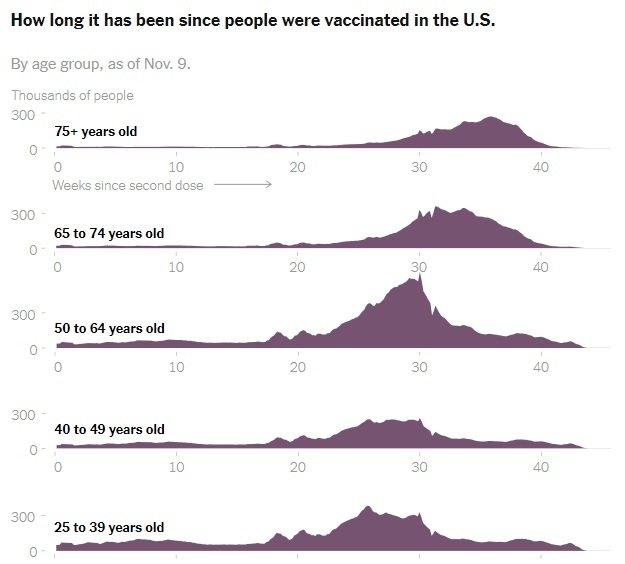
As tens of millions who are eligible in the United States consider signing up for a Covid-19 booster shot, a growing body of early global research shows that the vaccines authorized in the United States remain highly protective against the disease’s worst outcomes over time, with some exceptions among older people and those with weakened immune systems.
But while the vaccines’ effectiveness against severe disease and hospitalization has mostly held steady, even through the summer surge of the highly transmissible Delta variant, a number of published studies show that their protection against infection, with or without symptoms, has fallen.
Public health experts say this decline does not mean that the vaccines are not working.
In fact, many studies show that the vaccines remain more than 50 percent effective at preventing infection, the level that all Covid vaccines had to meet or exceed to be authorized by the Food and Drug Administration back in 2020. But the significance of these declines in effectiveness — and whether they suggest all adults should be eligible for a booster shot — is still up for debate.
-
2020-03-26
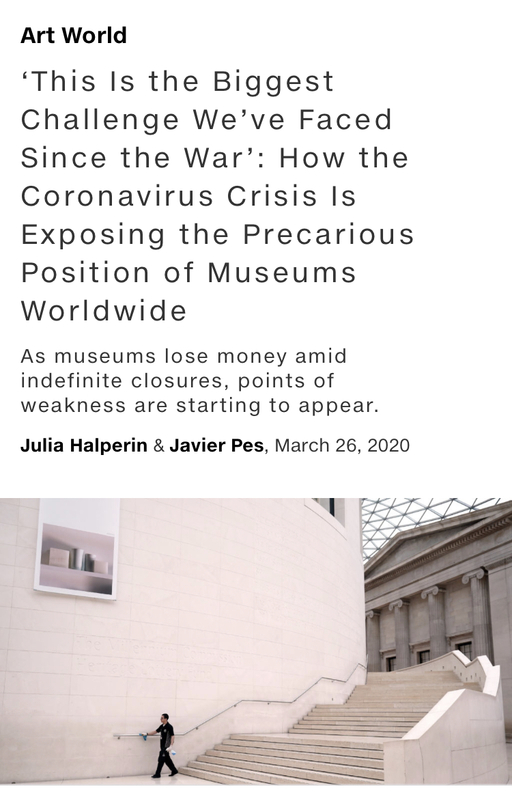
The article discusses the financial hit to museums caused by the pandemic and fear and anxiety over how long museums can sustain amid a global shutdown. Whereas federal aid has come to the rescue of some museums provided by select countries for example, Germany and Britain; however, the United States does not have the same relief plans in place for cultural institutions. The pandemic has revealed weaknesses in the current museum model in relation to funding and what the article describes as a “winners take all mentality”. These problems have been compounding for decades but is the pandemic the straw that breaks the camel’s back? What might a new museum model look like if the old one is no longer sustainable?
-
2020-06-30
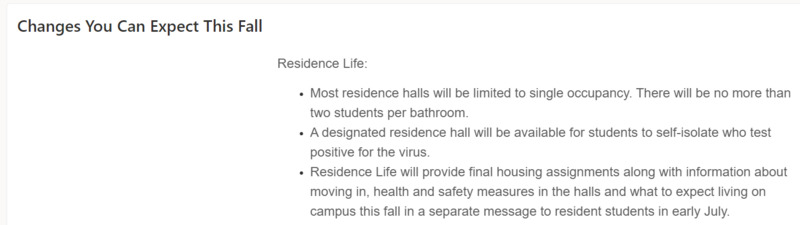
It is Summer 2020 and students nationally, and even internationally, are preparing themselves to live on campus. For some, it is their first time, and for others, they are returning to their home away from home. However, it is a new experience for both as they adjust to the new rules and regulations of living on campus. This email from the President of St. Mary's University was sent to all Rattlers and is symbolic of the changes students had to adapt to in order to live on campus.
-
2020-05-13
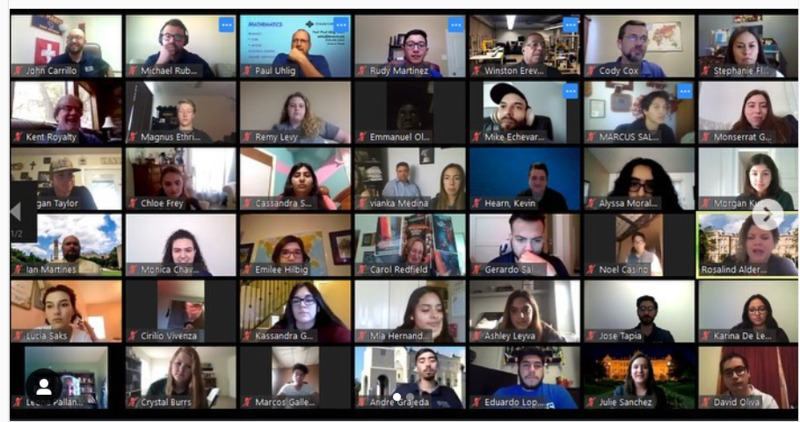
The pandemic hit and many new college students were forced to enjoy their admission celebrations from their homes through their computer screen and Zoom. Still, St. Mary's University pushed forward to make this event memorable and celebrate future incoming Rattlers to their new school. This screenshot is a still shot of the emotions and celebrations early freshmen experienced during the pandemic. Being accepted into university is no small thing, but a Zoom celebration is a small gesture of congratulations that feels very big.
-
2021-06-01
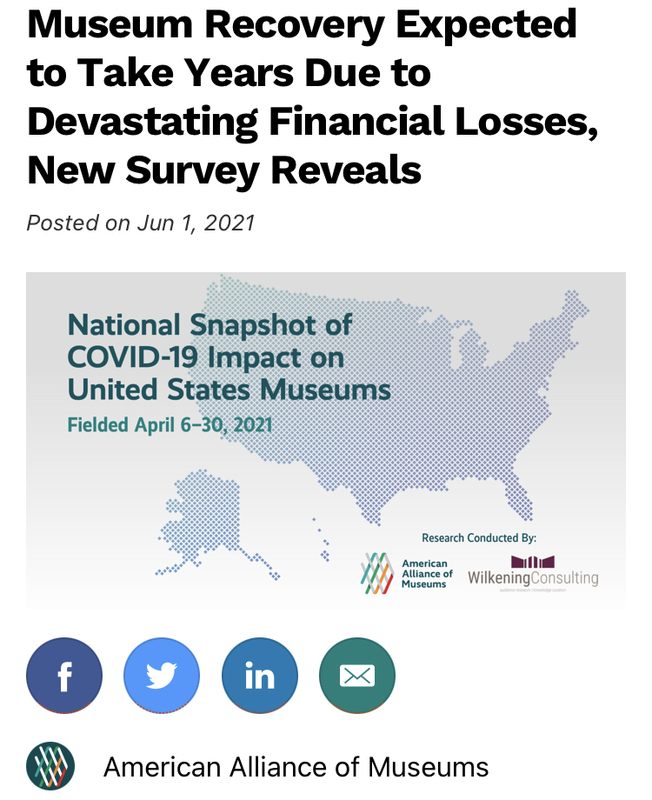
The American Alliance of Museums report highlights financial problems and some of the more negative long-term impacts resulting from COVID-19 such as reduced overall net revenue for the institution, lower employment numbers, and lower average salary for their staff members.
-
2021-08-05
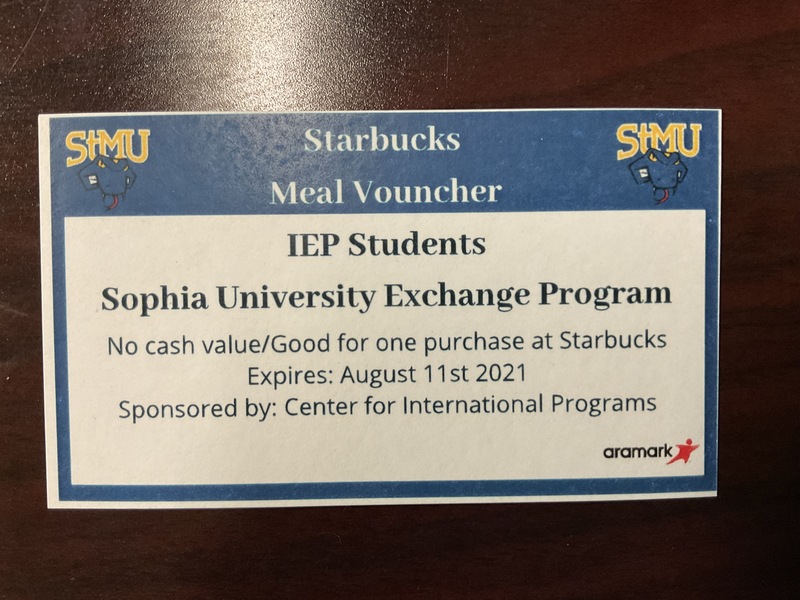
The meal voucher was made for international students coming during the first weekend of August and did not have food, nor was the cafe open for them to eat. During the summer of 2021, communication between the University Cafeteria and the Center for International Programs was complex due to changes inside the Center for International Programs. No plans were made for the incoming students coming that weekend. For that reason, the Center for International Programs had to create a meal voucher to eat at Starbucks or Chick-fil-a inside the campus. Twenty students were coming in the weekend, and the CIP team had to check them in, bring food supplies, and pick them up from the airport.
-
2020-09-29
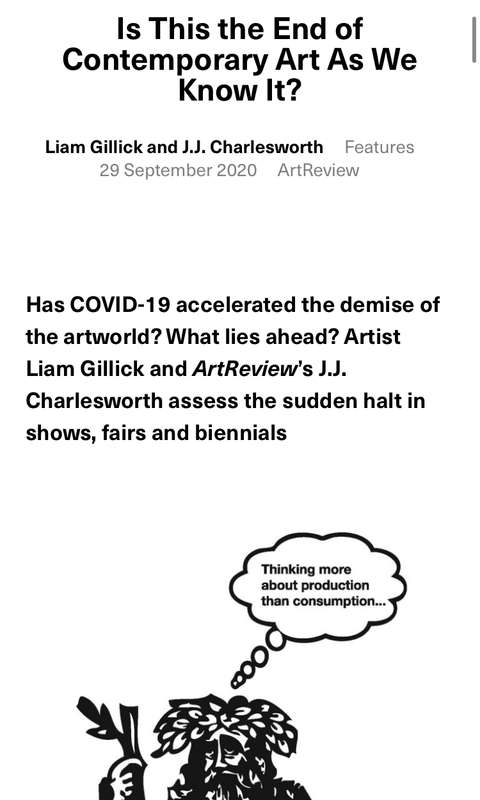
Artist Liam Gillick and a writer for ArtReview, J.J. Charlesworth talk about the changes brought by the pandemic and the many ways that everything will most likely remain the same. Interestingly, they examine the beginning and end of “contemporary art” and the complex web of economic, social, political and cultural factors that are shifting and breaking down in different ways from our current crises.
In the end, the feeling that art will survive but the idea that this particular period of art and the art world has reached its end is contemplated.
-
2020-06-30
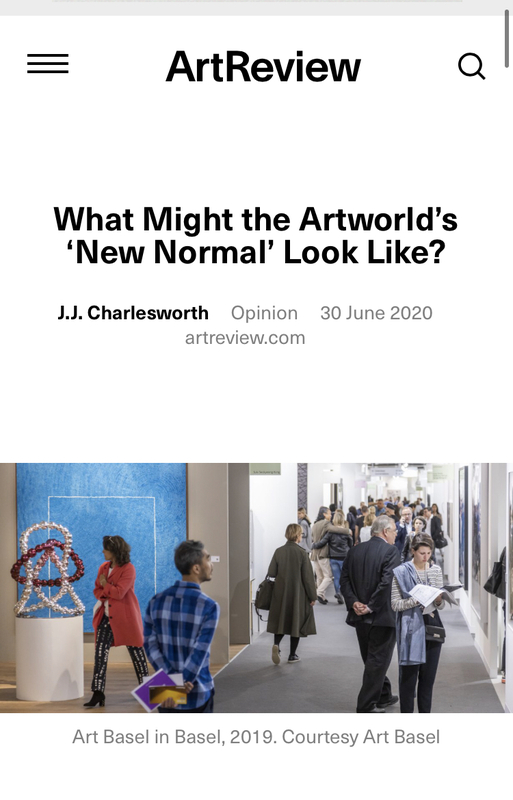
The ArtReview article comments on the new normal and the possible dangerous path we are propelling towards as a society with accelerated speed. The article specifically discusses the use and imminent fears on future reliance of technology in the art sector.
Looking on the positive side, social justice and pressure from activism groups and the Black Lives Matter movement have spurred the beginning of greater reform within the art world including decolonization efforts in museums, diversity in collections, exhibitions, and staff.
-
2021-04-06
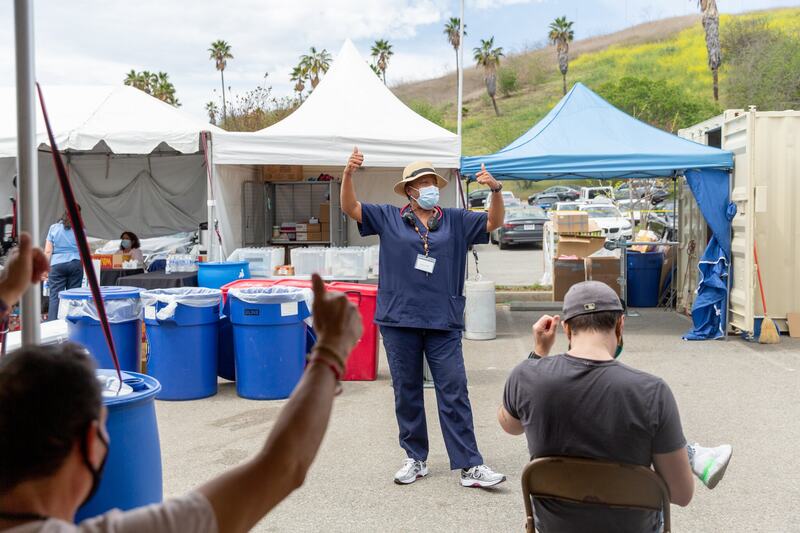
President Biden will promote his administration’s success in accelerating the pace of coronavirus vaccinations during two appearances on Tuesday, as officials in nearly every state say they will make shots available to all adults by his target of April 19.
Three months into his presidency, Mr. Biden confronts an escalating migrant surge at the border with Mexico and has embarked on a grind-it-out effort to ram through a $2.3 trillion infrastructure bill. But the virus remains his primary focus.
And he wants the country to know that — so he is offering multiple updates each week, along with helpful visual cues, like standing next to a giant Easter bunny wearing a mask.
On Tuesday afternoon, Mr. Biden will travel to Alexandria, Va., to tour a vaccination site at the Virginia Theological Seminary. Later, at the White House, he will deliver remarks emphasizing recent successes, including the milestone of delivering four million vaccinations in one day over the weekend.
More than three million doses are now being given on average each day, compared with well under one million when Mr. Biden took office in January, according to the Centers for Disease Control and Prevention. Every state has now given at least one dose to a quarter or more of its population. About 62.4 million people — 19 percent of Americans — have been fully vaccinated.
On Monday, Gov. Larry Hogan of Maryland announced that all Maryland residents 16 or older would be eligible from Tuesday for a shot at the state’s mass vaccination sites, and starting April 19 at any vaccine provider in the state.
Also on Monday, Gov. Philip D. Murphy of New Jersey and Mayor Muriel Bowser of Washington, D.C., said residents 16 or older would be eligible on April 19.
Gov. Kate Brown of Oregon announced Tuesday that all Oregonians over the age of 16 were eligible to receive a vaccine. The state had been limiting the doses to those with underlying conditions and frontline workers.
That leaves one state, Hawaii, keeping to Mr. Biden’s original deadline of May 1.
In Hawaii, 34 percent of residents have received at least one dose. Alabama has vaccinated the lowest proportion of its residents, at 25 percent.
Along with dangerous coronavirus variants that were identified in Britain, South Africa and Brazil, new mutations have continued to pop up in the United States, from California to New York to Oregon.
The shots will eventually win, scientists say, but because each infection gives the coronavirus a chance to evolve further, vaccinations must proceed as quickly as possible.
For now, however, cases are rising sharply in parts of the country, with some states offering a stark reminder that the pandemic is far from over. Yet again, governors across the country have lifted precautions like mask mandates and capacity limits on businesses.