-
2021-07-06
In the year of COVID-19, I did not want to leave my house. I was already an anxious person before COVID-19, so I was scared out of my mind when it hit. A lot of people do not talk about the mental effect that COVID-19 has had on teenagers. COVID-19 happened at the end of my sophomore year. Before COVID-19, I was such an outgoing person, and now I feel like I do not know how to talk to people without overthinking. My junior year of doing mostly virtual has crippled me in a way that few can understand. My social battery has never seemed to recover, and my anxiety is always on ten whenever I go out in public. It feels like during this pandemic, I have lost a part of me that I may never get back. I now struggle with talking to people and making friends at my new school. I was so stuck in my head during the pandemic, and now I do not know how to get out. I recognize my privilege in never getting COVID-19 and no one close to me dying. I just wanted to acknowledge the effects of COVID-19 on my mental health. I hope that I can work through the issues this pandemic has caused me and get to a better place mentally.
-
2021-07-07
"See y'all in two weeks!" we joked as my cousins left my house after a long game of Monopoly. There was talk in the news about some new virus and having to be on lockdown for two weeks. This was all still so new and unbelievable, literally. We never thought a quarantine would happen, especially since being isolated for two weeks felt like an eternity. A few days later when we realized we were going to be separated for two weeks, we could not imagine how we were going to get through these two weeks without seeing each other. Two weeks, that is it. Looking back, that sounds like nothing. Two weeks turned to three, weeks turned to months, and months turned into over a year. During this time, the things I missed the most were the little things. I missed watching my little cousin do cartwheels in our backyard. I missed hearing my older cousin's deep laugh as she tried to teach me how to dance. I missed stressing out over getting ready to go out. I missed arguing over the rules of Monopoly with my cousins. Fast forward 15 months, we are all vaccinated, and hopefully will return to rejoicing over a game of Monopoly soon.
-
2020-03-18
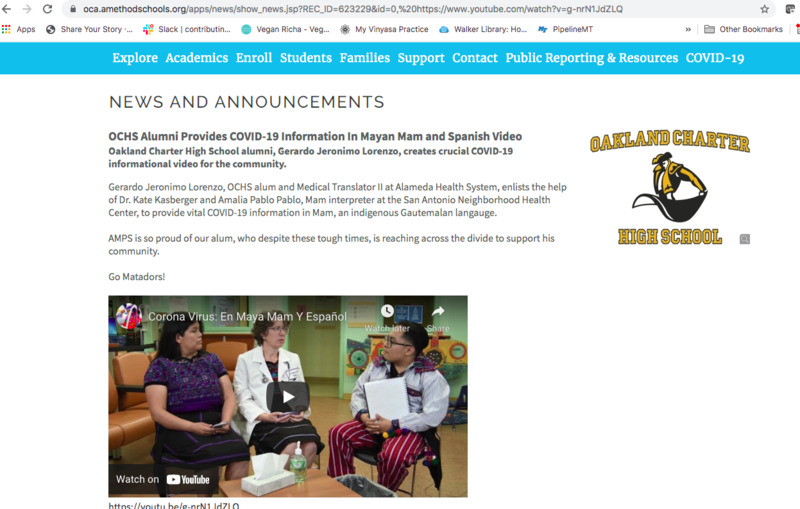
Oakland Charter High School alumni, Gerardo Jeronimo Lorenzo, creates crucial COVID-19 informational video for the community.
Gerardo Jeronimo Lorenzo, OCHS alum and Medical Translator II at Alameda Health System, enlists the help of Dr. Kate Kasberger and Amalia Pablo Pablo, Mam interpreter at the San Antonio Neighborhood Health Center, to provide vital COVID-19 information in Mam, an indigenous Gautemalan [sic] langauge [sic].
AMPS is so proud of our alum, who despite these tough times, is reaching across the divide to support his community.
Go Matadors!
-
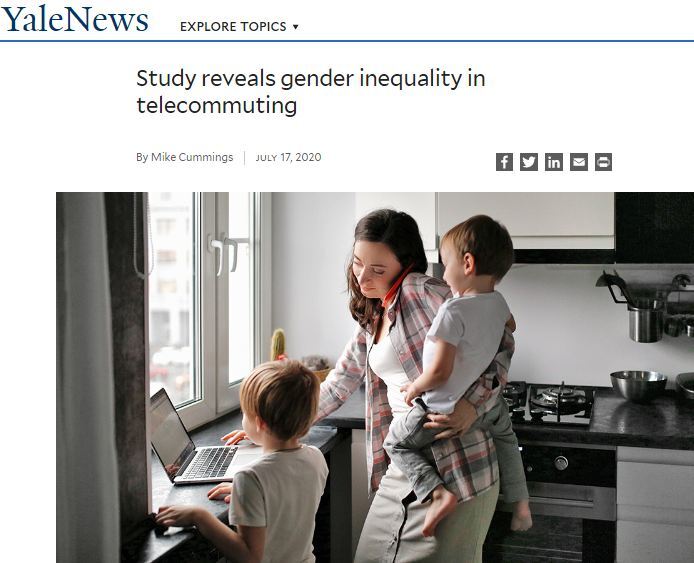
2020-07-17
This article discusses findings from the COVID Impact Survey conducted by the National Opinion Research Center at the University of Chicago. The data show gender inequality associated with working from home. The survey found that mothers working from home spend more time on housework and childcare than fathers working from home. Mothers also report increased levels of anxiety, loneliness, and depression.
-
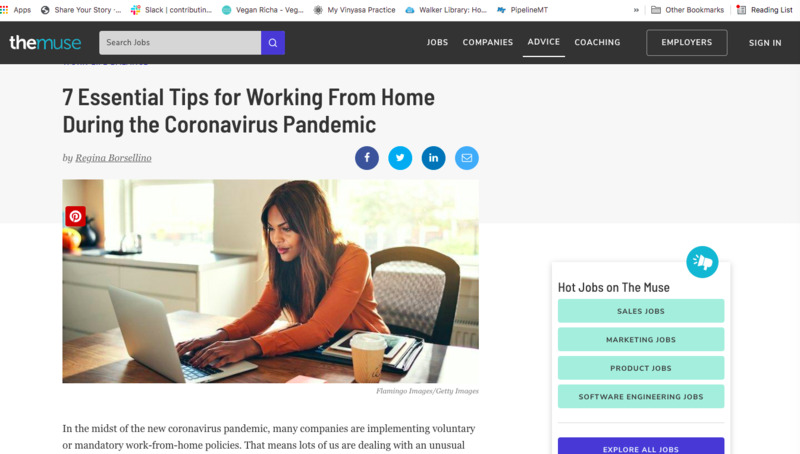
2021
This article provides tips on how to work effectively from home during the pandemic and discusses how to set up a home office, stay connected and in communication with coworkers, and strike a viable work-life balance.
-
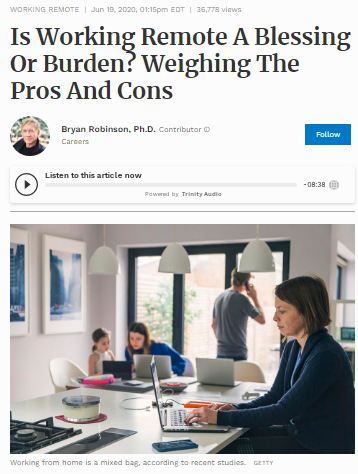
2020-06-19
This article discusses the pros and cons of changes to productivity caused by the shift to teleworking during the pandemic in countries around the globe. Major themes are mental health and work-life balance.
-
2021-02-13
This article discusses an European study investigating individuals’ experience of working from home during the pandemic and the disadvantages and advantages of this work model. The advantages were a better work-life balance, improved work efficiency, and greater work control. The disadvantages were home office constraints, work uncertainties, and inadequate tools.
-
2021-03-21
This article and accompanying video discuss what employees miss most in the new teleworking situations created by the pandemic and what aspects of this situation they hope to have addressed after the pandemic recedes. The lack of interaction and socializing with coworkers is viewed as the major disadvantage to teleworking for individuals in the survey cited.
-
2020-04-06
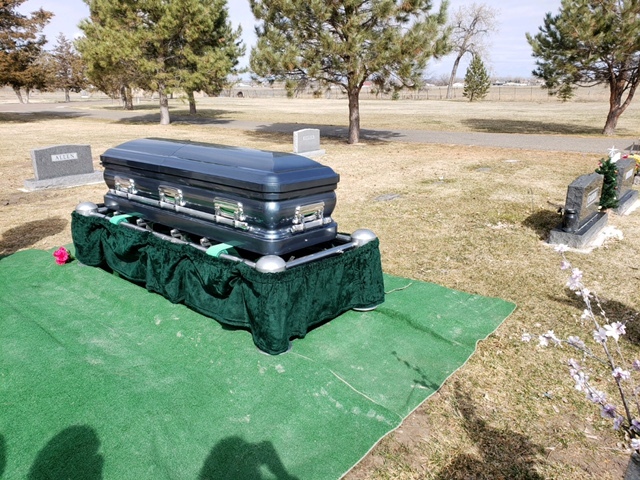
The echoing silence is what stands out to me the most. Where there should have been “Taps” playing, blanks being fired in the air, and stories being told, there was nothing. On April 1, 2020, my grandfather passed away of natural causes. Under normal circumstances, my parents and I would have traveled up to Montana to attend his funeral. However, due to the fact that my father and I are immune-compromised, we were unable to attend. Even if we were able to make the trip, there was the possibility that we would not be able to attend the service. The funeral home only allowed ten people to be at the funeral, masked-up and socially distanced.
On the day of the funeral, April 6, 2020, my parents and I attended the funeral virtually. We were sitting in the car (my parents were at work) watching the funeral on a FaceTime call with my sister. The service was extremely short. The funeral home wanted to make the service as quick as possible to limit potential exposure. This meant there was no eulogy, no military honors (he was an Air Force veteran), and very little time for the sharing of stories of personal stories. Thus, the service was oddly quiet. Funerals are typically quiet, but this was something more. There were tears, but the tears were hallowed. A lot of the emotion involved with a funeral comes from the memories shared. These tears are not all sad tears. This is because a life is being celebrated, all the ups and downs. The tears at my grandfather’s funeral were all sadness. Sad tears sound different than happy tears. Happy tears are often associated with laughter, something lacking at this funeral. Another sound that was absent during my grandfather’s funeral was his military honors. Typically, at a funeral that involves a veteran, there are a few things happen: “Taps” is played, a rifle detail fires blanks into the air, and a burial flag is presented to the next of kin. My grandfather did not receive military honors at his funeral. Thus, these sounds were not present. My grandfather’s funeral was the closest thing to silent as can possibly be.
Covid prevented my grandfather from having the funeral he deserved. Fortunately, my family was able to give him a proper celebration of life in June 2020, which involved everything that had been missing at his funeral. The sounds of happy and sad tears were present, along with the sounds of full military honors. I am glad we were able to accomplish this, but to me, it felt different. The memories of his “silent” funeral were still engrained in my mind, causing me to have mixed emotions of sadness and anger that were not able to properly celebrate him at his funeral.
-
2021-06-02
The text document describes how COVID gave me an opportunity to reinvent myself. The live recreation of a famous meme is an example of how I tapped into my creativity, living a more fulfilling life
-
2021-07-05
For the past year, I cycled in and out of a few uniforms. At the start of the pandemic, when the weather was warm, I wore a simple, roomy, tan linen dress that could have fit in at a nice restaurant for lunch, if I'd dressed it up with accessories. A chic friend recommended it over a Zoom call as her Amazon "find". During a year of lock-down, it became more of a "housecoat" than a chic dress and I wore it a lot, usually barefoot. If I wasn't wearing the tan housecoat, I wore the green or black one. (I'd bought three at my friend's exuberant recommendation.)
As the weather changed, oversize jeans (my husband's hand-me-down) and my favorite navy sweatshirt from Paris became my go-to. This outfit coincided with learning how to clean the house (nobody was allowed to come inside, not even our cleaning ladies). I got a bleach stain on the sweatshirt and eventually a hole formed at the elbow. It's still my favorite. Another pair of loose jeans and a couple of other sweatshirts bought on Amazon got me through the rest of the winter. Socks were usually all I put on my feet.
The weather is warming up and I've started shopping again, in-person! I've bought a few wide-brimmed hats, a couple of skirts, and even a silk blouse. I'm eyeing some nice sandals. I won't be cleaning the bathrooms in these new clothes. I'll be wearing them out to museums, to lunches with friends, to dinners on new outdoor dining patios, and maybe even on airplanes. I'll be mixing and matching, accessorizing, dolling up and down.
When I'm home, though, I'll be back in my uniforms. I've grown to love them.
-
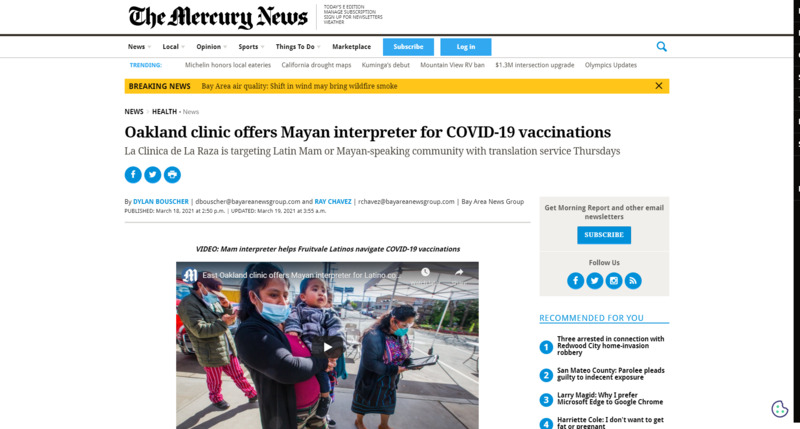
2021-03-18
Oakland clinic offers Mayan interpreter for COVID-19 vaccinations
La Clinica de La Raza is targeting Latin Mam or Mayan-speaking community with translation service Thursdays
OAKLAND — A new COVID-19 vaccination clinic in the Fruitvale neighborhood is offering interpreter services for the Latin Mam or Mayan-speaking community.
This month, La Clinica de La Raza began offering the community-targeted vaccination service at 32 locations across the Bay Area, including ASCEND Elementary School on East 12th Street, where Latinos who speak Mam, K’iche ‘and Q’eqchi’ can get translation help from appointment to inoculation on Thursdays.
There are over 22 different Mam dialects spoken primarily by people of Guatemalan and Mexican descent. According to a recent UC San Francisco study, Mayan people with Guatemalan roots are the fastest-growing ethnic group in Oakland.
“I’m here to support my community, getting them the service that they deserve,” Brenda Sucely Perez, the on-site interpreter at ASCEND, said last week while about 450 eligible people were vaccinated.
Staff at the Fruitvale site have administered roughly 2,000 Moderna vaccines per week since opening on March 4, according to La Clinica officials.
Salvador Garcia, an Oakland firefighter, volunteered at the vaccination clinic.
“Coming to get the vaccination is a good thing because it would help prevent the spread,” Garcia said, adding that it’s especially important given how close relatives in the Latino community live.
“When you’re around people in such tight quarters around here, the way the families live with each other, it’s just good to have the preventative measure of the vaccination.”
It’s also one of the reasons the nation’s first and strictest stay-at-home orders proved ill-suited for the hard-hit Latino community, a four-month Bay Area News Group investigation found. That analysis showed case rates for the region’s Latino residents are nearly four times higher than White residents, while the Latino population has fared worse against the virus across California.
During the fall case surge, economic pressure to keep working outside the home became another major factor in the Latino community’s higher COVID-19 positivity rate in the Fruitvale neighborhood than the rest of the state, according to a UCSF study conducted in September.
The results of that study found that antibody-positive prevalence was 9.8% overall among people who live and work in Fruitvale, a predominantly Latino neighborhood. The number spiked to 26.8% among the Latin Mam, or Mayan, speaking community, USCF [sic] researchers noted. The COVID-antibody test shows that someone once had coronavirus.
-
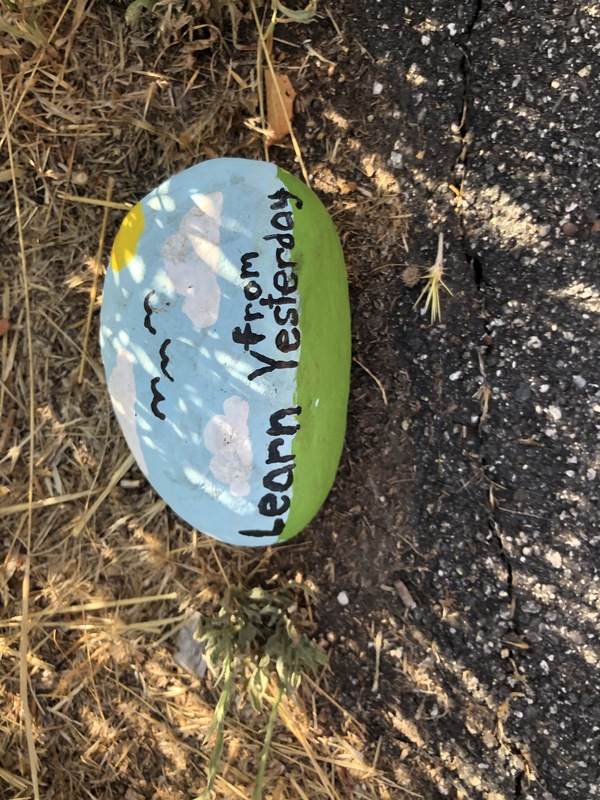
2020-07-05
These are a series of photos I took on July 5, 2020, of a set of painted rocks I found on the Iron Horse Trail in Danville. The rocks say:
"BE KIND"
"STRONGER TOGETHER"
"DANVILLE GOT HEART"
"WHEN THERE'S NO PEACE ON EARTH THERE IS PEACE IN CHRIST"
"SRV '20" (in reference to nearby San Ramon Valley High School)
"SMILE! 🙂"
"EMBRACE THE PAUSE!"
"count your BLESSINGS"
"Learn from Yesterday"
"LOVE has many COLORS" (with a painted Pride flag in the background)
"TOGETHER we will PERSEVERE"
The rocks are all positive in tone, with a rock celebrating the recently-graduated seniors at the local high school, a rock advocating for queer people, a variety of rocks with generic inspirational messages, and a message urging others to find solace in religion. There is also one rock that references Danville's community explicitly.
-
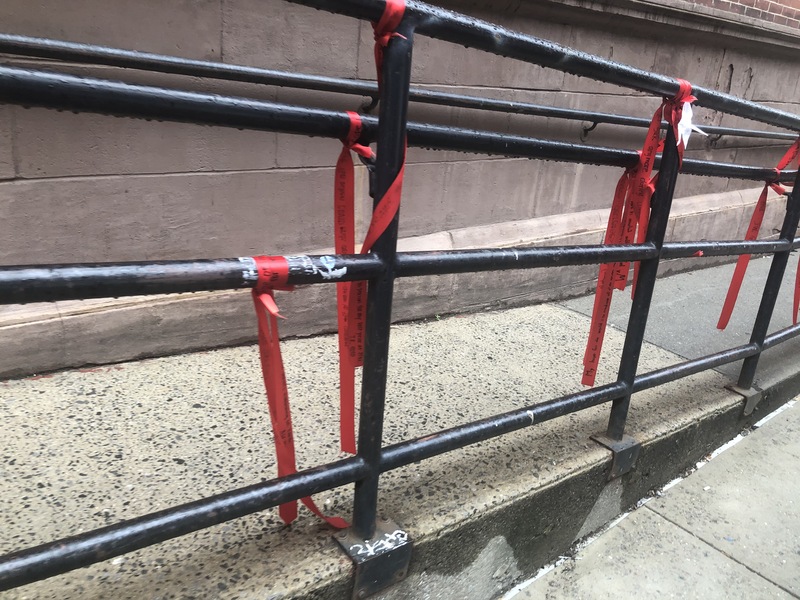
2021-06-13
I took these two photos in Downtown Manhattan at Public School 42. There were red ribbons tied around the iron fence that appear to have wishes or hopes from students. Some of the ribbons are hard to read, but one says "[Illegible] make homeless people happy by giving them things I don't need" and another says "My [illegible] that COVID-19 will stop forever". All of the ribbons where the grade level is visible indicate that the ribbons were made by fourth graders.
-
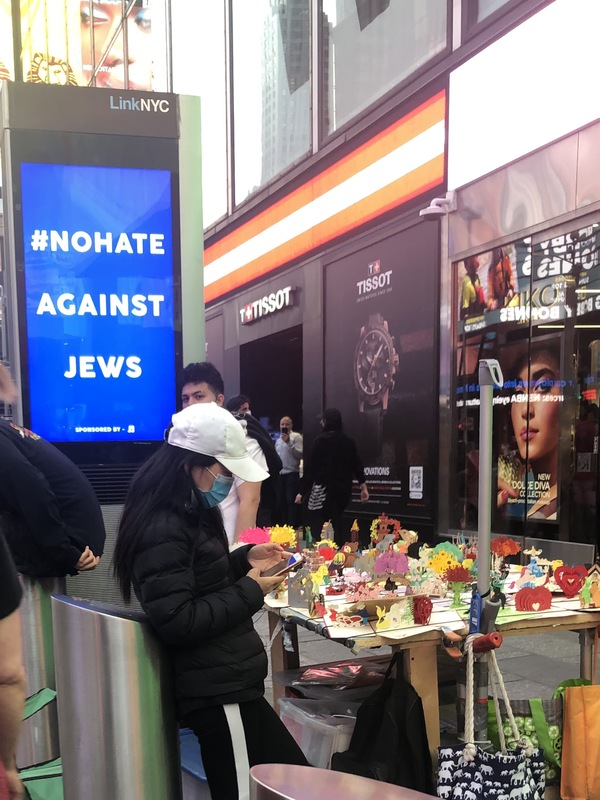
2021-06-14
These are two photos of anti-racist advertisements I saw in Times Square on June 14, 2021. One is an advertisement on a digital advertisement board that says "#NOHATE AGAINST JEWS" in white text on a blue background, while the other is a poster on the side of a garbage receptacle that says "FIGHT THE VIRUS NOT THE PEOPLE #STOPASIANHATE", made by artist Zipeng Zhu.
-
2020-11-14
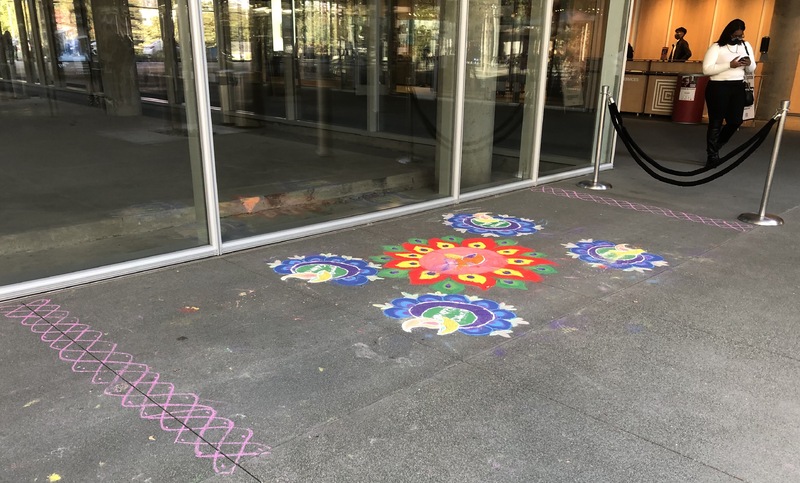
This is a photograph of a rangoli at City Center Bishop Ranch I took on November 14, 2020. That date also happens to be Diwali, a Hindu holiday on which some people make rangoli. Rangoli are made of various dyes and powders.
-
2020-07-12
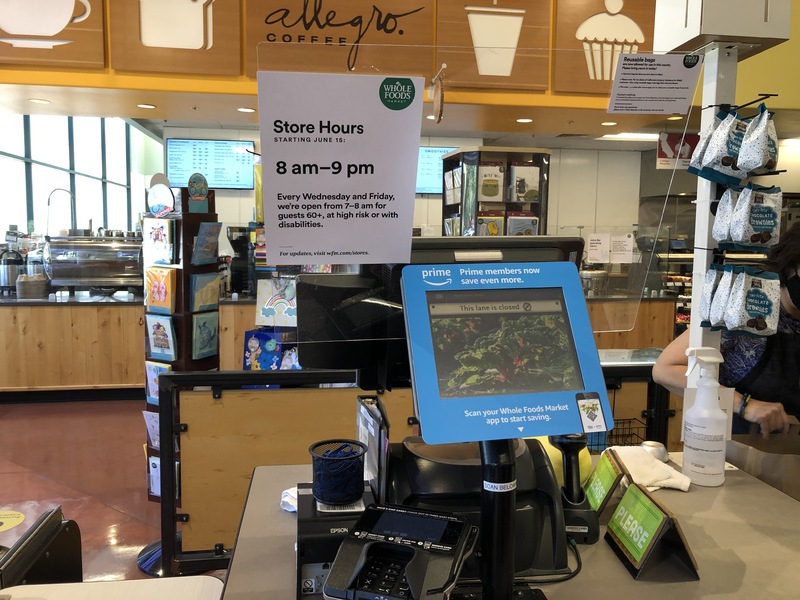
This is a photo I took on July 12, 2020, at the local Whole Foods, of a cash register. There is a plexiglass shield at the register, and a sign announcing a change in hours. The sign also promotes a biweekly special shopping session for the elderly and those at high risk for COVID-19.
-
2020-04-30
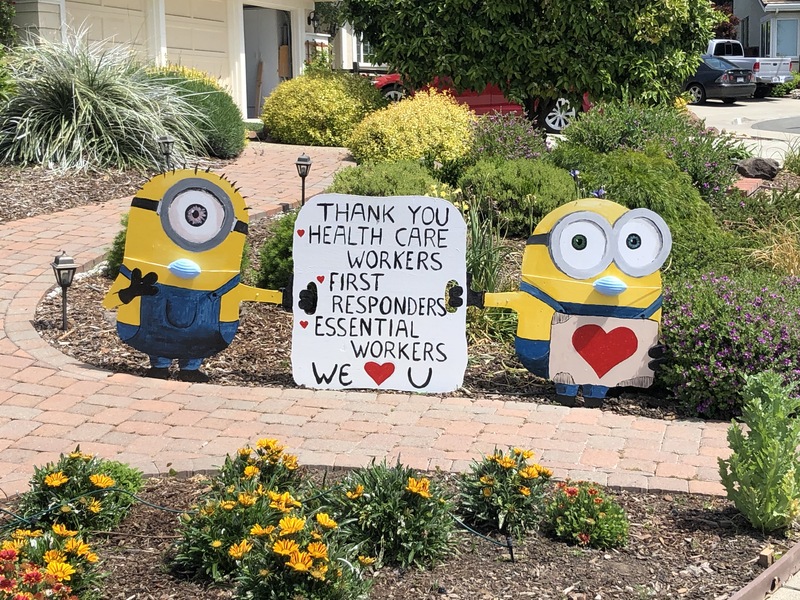
A family in San Ramon made a cutout of two minions wearing masks and put it in front of their home. The sign says "THANK YOU ❤️ HEALTHCARE WORKERS ❤️ FIRST RESPONDERS ❤️ ESSENTIAL WORKERS WE ❤️ U". The photo was taken on April 30, 2020.
-
2021-07-02
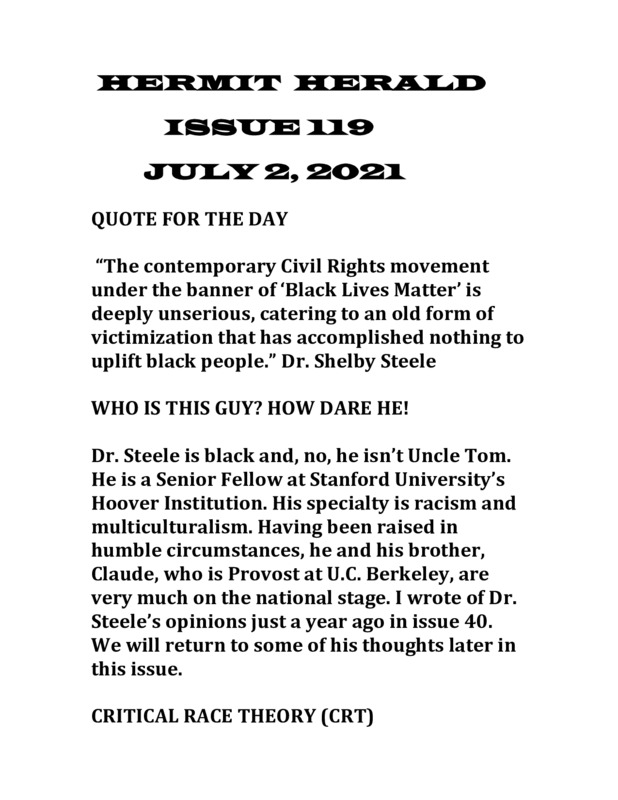
Intro Dr. Shelby Steele
-
2021-06-23
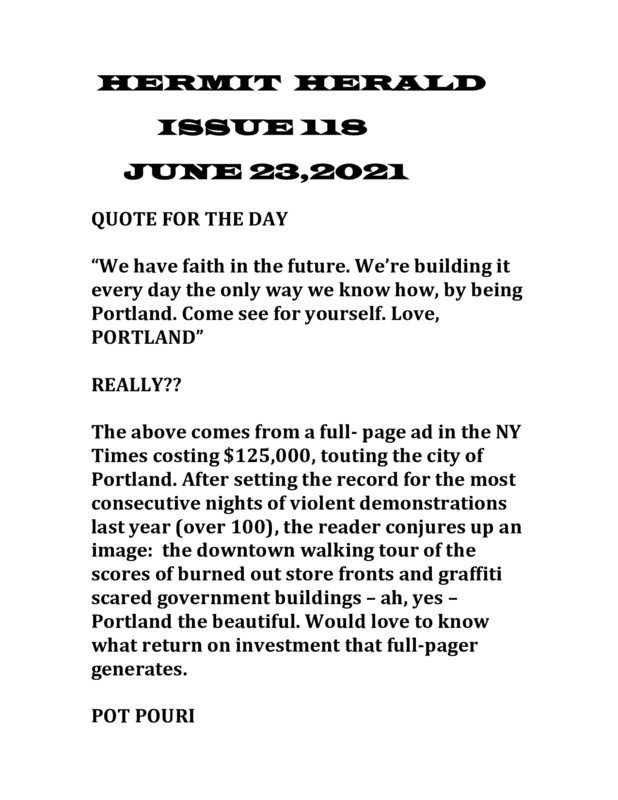
Portland promotion
-
2021-07-03
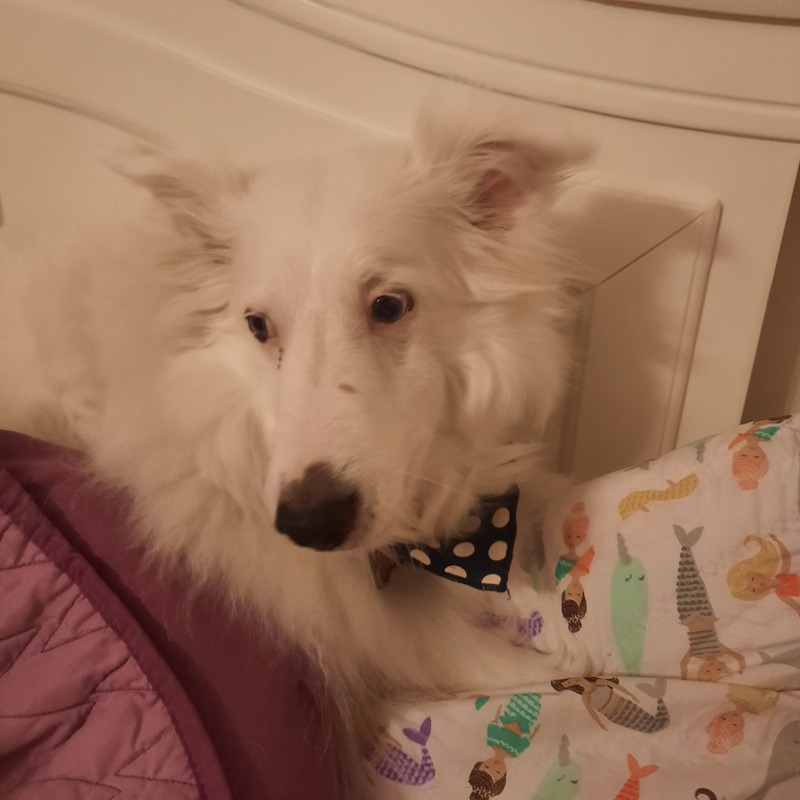
This is Hannah aka Hannah Banana. My husband and I adopted her May 4, 2013 from a rescue in St. Catherine's, ON. We live just over the border in Buffalo, NY. Hannah is a purebred Sheltie (Shetland Sheepdog), but purebred gone wrong. She is what is called a double merle. That means an irresponsible breeder bred two merle coated dogs together, which results in 25% of the litter being born deaf, primarily white in color, and with eye problems or missing eyes altogether. Hannah was approximately 4 years old at the time. The previous owners who surrendered her had had her for 2 years. They had adopted her from a shelter that had picked her up as a stray. Hannah was our 2nd double merle (we also have an Aussie with the same problem), so we were used to the unique problems associated with deaf and vision impaired dogs, but Hannah came with many more from a history of abuse and neglect. One of her biggest issues was that she was absolutely terrified of people, particularly men, and she hated small children. We worked with a trainer, we did agility twice a week, and did barn hunt once a week. She broke out of her shell a lot, but did not lose her fear of people. In 2016 my husband and I had our first and only child, Charlotte. Hannah was very aggressive towards her. She would bark and snap at her. We had to keep her separated a lot, and we worried about what the future would bring. She got a bit better when Charlotte could walk, but not to a comfort level. Once Charlotte was about 3, Hannah accepted that she was a human in the house but wanted nothing to do with her. She didn't really want to have much to do with any of us or our other dog except for at agility class. She wouldn't play with us and only tolerated petting for a short while.
Fast forward to 2020. While COVID-19 was cause fear, anxiety, and depression in people, for Hannah it was just what she needed. After a few months, she became a whole new dog. Having all three of her humans home 24/7 seemed to alleviate a lot of her fears and anxieties. She completely bonded with Charlotte. She actually plays with her and snuggles with her and sleeps in her bed. Who knew this 12-year-old dog just needed constant companionship to heal her old wounds. Luckily, my career path changed during the pandemic (I am going back to school to pursue a PhD) and so I will continue to be home a lot of the time. While COVID did bring devastation to people across the world, for one little dog it was just the medicine she needed.
-
2020-04-10
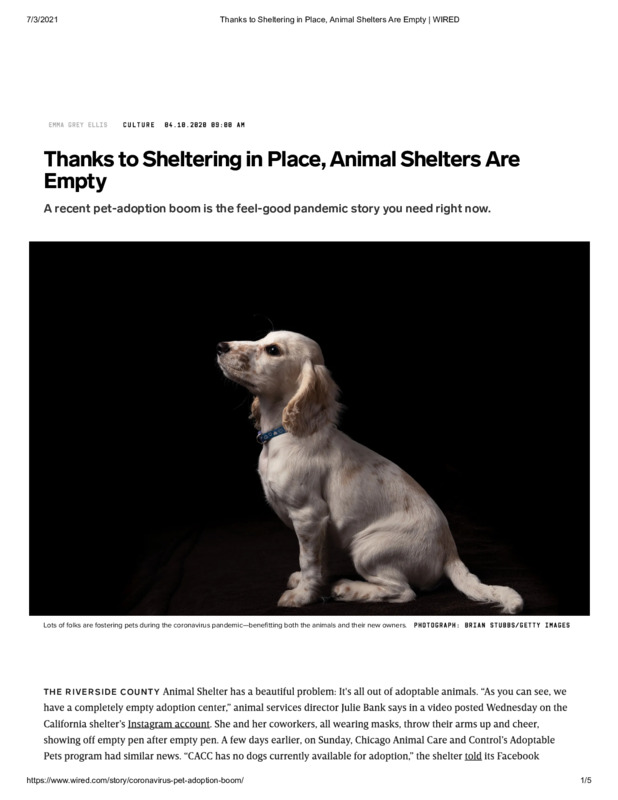
This article discusses the animal adoption trend in the United States during the pandemic. Some shelters find themselves completely empty, which is a dream come true for animal lovers. On the flip side, there are families in crisis, particularly in large cities, that have been forced to give up their pets. Fortunately, with so many foster and adoptive families on waiting lists, these pets won't be going to shelters for any length of time.
-
2020-09-02
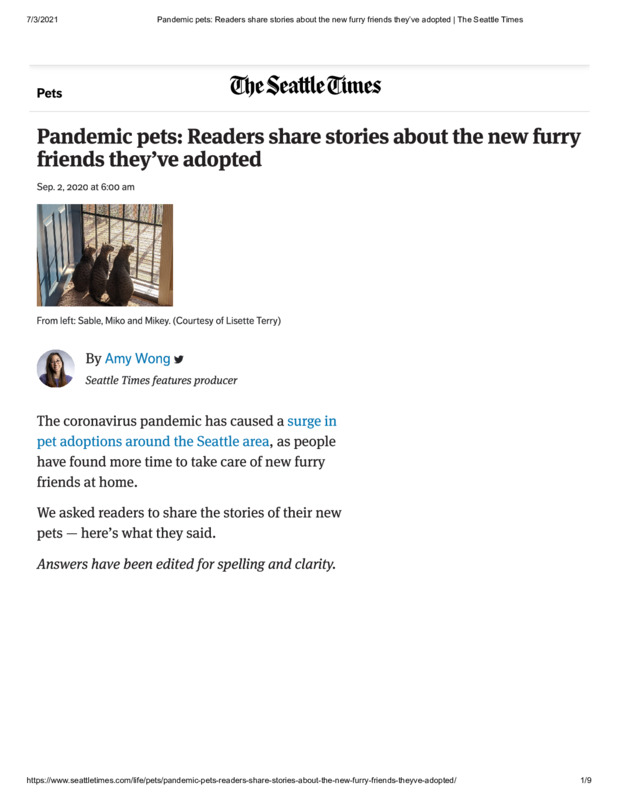
In this heart-warming article. Readers share pictures of and blurbs about the pets they adopted during the pandemic. Dr. Fauci the cat with a bow tie is particularly apropos.
-
2020-08-03
When I came home from my last deployment in December 2019, I began to look for teaching jobs- I was for the first time preparing for the teaching job market. Suddenly, when Covid-19 hit the streets, most business and shops closed their doors and were only open for carry-out. In May 2020, I was worried because most school corporations announced that they would presume classes virtually or through a mix of hybrid days that would consists of both synchronous and asynchronous learning for the first portion of the school year. I thought that this would be a learning curve for me if I ended up getting a position. By August 2020, I got a position as an 11th-grade high school teacher in my hometown. Before the bell rang on 03 August 2020, I put the rubber gloves on that the school’s office gave me and sprayed each desk down with bleach. The tight latex gloves did not fit my hand properly but worked for its purpose. The disinfectant left an aroma in the air, similar to a hospital. Brinnnnng, the bell sounded, and the students began marching into the building as I watched them from my window. My forehead began to bead up with sweet (I was nervous for my first day). Then, I put on my mask and stood outside my door. As I waited at the door, I remembered the old days when I was a student at that same school, I was now a teacher. Back then, the hallways were filled with my peers, there were lots of hugging and other high schoolers interaction going on. Everywhere I turned, my peers were smiling and excited to share summer stories. In a blink of eyes, when I looked at the hallways, my peers were no longer there. Neither was the high schooler me. Now, I look through the hallways and it is filled with faceless students. The unnatural phenomena brought forth by Covid-19. The wearing of a mask in the U.S. society is unnatural. The students tried to stay six feet away and tried not make physical contact with anyone. The masks covered their faces, and many wore gloves to open their lockers. As I greeted my students entering my class first period, they seemed happy to be in school in-person since all surrounding corporations had announced they would have online instruction. As they seated, they soon realized that each desk was coated in residues from the cleaning products. I then went to the front of my class and tried to write my name on the board. The marker streaked the board. The cleaning products from wiping each room down from the cleaning staff had left a clear coating that made it impossible to write on. This was a common theme for each class that entered my room. By the end of the day, the room was filled with body and cleaning supplies odors. The coating on the board ruined my marker. My hands shriveled from the gloves, and my ears were red and irritated from the mask. I thought to myself, “this is the new norm now. I must get used to it, so students do not feel overwhelmed.”
I chose this story because I felt that this was a challenging year for all first-year teachers. I wanted to bring insight on how difficult it was to try and keep calm and push students to strive to their potential without making students have the extra worry of Covid. This story shows how Covid affected not only adults but everyone in our society.
-
2021-06-25
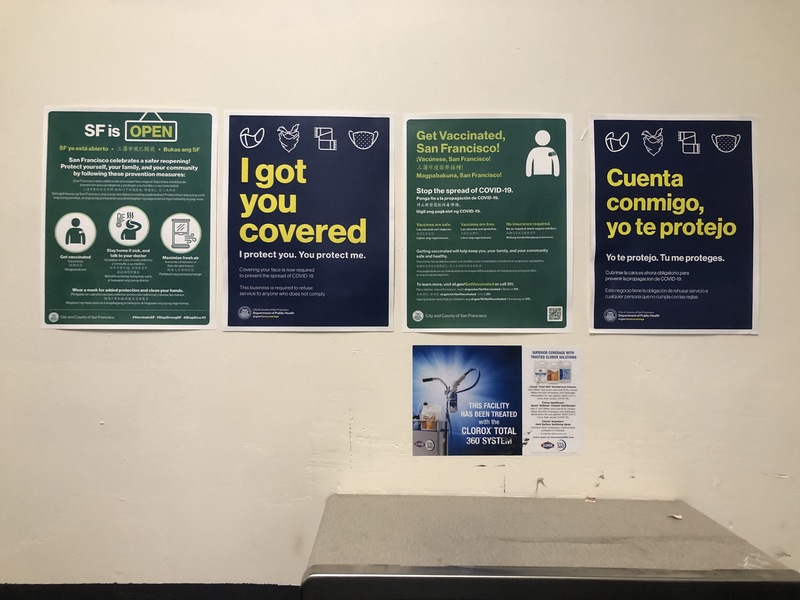
On June 25th, I saw this set of posters next to a bathroom in Japan Center, a Japanese shopping center in San Francisco. The posters are in English, Spanish, Mandarin, and Tagalog.
-
2020-07-09
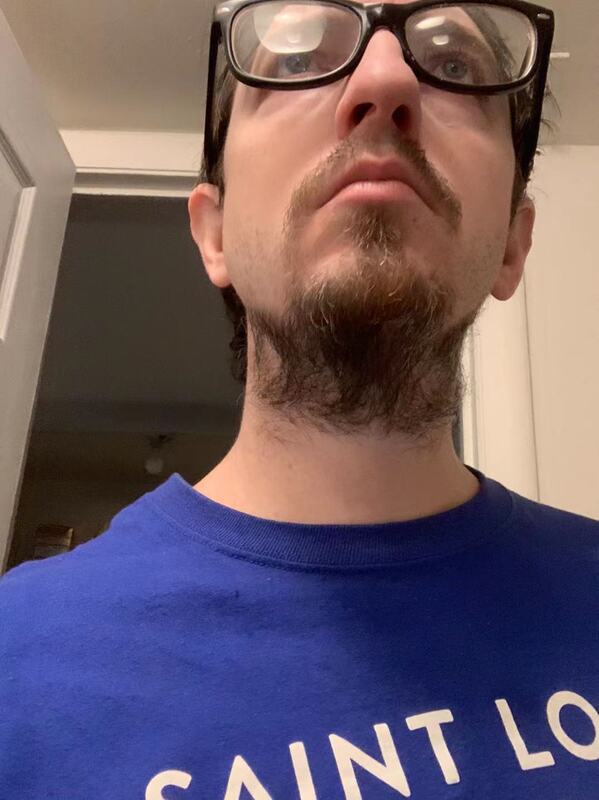
Over the past year, I found myself for the first time extremely isolated from most of the outside world. As opposed to my entire life previously, where I was always around other people and tried to make my appearance presentable, I no longer had to worry about what I looked like. As a result, I stopped shaving and let my beard grow for weeks and months on end. I will never forget the strange feelings associated with the different stages of my beard. Running my fingers across my face and feeling the sharp pricks from the stubble of a short beard, or the fuzzy and puffy feelings from touching my medium-sized beard, or straitening out the matted hair of my longish beard. As I had never tried to grow a beard before, these feelings were new to me and something I will not forget. The picture I uploaded was shortly after I had shaved my cheeks and left the rest of the hair on my face and neck, which felt stubbly and sharp on the sides but more silky and smooth in other areas. This is something I would have never done if I had to be around people. The isolation I experienced during the lockdown allowed me to grow this strange beard and experience the feelings that came with it. This is representative of the experiences of so many people who all of a sudden found themselves in a new situation of solitude as a result of the Covid lockdowns. For once in a lifetime, your appearance didn't have an effect on your professional life and you could just let things like beard growth go completely uncared for. As I will probably never experience this kind of isolation again, I will probably never experience the feelings of running my fingers across and through an unkempt beard as I did during the Covid-19 pandemic.
-
2020-03-20
On Friday, March 20, 2020, I was grocery shopping at Hy-Vee in Canton, Illinois when my mobile phone pinged with an alert from a local news app: the Illinois governor had officially issued a stay-at-home order to prevent the spread of Covid-19. Rumors of the impending order had been circulating for the past few days. I teach English at Canton High School, and we were scheduled to start a week of Spring Break that Friday. That morning the principal had cautioned us to take home our computers and any teaching materials that we might need, just in case we did not return to school after Break. So, the text message confirmed a stark reality.
Talk of the stay-at-home order overtook the conversations of shoppers around me. People were speculating about what would come next, now that schools and businesses would be closed. I remember passing the meat counter where I overheard the department manager taking a phone call from a gentleman who wanted to place an apocalypse-sized order of beef. This is it, I thought to myself, trying to figure out what kind of groceries to buy that would sustain my family over for an indefinite period of time, because even though the stay-at-home order was for just two weeks, I had a sinking suspicion we were not going to best Covid-19 in two weeks’ time. I began pushing my cart up and down the aisles faster, a little more frantically, in response to a burgeoning awareness that the virus could already be circulating within our community.
Looking back now, I see that we were somewhat cocooned in Fulton County, Illinois, a mostly rural county. The health department announced the first positive case on April 10; the first death occurred on October 21. The virus was slow to take a foothold, but eventually it did. In late July, our school district’s board unanimously voted to start the school year fully remote. Each school day, teachers reported to ghost-town school buildings and holed up in their empty classrooms, with admonitions from administrators not to co-mingle with each other. During that time, I dutifully logged onto Google Meets for each class period, where various avatars greeted me because students were not required to turn on their cameras, so none did. Sometimes I got to hear tinny student voices, which sounded a lot further away than across town, and I wondered if each voice matched the person I pictured in my mind’s eye. I had never met the majority of my students in person, and the photographs on our school’s student management system had not been updated since the fall of 2019.
I remember the frustration I struggled to keep capped when I would call on students and be met with silence. Were they even sitting by the computer? Were they afraid to say something in front of their classmates, lest they look stupid? Were they just willfully ignoring me? Were they okay, physically and mentally? I pulled more words out of students through written assignments and chat boxes than through Google Meets. Although part of the student body returned to in-person school in January of 2021 while the rest remained remote by choice (we taught both groups concurrently), it was still difficult to get students to speak, even to each other. Sadly, many of our students had become so accustomed to the idea of school as a radio broadcast—one from which they could easily disengage if they so wished—that they no longer felt it necessary to contribute their voices. In Illinois, we’ve been told that all students will return to in-person learning in the fall of 2021, with few exceptions, but I fear the virus has done irrevocable damage to our students’ speech.
-
2020-03-13
It was two days after the NBA had shut down and the first day our school district had shut down. Not sure about what was to come next (and honestly pretty scared to go) I took on last trip to Costco to buy supplies for the lockdown of unknown duration that was about to begin. The scene was chaos, with the lines running the full length of the store. The most eerie part, though, was someone who decided to “play us off” in a sort of Titanic-style farewell to our old life.
Having endured the line for longer than I can remember, I chose to record the moment (which I felt would be one to remember.
-
2021-07-02
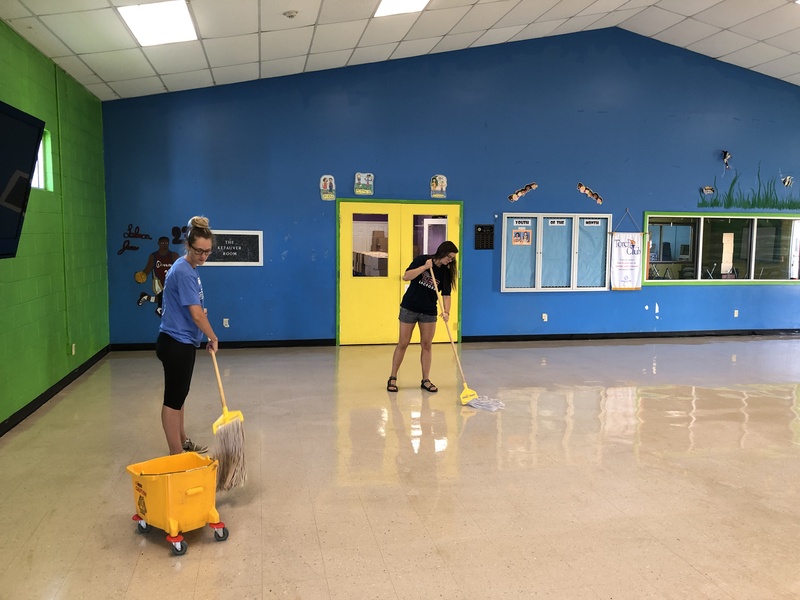
I work as a director of a Boys & Girls Club in Cleveland, Tennessee. For anyone unfamiliar with the Boys & Girls Club, we are a Department of Education-certified after-school and summer program. Our organization is comprised of fourteen Clubs across four counties and, prior to COVID-19, we served over 1,000 Club members every day. Immediately following the outbreak of COVID-19, the hallways of our Clubs were empty. In a matter of hours, an invaluable local resource became inaccessible to hundreds of families who depended on our support. This was an extremely difficult time. Fortunately, our organization has an exceptional leadership team. From the moment our doors closed in March 2020, our administration began working around the clock to adapt our program into one that was both virtual and accessible. Clubs began having daily ZOOM calls with their members, calling families to just check in, making silly YouTube videos and connecting with teen members on safe and secure social media platforms. Even further, our administration ensured that no one was laid off and employees still had plenty of work to do. With our hallways emptied, we were divided into small teams that could easily work in a socially-distanced manner and were assigned to a number of facility maintenance projects. We knew that one day our Club members would return, and when they did, we wanted their Clubs to be fresh, clean, and updated. I was assigned to the floors team. This team was charged with stripping and waxing all of the floors in each of the fourteen Clubs. For about eight weeks straight, I became overly familiar with the burning, sterile scent of Zep Heavy Duty Floor Products. Even with an industrial mask, the sharp and bitter aroma of the cleaner was pungent. Now, anytime the floors need to be done in my own building, I am taken back to those 14 weeks there were no kids in the hallways. Fortunately, we re-opened our doors to our Club members on June 1st, 2020 with strict health and safety protocols, and only at half capacity. We remained at half capacity until June 1st, 2021 when we were finally able to fully re-open our sites. Our numbers have still not returned to what they were, but we are slowly getting there. The important thing to us is that we are able to safely provide much-needed services to our community.
-
2021-07-02T12:30:00
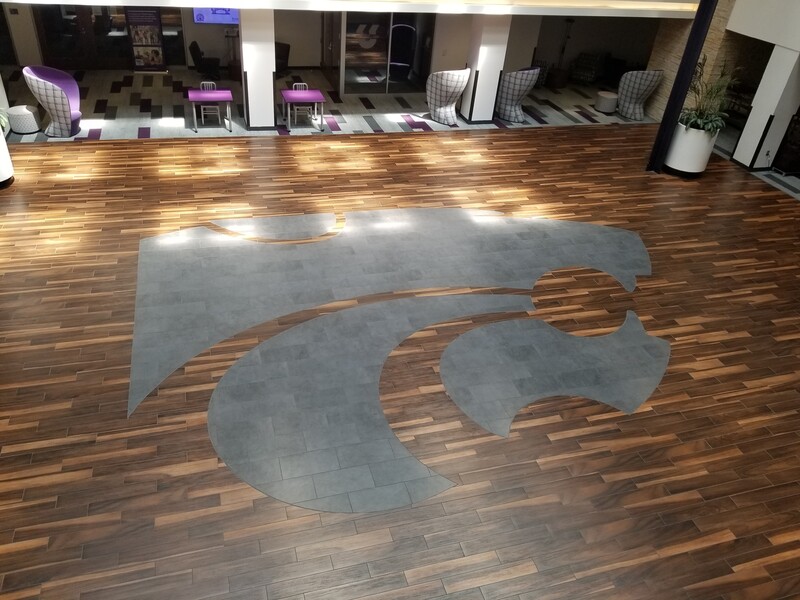
How quiet can a campus of normally 21,000 students get? I will let you in, you can hear a pin drop. When the pandemic began, the school shut down the school Union. On top of that, I was placed on furlough from my job from March until August last year because my job is located in that Union! When I was able to come back to campus, masks and hand sanitizer were required (still are) and the other thing that was noticed was...the silence. Normally, the Union has about 1,000-2,000 students and staff in it at a time, but due to the pandemic, it was completely dead inside. Not only that, the hours that we were open cut in half until some of our workers were let go based on the amount of time that they had spent in their position. In the midst of the pandemic, it would become extremely eerie because there would be times we would not see a single customer for over an hour when normally, it would be steady (and during peak hours extremely busy). Due to the pandemic, our manager left the business and that left me and another co-worker (now the manager) in charge of a store that normally has 8 eight employees. Normally during this time of year, even though it is summer, the Union is completely full due to Freshman Orientation, camps, and campus tours. Currently, as my photo suggests, the Union is a ghost yard....there are no students during the lunch hours, no restaurants open other than the convenience store, and no staff walking around. Ever since last March, this is not only how the Union has been, but also the campus itself.
I chose to take a picture of the Student Union Courtyard because this is normally where events are held during open hours in the Union. This is not to show that there are no individuals in the building, what I specifically want to bring attention to is because of no people in the building, it is completely silent 95% of the time. In addition, this is where the Freshman Orientation stations would be where they go to get information about classes and other events on campus. It is very weird to have no one in the building when two years ago they had roughly 2,000 people in the building during the lunch hour period when I worked for Follett's convenience store. It would be extremely loud, at all times and the shifts would go by quickly. Now...there is nothing but silence about 95% of the time on a public campus of 21,000 students!
-
2020-07
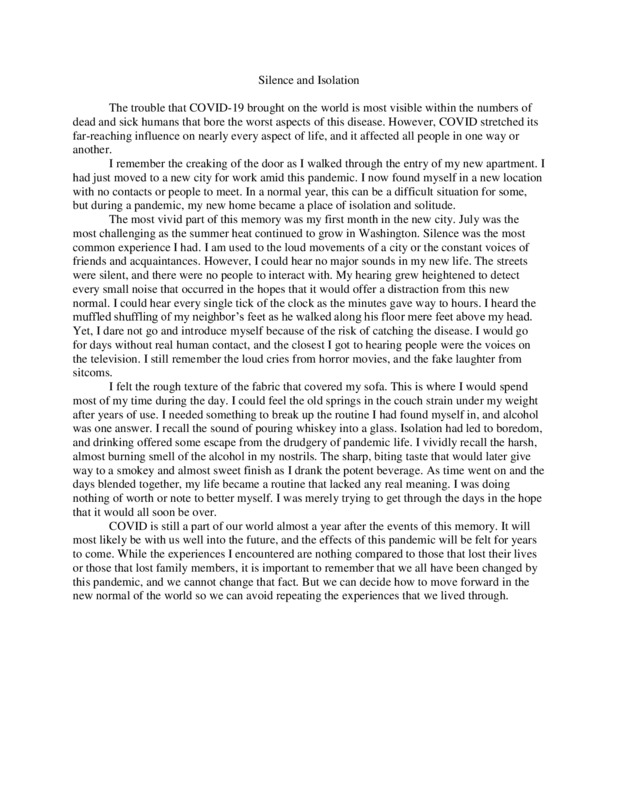
This is important because it speaks to the daily struggle of living through the pandemic. I was not touched by the disease itself, but my life was changed by it. My submission describes my sensory experiences of isolation during the pandemic as I moved to a new city for work. It expresses how the pandemic brought more than health issues but social issues to society as well.
-
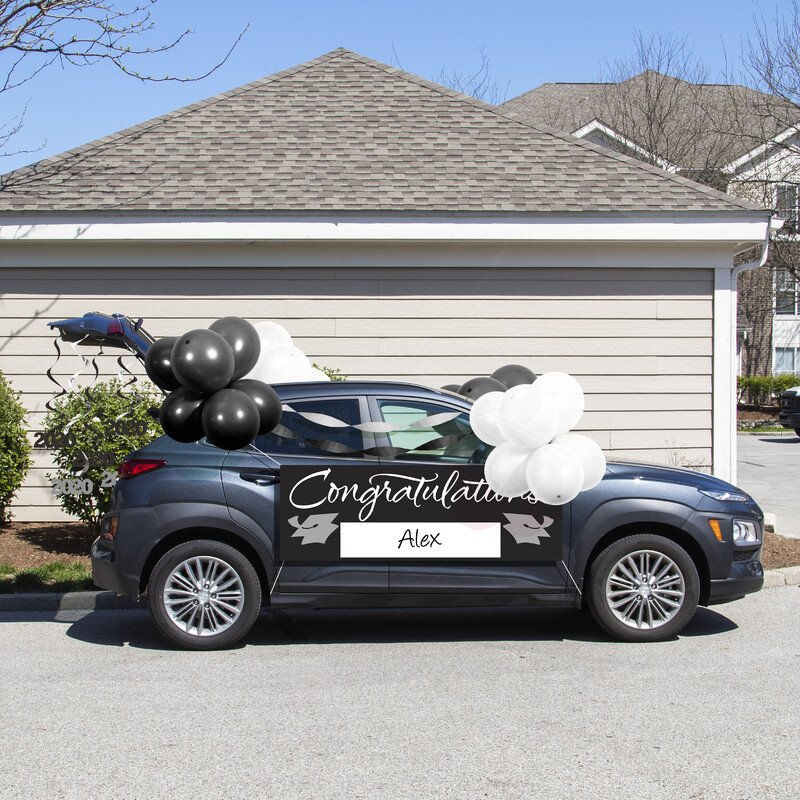
2021-05-22
I worked in the high school settings in 2020 when the lockdowns and social distancing were put into effect. For the Class of 2020, the unknown of what will happen and what could happen seemed to weigh heavy on the young adults I taught. However, they also saw many milestones of teenage life suddenly uprooted as proms, end of the year events such as dance recitals, plays, and senior trips were postponed indefinitely and, in many cases, canceled. However, graduation had to happen, and administrations and staff scrambled to figure out how to celebrate the accomplishments of 13 years of schooling (including kindergarten) for their students.
In any other year, students would file onto the grass of their home football field one last time, or in an auditorium, if the school graduating class was too large for the field, to the tune of Pop and Circumstance either played by the band or prerecorded; while families surrounded them in the stands cheering, applauding, and blowing air horns, and holding hand-made signs of support, congratulatory nylon balloons of the class year; and flowers and plushies for the end of the night. However, for the class of 2020 many classes held drive-thru graduations. Where lines of cars decorated with school colors and banners of the graduates’ names displayed on paper or painted directly unto the windows to show pride. Airhorns were replaced with car horns and Pomp and Circumstance was replaced with a DJ playing hits, or “bangers” as students would inform me, of the day. The administration would hand the graduate a diploma and a quick snapshot was taken, and teachers were lined up in the parking lot honking and cheering congratulations to the students they never officially got to say goodbye from when the lockdown of “15 days to slow the spread” was at that point surpassing the two-month mark. But graduation did happen and we as teachers did get to celebrate the students, we worked so hard to be ready for the world. Though nothing could really prep them for the next year of lockdown.
Fast forward to the class of 2021 and in the state of Arizona we were no longer in an optional shelter in place but “common sense” guidelines; and high school graduations could and would take place at schools that were able to implement social distancing. Most school employees were vaccinated, but masks were still required for anyone who participated in the ceremony and for those who were in the stands. Chairs were spaced out 6-to-8 feet apart, but students were back on their home field her one last time processing once again to the tune of Pomp and Circumstance. However, attendance was limited to 4 tickets per student, an extraordinarily small amount considering parents and grandparents on both sides are six people, and that did not include: siblings; aunts; uncles; cousins; and friends from other schools. Handmade signs, balloons, and airhorns also returned, though limited, students were still happy that “normal” was returning which to them was marking the end of the pandemic.
-
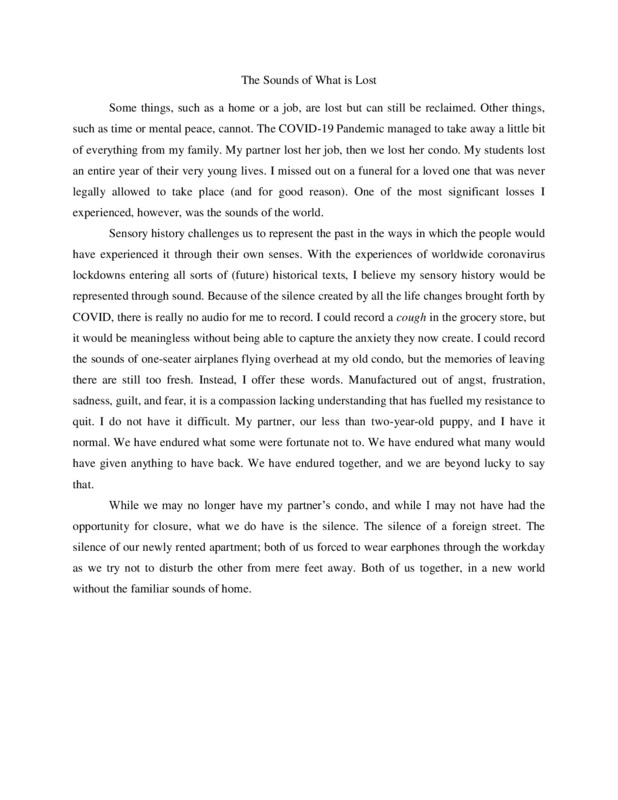
2020-09-30
This story speaks to the ever-changing sounds of the pandemic. Sensory history allows us to engage with the past in ways the invite the senses of the past back into the story. As my partner and I were navigating all the trials and tribulations conjured into existence by the events of the past year and a half, we noticed how silent our home full of sadness and confusion had been. Gone were the overhead aerial shows, the chatty neighbors, the rattling railway tracks... Now there was nothing. Our sense of sound changed dramatically and began to represent how fractured our connection to the world was. We had to be plugged in to tune each other out. We had to stare at a screen to see a familiar face. While most things felt, looked, and smelled different, there was nothing that sounded the same.
-
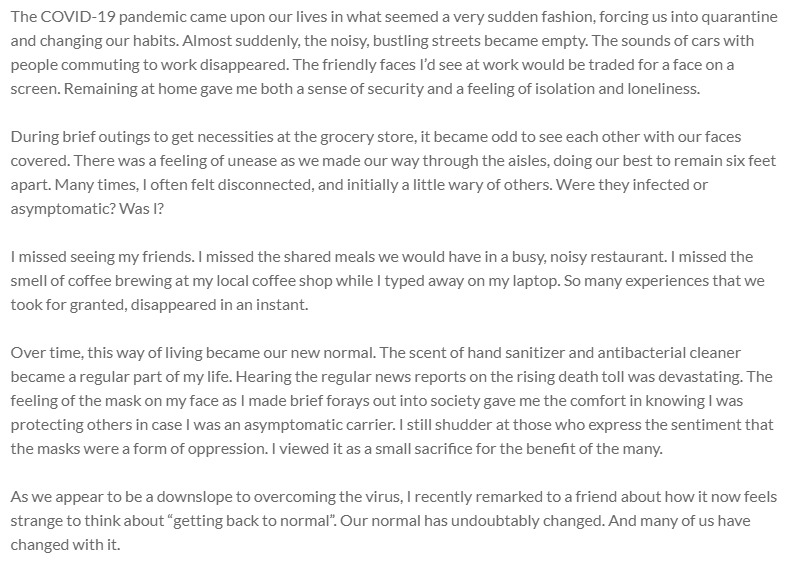
2021-07-01
The COVID-19 pandemic came upon our lives in what seemed a very sudden fashion, forcing us into quarantine and changing our habits. Almost suddenly, the noisy, bustling streets became empty. The sounds of cars with people commuting to work disappeared. The friendly faces I’d see at work would be traded for a face on a screen. Remaining at home gave me both a sense of security and a feeling of isolation and loneliness.
During brief outings to get necessities at the grocery store, it became odd to see each other with our faces covered. There was a feeling of unease as we made our way through the aisles, doing our best to remain six feet apart. Many times, I often felt disconnected, and initially a little wary of others. Were they infected or asymptomatic? Was I?
I missed seeing my friends. I missed the shared meals we would have in a busy, noisy restaurant. I missed the smell of coffee brewing at my local coffee shop while I typed away on my laptop. So many experiences that we took for granted, disappeared in an instant.
Over time, this way of living became our new normal. The scent of hand sanitizer and antibacterial cleaner became a regular part of my life. Hearing the regular news reports on the rising death toll was devastating. The feeling of the mask on my face as I made brief forays out into society gave me the comfort in knowing I was protecting others in case I was an asymptomatic carrier. I still shudder at those who express the sentiment that the masks were a form of oppression. I viewed it as a small sacrifice for the benefit of the many.
As we appear to be a downslope to overcoming the virus, I recently remarked to a friend about how it now feels strange to think about “getting back to normal”. Our normal has undoubtably changed. And many of us have changed with it.
-
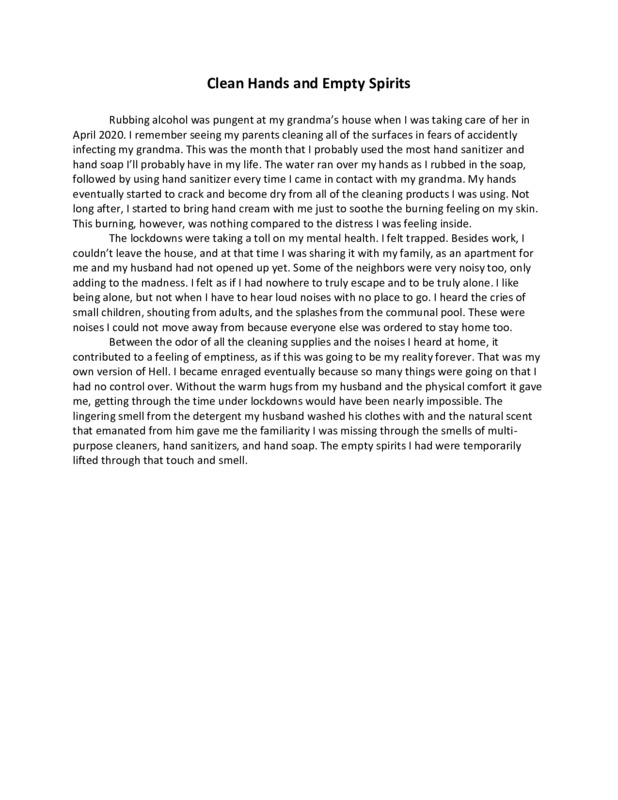
2020-04
This story is a small snapshot into how I felt mentally, and smelled, heard, and touched physically during April 2020. It talks about how the smells and noises around me at the time contributed to my worsening mental state and the feeling of hopelessness. This is important to me because it was this time that I learned that I am mentally stronger than I think and that I can get through rough patches with the help of my husband. It was not a fun experience, but I grew from it.
-
2020-08-17
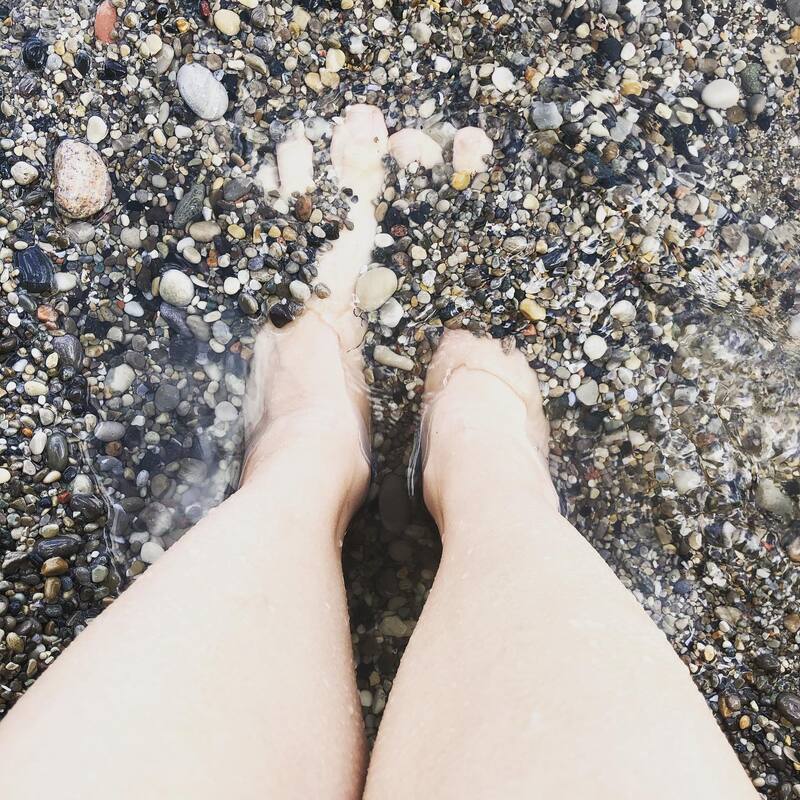
This photograph is of my feet, buried in the sand and rocks of the beach of Lake Michigan, on the coast of Port Washington.
Covid-19 affected so many areas of our lives in 2020, and in so many ways, that it can be hard to pin down which loss was the worst. Like many others, the sense I missed the most over the course of that long year was that of touch: physical contact with family, the cool water of the public pool, the slap of bare feet on pavement, dust coated legs on a school field trip. Over time, so many little touches were lost that it began to feel as though I was untethered, floating free in space in my little bubble of house-kids-spouse-pets. The cozy feeling of my rocking chair, the heavy press of my son on my lap and the rasp of my dog's coat against my knee became the only thing I registered, my little space-ship in this weird galaxy of loneliness created by Covid-19.
In August I left the house for the first time in far too long, headed for the abandoned shoreline of a nearby coast town, desperate to feel connected to anything outside my little bubble. I stood there, feeling the spray of the water on my ankles, the grit of the sand and rocks between my toes, the sun on my face and the wind against my skin. In these feelings I was reconnected, I was present once again, my tether to this beautiful world damaged but intact.
-
2020-08-04
When I came home from my last deployment in December 2019, I began to look for teaching jobs- I was for the first time preparing for the teaching job market. Suddenly, when Covid-19 hit the streets, most business and shops closed their doors and were only open for carry-out. In May 2020, I was worried because most school corporations announced that they would presume classes virtually or through a mix of hybrid days that would consists of both synchronous and asynchronous learning for the first portion of the school year. I thought that this would be a learning curve for me if I ended up getting a position. By August 2020, I got a position as an 11th-grade high school teacher in my hometown. Before the bell rang on 03 August 2020, I put the rubber gloves on that the school’s office gave me and sprayed each desk down with bleach. The tight latex gloves did not fit my hand properly but worked for its purpose. The disinfectant left an aroma in the air, similar to a hospital. Brinnnnng, the bell sounded, and the students began marching into the building as I watched them from my window. My forehead began to bead up with sweet (I was nervous for my first day). Then, I put on my mask and stood outside my door. As I waited at the door, I remembered the old days when I was a student at that same school, I was now a teacher. Back then, the hallways were filled with my peers, there were lots of hugging and other high schoolers interaction going on. Everywhere I turned, my peers were smiling and excited to share summer stories. In a blink of eyes, when I looked at the hallways, my peers were no longer there. Neither was the high schooler me. Now, I look through the hallways and it is filled with faceless students. The unnatural phenomena brought forth by Covid-19. The wearing of a mask in the U.S. society is unnatural. The students tried to stay six feet away and tried not make physical contact with anyone. The masks covered their faces, and many wore gloves to open their lockers. As I greeted my students entering my class first period, they seemed happy to be in school in-person since all surrounding corporations had announced they would have online instruction. As they seated, they soon realized that each desk was coated in residues from the cleaning products. I then went to the front of my class and tried to write my name on the board. The marker streaked the board. The cleaning products from wiping each room down from the cleaning staff had left a clear coating that made it impossible to write on. This was a common theme for each class that entered my room. By the end of the day, the room was filled with body and cleaning supplies odors. The coating on the board ruined my marker. My hands shriveled from the gloves, and my ears were red and irritated from the mask. I thought to myself, “this is the new norm now. I must get used to it, so students do not feel overwhelmed.”
-
2020-09-08
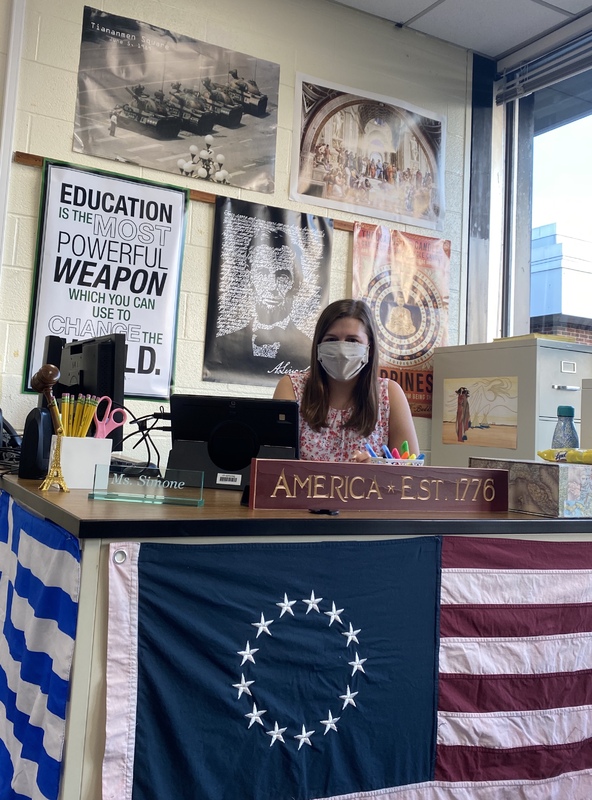
September 8, 2020 was the first day of school at my regional high school and I was beginning my third year as a teacher. As always, the night before the first day of school was marked by butterflies, but this time around, the butterflies were not due to the excitement and hecticness of the first day, but due to fear. As someone who social distanced to an extent unmatched by most of my peers, coming to school on the first day terrified me, as I was concerned with putting myself around so many other people in such a small room, specifically high school students who certainly enjoyed more social interaction over the summer than I did. However, as a teacher, I had to come in with a smile on my face, as you can see in the picture, despite the immense fear I was feeling in the pit of my stomach. What I remember most clearly is the smell of the school. The hallways were filled with hand sanitizer dispensers which released a scent that could overpower all else. Individual classrooms were packed with cleaning supplies and Lysol wipes which I had to clean each desk with between periods. What is so shocking is that more than anything, it is these smells that I associate with the fear I felt that first day of school. Though that first day was one of the most fear-inducing days of my life, the year ended up being incredibly rewarding and my students and I together helped each other through one o f the mo st difficult years of our lives. Though originally nervous to teach in 2020, I am incredibly grateful to have been able to conquer this year with my students by my side. Hopefully someday I will not have such an adverse reaction to the smell of hand sanitizer.
-
2020-09-08
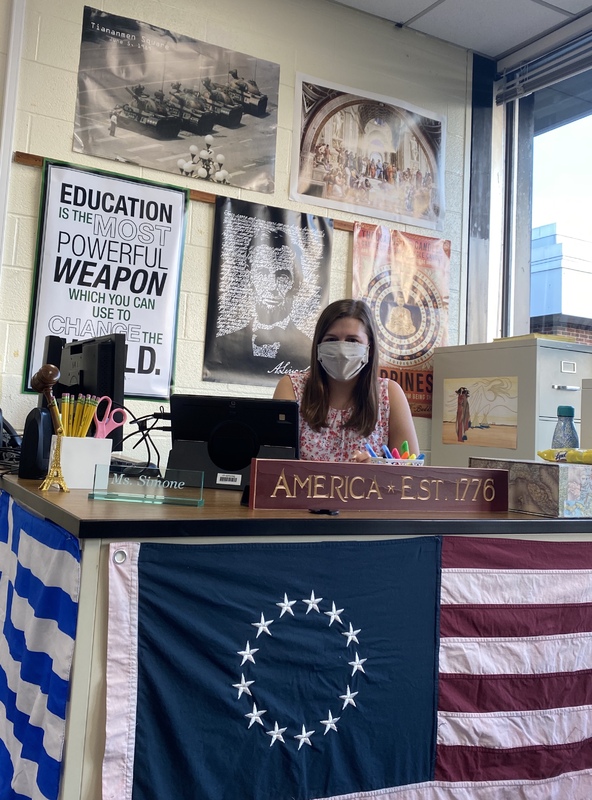
September 8, 2020 was the first day of school at my regional high school and I was beginning my third year as a teacher. As always, the night before the first day of school was marked by butterflies, but this time around, the butterflies were not due to the excitement and hecticness of the first day, but due to fear. As someone who social distanced to an extent unmatched by most of my peers, coming to school on the first day terrified me, as I was concerned with putting myself around so many other people in such a small room, specifically high school students who certainly enjoyed more social interaction over the summer than I did. However, as a teacher, I had to come in with a smile on my face, as you can see in the picture, despite the immense fear I was feeling in the pit of my stomach. Though that first day was one of the most fear-inducing days of my life, the year ended up being incredibly rewarding and my students and I together helped each other through one of the most difficult years of our lives. Though originally nervous to teach in 2020, I am incredibly grateful to have been able to conquer this year with my students by my side.
-
2020-09-30
I am not overly social. Therefore, the COVID-19 pandemic’s stay-at-home orders were not a big deal to me. However, the mandate meant no after-school activities for my kids who had a very hard time with it. My ten-year-old son took it the hardest as it meant no soccer, no chess, and no playdates which also meant no touching, no tag, and absolutely no wrestling.
After classes, I would pick them up and chauffeur the kids around town to all their activities. If we had time we would sometimes stop by the mall and grab a bite to eat. If we had an hour to kill, we would run into the arcade for a quick game or two of Mario Kart. But all that stopped once COVID struck. There was no room for the kids’ activities—no sports, no music lessons, no mall eateries, no more Sbarro on the run, no arcade—so in essence, no more fun.
Due to COVID constraints, my boy developed a small case of depression from not being able to play with his friends and soccer buddies. Seeing my son miserable affected me, especially after reading some children were committing suicide due to these restrictions. I forgot just how much bonding with friends and socializing meant when you are ten and surrounded by thirty other kids for five days a week.
While the pandemic gave parents like me a respite from all their children’s after-school extracurriculars, it was not worth seeing my son sad like that, and socializing was not the only aspect affected. My kids really missed getting their hands-on activities with other kids at the playground and soccer field. Kids simply love playing anywhere and touching everything, so not being able to do so hampers their growth through play and touch. Soccer was an outlet for all my son’s pent-up energy and once it and the other sessions were taken away, he felt trapped at home. We would play in the backyard, but it was not the same for him.
Although he may complain about school now, he still needs his friends. Luckily, the pandemic is over, and soccer and their clubs are all back on. My son is back to his normal rambunctious self again. My children are back to being full-time kids again!
-
-0021-06-29
This story tells of the dramatic shift in "normalcy" that the pandemic interrupted.
-
2020-05-25
My family and I have always been really close, meeting for family days as often as we can. Family gatherings will begin and end with hugs. When the pandemic started, we ensured that we isolated from everyone, even each other, as we all live in separate households and my father and sister have autoimmune diseases, and I have asthma and two heart conditions. Basically, Covid-19 was dangerous for all of us and we were afraid not only to contract it, but even more so to possibly give it to each other. While we would talk over Google Duo and Zoom, it honestly was not the same as getting to interact in person. There is huge importance and one could even say power in human contact, in human touch. It can be something that inflicts pain or reassurance. In this case, I lost the reassurance of hugs and seeing my family in person. The first time I hugged my older sister after lockdown started was about three months after lockdown began. We had both been isolated for weeks without symptoms and without having gone anywhere, and we had both tested negative for it. It had been the longest time I have gone without hugging her. I cried.
-
2021-06-05
Puppeteer Andy Gaukel had carved out a comfortable niche for himself in the Early Childhood Center at Bronx Community College. Then Covid-19 hit, and he had to find new ways of connecting with the college’s smallest students. In this oral history, he explains how he learned new skills to teach online while maintaining his rapport with his pre-schoolers and engaging their parents in a way that he hadn’t before the pandemic.
-
2021-01-06
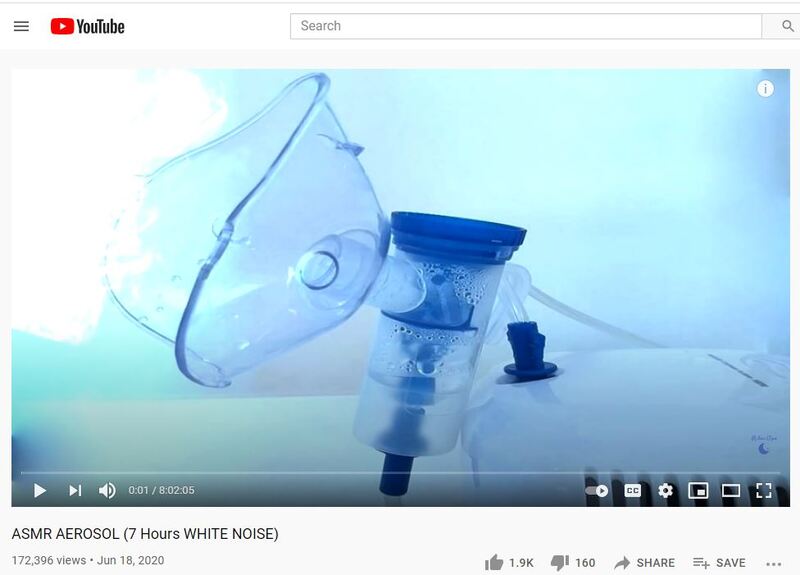
I wish I had a sound of the oxygen concentrator my mom was on for a full month, but at the same time I'm glad that I don't. After spending 8 days in the ICU due to COVID, my mom was finally sent home only because the hospitals were full in the Fort Worth area, and there were other people much more sick than her. In a normal year, she would have been in there at least another week or two, but they got her a concentrator and sent her home to be taken care of by my Dad, sister, and me. The sound the small motor made, producing the oxygen my mom's lungs weren't capable of getting. The high-pitched beeps that sounded when the battery was low, or if the cannula in her nose wasn't properly placed on her face--all of it is probably permanently etched in my memory.
The sound that I've submitted here is an excerpt of what a nebulizer sounds like when it's turned on. In addition to the sound of the oxygen concentrator, we'd hear this sound at least twice daily as my mom inhaled her lung medications with the nebulizer, accompanied by a lot of coughing as she recovered fully.
I'm grateful that she recovered and is still doing well, but I don't think I'll ever be able to hear a sound like this without remembering what the month of January was like this year for our family.
-
2020-09
On March 12th, 2020, all of the teachers and support staff in the high school where I work in Stafford, Virginia (A suburb of Washington DC) were called down to the auditorium and told by the head principal that our school would be shut down for the next two weeks as a result of Covid-19. Long story short, I did not return into that building until January of 2021. Even though I did not enter the building, between September and December of 2020, I toiled away teaching virtually via Google Meet from my basement.
Teaching online was difficult - due to privacy concerns, students were not required to turn their cameras on - and none did. For the first time, I was teaching to a class of thirty without seeing anyone other than myself. Many students did not want to ask questions by unmuting their microphones, so instead they would type out questions, make comments, tell jokes, etc through the chat feature. Each time a student would send a message, my computer would make a small beeping noise. I learned to love this noise as it was the only reminder I had that there was someone listening to me. As a teacher, forming relationships is so central to the profession. At first, it seemed impossible to be a meaningful teacher when I had no clue what my students even looked like. But every time I heard that beep, I was delighted to know that someone was on the other side of that screen. Without the fear of immediate judgement of their peers, many of my students provided commentary on the lesson and made teaching fun. When teaching in person, I hate when a student tries to talk over me, so only dealing with a tiny beep was much more manageable and it was nice to see these kids communicate with one another while separated by the pandemic.
Many articles that I have read have been incredibly critical of online learning, and some with good cause. I did not reach every student. Some fell back asleep, logged in then walked away, played video games, and even one of my students admitted to me that he was taking his dog on a walk during class. But hearing that beep reminded me that there are students out there that can make connections even when it seems impossible.
-
2021-06-28
When the pandemic was coming, I was initially relieved. I was supposed to fly to Chicago to visit my sister and go to our favorite band’s (Keane) concert, but as a person with anxiety and panic disorder who is terrified of airplanes and crowds it allowed me to back out. The concert was cancelled. It was the excuse I needed to back out without shame or blame. It seems silly now, but at the time covid seemed more like a bad cold or flu to me. It seemed like another Swine Flu or Avian Flu or other scare in recent memory which hadn’t amounted to a plague style pandemic. Lockdown was even kind of nice at first. My husband, daughter, and I got to spend a lot of family time together. I had taught ESL online for a number of years previously, so converting my in school classes to online was easy. I had no problems teaching over Zoom. I’m a homebody anyway, by habit and by anxiety, so this was great… until the body count started.
I was horrified and sickened to hear about the freezer containers being used in New York City to store the overflow of bodies. The germaphobia that had plagued me in childhood, that I had gone to years of therapy to overcome, came roaring back with a vengeance. Like everyone else, I went to the grocery store to stock up so I wouldn’t have to leave me house for awhile, only to find shelf after shelf empty. As a super health conscious, organic, vegan my choices were extremely limited. My husband and daughter aren’t vegan, but they do eat only organic, which became impossible. Soap, disinfectant, cleaners, and hand sanitizers were nowhere to be found. At a time when it was so important to be as clean and healthy as possible all those modern conveniences were utterly gone. I felt helpless. I imagined that people living during pandemics like the bubonic plague and Spanish flu must have felt similarly.
After a couple of weeks, quarantine started to feel more like a claustrophobic prison sentence than a family vacation. I missed my sister, my parents, my friends, my colleagues, and my students. On my birthday and Easter I just had to wave at my parents through the glass door. My favorite hobby- taekwondo, which I had started in order to relieve stress and help with my anxiety was taken from me. I had to do the classes online from my living room, which was nearly impossible. I felt trapped. A raging epidemic across the planet from which there was no escape. If I spent too much time thinking about it, I would start to feel the claw of panic. By the time summer arrived I was at breaking point.
Luckily with summer we had some reprieve. Case loads declined, and I started meeting my best friend outside. We socially distanced ourselves and wore masks, but we were together and that was a start. By the end of summer she and her boyfriend were on our “quaranteam” that is we decided we could see each other since we weren’t seeing anyone else.
In the fall school started. Since I teach at a Catholic school we were able to have school in person full time, though we had students in every grade who opted to go remote. But my bestie and I were back in the building with most of the kids, and I started to feel less trapped. I was going to stores masked and my daughter was also in school. But as soon as Thanksgiving hit everything changed again. So many people ignored all of the recommendations and restrictions and got together with family and friends. It made me so angry that people were so careless. A friend of mine had a large family in Pennsylvania who all got together for Thanksgiving. She didn’t go because she thought it was reckless. 8 out of 14 people at the family dinner got covid and 2 of them died. Then at Christmas, my great uncle passed. No funeral. No wake. Nothing. Schools shut down again. We were trapped.
Then the vaccines came. It was nearly impossible to get one for a long time even if you were eligible. Slots filled as fast as they were posted. You needed to present a lot of proof of eligibility in order to get one. As a teacher, I was able to get mine earlier than many others. I got the Moderna. The first shot made me feel a little sick for a few hours, but with the second I had a fever of 103.5, aches, chills, nausea for 12 hours and a general malaise for 3 days. A friend of mine in taekwondo, who has some autoimmune problems, had a severe reaction after her first Moderna vaccine. She has had side effects for a few months now that are not going away. She has dizzy spells and heart palpitations regularly. She is undergoing testing and being monitored by the CDC. Despite some horror stories, the vaccine is still the absolute best thing that we could have hoped for. I would like my daughter to get it as soon as they open it to the under 12 population. A lot of people won’t get the vaccine because they are in the “Science is fake, I’m a Trump supporter” camp. In my opinion, Trump’s misinformation and mishandling of the pandemic cost tens of thousands of American lives, and his diversive legacy is going to cost us dearly for many years to come.
It is now June again. School just finished. New York State is allowing people to enter buildings unmasked if they are vaccinated, but few people are actually requiring any proof. Given that the people with a cavalier attitude toward wearing masks are many of the same people who are against getting vaccinated, an honors system policy towards wearing masks is really just a no-mask policy. It is very frustrating to me that people can’t just deal with masks for a while longer to fully insure this disease’s eradication before we have another relapse and find ourselves back in quarantine again.
-
2020-08-15
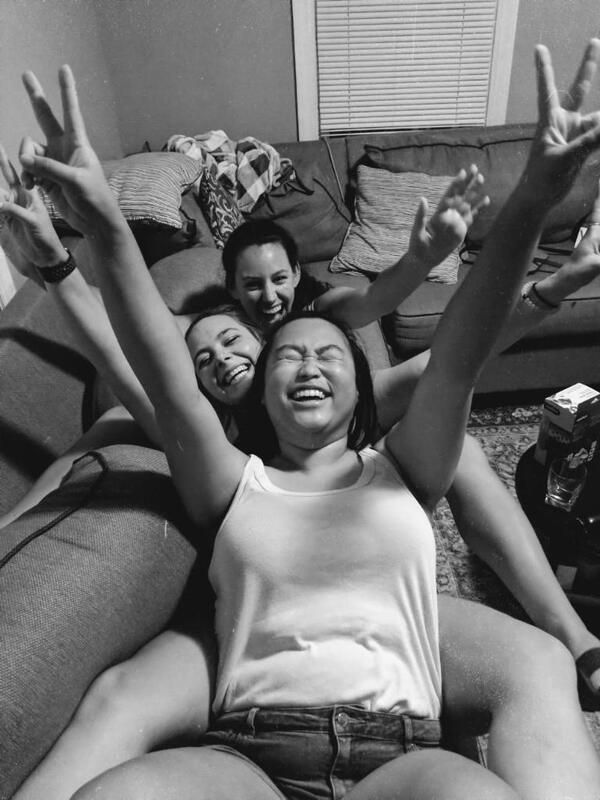
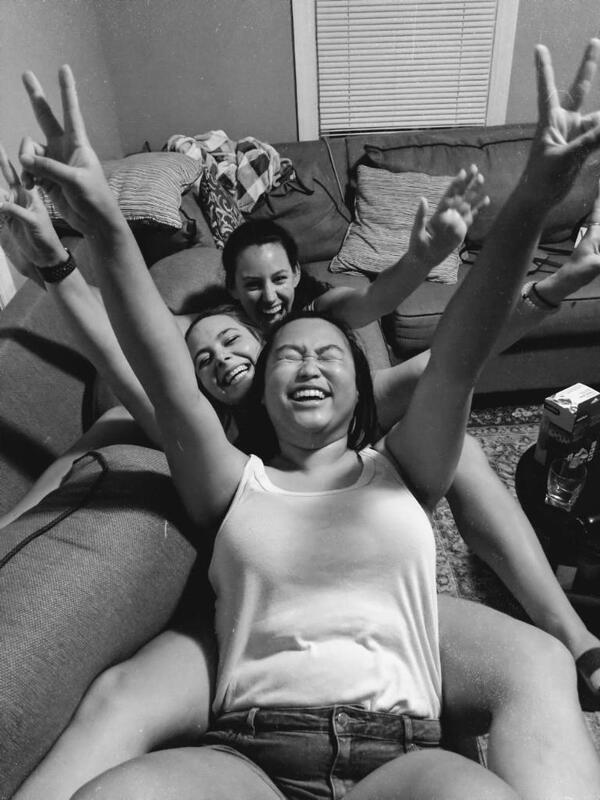
The image I included shows the sense of sound. In the picture submitted my two close friends and I are laughing in a picture together. The story I am regarding with this is the fact the pandemic deprived me of hearing not only their voices in person but also their laughter. In my state we started the lockdown by late March, so all of us were not quarantining together, so the time when the pandemic was the worst was the longest, we went without seeing each other in person. Of course, like other people, we would use technology, like Facetime and Zoom. Like most other people know, Zoom is not the same as in person. So this picture shows us laughing and for the first time in a really long time to hear us all laughing was musical. I think this particular sensory history shows the importance of what a person hears from day to day, or on a regular basis. It becomes clear in times of global pandemics what gets taken for granted until it is taken away. I think when this history gets studied in years to come, historians are going to see a recharge in what people think is important. Those simple things, like a friend's laugh, were lost in the time of quarantine.
-
2020-06-28
Through the start of the pandemic, in America, my state shut down by late March. I was fortunate enough to have been able to quarantine with my parents, after a fall my grandma joined us as well. The hard part was though to be totally honest not seeing my friend. My two best friends and I are super close and that period between March through June was the longest time since we became friends ten plus years ago, that we were apart. My birthday was during that time, which again was weird and sad not to have them as part of my actual day. I think sound was a sensory that I missed during the pandemic. Hearing my friends in person, was completely different than hearing them over Facetime, or Zoom. The laughter that normally flows, online was broken up by bad connections.
-
2020-06-14
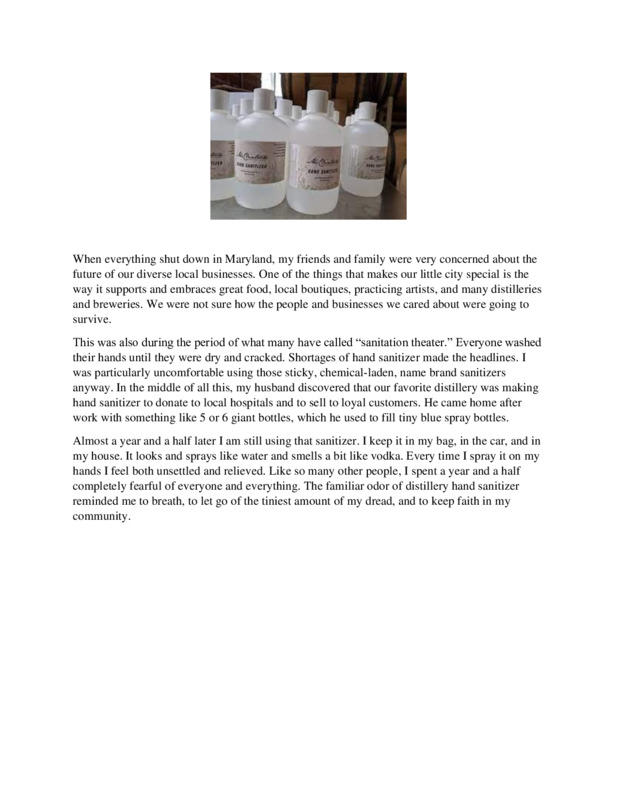
This is a story about how hand sanitizer kept one woman hopeful during the pandemic. "Sanitation theater" was a coping mechanism used by individuals, businesses, and organizations used to convince ourselves that we were safe. So much of what we needed during the pandemic, was respite from the dread and insecurity. So much was unknown and so much felt out of control. The smell of the hand sanitizer produced by my local distillery instantly evokes the emotions I felt at the height of the pandemic
-

2020-12-04
Overcrowded movie theaters, expensive popcorn, and escapism entertainment made for the best days as a child of the 20th century. Surrounded by an ever growing crisis of climate change, the rising political tensions domestic and foreign; nearly every issue fades away as the lights dim in a theater, directing all attention to the action set pieces of the latest blockbuster hit. Unfortunately now, there are no lights to dim, no popcorn to smell, the once intense reverberating sound and art of audio mixing, is now forced to protrude from broken TV sound bars. The magnificent subtle nuances of orchestral scores, become muffled by the yelling of neighbors. As basic and selfish as it may seem, Covid-19 served as a reminder of the unobtainable nostalgia and senses that surround my past, the art of escapism through film. In 2020 I witnessed the passing of loved ones, relationships dwindle, and ironically the comfort of escapism...has now escaped me. Movie theaters were closed, the discomfort of the slightly course and rough woven stitched seats, became a desperate dream, a return to normalcy. The artificial smell of buttered popcorn, along with the overpriced snacks, became memories of an easier past.
I wrote Henshin, as a manifestation of the changes of Covid-19. It isn't necessarily that films can never be enjoyed again, but the ability to truly escape, is gone. We view, smell, feel and see things differently now. The bombastic sensation within a theater, sharing the laughs, cries and emotions with other children, is now replaced with a constant checking of watches to return again to the world. The smell of artificial flavoring may be gone forever. Loved ones will never carry us out of a theater again. The inconvenient sounds of crowds, machines, and other viewers, are now replaced with conventional house noises. Undoubtedly film will return, theaters will open up again, but the once wholesome experience from the past has changed. The families laughs have now turned to cries, quoting movies with one another has turned to editing eulogies, smells are now memories instead of new experiences.